 English
 中文简体
 Español
 عربى

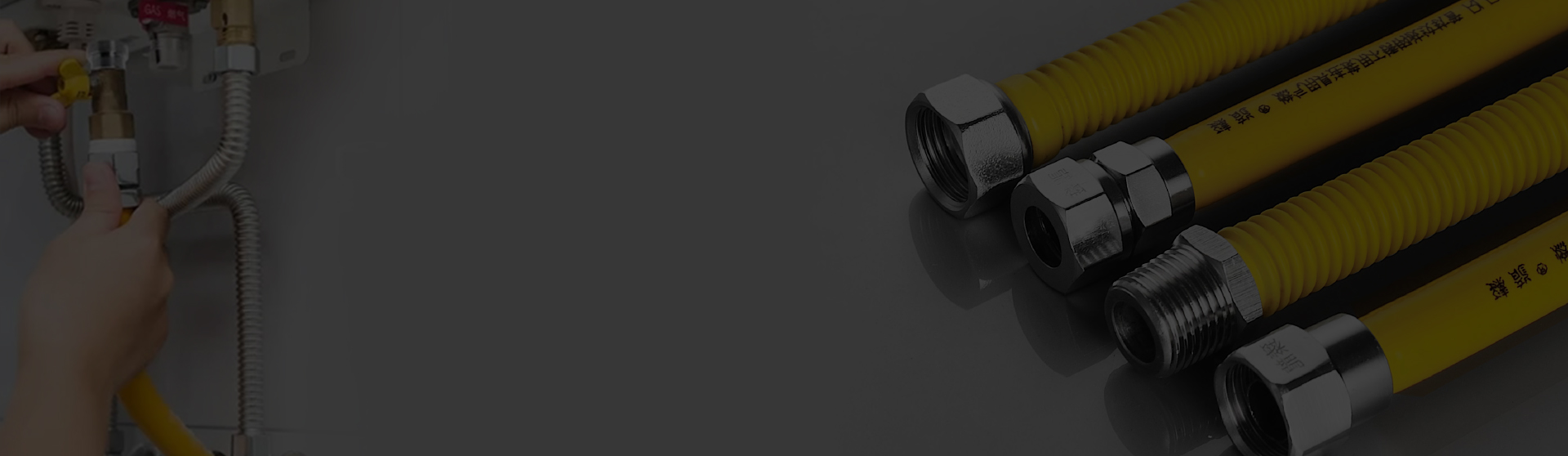

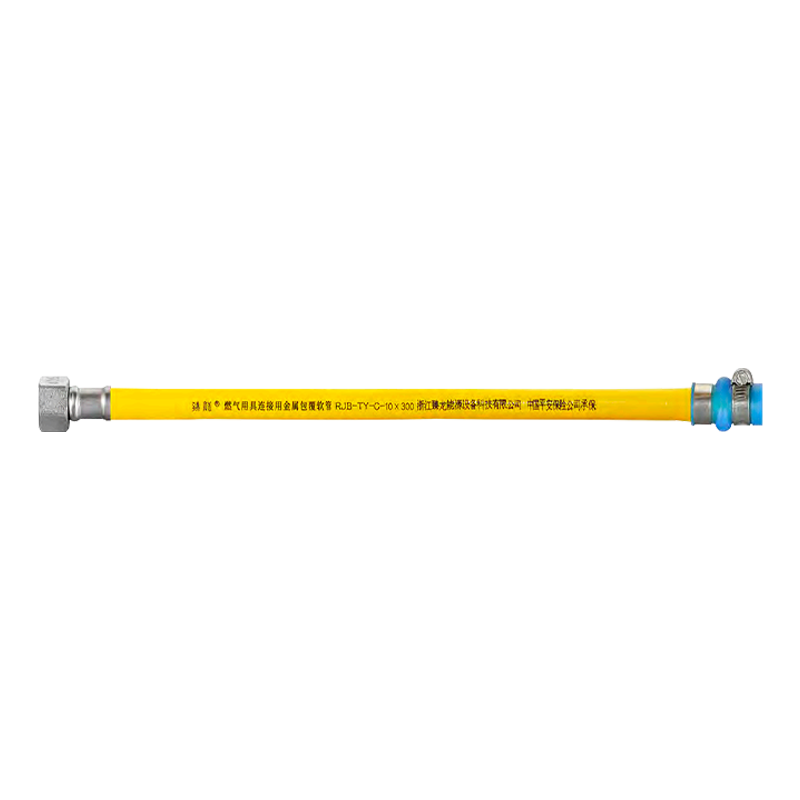
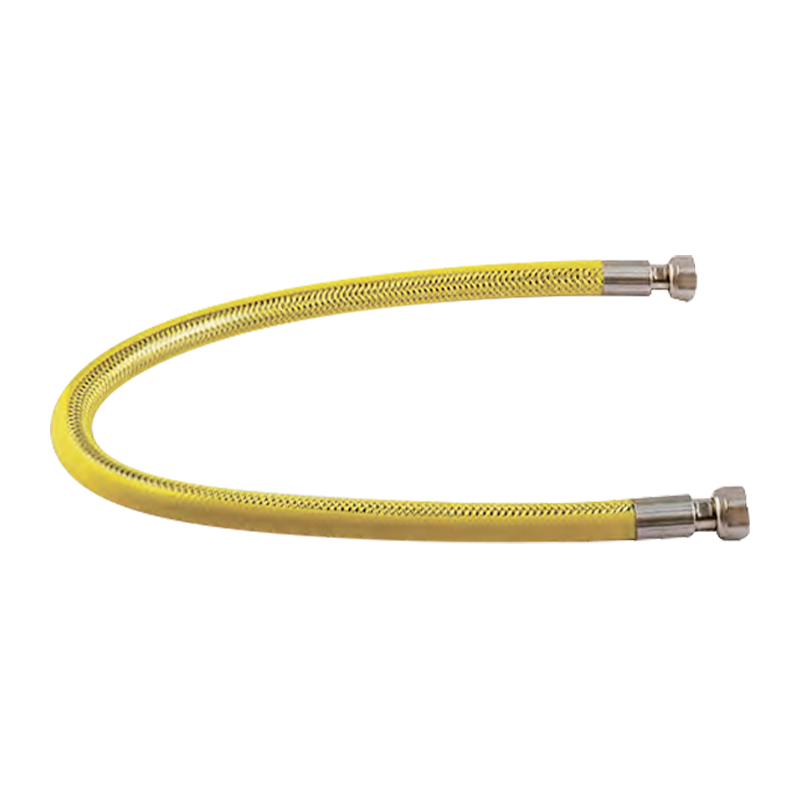
Almost every corrugated stainless steel tubing failure that reaches a warranty desk started in the field, not at the mill. The product itself is simple: a thin-wall 304 or 316L stainless steel tube, hydraulically corrugated so it bends by hand, wrapped in a flame-retardant PVC jacket. In normal fuel gas service it holds up for decades. What fails first is the bonding, the support, or a fitting that was never listed with that tube.
So the conclusion comes first. CSST is the right choice for residential and light commercial gas distribution when three conditions hold: the run can be directly bonded to the electrical grounding system, the tubing stays out of slabs, soil and screw paths, and the fittings come from the same listed system as the tubing. Break any one of those three and threaded black iron or copper is the safer answer over the life of the building. Everything below explains why, and where the practical limits sit.
Content
- 1 What Corrugated Stainless Steel Tubing Actually Is
- 2 Why CSST Replaced Threaded Iron on Most Residential Branches
- 3 Sizing: Where Most Projects Get It Wrong
- 4 Bonding and Installation Rules That Decide Whether the Job Passes
- 5 304 or 316L, and Why the Fitting Matters Just as Much
- 6 What to Check Before You Place a Volume Order
- 7 Frequently Asked Questions
What Corrugated Stainless Steel Tubing Actually Is
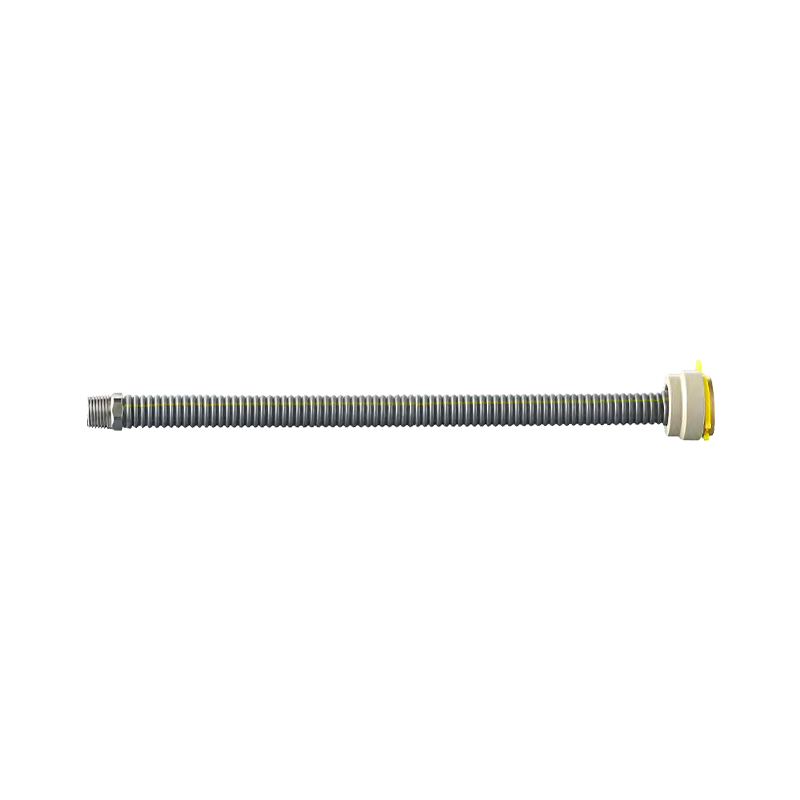
The product is defined by ANSI LC 1 / CSA 6.26, the standard covering fuel gas piping systems that use corrugated stainless steel tubing. Under that standard, the tube is formed from continuously annealed 304 or 316L strip, welded along the seam, hydraulically expanded into an annular corrugation, then covered with a UV-resistant, flame-retardant PVC jacket.
Three dimensions decide how the product behaves on site. Wall thickness on a 1/2 in. nominal tube runs roughly 0.008 to 0.010 in., which is why one installer can pull a coil through a stud bay and also why the tubing must never be used as a step, a wire pull or a support for anything else. Corrugation pitch sets the minimum bend radius, commonly 2 to 3 in. for 1/2 in. tube. Jacket construction decides where the tubing may be installed, because only some jackets carry a rating for outdoor and UV-exposed runs.
Where the material is not allowed
CSST is not a structural member. It is not permitted in a slab or in direct contact with soil unless a listed conduit or jacketing is used. It cannot serve as an electrical grounding electrode. And it should not be reused once a fitting has been removed, because the seal is formed by the fitting at the moment of installation, not at the factory.
| Attribute | Threaded black iron | Copper | Rubber hose | CSST |
|---|---|---|---|---|
| How joints are made | Cut and thread | Solder or press | Barb and clamp | Listed mechanical fitting |
| Typical joints per 30 ft | 8 to 12 | 6 to 10 | 2 | 2 |
| Flexibility | Rigid | Rigid | High, but short lengths | High, long coils |
| Typical service expectation | 40 to 60 years | 50 years and above | 5 to 8 years | 30 to 40 years |
| Acceptable in a concealed run | Yes, with protection | Yes, with protection | No | Yes, with a listed jacket |
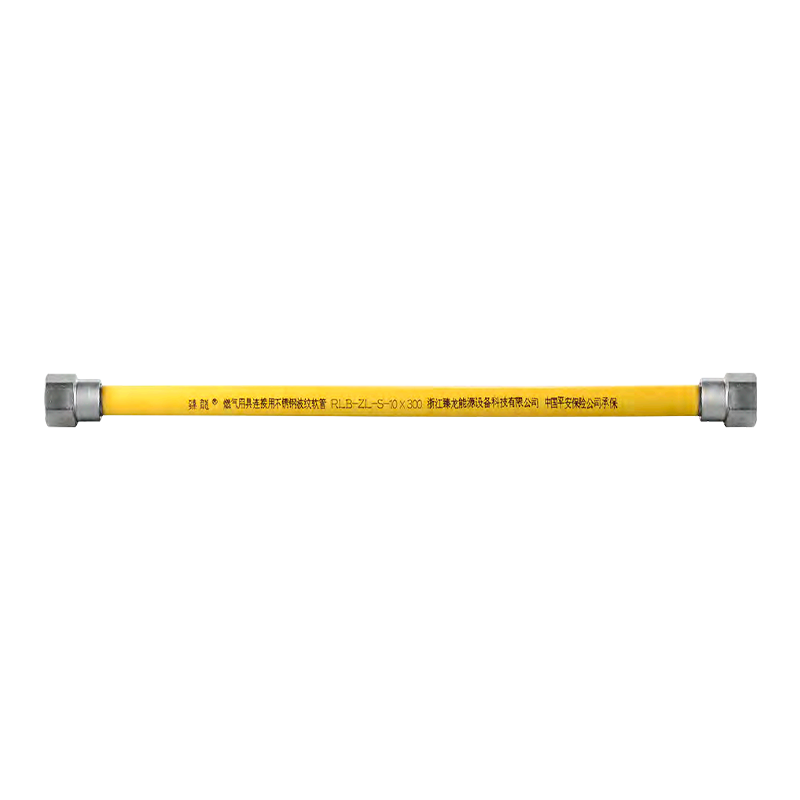
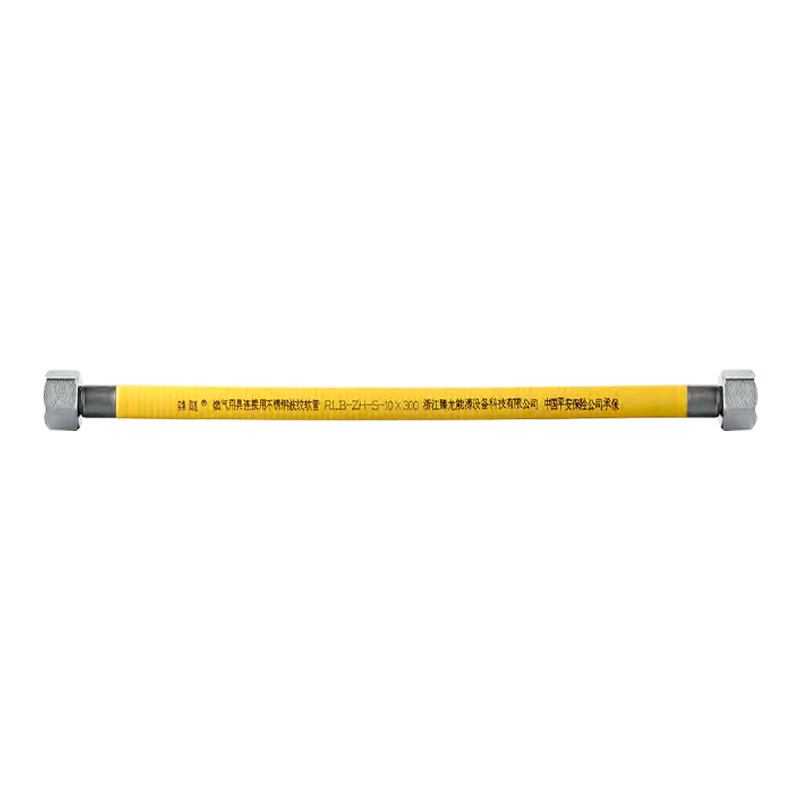
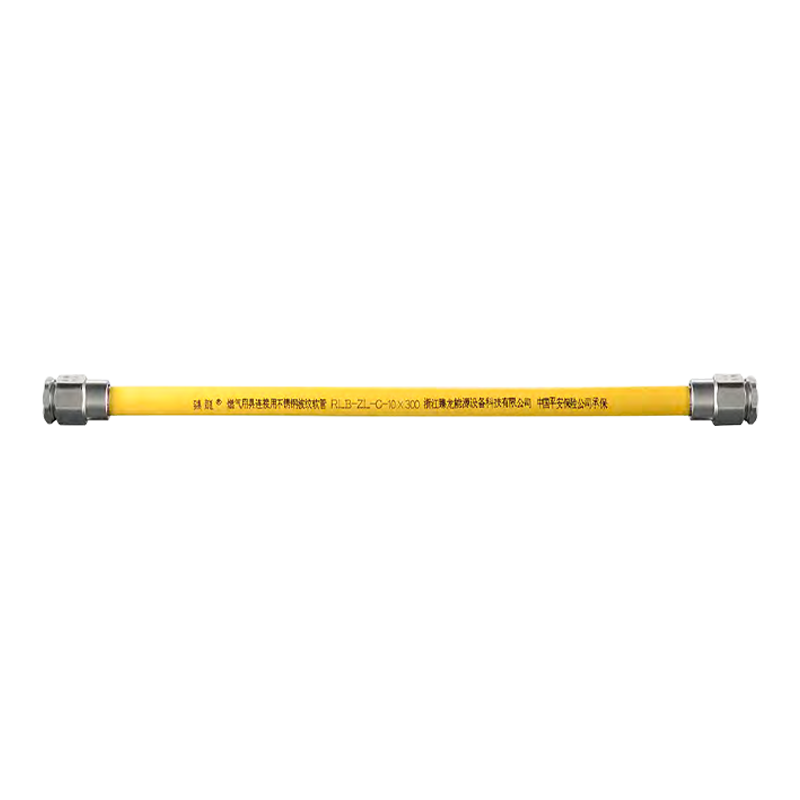
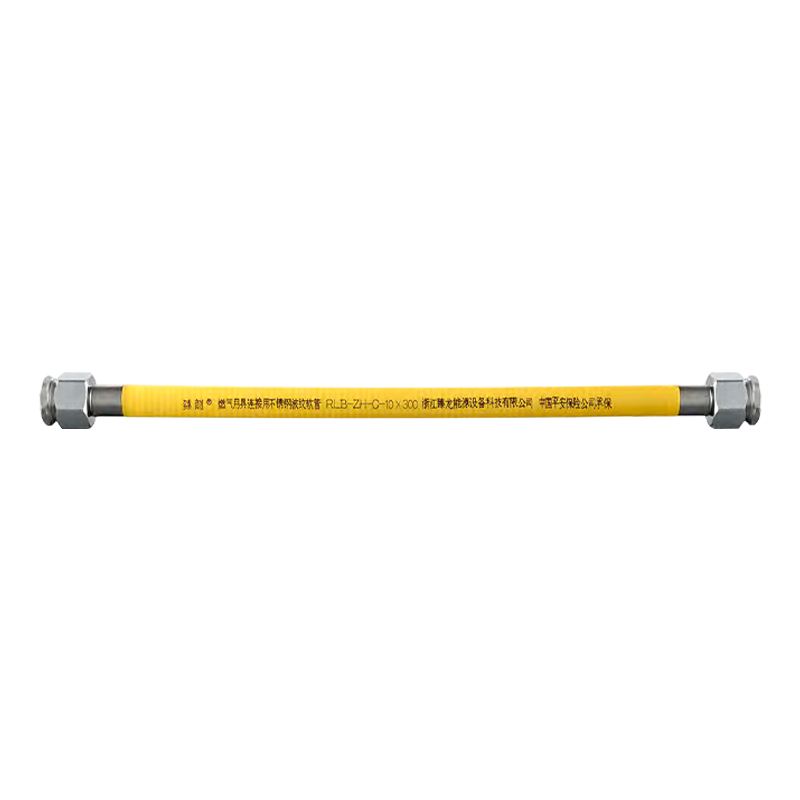
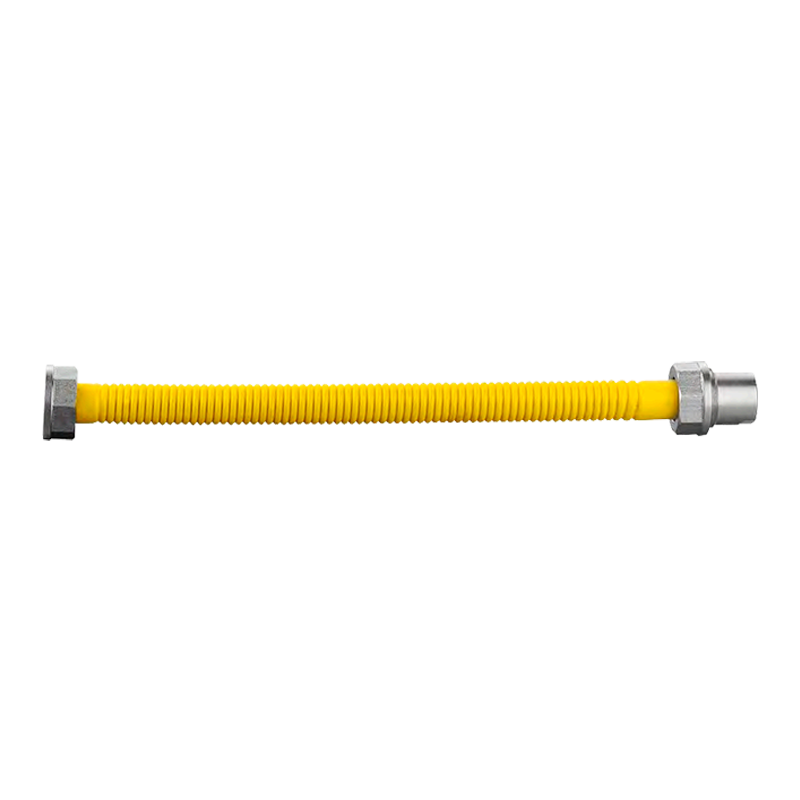
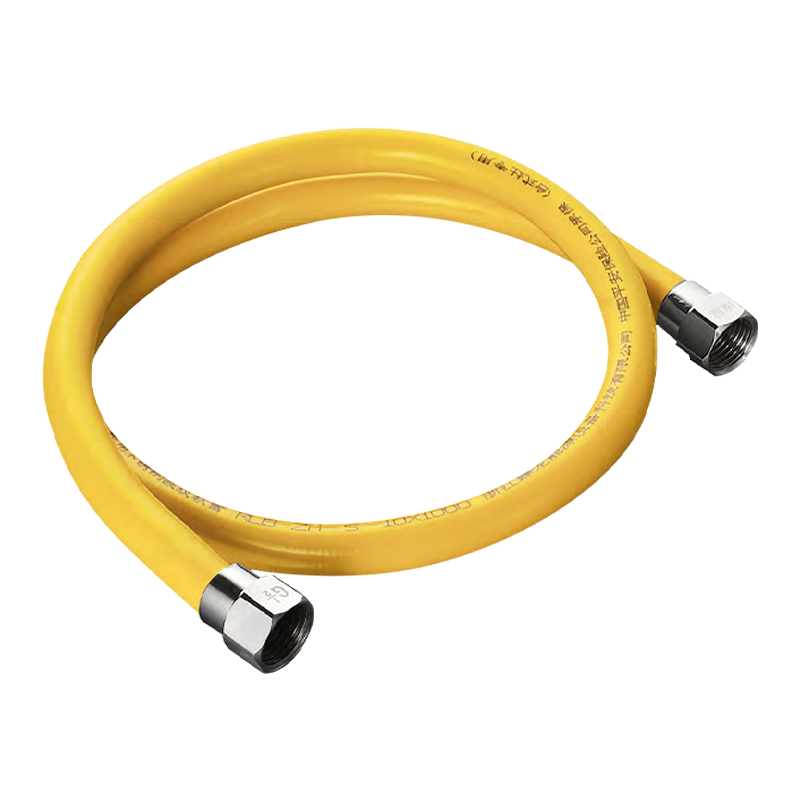 Stainless Steel Corrugated Gas Hoses for Appliance ConnectionsFlexible 304/304L corrugated gas hose with flame-retardant PVC cover, suited to fixed gas appliance, meter, and piping connections.View Product →
Why CSST Replaced Threaded Iron on Most Residential Branches
The arithmetic is simple: fewer operations per foot. Threading 1/2 in. black iron means measuring, cutting, reaming, threading, doping and tightening, repeated at every joint along the run. A CSST branch is uncoiled, routed, cut once and terminated at both ends. The chart below shows the pattern most installers report; treat the numbers as indicative, since routing and access change everything.
Two secondary effects matter more than the time saving. First, a continuous coil means no hidden joints inside a finished wall, and every joint in a gas system is a potential leak point. Second, fewer penetrations mean less fire-blocking and sealing work in wood-frame construction, where each pipe passing through a top plate has to be protected and sealed.
Sizing: Where Most Projects Get It Wrong
Capacity falls off faster than people expect
The most common field error is a run sized by habit rather than by table. CSST capacity depends on nominal size, inlet pressure, allowable pressure drop, gas specific gravity and total developed length, including an allowance for every fitting. The curve below uses an ordinary residential condition: 7 in. w.c. inlet, 0,5 in. w.c. pressure drop, natural gas at 0.60 specific gravity. A 1/2 in. tube that carries roughly 78,000 BTU/hr at 20 ft carries about 34,000 BTU/hr at 100 ft. Doubling the length does not halve the capacity, and that is the trap: a branch that comfortably feeds a 60,000 BTU appliance at 30 ft can starve a larger load at 80 ft.
Pick the diameter from a published table
Nominal size is only a starting point, because corrugation design changes flow behaviour between products. Use the capacity table published for the exact tubing, inlet pressure and fitting allowance you are installing.
| Nominal size | Outside diameter | Effective inside diameter | Typical residential use |
|---|---|---|---|
| 1/2 in. | 0.625 in. | About 0.46 in. | Range, dryer, single water heater |
| 3/4 in. | 0.875 in. | About 0.68 in. | Furnace, tankless water heater, short manifolds |
| 1 in. | 1.125 in. | About 0.94 in. | Long manifolds, light commercial equipment |
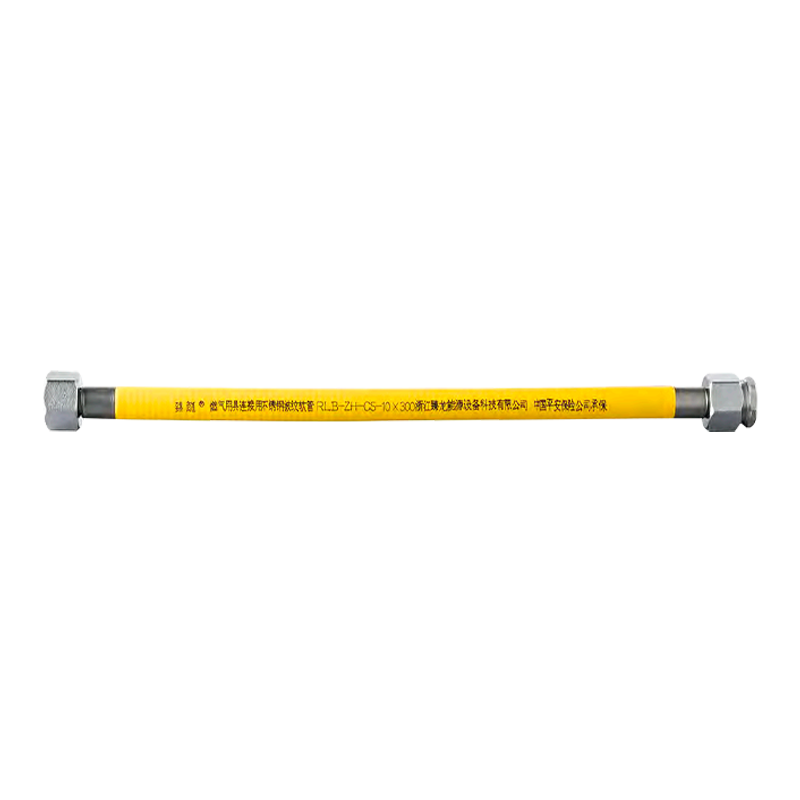 ZLR-09 304 High-Toughness Stainless Steel Corrugated Gas HoseReview ZLR-09 for flexible 304 stainless gas connections; DN10, OD16 mm, 300–2000 mm lengths, with gaskets, nuts, flanges, and PVC cover.View Product →
Bonding and Installation Rules That Decide Whether the Job Passes
The thin wall that makes CSST flexible is also why bonding is mandatory rather than optional. It is a lightning and fault-current issue, not a gas issue. Under NEC 250.104(B) and NFPA 54, gas piping that is likely to become energized must be bonded, and the manufacturers of listed CSST systems require a direct bond from the tubing to the electrical grounding system, using a listed clamp and a copper conductor, commonly 6 AWG, run as straight and as short as practical. Indirect bonding through a grounded appliance is accepted in some jurisdictions and refused in others, so the listing and the local inspector decide.
- Keep the tube out of slabs, soil and screw paths, or protect it with a listed striker plate or conduit where it passes through framing.
- Support the run as the listing requires, typically every 8 ft on horizontal runs and at every change of direction.
- Never use the gas line as a grounding electrode, and never rely on an appliance cord for bonding.
- Pressure test at the pressure and duration stated in the listing, with the test gauge isolated after the test.
- Do not mix fitting systems. A fitting that is not listed with that tube voids the listing, even when the thread matches.
If you want the field sequence in order, our step-by-step CSST installation and bonding guide walks through routing, clamping and the pressure test.
304 or 316L, and Why the Fitting Matters Just as Much
For inland residential work, 304 is the grade most specifications call for, and it performs well in dry indoor gas service. 316L carries a molybdenum addition that resists chlorides, so it is the grade for coastal sites, fertilizer plants, and any location where salt spray, cleaning chemicals or ammonia can sit on the jacket. The trade-off is material cost, not performance in ordinary indoor air.
A listed CSST system is a package: a specific tube, a specific fitting design and a specific installation procedure. Swap the fitting brand and the listing is void. The consequences show up at the pressure test or, worse, three winters later when a joint that was never torqued to specification starts weeping. The material comparison behind this chart is covered in more detail in our article on corrugated stainless steel versus traditional copper pipe.
What to Check Before You Place a Volume Order
For buyers, the useful questions are about traceability rather than marketing. Ask for the heat number and material certificate for each coil, confirmation that incoming strip is verified on a direct-reading spectrometer, and the leak and flow test record for the fittings that ship with the tubing. Then confirm the manufacturing licence, the quality management system certificate and the third-party test reports, because those are the documents a utility or an inspector will ask to see.
- Material certificates matched to coil heat numbers, not to a generic grade statement.
- In-house spectrometer verification of incoming stainless strip.
- Pressure and flow tightness testing of every fitting batch, with records retained.
- A current special equipment manufacturing licence and a recognised quality management certification.
Zhejiang Zhenlong Energy Equipment Technology Co.,LTD. is a company engaged in the research and development, manufacturing, and processing of energy equipment. We are an enterprise that manufactures, processes, and combines industry and trade in metal hoses, natural gas pipelines, plumbing fittings, sanitary ware, valves, plastic products, and hardware. Our company is located in Yuyao, Ningbo, Zhejiang, covering an area of 40 acres with a factory building of 30000 square meters. We have 30 welding and forming production lines, 2 uninterrupted solid melting hydrogen furnace production lines, and testing equipment such as a metal material analysis direct reading spectrometer and a flow tightness tester. We strictly implement the ISO9000:2008 quality management system and hold the People's Republic of China Special Equipment Manufacturing License (Pressure Pipeline) and the EU CE certification national testing center report. We are a member of the China Urban Gas Association. The company has a strong research, design and production team to provide customers with safe pipe fittings and comprehensive pre-sales and after-sales services. Zhejiang Zhenlong Energy Equipment Technology Co., Ltd. originates from sincere cooperation with friends at home and abroad, working together to create brilliance.
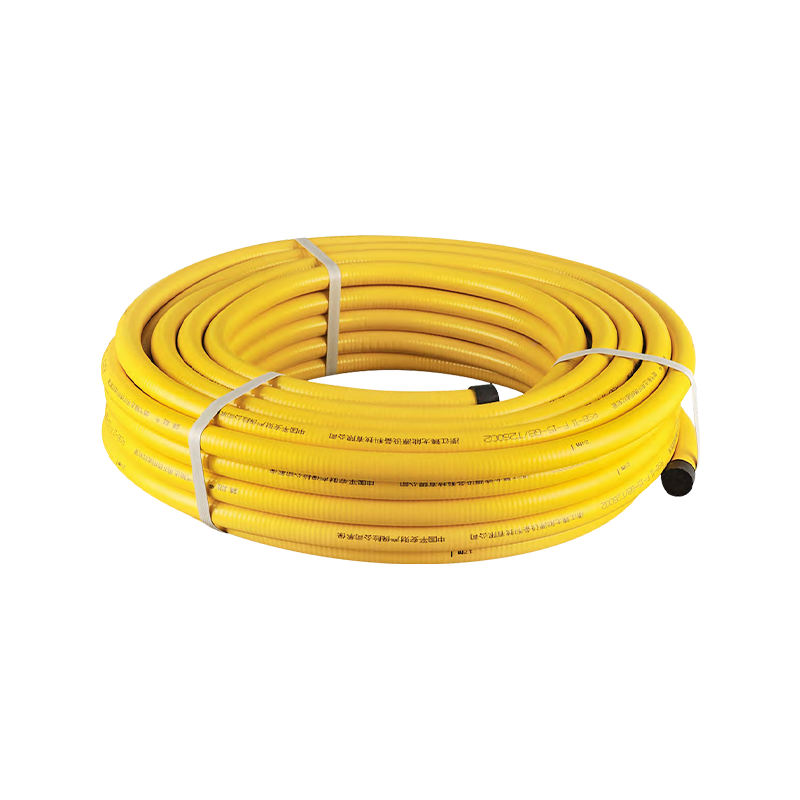 ZLR-02 304 Stainless Steel Corrugated Gas PipeReview ZLR-02 for flexible gas transmission; PVC-coated 304 bellows, DN10–50, 30 m length, with corrosion and UV protection.View Product →
Frequently Asked Questions
Q1. Can corrugated stainless steel tubing be buried underground?
Not in the standard jacketed form. Ordinary CSST is prohibited in soil, in slab and in concrete. Only tubing with a manufacturer's listing for direct burial, normally inside a sealed conduit, can go below grade, and local code still has to permit it.
Q2. How long does CSST last?
Trade guidance and most listings point to a 30 to 40 year expectation in normal indoor gas service. The jacket and the fittings typically reach the end of their life before the stainless tube does.
Q3. Does CSST have to be bonded?
Yes. The tubing must be bonded to the electrical grounding system with a listed clamp and a copper conductor, commonly 6 AWG. Bonding protects against lightning and fault current, not against gas leaks.
Q4. Can CSST be used for propane or for water?
It is commonly listed for both natural gas and LP gas, but the capacity tables differ because of specific gravity. For water you need tubing specifically listed for potable water, which is a separate product line.
Q5. What size do I need for a 100,000 BTU appliance?
At 7 in. w.c. inlet and a 0.5 in. w.c. drop, 1/2 in. usually covers short runs under roughly 30 ft, while 3/4 in. covers most runs up to about 90 ft. Always size from the published table for your exact product.
Q6. Can I reuse tubing after removing a fitting?
No. The seal is created by the fitting during installation. Cut back past the deformed section and re-terminate with a new fitting, or replace that length of tubing.