 English
 中文简体
 Español
 عربى


Last month a fitter sent us a photo of a two-year-old rubber connector. The hose body was untouched; the split had opened just behind the crimped ferrule. That is where flexible gas lines usually give up, at the ends. A stainless steel flexible gas line changes the picture because its weak points are visible: a braid you can inspect, a ferrule you can check, a nut you can torque to a stated value.
The short answer for buyers: use a listed braided stainless connector, 6 ft or shorter, for the final leg to the appliance; use listed corrugated stainless steel tubing (CSST) for any run that disappears into a wall, floor or ceiling; and get the working pressure, the coating specification and the bonding requirement in writing before the first box ships. The rest of this page explains why those three lines decide whether an installation passes inspection the first time.
Content
- 1 Appliance Connector or CSST: Two Products Wearing One Name
- 2 What Sits Inside the Line
- 3 Pressure, Bore and Length: The Three Numbers That Matter
- 4 Coatings and Corrosion: Where Cheap Lines Fail First
- 5 Four Checks Before the Wall Closes
- 6 What to Put in a Supplier Questionnaire
- 7 Who Makes the Lines We Ship
- 8 Frequently Asked Questions
Appliance Connector or CSST: Two Products Wearing One Name
Search results mix them freely, yet an appliance connector and a CSST run are governed by different listing standards and cannot substitute for one another.
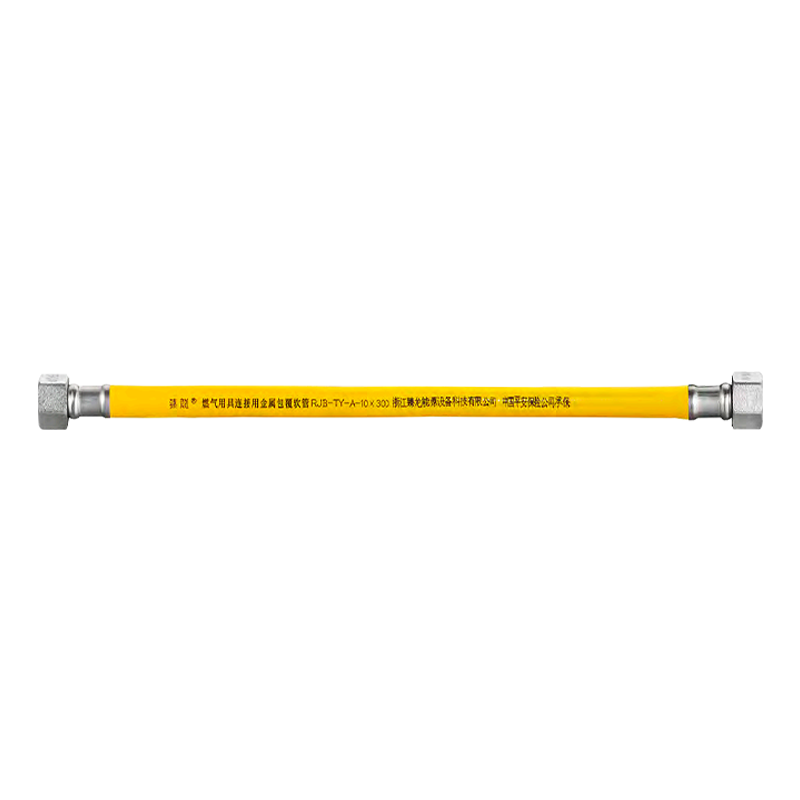
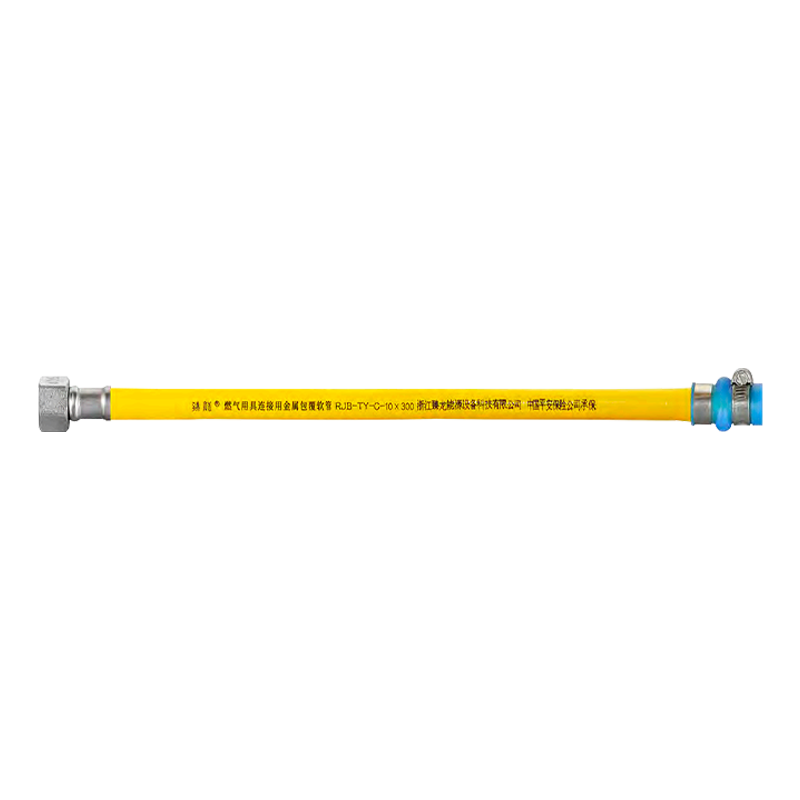
An appliance connector is a factory-made assembly with crimped ferrules, listed to ANSI Z21.24 / CSA 6.10 and limited to 6 ft (1.83 m). It bridges the appliance shut-off valve and the appliance inlet, lives at the appliance stage of the system (around 0.5 psi, or 14 in. w.c.) and stays exposed and visible.
CSST is listed to ANSI LC 1 / CSA 6.26, arrives in coils, is cut to length on site and joined with mechanical fittings. It can feed a whole house, but it must be directly bonded, and routing, support and strike protection have to follow the manufacturer's instructions.
| Item | Appliance connector | CSST |
|---|---|---|
| Listing standard | ANSI Z21.24 / CSA 6.10 | ANSI LC 1 / CSA 6.26 |
| Form and length | Fixed length, 6 ft (1.83 m) maximum | Coil, cut to length on site |
| Working pressure | Appliance stage, about 0.5 psi | Commonly listed to 5 psi; higher-pressure versions available |
| End connections | Crimped ferrule plus nut, made in the factory | Mechanical fittings assembled on site |
| Routing | Exposed only, valve to appliance | May run in walls and ceilings where listing and local code allow |
| Bonding | Not required | Direct bond required, NFPA 54 and NEC 250.104(B) |
The working rule is simple: connector at the appliance, tubing in the structure.
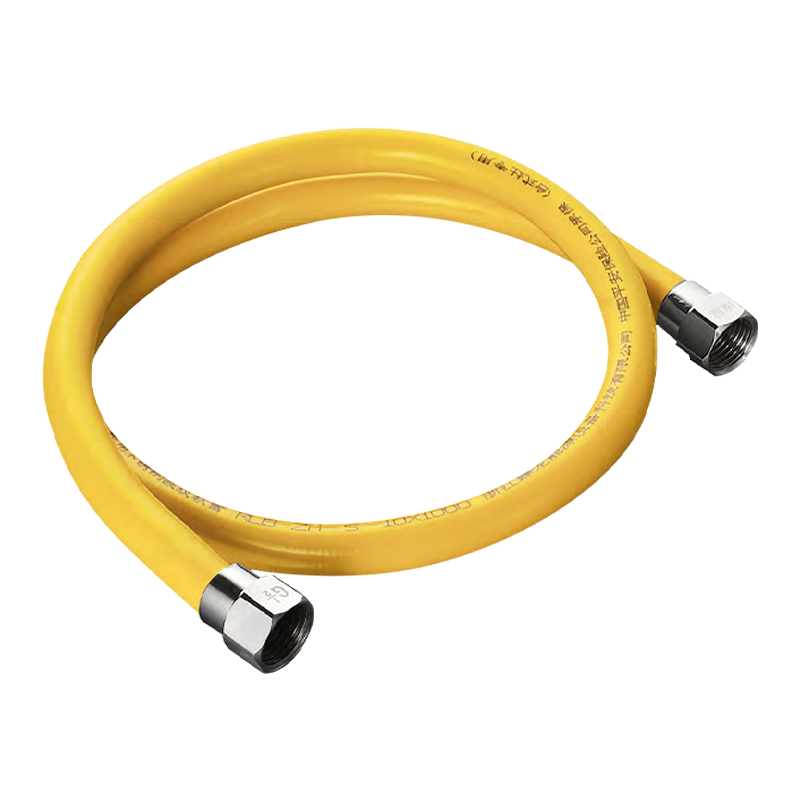
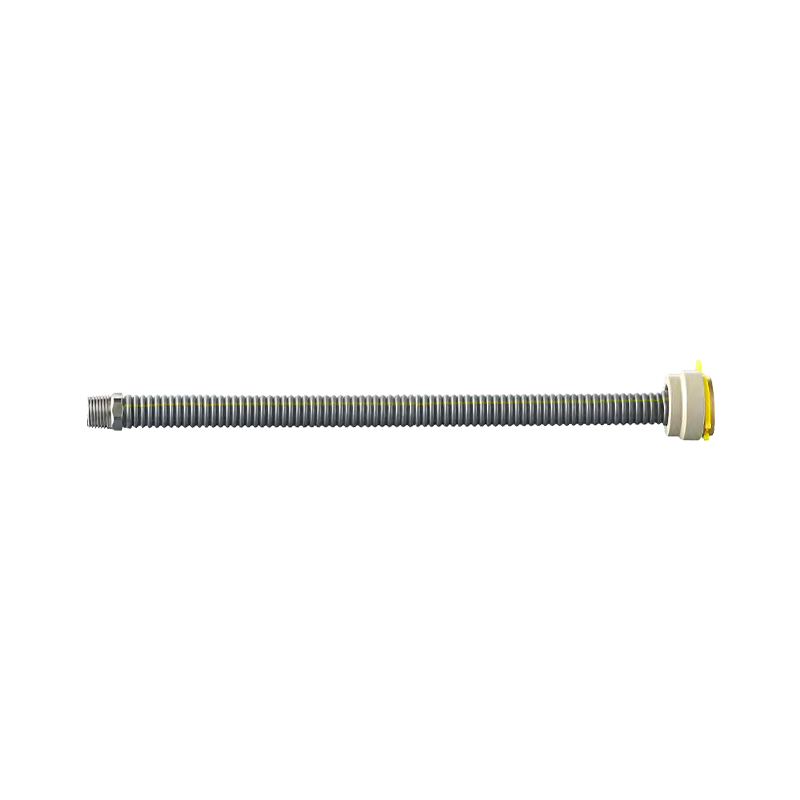
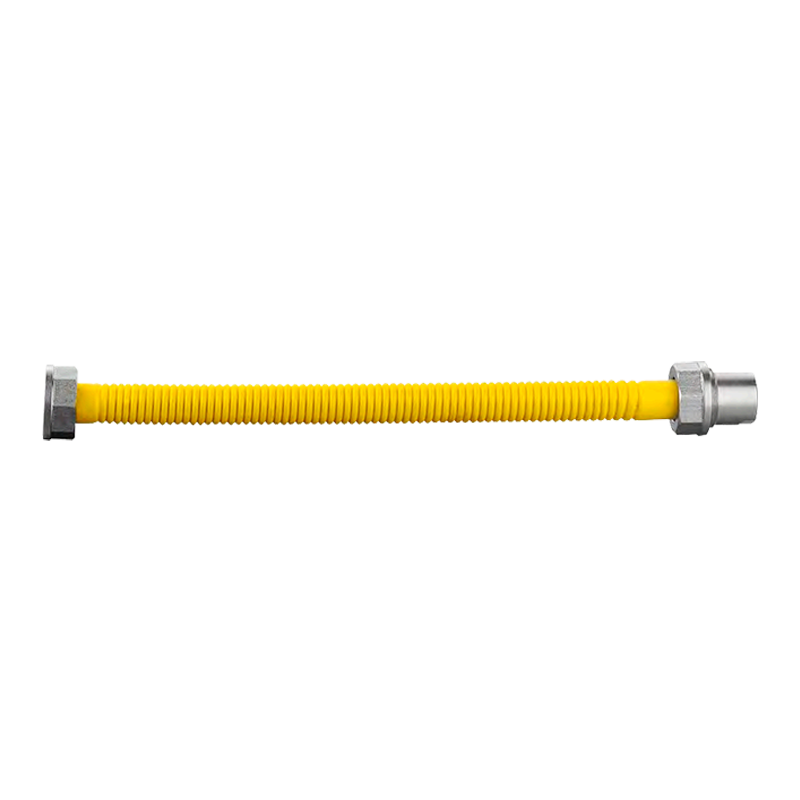
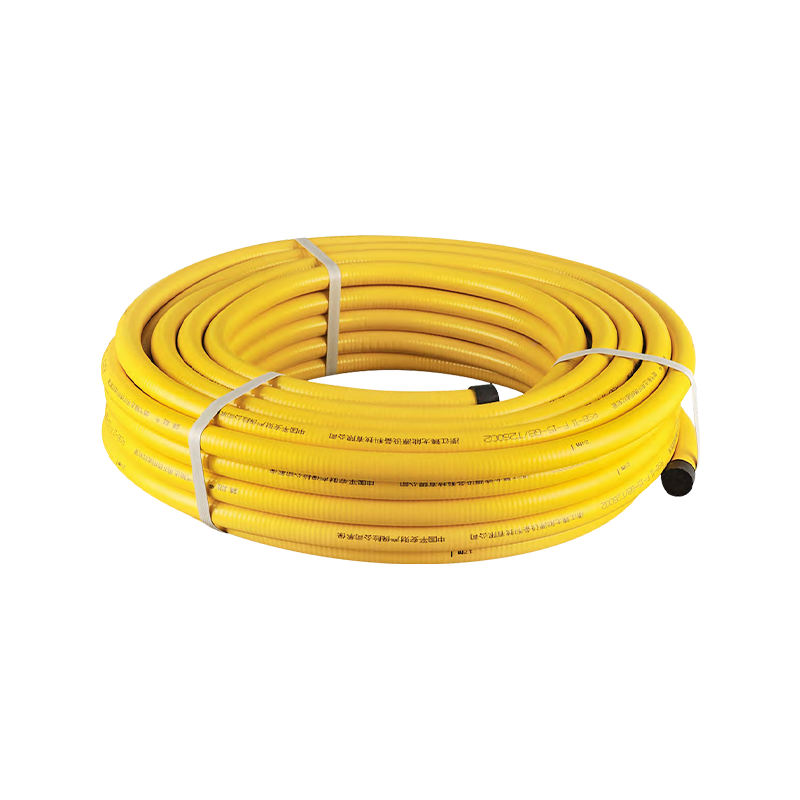 ZLR-02 304 Stainless Steel Corrugated Gas PipeFlexible 304 stainless steel gas pipe with yellow PVC coating, suited to structure-side gas runs where durability, pressure and vibration resistance matter.View Product →
What Sits Inside the Line
Five layers decide service life, and only one of them is the stainless steel everyone talks about.
- The core is a thin-wall corrugated tube, usually 304, with wall thickness in the 0.2 to 0.3 mm range. Corrugation depth and pitch set how tight the line can bend without flattening.
- The braid carries hoop load and takes abrasion, and it is specified by wire diameter and strands per carrier rather than by appearance.
- The jacket, PVC or PE, keeps grit and cleaning chemicals off the braid. The ferrule and nut decide the leak path: an under-crimped ferrule weeps, an over-crimped one cuts the core.
This is why a purchase order should name the core grade, the wall thickness, the braid construction and the crimp pull-out force, not only the length and thread size. Assemblies that are pressure-tested one by one, rather than by sampling, remove most of the argument later.
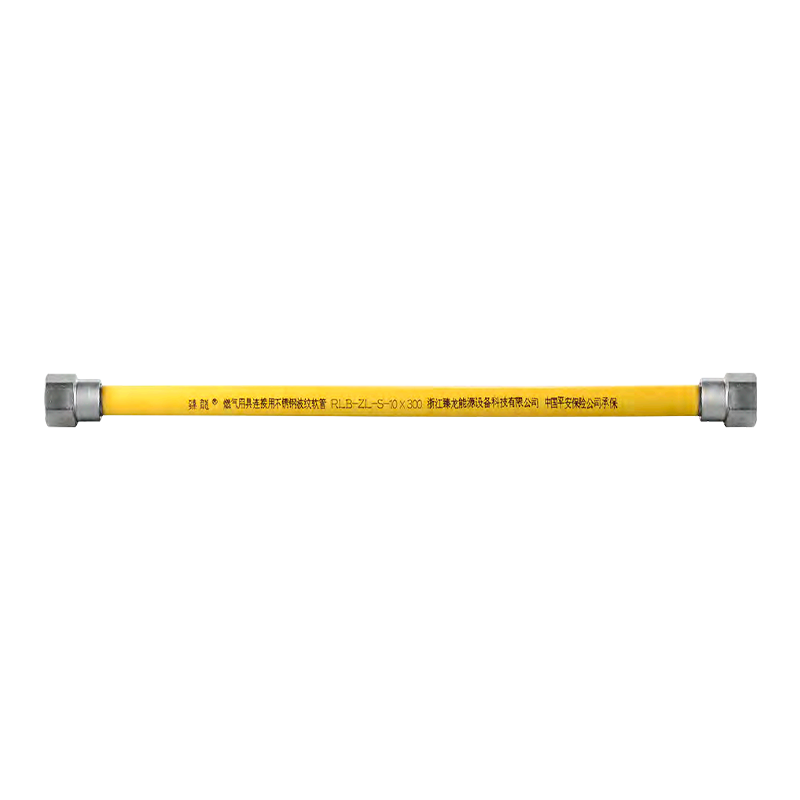
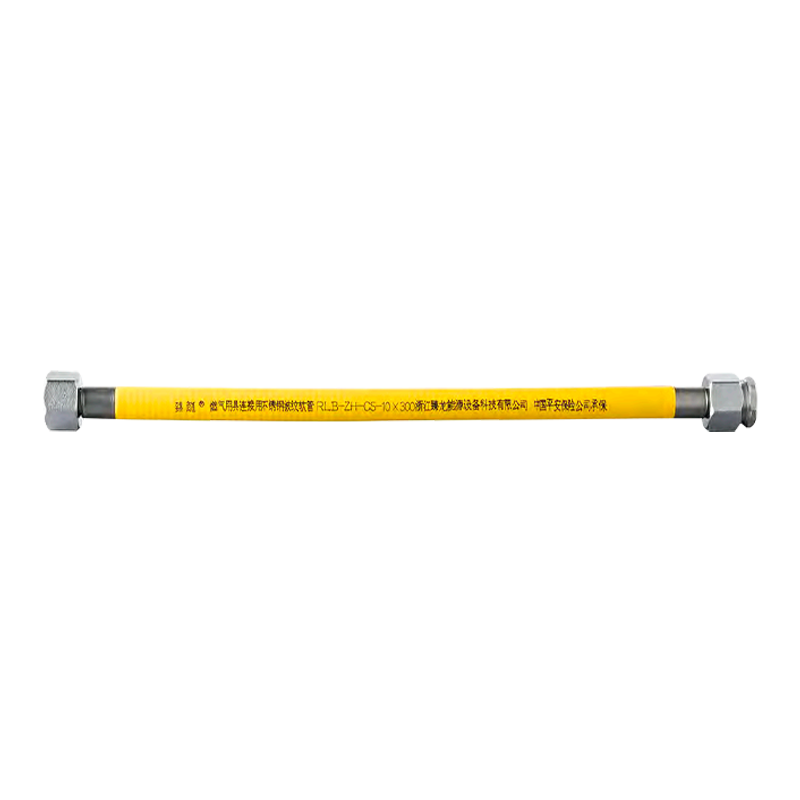
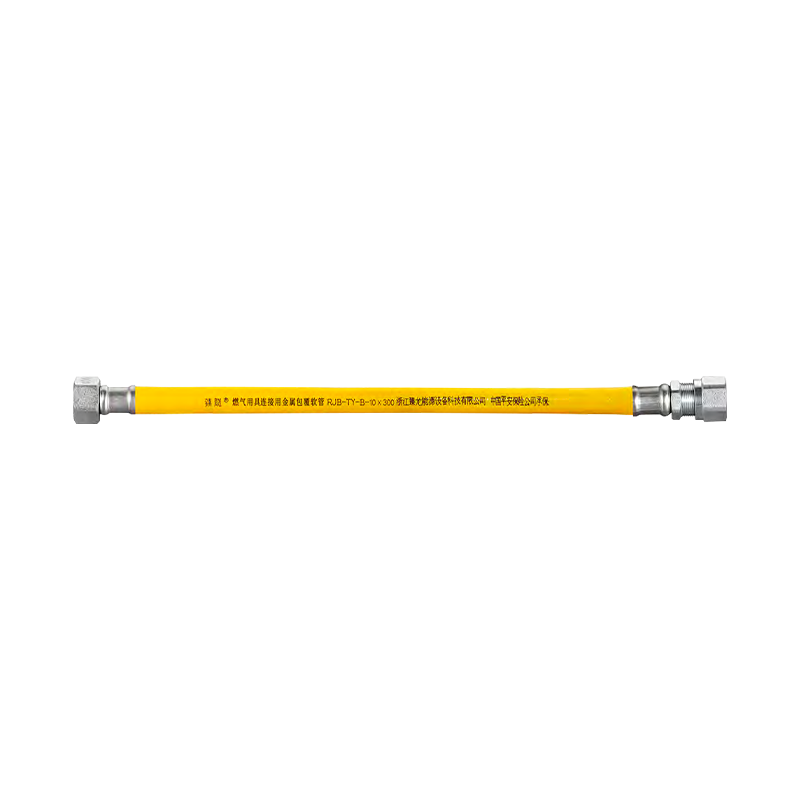
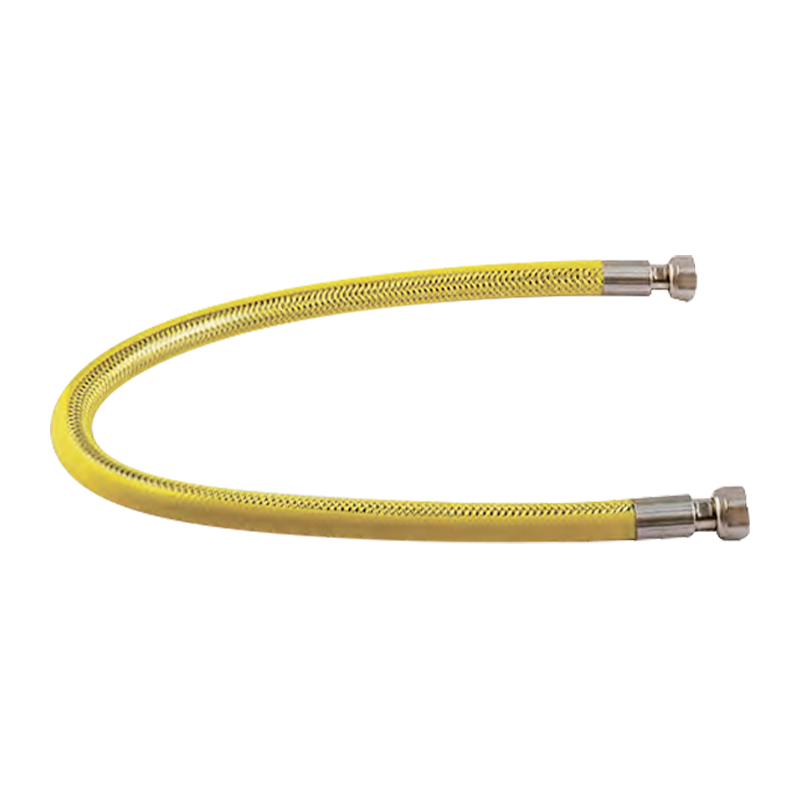
 ZLR-16 Braided Stainless Steel Gas Appliance ConnectorBraided stainless steel connector with PE coating and sealing washers, offering flexible, pressure-resistant gas appliance connection in short DN15 lengths.View Product →
Pressure, Bore and Length: The Three Numbers That Matter
Flexible lines are usually sold on diameter and length, while the two figures that decide performance are working pressure and pressure drop over the actual route.
The bar chart shows why the two families are not interchangeable: an appliance connector sits at the appliance stage, while CSST takes the upstream run. The other number people under-buy is bore. A 24 kW combi boiler draws roughly 2.5 m³/h of natural gas; over an 8 m route with several bends, a 1/2 in. line may drop more pressure than the appliance tolerance allows, and 3/4 in. becomes the cheaper decision because nobody has to reopen the ceiling.
Worked check before ordering: add the appliance input figures, convert to m³/h, add equivalent length for every bend (a 90 degree elbow counts far more than a metre of straight run), then match against the supplier's flow table for that bore. If the result lands within about 10 percent of the table limit, go one size up.
Coatings and Corrosion: Where Cheap Lines Fail First
Stainless steel is not the vulnerable part of an installed line. The jacket is. UV from a south-facing wall, cooking grease, chlorinated cleaning sprays and abrasion at a wall penetration all attack the coating, and once it splits the braid becomes a dirt trap that holds moisture against the wires.
Match the coating to the room, not to the catalogue. Plain braid is for dry indoor work. Yellow PVC marks the line and resists abrasion on long runs. Flame-retardant PVC is the usual choice where a riser passes a habitable space. Metal-wrapped composite earns its price in commercial kitchens, where grease and caustic degreasers strip a plastic jacket within a couple of years. On the material side, 304 handles ordinary indoor gas service, while 316L is worth the premium only where chlorides are genuinely present, for example coastal make-up air or industrial cleaning regimes.
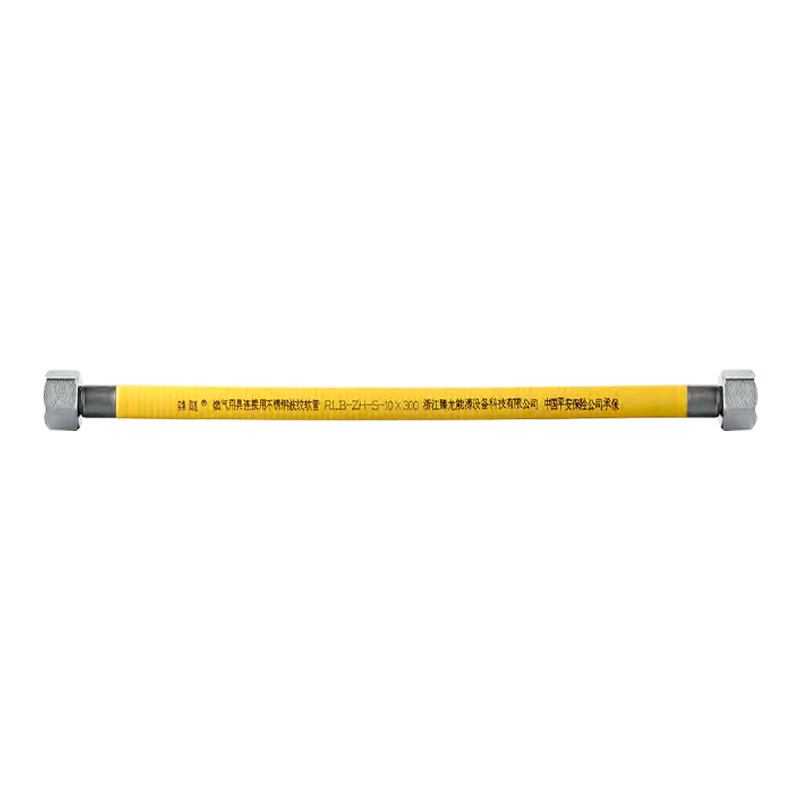
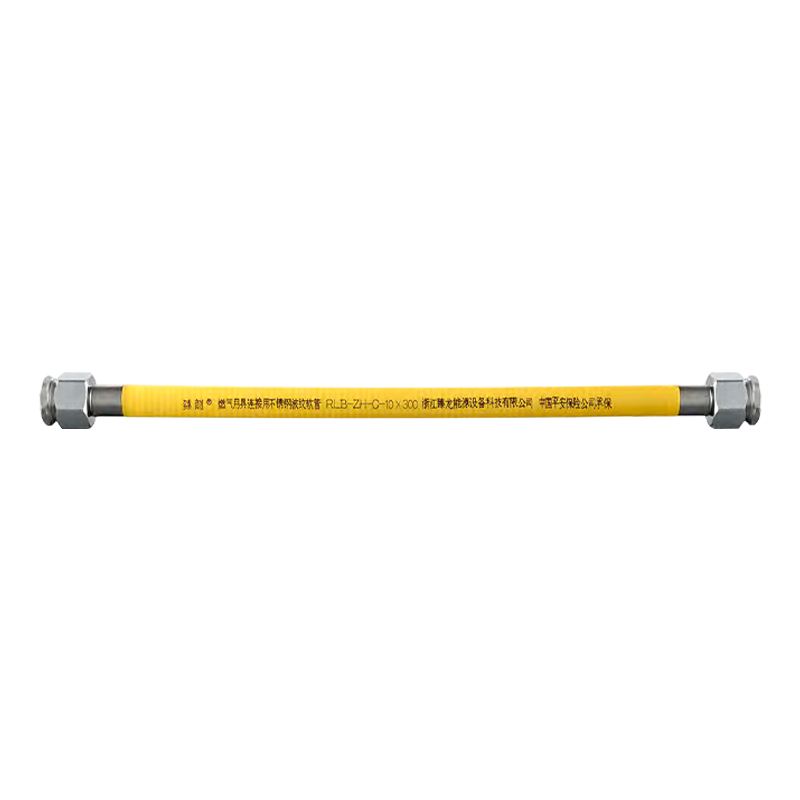
 ZLR-14 Metal-Wrapped Stainless Steel Corrugated Gas HoseMetal-wrapped corrugated hose with braided mesh and flange connectors, suited to gas appliance connections needing flexibility, strength and reliable sealing.View Product →
Four Checks Before the Wall Closes
- Torque to the figure on the instructions, using a calibrated wrench. Feel is not a specification, and a nut tightened by hand alone is the most common source of a callback.
- Leak-test with a soap solution at working pressure and watch the ferrule for a full minute. A flame is not a test method, and a bubble that appears slowly is still a leak.
- Respect bend radius and support spacing from the instructions, typically around one metre between clips. A kink at the bend does not recover, even if it looks round again.
- Measure bonding continuity end to end on CSST, and record the reading. It takes a minute and settles the inspection question before it is asked.
What to Put in a Supplier Questionnaire
- Which listing standard applies, and can you send the certificate and the test report for the batch?
- What is the working pressure, and was the burst value measured to a stated method or quoted from a catalogue?
- Core grade and wall thickness, braid construction, jacket compound and flame or UV rating.
- Fitting material, crimp type and the torque value that ships with the goods.
- Batch traceability, packaging language and labelling for the destination market.
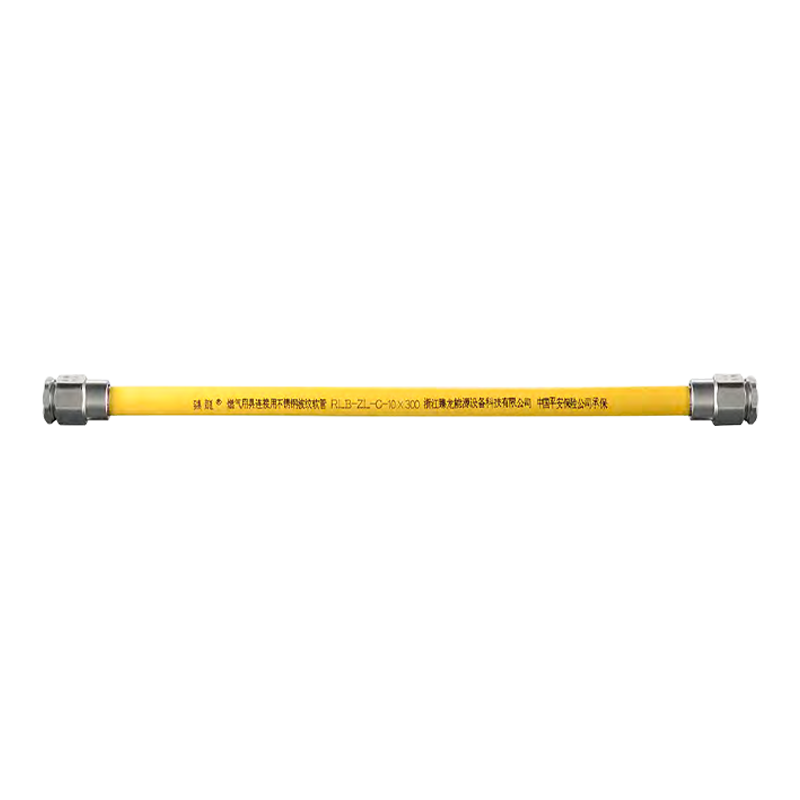
End fittings usually decide how a line behaves in service, so pair the hose order with the matching range of stainless steel corrugated hose fittings for gas transmission, including wall boxes, valves and adaptors from the same production batch.
Who Makes the Lines We Ship
Zhejiang Zhenlong Energy Equipment Technology Co.,LTD. is a company engaged in the research and development, manufacturing, and processing of energy equipment; we are an enterprise that manufactures, processes, and combines industry and trade in metal hoses, natural gas pipelines, plumbing fittings, sanitary ware, valves, plastic products, and hardware. Our company is located in Yuyao, Ningbo, Zhejiang, covering an area of 40 acres with a factory building of 30000 square meters.
We have 30 welding and forming production lines, 2 uninterrupted solid melting hydrogen furnace production lines, and testing equipment such as metal material analysis direct reading spectrometer, flow tightness tester, etc. We strictly implement the ISO9000:2008 quality management system and hold the People's Republic of China Special Equipment Manufacturing License (Pressure Pipeline) and the EU CE certification national testing center report. We are a member of the China Urban Gas Association.
The company has a strong R&D, design, and production team to provide customers with safe pipe fittings and comprehensive pre-sales and after-sales services. Zhejiang Zhenlong Energy Equipment Technology Co., Ltd. originates from sincere cooperation with friends at home and abroad, working together to create brilliance.
Frequently Asked Questions
In returned samples the core and braid are rarely the limit; hoses a decade old still pass a leak test. Failures are mechanical damage, a cut jacket, or a joint disturbed during appliance replacement. Replace any unit with a broken braid wire, a deep jacket cut or a disturbed ferrule.
Appliance connectors never. CSST only where the listing, local code and instructions allow it, normally inside a protective sleeve with strike protection. Direct burial in soil needs a product specifically listed for that use.
Match the system stage rather than the biggest number on the datasheet: about 0.5 psi at the appliance inlet, 5 psi for standard CSST, and a higher figure only with a product listed for it.
Yes. A direct bond sized to NFPA 54 and NEC 250.104(B) plus the manufacturer's instruction. Without it the installation fails inspection, whatever the paperwork says.
No. A crimped ferrule is a single-use joint. Fit a new assembly and leak-test again; reusing a disturbed crimp is the fastest way to a hidden leak.
Braided where abrasion and pressure containment matter most. Metal-wrapped composite where grease, cleaning chemicals and sunlight attack the jacket, typically commercial kitchens and exterior risers.