 English
 中文简体
 Español
 عربى

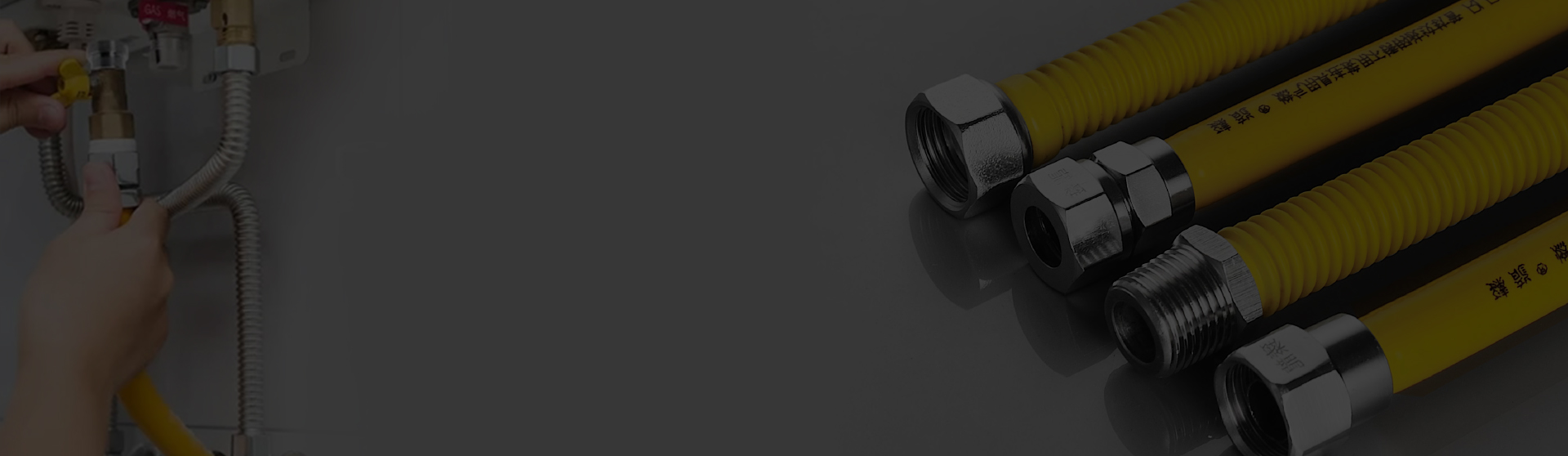

A 199,000 BTU tankless water heater fed through a 3/8 in. corrugated stainless steel tubing (CSST) run will never deliver its rated output — and in most of the cases we see, the tubing is not the part that failed. The line was sized from natural gas habit instead of a propane load, the regulator was never checked against the run, or the bond was left off the drawing.
That pattern repeats on real jobs: certified tube, tight fittings, and a line that still underperforms. Get load, delivered pressure and bonding right, and a CSST propane line becomes one of the cleanest ways to move LP gas through a building — fewer joints than black iron, a bend radius measured in inches instead of elbows, and one continuous run from regulator to appliance.
Content
- 1 Sizing Comes First: Load, Developed Length, Then Tube
- 2 Why a Propane Table Cannot Be Copied From Natural Gas
- 3 Installation Details That Decide Leak Risk
- 4 What to Verify on a Tube and Fitting Data Sheet
- 5 A Short Buyer's Checklist
- 6 Where the Tube Comes From
- 7 Frequently Asked Questions About CSST Propane Lines
- 7.1 Q1. Can CSST be used for propane, or only natural gas?
- 7.2 Q2. What size CSST does a 100,000 BTU propane furnace need?
- 7.3 Q3. Does a CSST propane line have to be bonded?
- 7.4 Q4. Can a CSST propane line be buried underground?
- 7.5 Q5. How often should a propane appliance connector be replaced?
- 7.6 Q6. What pressure should the propane regulator deliver?
Sizing Comes First: Load, Developed Length, Then Tube
The number that governs everything downstream is the connected load, taken from appliance nameplates rather than rules of thumb. Typical propane inputs sit around 60,000–75,000 BTU/hr for a range, 20,000–35,000 for a dryer, 30,000–50,000 for a storage water heater and 60,000–120,000 for a furnace; a high-capacity tankless unit can pass 180,000. Add them up, apply a diversity factor only where the adopted code allows it, and treat that total as the design load.
- Record the actual delivered pressure at the outlet of the second-stage regulator — often close to 11 in. w.c. on a low-pressure propane system.
- Measure the developed length of the route, not the straight-line distance, and add the allowance for bends and fittings stated in the manufacturer's instructions.
- Read the propane capacity table at that inlet pressure and the allowable pressure drop, commonly 0.5 in. w.c. on low-pressure runs.
- Choose the smallest nominal size that carries the load across that length, then re-check it against the regulator you actually specified.
- Treat the last six feet separately — appliance connectors are typically limited to 6 ft, so a long approach needs tube, not a stretched connector.
Elevated-pressure systems change the arithmetic. Running 2 psi from the regulator and stepping down to manifold pressure at each appliance lets a smaller tube cover a longer distance, but every drop then needs its own appliance regulator, a vent that stays clear, and a label stating the pressure. That configuration is a different column in the sizing table — not a different brand.
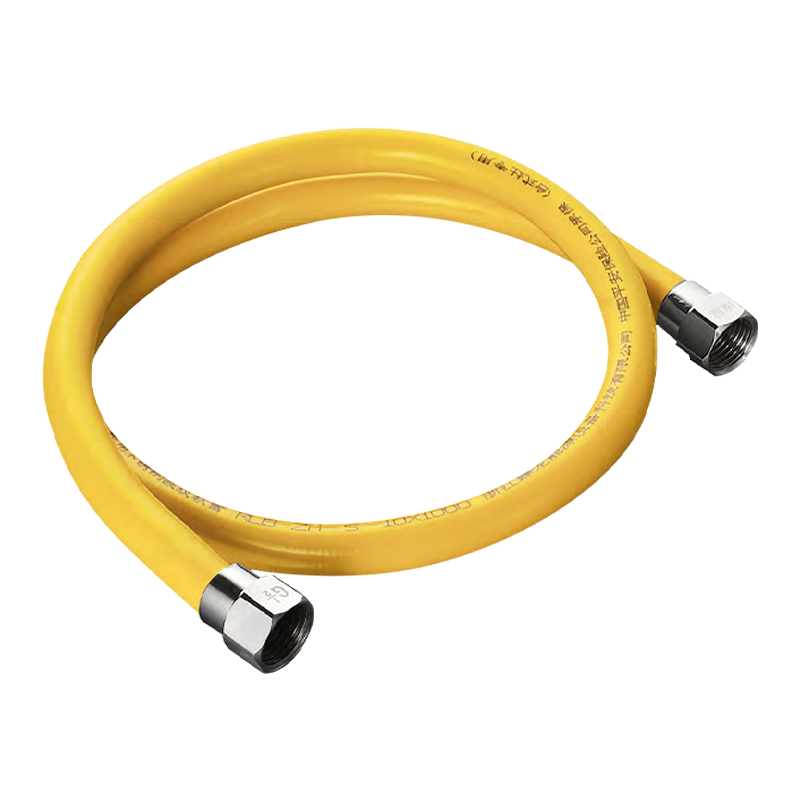
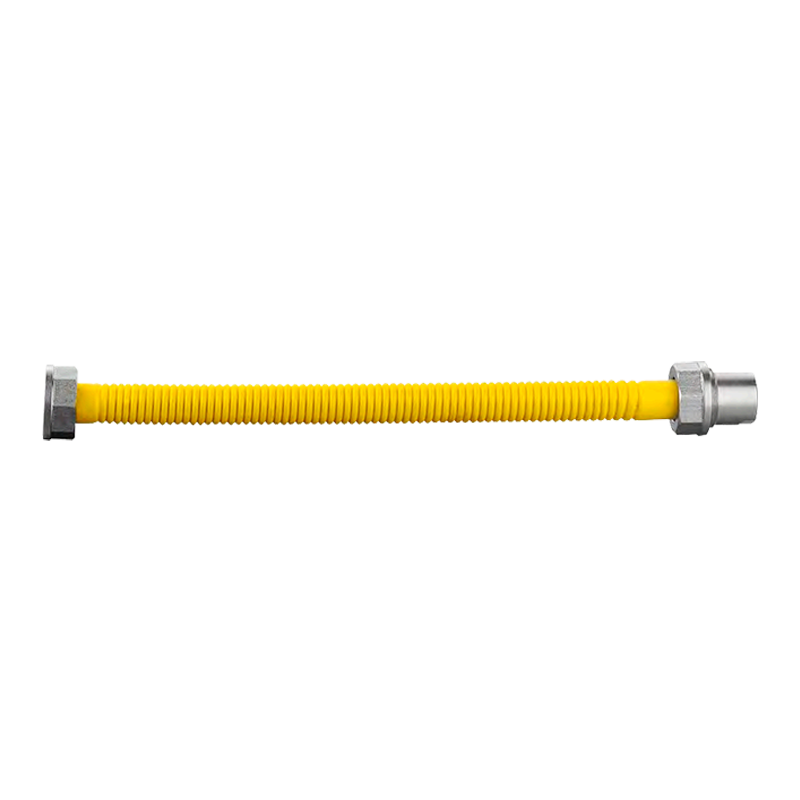
For projects that need a continuous run from meter or tank to the appliance manifold, a listed 304 stainless corrugated gas pipe is the usual starting point in the specification.
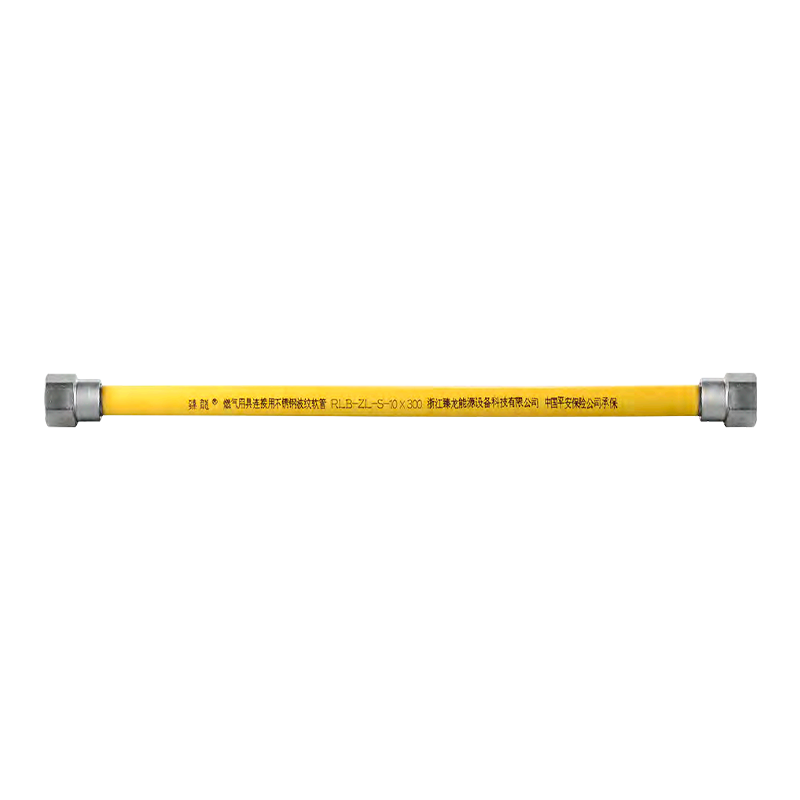
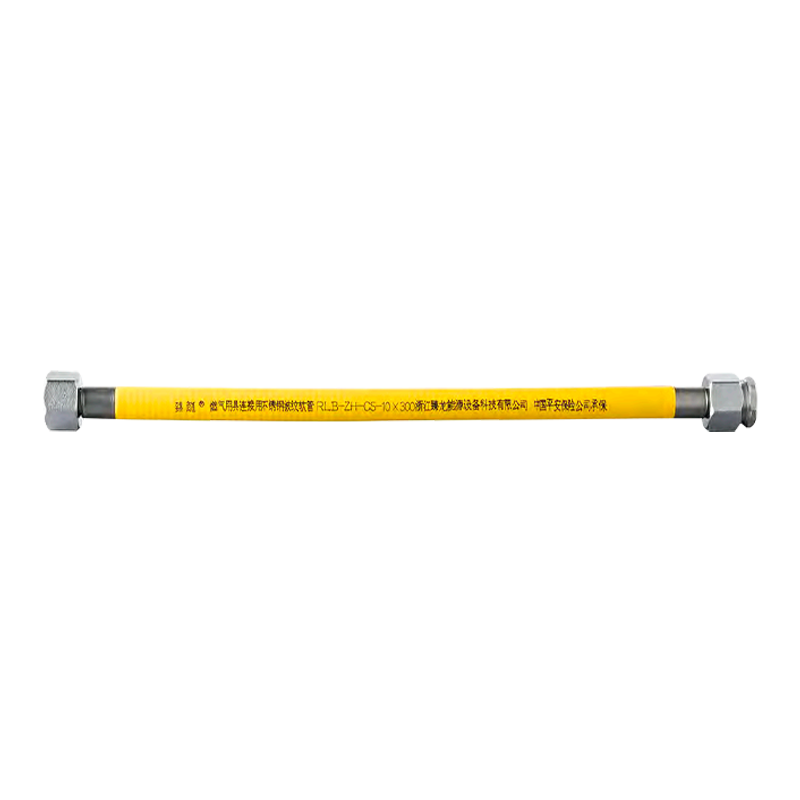
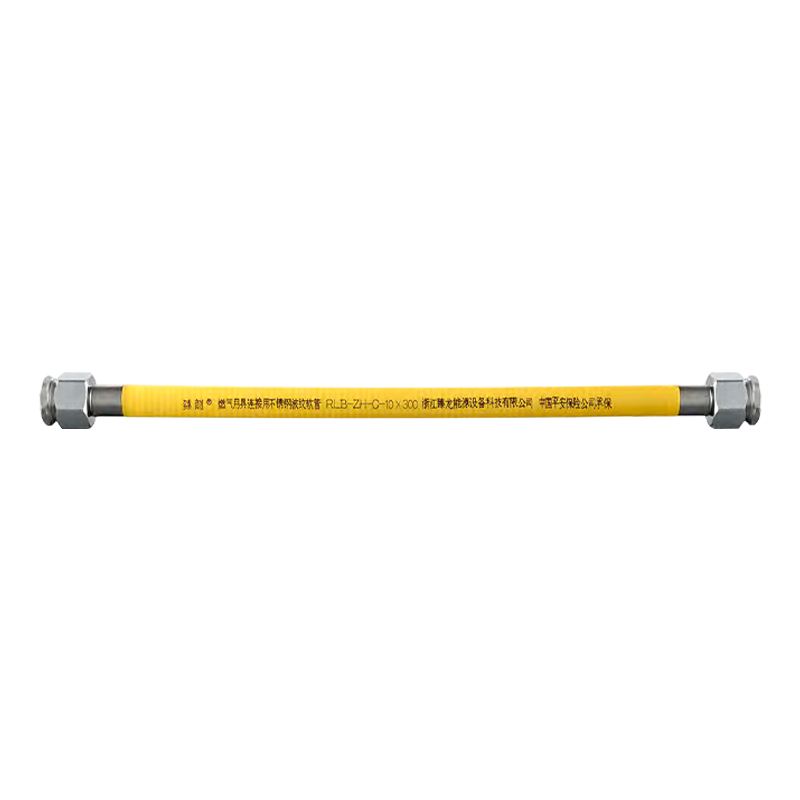
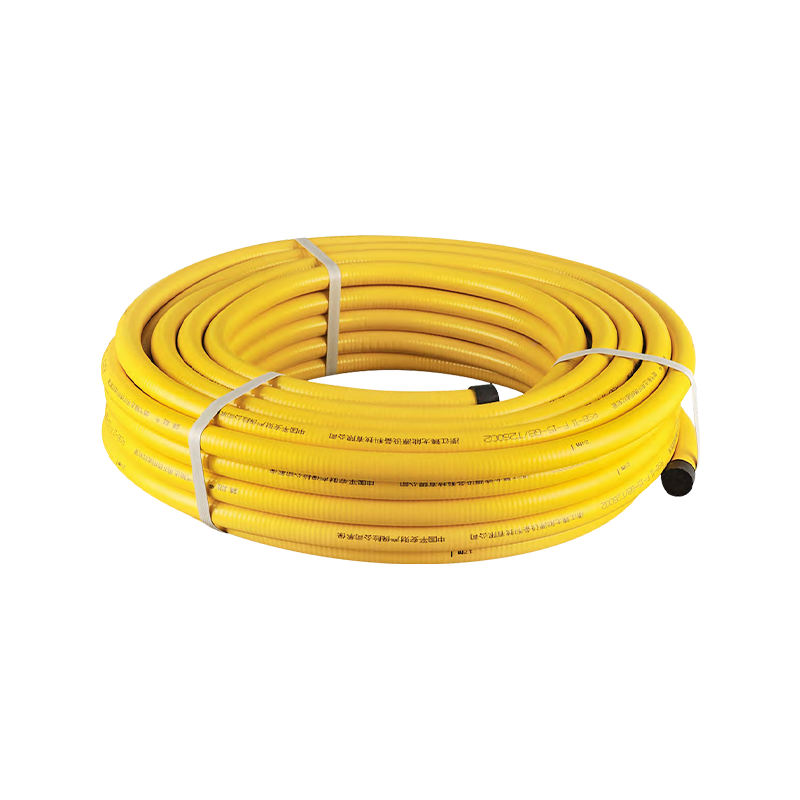 ZLR-02 304 Stainless Corrugated Gas PipeFlexible 304 stainless corrugated gas pipe with yellow PVC coating, suited to continuous meter-to-appliance runs where durable, stable gas transmission is required.View Product →
Why a Propane Table Cannot Be Copied From Natural Gas
Propane carries roughly 2,500 BTU per cubic foot against about 1,000 for natural gas (U.S. EIA heat-content figures), so the same load travels through a noticeably smaller tube. That is convenient, and it is also where undersized lines come from: someone reads a natural gas column, assumes the extra energy pays for itself, and misses that the table was built around a different delivered pressure and a different allowable drop.
The second difference is physical. Propane vapor has a specific gravity around 1.5 against air at 1.0, so a leak does not rise and disperse the way natural gas does; it settles into low points — a crawl space, a pit, a floor-level void. Routing follows from that: keep concealed low runs out of the design, keep regulator and relief vents clear, and never treat a smell test at floor level as a substitute for a gauge test.
| Parameter | Typical propane value | What it changes |
|---|---|---|
| Energy content | About 2,500 BTU/ft³ | A smaller tube carries the same load than with natural gas |
| Tank pressure | Varies with temperature and fill level | Drives the need for two-stage regulation |
| Second-stage delivery | Around 11 in. w.c. | Selects the column you read in the capacity table |
| Appliance manifold | 10–11 in. w.c. | Orifices are sized for LP, not natural gas |
| Allowable pressure drop | Commonly 0.5 in. w.c. at low pressure | Caps the run length for any given size |
| Vapor specific gravity | About 1.5 (air = 1.0) | Leaks pool at low points instead of dispersing |
| Appliance connector | 6 ft maximum, typical | Long approaches need tube, not a connector |
Regulator staging is the third trap. A two-stage arrangement takes tank pressure down to roughly 10 psi at the first-stage regulator and then to about 11 in. w.c. near the building. Skip the first stage, or size it for summer, and the second stage receives an inlet it cannot hold on a cold morning — the appliance starves while every gauge on the line reads normal.
Installation Details That Decide Leak Risk
Bonding is not optional. NFPA 54 and NEC 250.104 both require CSST to be bonded to the grounding electrode system, and manufacturers publish the jumper size — commonly 6 AWG copper from a manifold or tube fitting back to the electrode. Bonding does not stop a lightning strike, but it gives the energy a path other than the tube wall, which is precisely the failure mode the arc-perforation research of the 2000s identified.
Support spacing, bend radius and cutting method are the next three basics: keep supports at the manufacturer's maximum interval (often 3 ft on horizontal runs), respect the minimum bend radius — typically 3 to 5 in. depending on diameter — and cut with a tubing cutter rather than a saw, then deburr, so no swarf reaches the regulator seat.
Every through-wall or through-floor penetration needs a sleeve or striker plate, and concealed runs need the protection their listing calls for. Where the route has to go below grade the rules tighten considerably: whether CSST can be buried at all depends on the listing, the jacket and local code, and direct burial of a bare tube is not something to improvise on site. The installation rules are set out in more detail in this guide to CSST burial and underground installation.
At the wall, a purpose-made switch box keeps the tube protected, gives the valve a fixed point and makes the installation inspectable instead of hidden behind plaster.
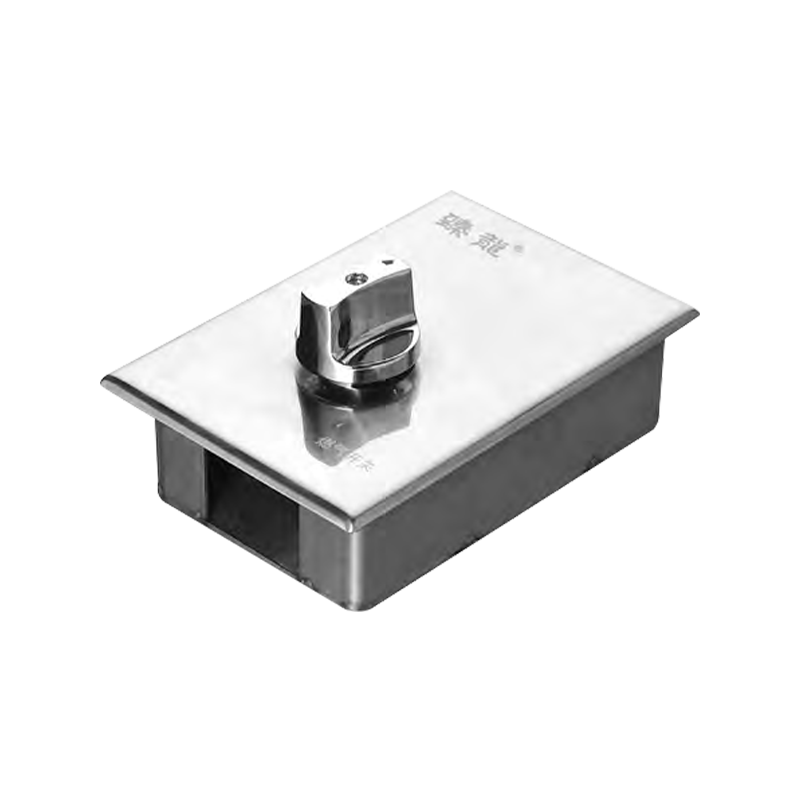 ZLP-001 Stainless Steel Buried Wall Gas Switch BoxCorrosion-resistant DN15 stainless steel enclosure that conceals and protects residential gas hose connections at the wall while keeping the valve accessible for inspection.View Product →
Finish with a documented pressure test at the pressure your jurisdiction requires, held long enough to read the gauge at both ends of the run. Because propane pools, a bubble test at every joint and a check at the lowest point of the route are worth more than a single sniff at the manifold.
What to Verify on a Tube and Fitting Data Sheet
- Listing to ANSI LC 1/CSA 6.26 (CSST) or ANSI Z21.24/CSA 6.10 for the appliance connector, with the certificate number on the sheet.
- Core material and wall thickness — 304 stainless is the common baseline for gas service.
- Jacket type: PVC for UV and mild chemical exposure, metal wrap where mechanical damage is likely, braid where abrasion and pressure spikes dominate.
- Fitting system from the same listing as the tube; mixing brands voids the rated assembly.
- Pressure and flow tightness test reports, plus the market approvals your customer asks for.
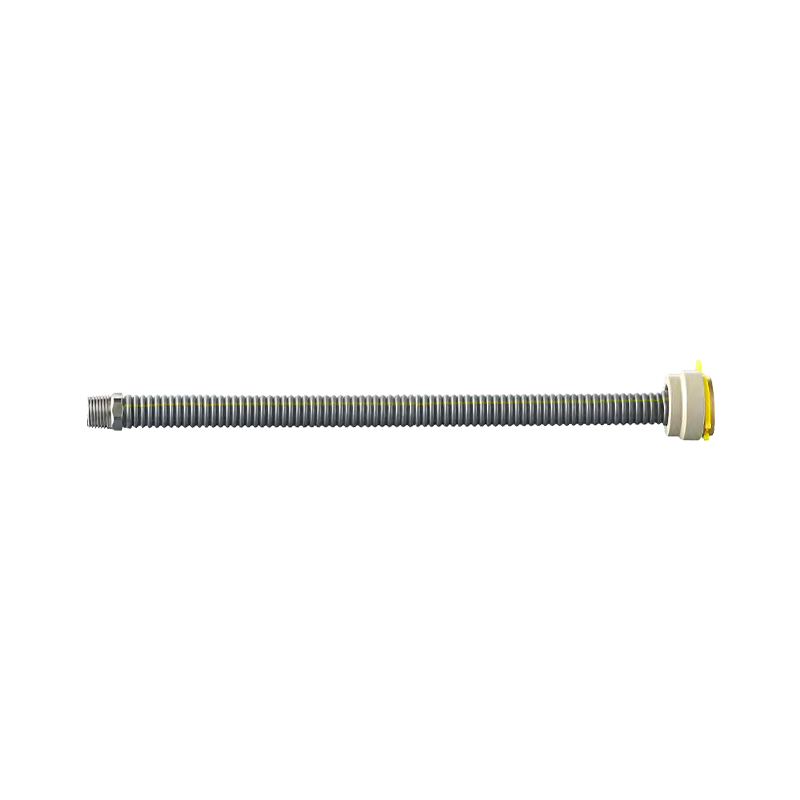
The exploded view above is what a purchase specification should close out: a 304 corrugated core, an optional reinforcement layer for abrasion and pressure, and a jacket chosen by environment rather than by price per metre. Metal-wrapped constructions add a physical barrier in commercial kitchens and plant rooms where a tube run is exposed to trolleys and tools.
Read the shape rather than the area: CSST wins on joints and installation speed, black iron still wins on lightning resilience and on authorities that require threaded steel, and a rubber connector belongs only at the appliance, inside its short length limit. Metal-wrapped variants add a layer of mechanical protection without giving up the continuous run.
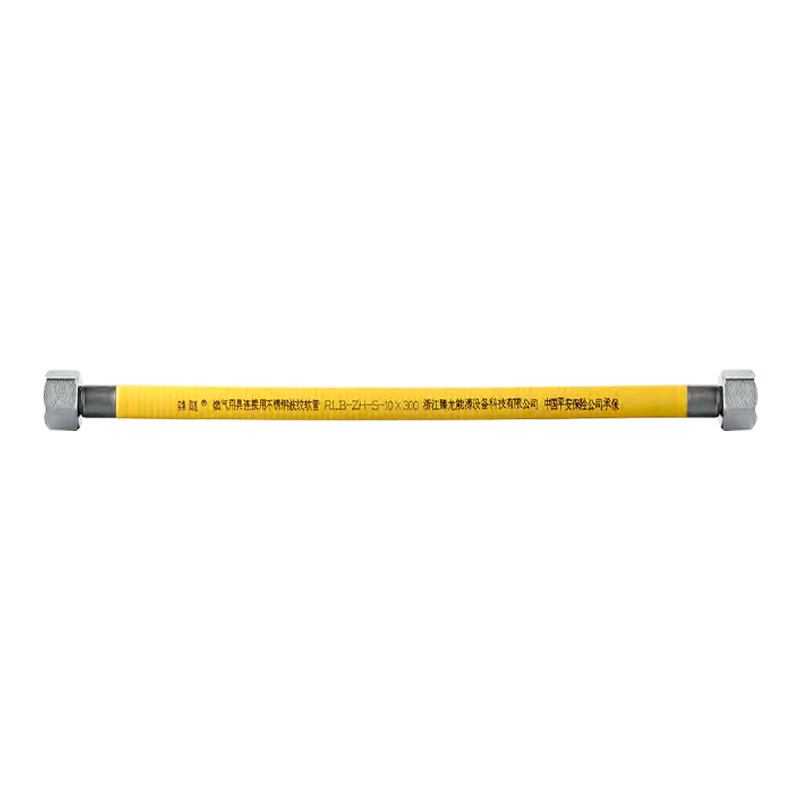
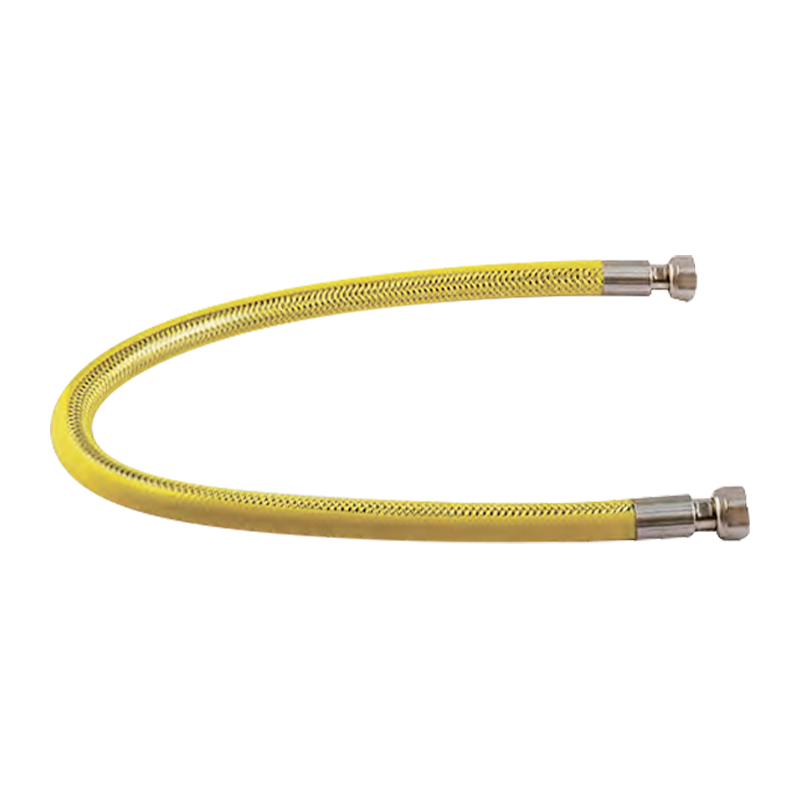 ZLR-14 Metal-Wrapped Stainless Steel Corrugated Gas HoseBraided, PVC-coated stainless corrugated hose with flange connectors, offering added mechanical protection for flexible gas appliance connections in space-limited or complex installations.View Product →
A Short Buyer's Checklist
- Ask for the propane capacity table, not the natural gas one, and check the delivery pressure it assumes.
- Confirm the tube and the fitting are one listed system, with a certificate number you can verify.
- Match the jacket to the environment: PVC outdoors and in damp plant rooms, metal wrap where impact is likely.
- Agree the bonding detail and the pressure test procedure before the first coil ships.
- Check the appliance connector length limit against the actual layout, because a 6 ft rule kills a 9 ft drawing.
- Keep a test record and a regulator label on site; it is the fastest way to close out an inspection.
Where the Tube Comes From
Zhejiang Zhenlong Energy Equipment Technology Co.,LTD. is a company engaged in the research and development, manufacturing, and processing of energy equipment; We are an enterprise that manufactures, processes, and combines industry and trade in metal hoses, natural gas pipelines, plumbing fittings, sanitary ware, valves, plastic products, and hardware. Our company is located in Yuyao, Ningbo, Zhejiang, covering an area of 40 acres with a factory building of 30000 square meters. We have 30 welding and forming production lines, 2 uninterrupted solid melting hydrogen furnace production lines, and testing equipment such as metal material analysis direct reading spectrometer, flow tightness tester, etc. We strictly implement the ISO9000:2008 quality management system and hold the People's Republic of China Special Equipment Manufacturing License (Pressure Pipeline) and the EU CE certification national testing center report. We are a member of the China Urban Gas Association. The company has a strong R&D, design, and production team to provide customers with safe pipe fittings and comprehensive pre-sales and after-sales services. Zhejiang Zhenlong Energy Equipment Technology Co., Ltd. originates from sincere cooperation with friends at home and abroad, working together to create brilliance.
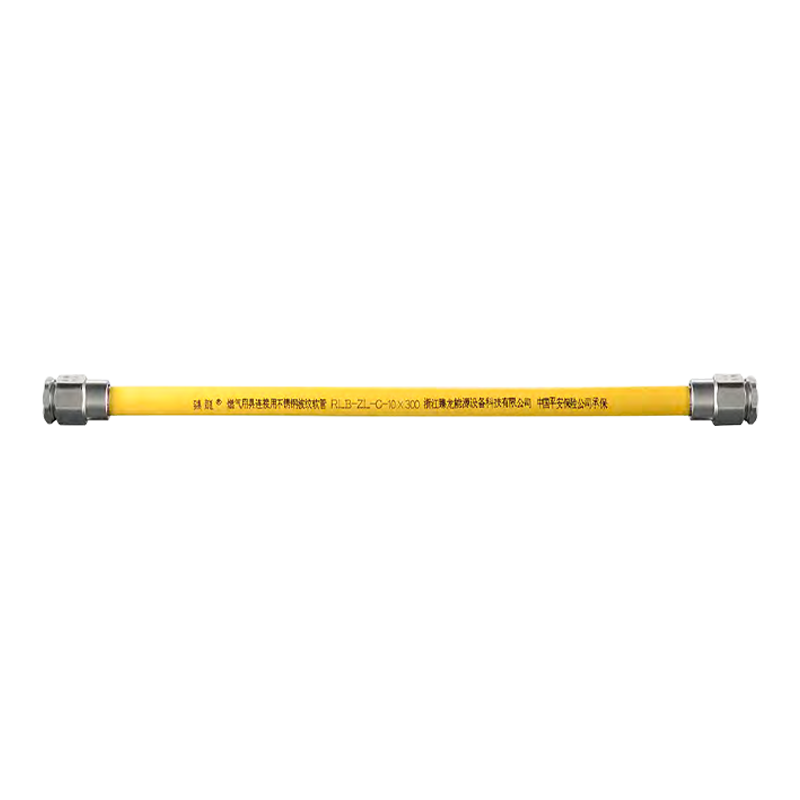
Buyers who need the wider assembly — tube, fittings, valves and wall boxes in one specification — can review the full gas pipes and fittings range and match it against the sizing values above.
Frequently Asked Questions About CSST Propane Lines
Q1. Can CSST be used for propane, or only natural gas?
Listed CSST is approved for both, but the capacity tables are separate because propane carries about 2.5 times the heat per cubic foot and is delivered at a different pressure.
Q2. What size CSST does a 100,000 BTU propane furnace need?
It depends on developed length and delivered pressure. On a 30 ft run at roughly 11 in. w.c., 1/2 in. is often adequate, but confirm it in the manufacturer's propane table before cutting.
Q3. Does a CSST propane line have to be bonded?
Yes. NFPA 54 and NEC 250.104 require bonding to the grounding electrode system, typically with a 6 AWG copper jumper sized to the service.
Q4. Can a CSST propane line be buried underground?
Only where the product is listed and protected for that use and local code permits it. Bare direct burial is generally not acceptable.
Q5. How often should a propane appliance connector be replaced?
There is no fixed interval, but replace any connector that is kinked, corroded or reused after an appliance change, and follow the local rule at replacement time.
Q6. What pressure should the propane regulator deliver?
A two-stage system typically steps down to about 10 psi at the tank and then to roughly 11 in. w.c. at the building, which is close to appliance manifold pressure.