 English
 中文简体
中文简体 Español
 عربى
عربى
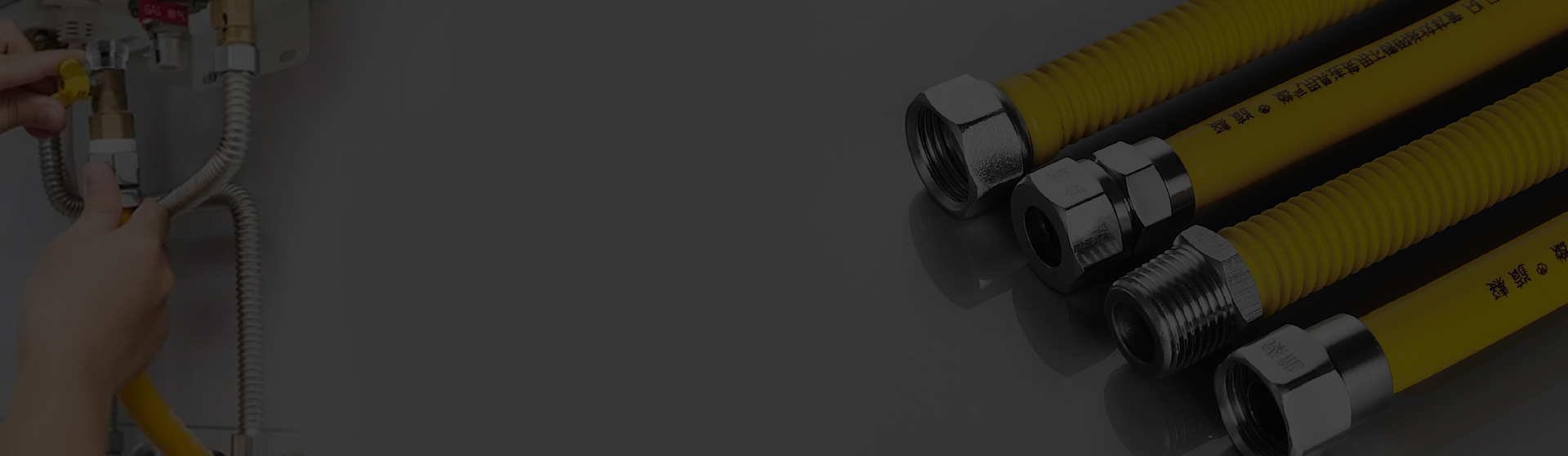

It started, as many gas code discussions do, with a bad install: on a plumbing forum, a licensed plumber described inspecting a friend's new standby generator and finding about 100 feet of 1/2-inch CSST gas line routed around the house - buried roughly 6 inches deep, bare yellow jacket pressed straight against the soil, connected through the meter's service tee (PlumbingForum.com). Inspectors run into versions of this job every season, which is why the question comes up so often.
Everything below explains what "approved" means in practice, what the numbers on the drawings mean, and where CSST is supposed to live instead.
Content
Why Bare CSST Does Not Survive Underground
CSST is a corrugated 304 stainless steel tube with walls roughly 0.25-0.30 mm thick - thin enough to bend around a joist by hand. Indoors, that geometry is a feature. In soil, every one of those traits works against the hose:
- Moisture never dries out. The yellow jacket is an abrasion and identification layer, not waterproofing, and the corrugations hold water against the steel. Chlorides and soil chemistry that a dry wall shrugs off will, over years, work on a wet one.
- Backfill attacks the coating. Sharp stone, debris, and compaction scrape the jacket during burial, exposing steel that no one can rewrap or inspect once the trench is closed.
- Mechanical fittings cannot be buried. CSST joins through brass mechanical fittings, and codes following NFPA 54 prohibit burying them because an underground joint can never be leak-tested or re-tightened.
- Leaks stay invisible. A pinhole in an exposed line announces itself as an odor. A pinhole under the lawn just vents quietly into the soil.
What the Codes Require Before Any Gas Line Goes Underground
United States fuel gas codes treat buried piping as a system: pipe, protection, depth, and markings, all specified together. The International Fuel Gas Code (section 404.12) sets the residential baseline - at least 12 inches of cover, raised to 18 inches where the run passes under a building slab or through areas subject to vehicle traffic or ground movement. Around that core sit the requirements in the table below.
| Requirement | Typical rule | Why it matters |
|---|---|---|
| Approved burial method | PE pipe, a listed burial-jacket CSST system, or CSST inside a listed non-metallic conduit | Bare CSST is approved nowhere underground |
| Watertight protection | Conduit or jacket with both ends sealed so water cannot enter | Standing water in a sleeve creates a permanent wet corrosion zone |
| Depth of cover | 12 in. minimum; 18 in. under slabs or traffic areas (IFGC 404.12) | Shallow lines meet spades and landscaping tools first |
| Continuous run | No unions, tees, or mechanical joints between risers | Buried joints cannot be leak-tested or inspected later |
| Locate-ability | Tracer wire or detectable marking tape along the run | The next crew digging in the yard must find the line before the excavator does |
Three Approved Ways to Put a Gas Line Underground
There are only three compliant routes, and one of them does not involve CSST at all:
- Polyethylene (PE) gas pipe. The default for long underground runs. It is inert in soil, rated for direct burial, and joined above grade with transition fittings. Tracer wire is laid alongside so the line can be located years later.
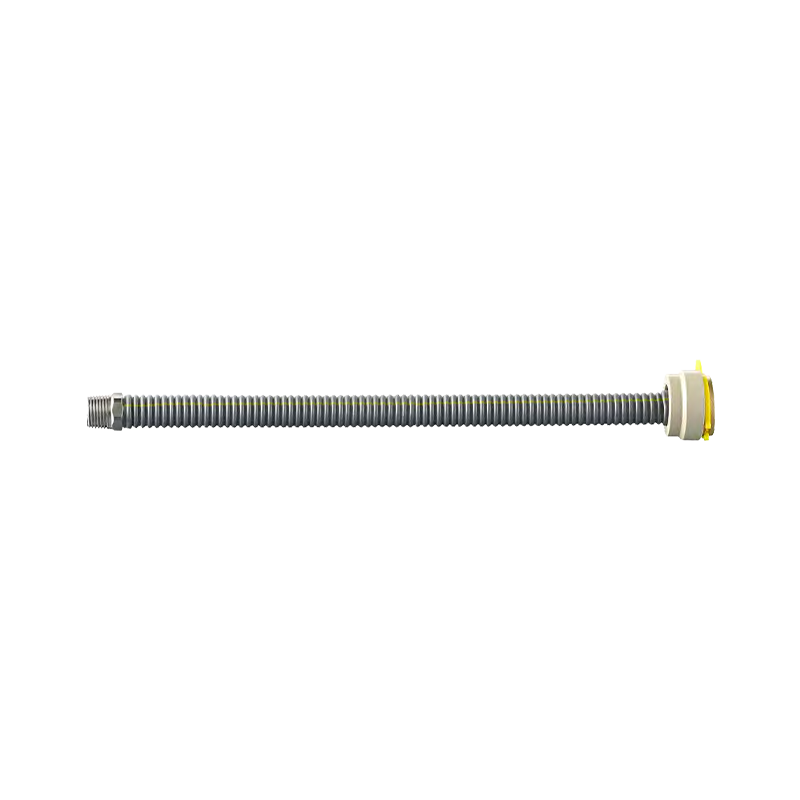
- Factory-jacketed CSST. Some manufacturers produce CSST with a heavy polyethylene outer jacket listed for underground use. It is compliant only when installed exactly as listed: one continuous run, approved risers at both ends, and no buried fittings.
- CSST inside a conduit. Where the manufacturer's instructions allow it, the hose is pulled through a larger non-metallic conduit and both ends are sealed. The conduit carries the burden of protection; the hose inside never touches soil.
How deep each utility has to sit varies with what the line crosses, which is easiest to see side by side:
Minimum cover depth for buried lines (inches)
Sources: International Fuel Gas Code 404.12 (gas piping); NEC 300.5 (electrical, shown for comparison). Local amendments govern.
A Compliant Buried Run, Layer by Layer
Assembled correctly, the trench reads like a sandwich from the surface down: soil, detectable warning tape roughly 12 inches above the pipe as a standard practice, tracer wire alongside the run, sand bedding, then the sealed conduit or jacket with the gas line inside, and 12-18 inches of cover measured to the top of the assembly. At each end the line turns up in a riser and enters the building at a protected penetration rather than through raw soil. The cutaway below shows the sequence:
Two details in that drawing decide most failed inspections: unsealed conduit ends, which turn the sleeve into a water channel, and buried mechanical fittings, which turn every joint into an uninspectable risk.
Where CSST Does Belong
Underground is where the CSST story ends. Indoors is where it earns its keep: connecting water heaters, furnaces, ranges, dryers, and generator inlets, especially across joist bays where threading black iron is slow work and every direction change costs another fitting.
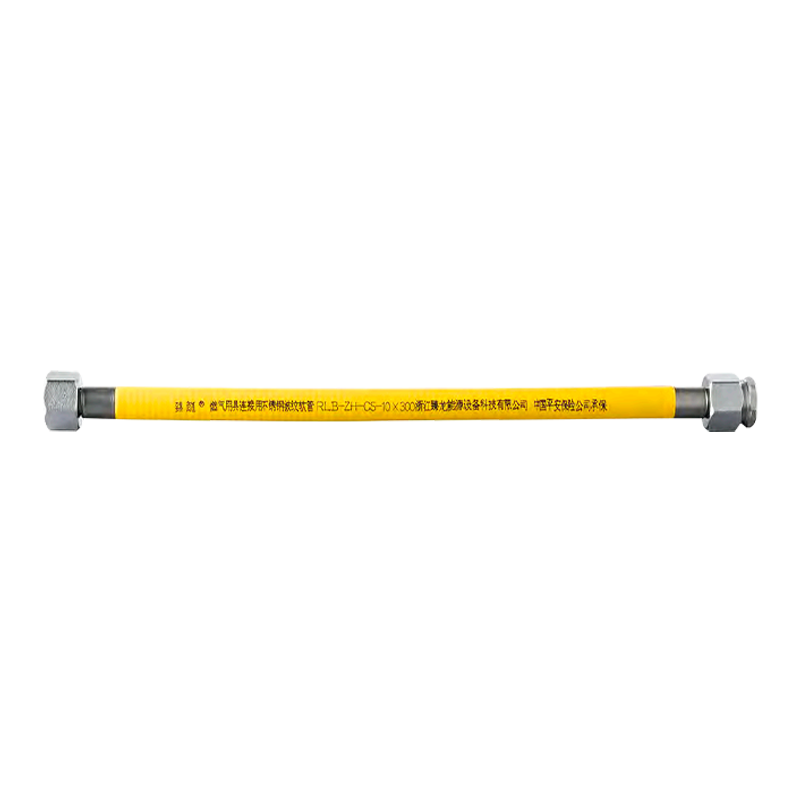
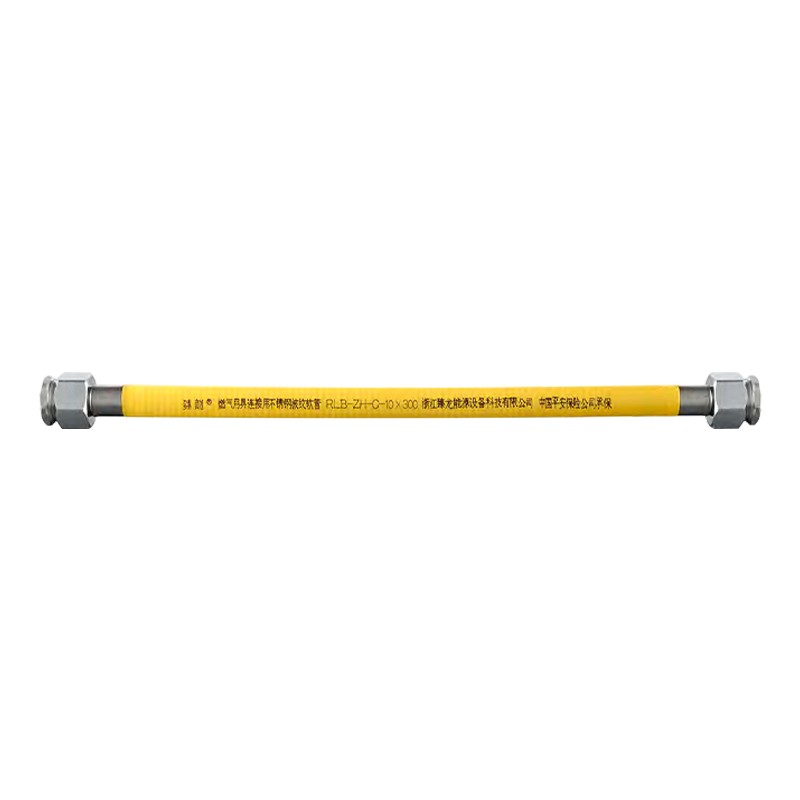
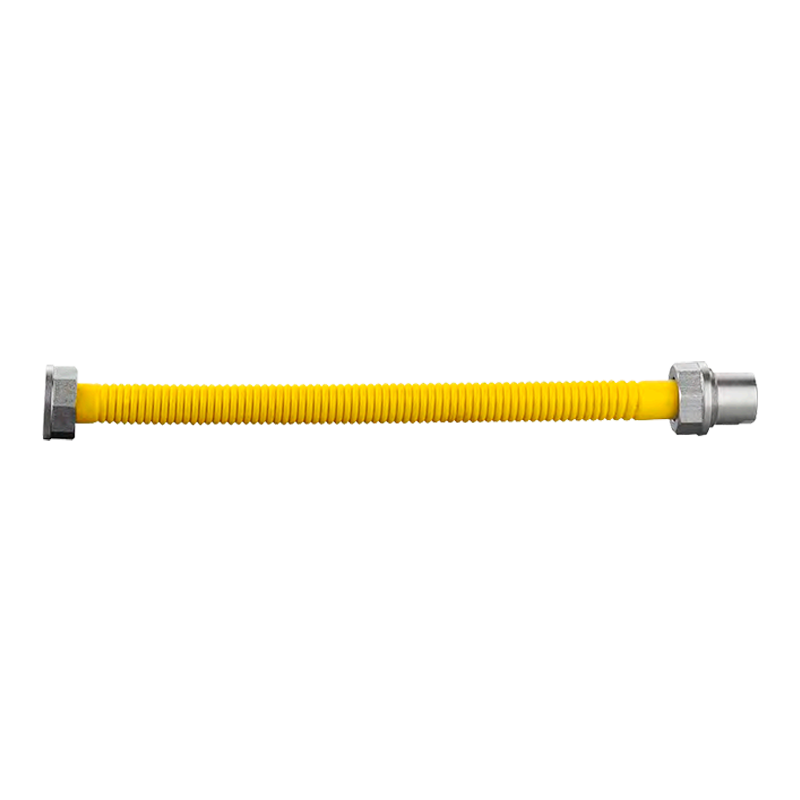
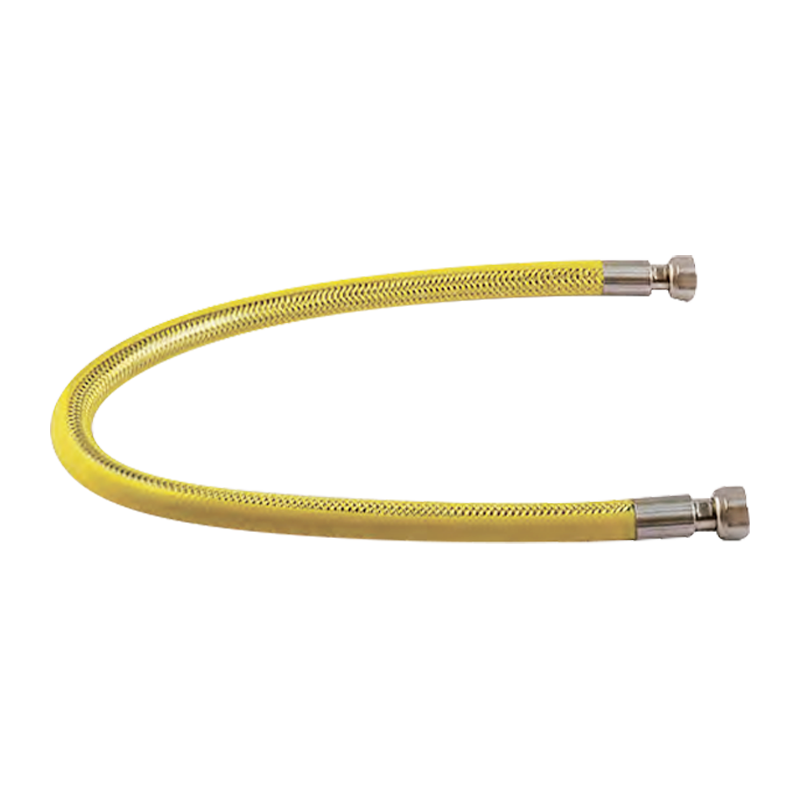
Coated versions extend that logic. A PVC jacket adds abrasion and corrosion resistance for exposed runs, damp utility rooms, and spots where other trades work nearby.
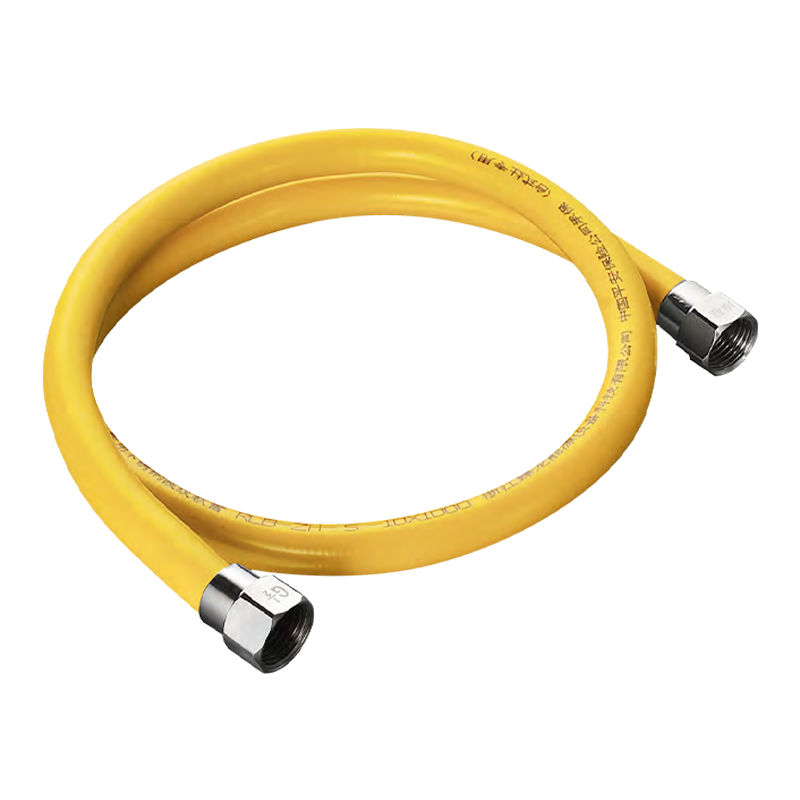
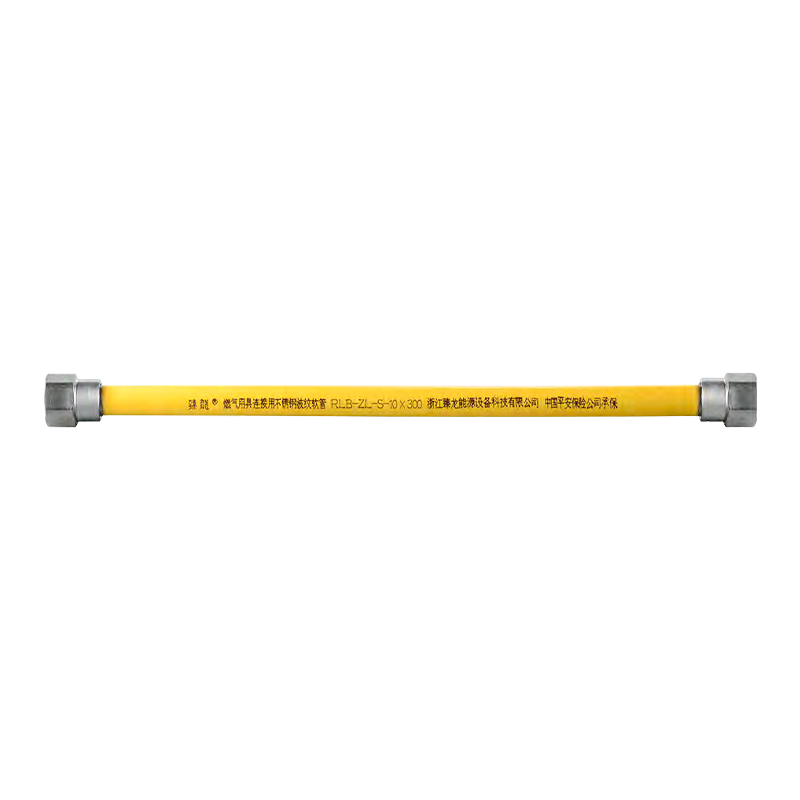
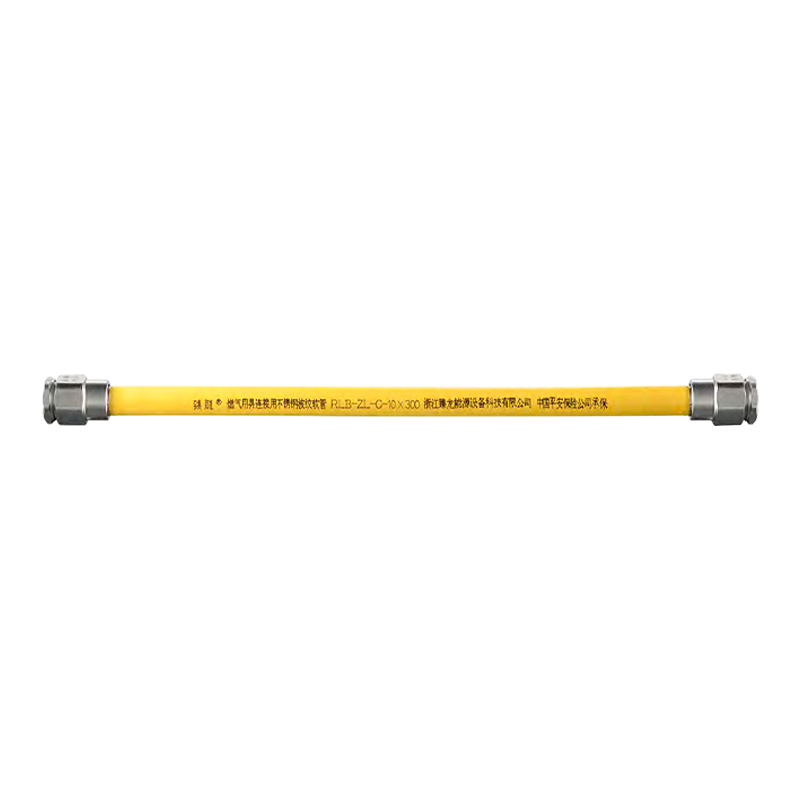
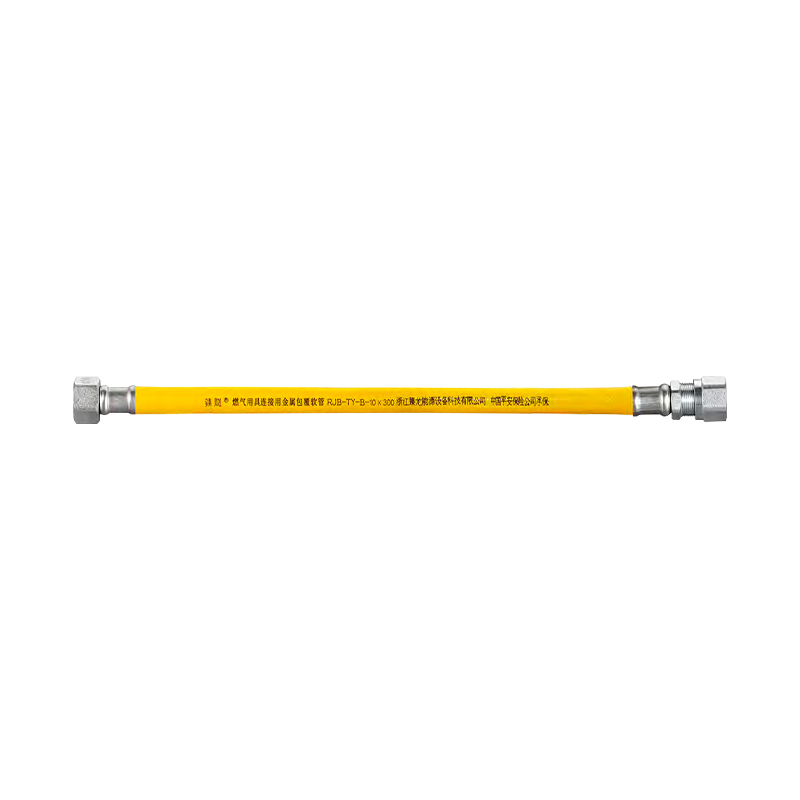
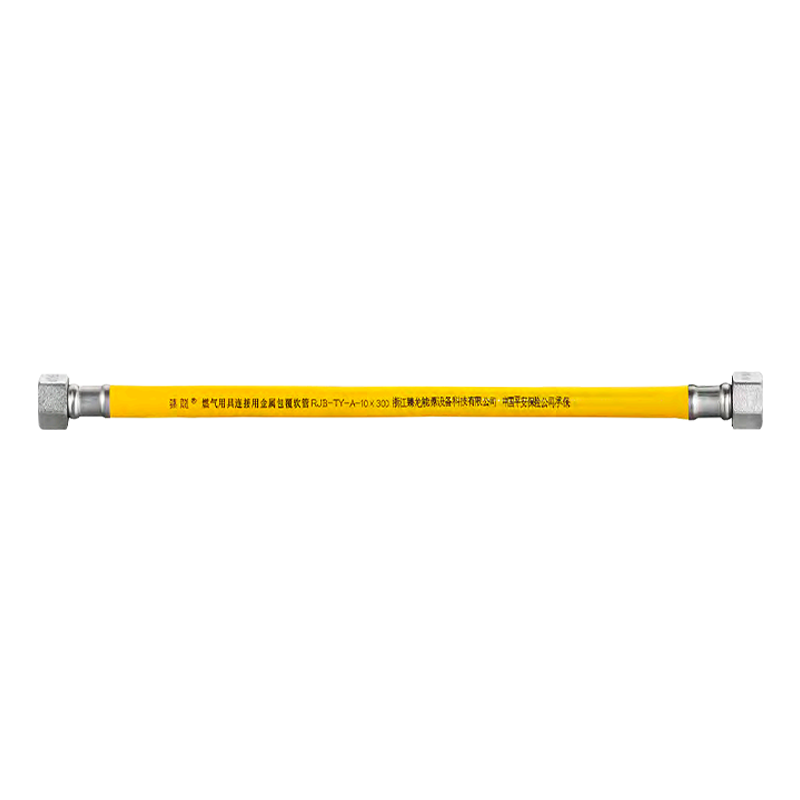
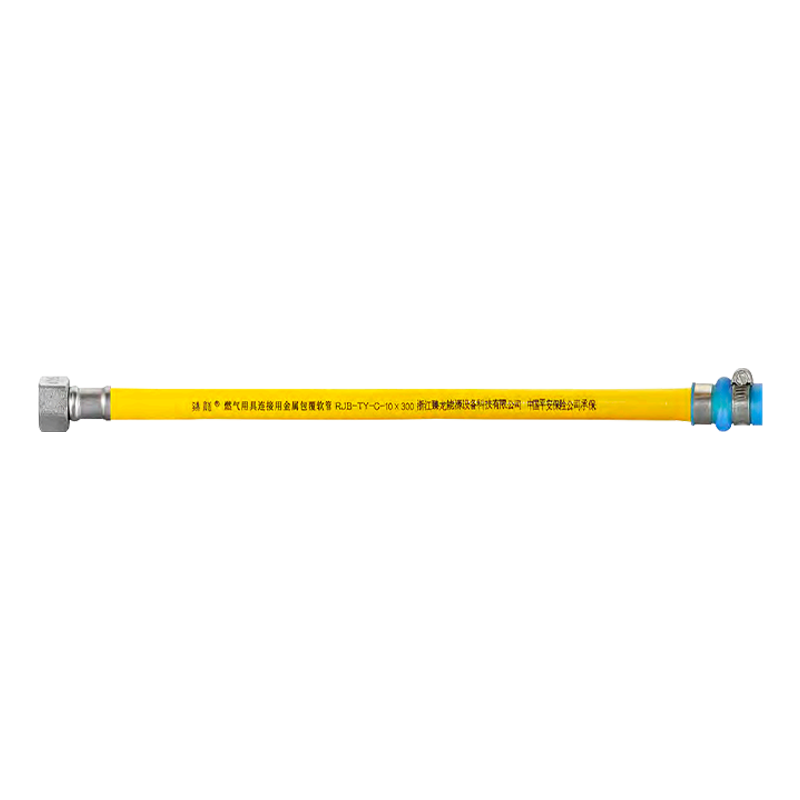
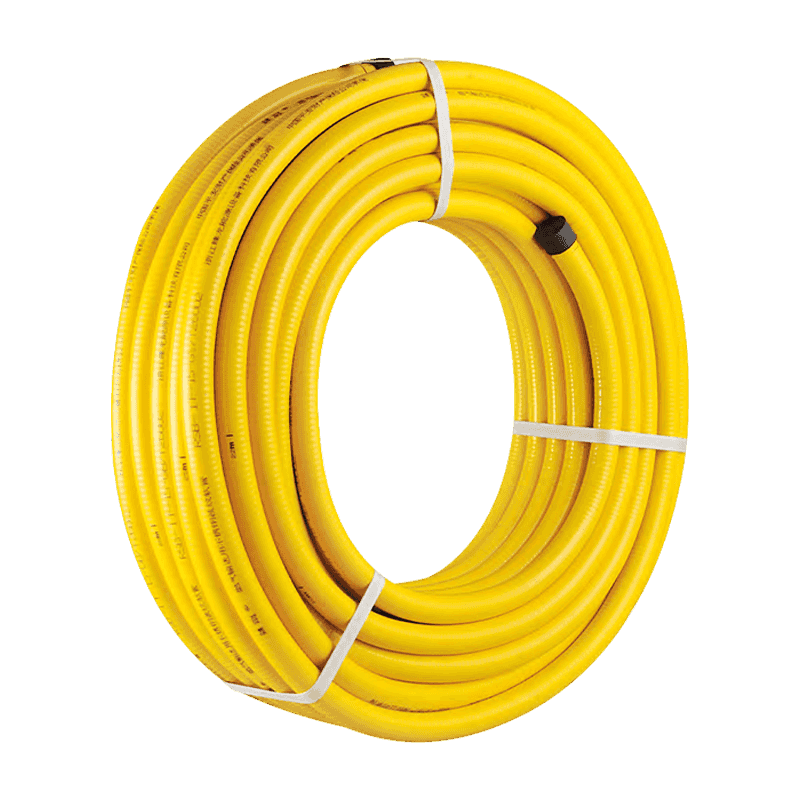 Yellow PVC-Coated Stainless Steel Gas Hose ZLR-01A 304 stainless steel corrugated hose with a yellow PVC jacket for abrasion and corrosion resistance. Its flexible core and multiple connection options suit exposed runs in damp utility rooms where other trades work nearby.View Product →
For concealed or service spaces where fire performance enters the specification, flame-retardant coated hose is the version to ask for, since it pairs the same corrugated core with a jacket formulated to resist flame spread.
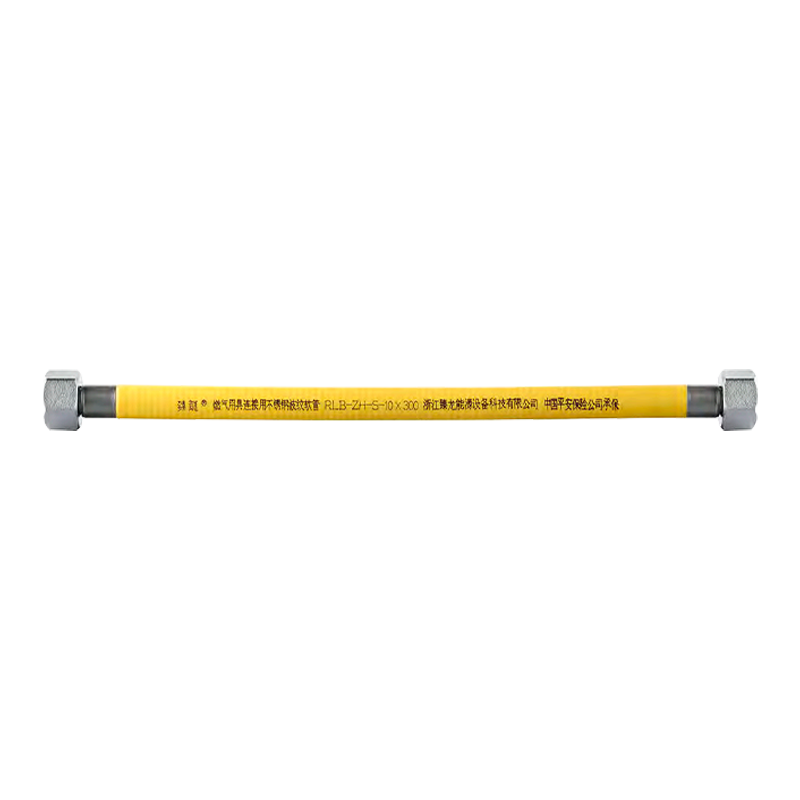
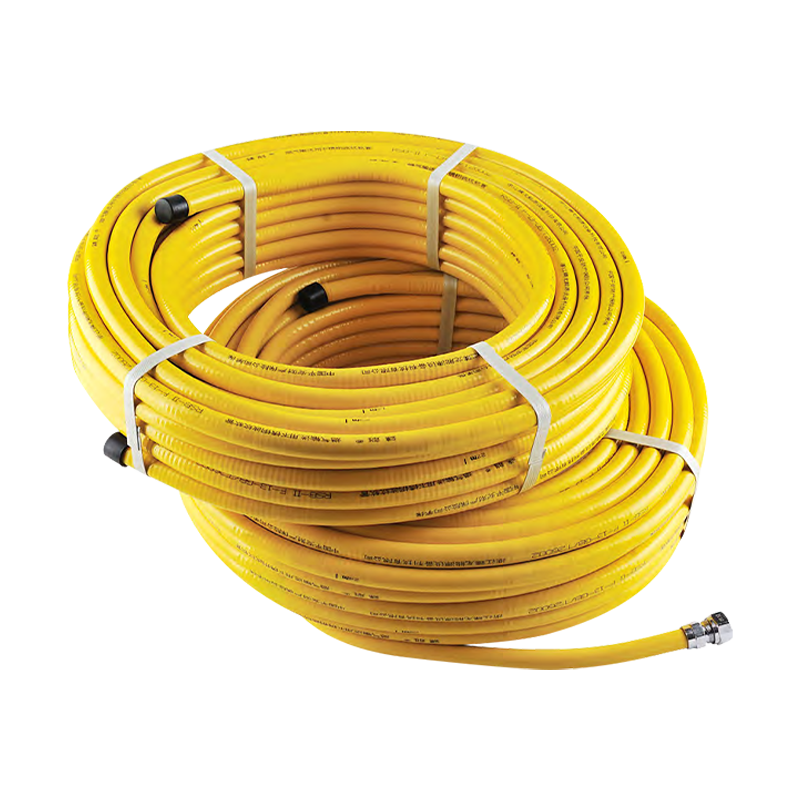 Flame-Retardant PVC-Coated Corrugated Gas Hose ZLR-03This hose pairs a corrugated 304 stainless steel core with a flame-retardant yellow PVC coating for corrosion and UV protection. It is the version to specify for concealed or service spaces where fire performance matters.View Product →
The last detail is the wall. Wherever a concealed run passes into a structure - or ends at a valve inside a cavity - the hose needs mechanical protection and a serviceable access point. That is exactly the job of a wall switch box: it shields the hose at the penetration and gives the shutoff valve a protected, reachable home. We explain in a companion article why the stainless steel buried wall switch box has become the new standard for domestic gas safety.
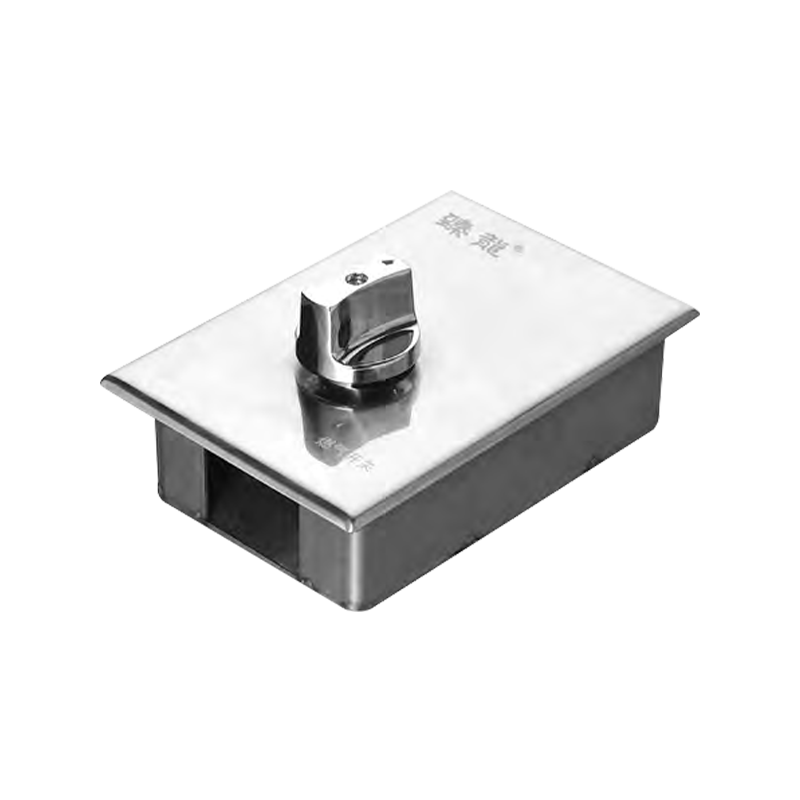 Stainless Steel Buried Wall Switch Box for Home Gas HoseA corrosion-resistant stainless steel enclosure that shields gas hose penetrations and houses the shutoff valve in a protected, reachable spot. It keeps concealed connections safe from damage while allowing easy service access.View Product →
Putting a full system together means matching tube, coating, and fittings to three variables: environment, pressure, and access. Browsing the stainless steel corrugated tubing and fittings used in gas piping systems is the fastest way to see how hose, valves, and protection parts pair up.
A Word From the Manufacturer
Zhejiang Zhenlong Energy Equipment Technology Co., Ltd. manufactures energy equipment in Yuyao, Ningbo, Zhejiang - stainless steel corrugated gas hose, metal-wrapped hose, and the valves, wall boxes, and fittings that complete a gas connection. The 40-acre site carries 30,000 square meters of workshops with 30 welding and forming lines and 2 uninterrupted solid melting hydrogen furnace lines; direct-reading spectrometers and flow-tightness testers verify material and seal quality before anything ships. Production runs under the ISO9000:2008 quality management system, and the company holds the Special Equipment Manufacturing License (pressure pipeline), EU CE national testing center reports, and membership in the China Urban Gas Association. That combination exists for a simple reason: a gas connection is only as trustworthy as its least-inspected part.
Frequently Asked Questions
Q1. Can CSST gas line be buried directly in the ground?
No. Direct burial of bare CSST violates gas codes and manufacturer instructions. It needs an approved conduit, a listed burial jacket, or replacement with PE pipe.
Q2. How deep does a buried gas line have to be?
Typically at least 12 inches below grade, and 18 inches under slabs or vehicle traffic areas per IFGC 404.12. Local codes can require more.
Q3. Can the brass fittings on CSST be buried?
No. Mechanical fittings and unions are not permitted underground because they cannot be inspected. Run one continuous length between risers.
Q4. Which gas pipe can be buried without a sleeve?
Polyethylene (PE) pipe rated for gas, plus factory-jacketed CSST systems listed for underground use. Both still need tracer wire and proper cover.
Q5. Can CSST be embedded in a concrete slab?
Not directly. Codes and manufacturers prohibit embedding CSST in concrete unless it is protected in an approved conduit per the listing.
Q6. Does not the yellow jacket make CSST waterproof?
No. The jacket is for abrasion resistance and identification, not a watertight barrier. Burial requires real conduit or a listed burial jacket.
Q7. Why does buried PE pipe need tracer wire?
Plastic pipe is invisible to standard locators. A tracer wire laid along the run lets crews find the line before they dig.
Q8. How should CSST be protected where it passes through a wall?
Use a sleeve or protective plate, and at concealed valve points a wall switch box, so the hose is shielded and the valve stays accessible.