 English
 中文简体
中文简体 Español
 عربى
عربى

Content
- 1 Quick Answer: How To Match A Connector To Your Gas Appliance
- 2 What A Stainless Steel Corrugated Gas Connector Is Made Of
- 3 Inside The Connector: Core Components And How They Fit Together
- 4 Key Factors To Check Before Selecting A Connector
- 5 Connector Sizing Guide By Gas Appliance Type
- 6 Standard Lengths And How To Choose The Right One
- 7 304 Stainless Steel Versus Other Common Tube Materials
- 8 Corrosion Resistance And Long Term Performance In Service
- 9 Installation And Handling Best Practices
- 10 Common Mistakes To Avoid When Choosing A Connector
- 11 About Zhejiang Zhenlong Energy Equipment Technology
- 12 Frequently Asked Questions
Quick Answer: How To Match A Connector To Your Gas Appliance
The right stainless steel gas appliance connector is selected by matching three things at once: the appliance inlet diameter, the physical distance between the appliance and the shutoff valve, and the end fitting thread type the local installation calls for. For most residential gas ranges, a 1/2 inch nominal diameter stainless steel corrugated gas tube in a length of 24 to 48 inches covers common kitchen layouts. Gas dryers typically use the same 1/2 inch diameter but in a longer run of around 48 to 60 inches so the unit can be pulled forward for cleaning. Gas water heaters often call for a 3/8 inch or 1/2 inch connector depending on the unit's BTU input. Checking the appliance data plate or installation manual for the required inlet size before ordering a connector is the single step that avoids most sizing mismatches.
The sections below walk through sizing logic, material grade, standard lengths, structure, installation habits, and a set of frequently asked questions collected from real purchasing conversations around stainless steel corrugated tubes for the connecting gas appliances.
What A Stainless Steel Corrugated Gas Connector Is Made Of
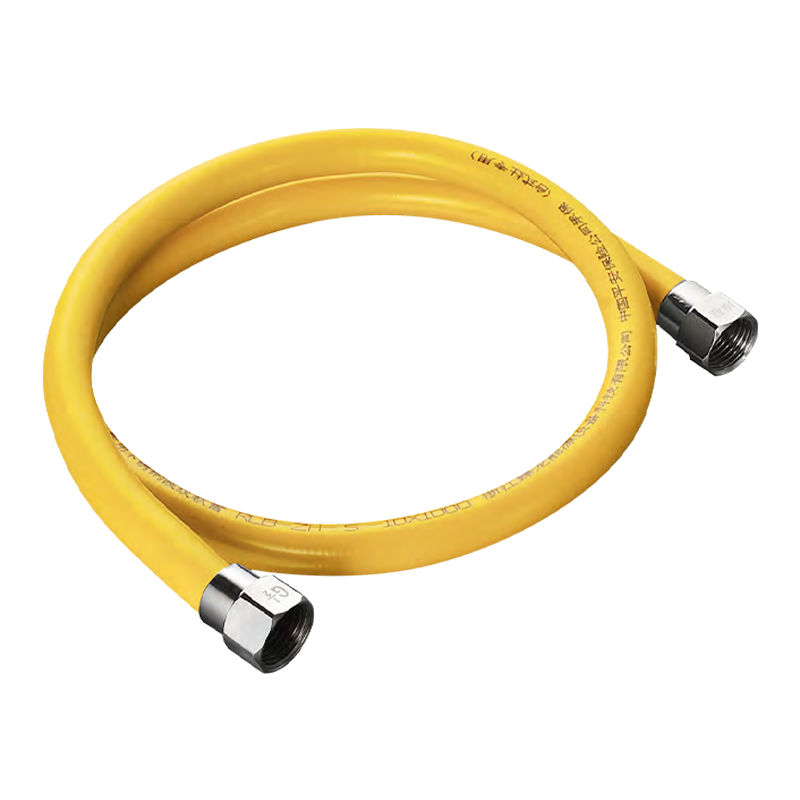
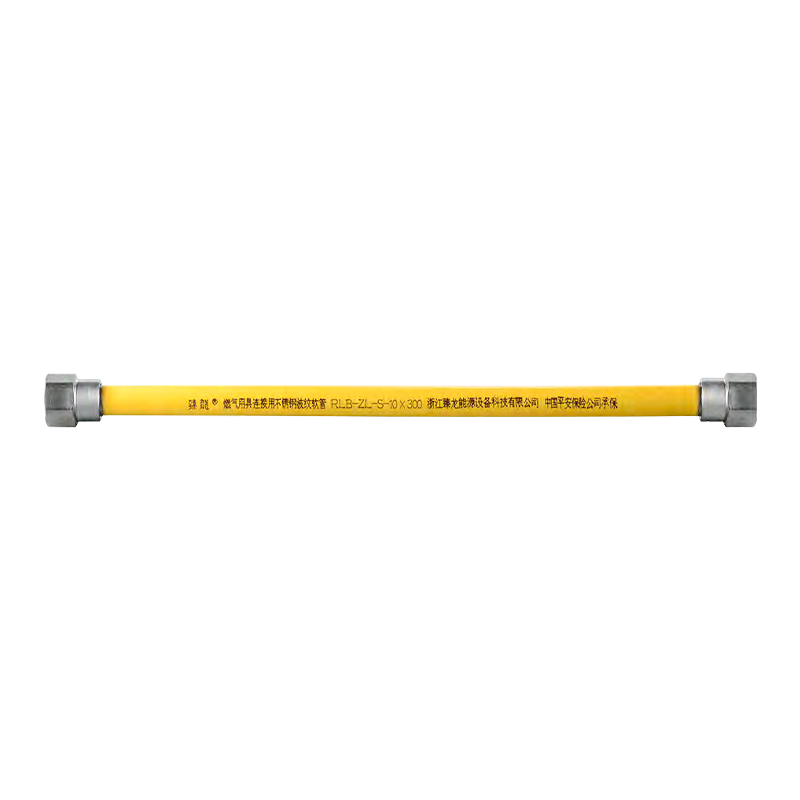
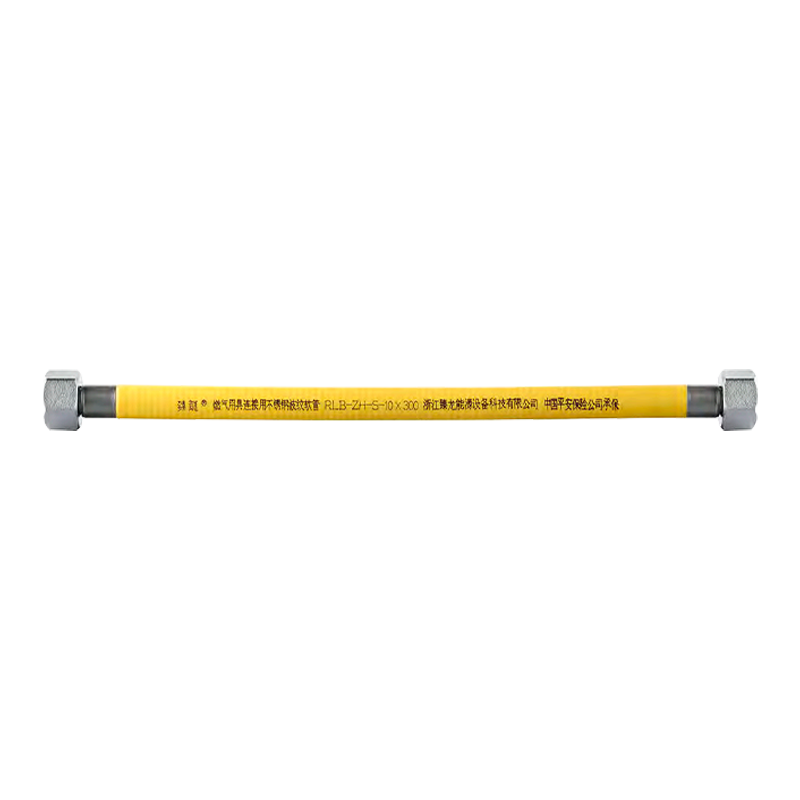
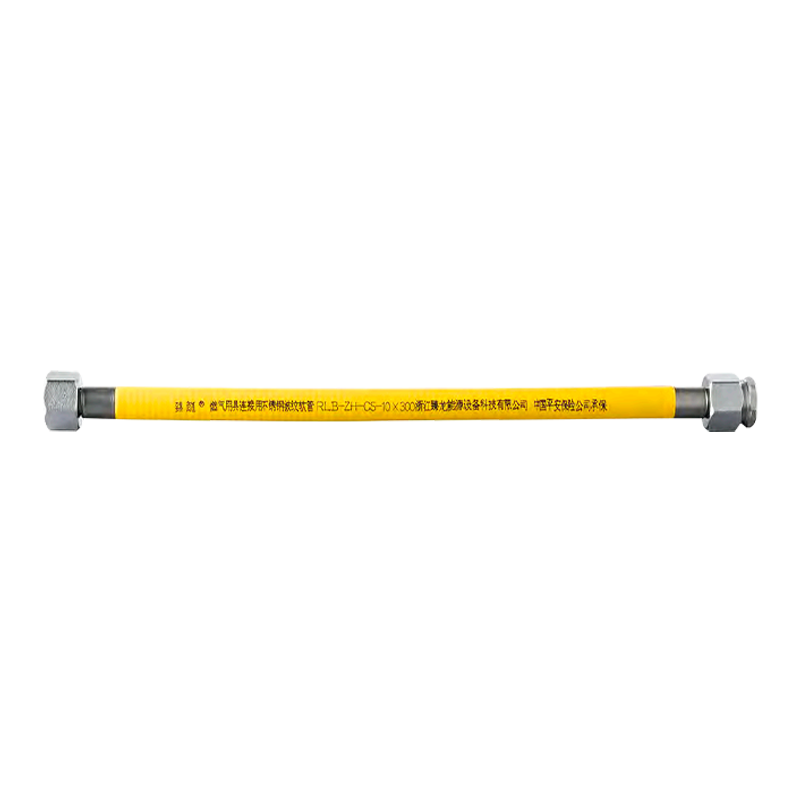
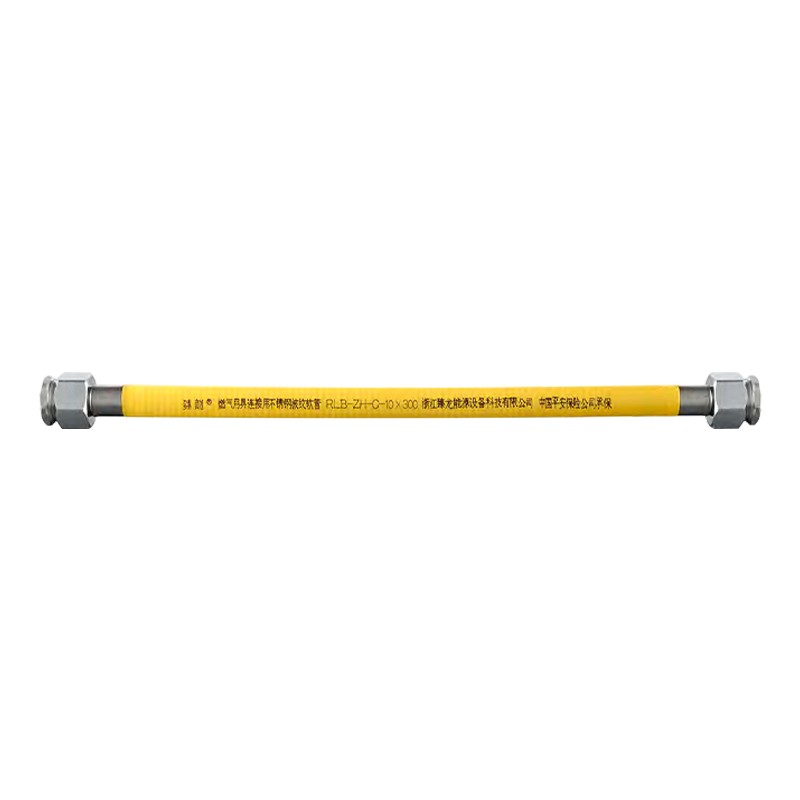
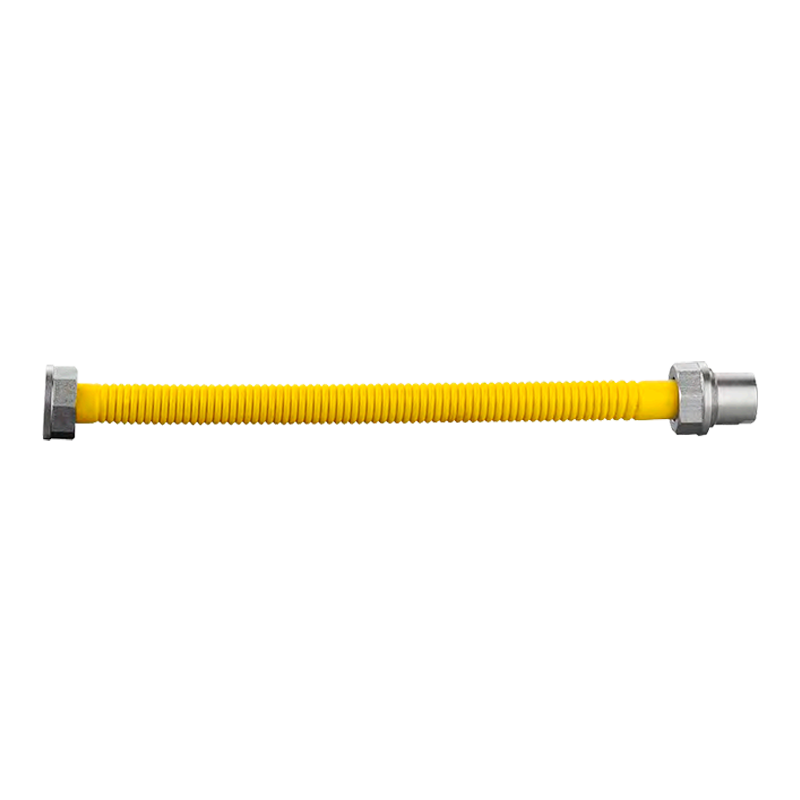
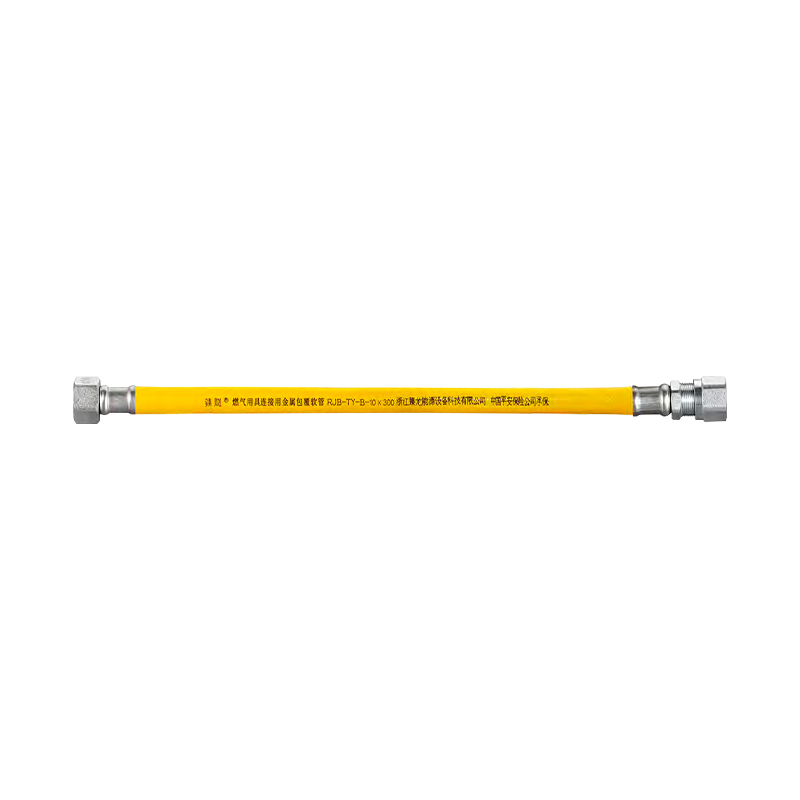
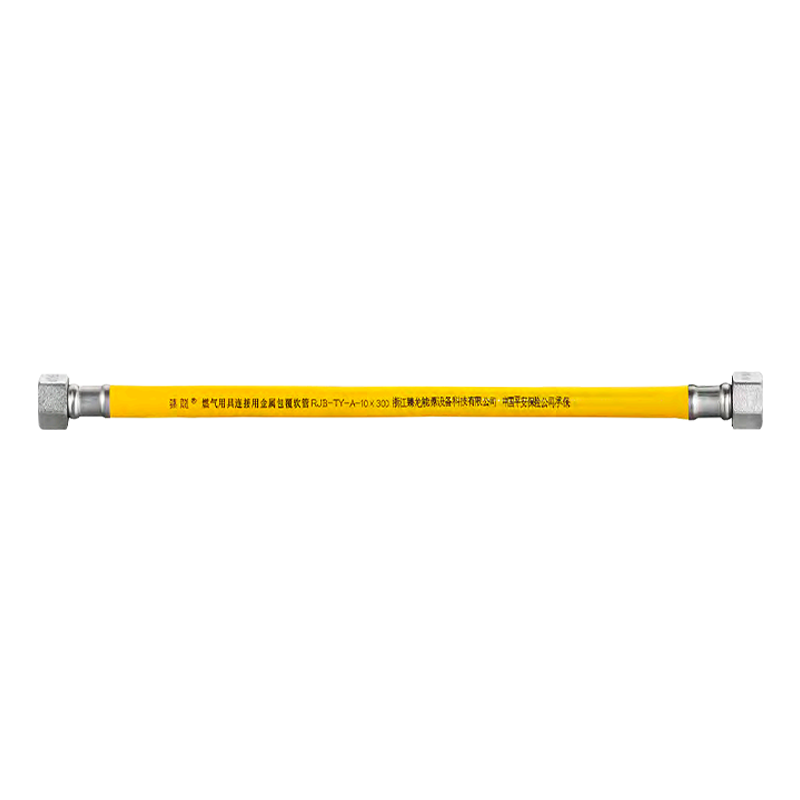
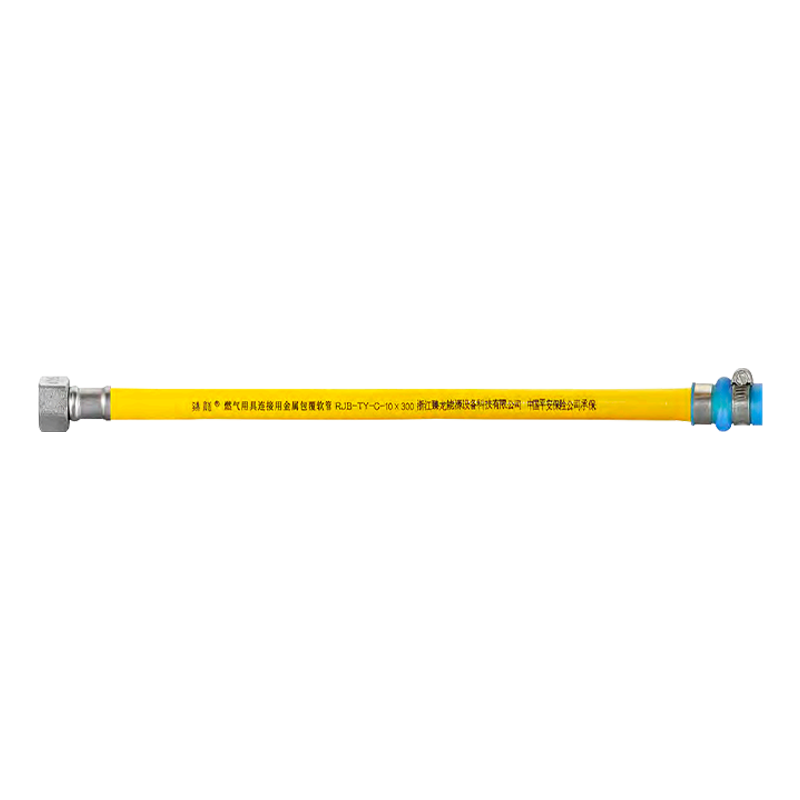
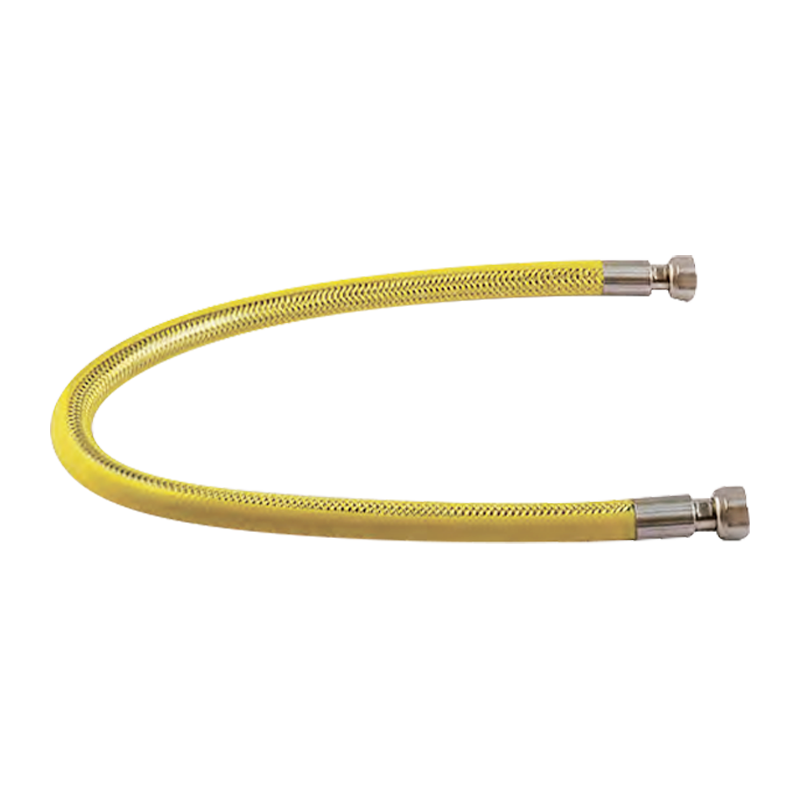
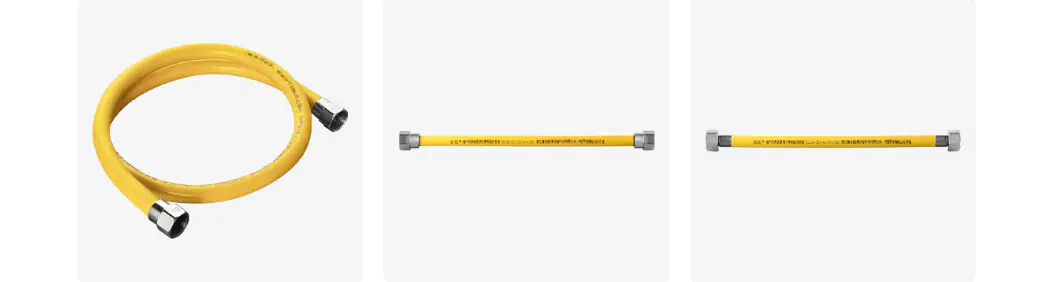
A stainless steel gas appliance connector belongs to the metal hose family. At its core sits a corrugated stainless steel tube, formed with either an annular (ring-shaped) or spiral corrugation pattern, which is what allows a metal tube to bend and flex without cracking. That flexible core is typically wrapped in an extruded soft PVC jacket that is flame retardant and resistant to ultraviolet exposure, protecting the metal beneath from abrasion, kitchen grease, and general handling wear. Threaded end fittings are attached to each side so the connector can join a rigid gas line or shutoff valve on one end to the appliance's own gas inlet on the other.
Stainless steel corrugated tubes for the connecting gas appliances are commonly produced from 304 or 304L grade stainless steel, chosen for its balance of corrosion resistance, weldability, and long-term aging performance compared to plain carbon steel. Because the tube is corrugated rather than smooth-walled, it can absorb small amounts of vibration and thermal expansion at the joint, which reduces stress on threaded connections during normal appliance use, servicing, or replacement.
Unlike rigid black iron pipe, a stainless steel flexible gas line does not need to be cut, threaded, or bent on site. It is installed as a ready-made assembly, which is one reason corrugated stainless steel gas hoses have become the common choice for connecting household appliances that occasionally need to be moved for cleaning or servicing, such as ranges and dryers.
Inside The Connector: Core Components And How They Fit Together
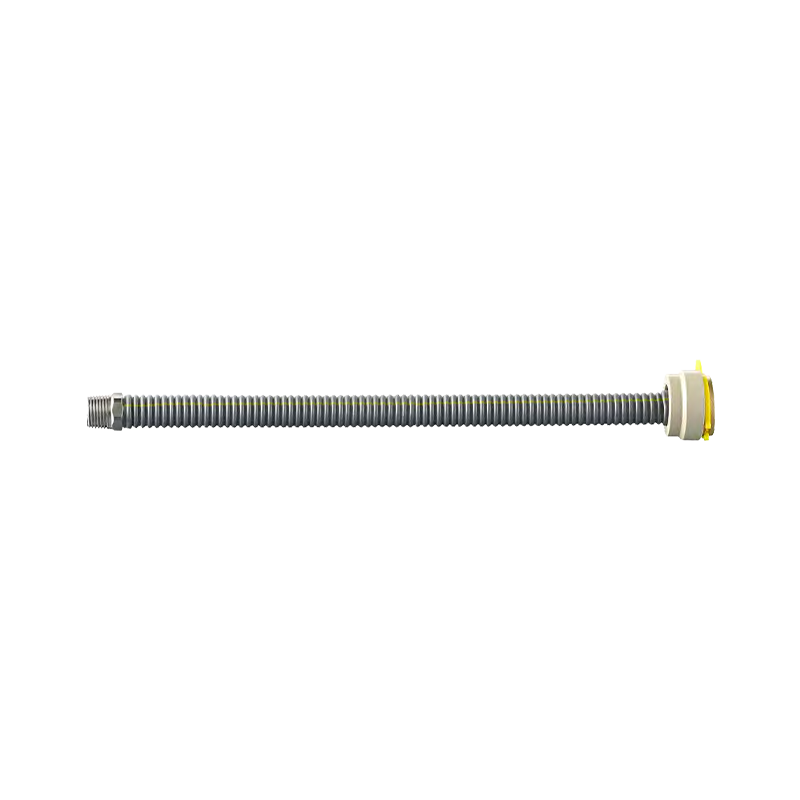
The diagram below shows the main parts of a typical stainless steel corrugated gas connector, with the protective jacket partially shown so the corrugated core underneath is visible.
- End fitting nut - engages the thread on the appliance shutoff valve or gas cock.
- Corrugated stainless steel tube core - the pressure bearing conduit, corrugated to allow bending without kinking.
- Protective PVC jacket - shields the metal core from abrasion, moisture, grease, and ultraviolet exposure.
- Thread connector - male or female thread sized to match the regional plumbing standard in use.
- Sealing washer - forms a leak tight seal where the connector meets the valve or appliance port.
Key Factors To Check Before Selecting A Connector
Diameter And Gas Flow Capacity
The internal diameter of a stainless steel flexible gas tube determines how much gas can pass through it per minute. An undersized connector on a high BTU appliance can restrict flow and affect burner performance, while an oversized connector simply wastes routing space without adding benefit. Matching the connector diameter to the appliance inlet fitting is the starting point, not an afterthought.
Overall Length And Routing Distance
Measuring the actual distance from the shutoff valve to the appliance inlet, including any bends around cabinetry or wall recesses, avoids ordering a connector that is too short to reach or so long that excess slack has to be coiled behind the appliance.
End Fitting Type And Thread Standard
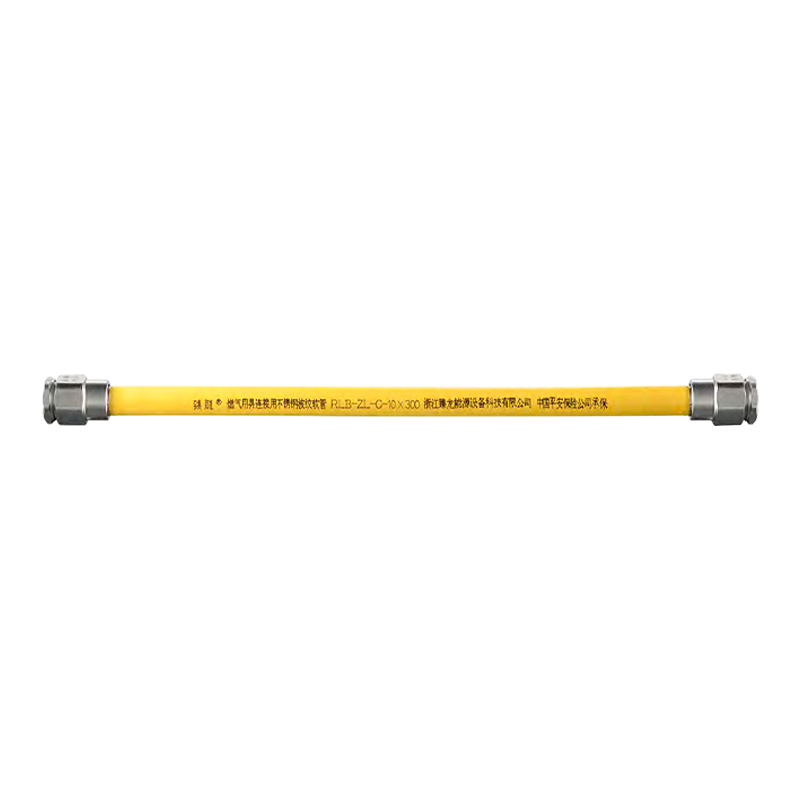
Flare fittings, male iron pipe (MIP), and female iron pipe (FIP) threads are the common configurations. The valve outlet thread and the appliance inlet thread do not always match, so confirming both ends before purchase prevents having to source an adapter later.
Material Grade And Wall Thickness
A 304 stainless steel gas connector is the common baseline for indoor residential and light commercial use because of its corrosion resistance in typical kitchen and utility room environments. Wall thickness affects both flexibility and pressure tolerance, so heavier duty commercial installations may specify a thicker walled tube.
Working Pressure Rating
Every connector is rated for a maximum working pressure. Residential natural gas and propane appliance connections generally operate at low pressure, but commercial kitchen equipment or larger regulator connections may run at a higher pressure that calls for a connector rated accordingly.
Connector Sizing Guide By Gas Appliance Type
The table below summarizes typical nominal diameters and length ranges seen across common household and light commercial gas appliances. Actual requirements should always be checked against the specific appliance manual, since output ratings vary between models.
| Appliance Type | Typical Nominal Diameter | Typical Length Range | Common End Fitting |
|---|---|---|---|
| Gas Range / Cooktop | 1/2 in | 24 - 48 in | Flare or MIP |
| Gas Water Heater | 3/8 - 1/2 in | 24 - 36 in | Flare |
| Gas Dryer | 1/2 in | 48 - 60 in | Flare or MIP |
| Gas Meter / Regulator | 3/4 - 1 in | 12 - 24 in | MIP / FIP |
| Wall / Space Heater | 3/8 in | 18 - 36 in | Flare |
| Outdoor Grill / Patio Heater | 1/2 in | 36 - 60 in | Flare or quick connect |
Standard Lengths And How To Choose The Right One
Corrugated stainless steel gas hoses are commonly stocked in a set of standard lengths so installers can pick the closest match rather than custom ordering for every job. A practical approach is to measure the straight-line distance from the valve outlet to the appliance inlet, add a small allowance for a gentle bend rather than a tight corner, and round up to the next available stocked length. Leaving the connector slightly slack, rather than stretched taut, allows the appliance to be pulled forward for cleaning or servicing without placing strain on the end fittings.
Coiling a long connector to take up unused slack is generally discouraged. Repeated tight coiling can work harden the corrugations over years of appliance movement, so choosing a length that fits the actual routing distance is preferable to buying oversized and coiling the excess.
304 Stainless Steel Versus Other Common Tube Materials
A 304 stainless steel gas connector is preferred for indoor gas appliance work largely because of its chromium and nickel content, which forms a thin passive oxide layer on the surface that resists staining and pitting in typical kitchen or utility room air. Compared with 201 stainless steel, which substitutes some nickel with manganese to reduce cost, 304 grade generally holds up better against long term exposure to humidity and mild household cleaning chemicals. Galvanized carbon steel, sometimes seen in older or lower cost hardware, relies on a zinc coating that can wear through over time, after which the underlying steel becomes exposed to corrosion.
A stainless steel flexible gas tube in 304 or 304L grade also tends to retain its flexibility better through repeated bending cycles, since the corrugations are less prone to work hardening and cracking compared with thinner or lower grade alternatives.
| Property | 304 Stainless Steel | 201 Stainless Steel | Galvanized Steel |
|---|---|---|---|
| Corrosion Resistance | Higher | Moderate | Lower once coating wears |
| Flexibility Retention | Good | Good | Moderate |
| Typical Indoor Use | Common | Common in budget lines | Less common today |
Corrosion Resistance And Long Term Performance In Service
The chromium content in 304 and 304L stainless steel forms a self-repairing passive oxide film on the tube surface. When the surface is scratched during handling or installation, that film tends to reform on its own given normal air exposure, which is part of why stainless steel corrugated tubes for the connecting gas appliances continue to be specified over plain carbon steel alternatives in kitchens and utility rooms where humidity and occasional splashing are common.
Long term performance is still influenced by the installation environment. Prolonged direct contact with chlorine-based cleaning agents, saline air near coastal properties, or standing water pooling around the connector can gradually affect even stainless steel over many years. Keeping the connector clear of harsh chemical splash zones and ensuring the installation area has reasonable ventilation supports a longer service life.
Installation And Handling Best Practices
- Shut off the gas supply at the main or appliance valve before removing an old connector.
- Inspect a new stainless steel flexible gas line for kinks, dents, or shipping damage before fitting it.
- Avoid bends tighter than the connector's minimum bend radius, since sharp folds can weaken the corrugations.
- Rotate the end nut when tightening rather than twisting the tube body, which keeps the corrugations from being stressed.
- Use a properly sized wrench and avoid over-torquing threaded joints beyond what is needed for a snug seal.
- Perform a soap and water bubble check on every joint after installation to confirm there is no leak before restoring gas flow.
- Route the connector clear of burner flame paths, oven drip areas, and moving dryer components to avoid heat or mechanical wear.
Common Mistakes To Avoid When Choosing A Connector
- Reusing an old connector on a newly installed appliance instead of fitting a fresh one sized to the new unit.
- Selecting a diameter smaller than the appliance inlet calls for, which can restrict gas flow to the burner.
- Routing the connector through a cabinet door gap or drawer path where it can be pinched repeatedly over time.
- Ignoring the manufacturer's minimum bend radius when squeezing the connector into a tight space behind an appliance.
- Mixing incompatible thread types with improvised adapters instead of sourcing a connector with the correct end fitting.
- Skipping the post-installation leak check, which is a quick step that confirms every joint is properly sealed.
About Zhejiang Zhenlong Energy Equipment Technology
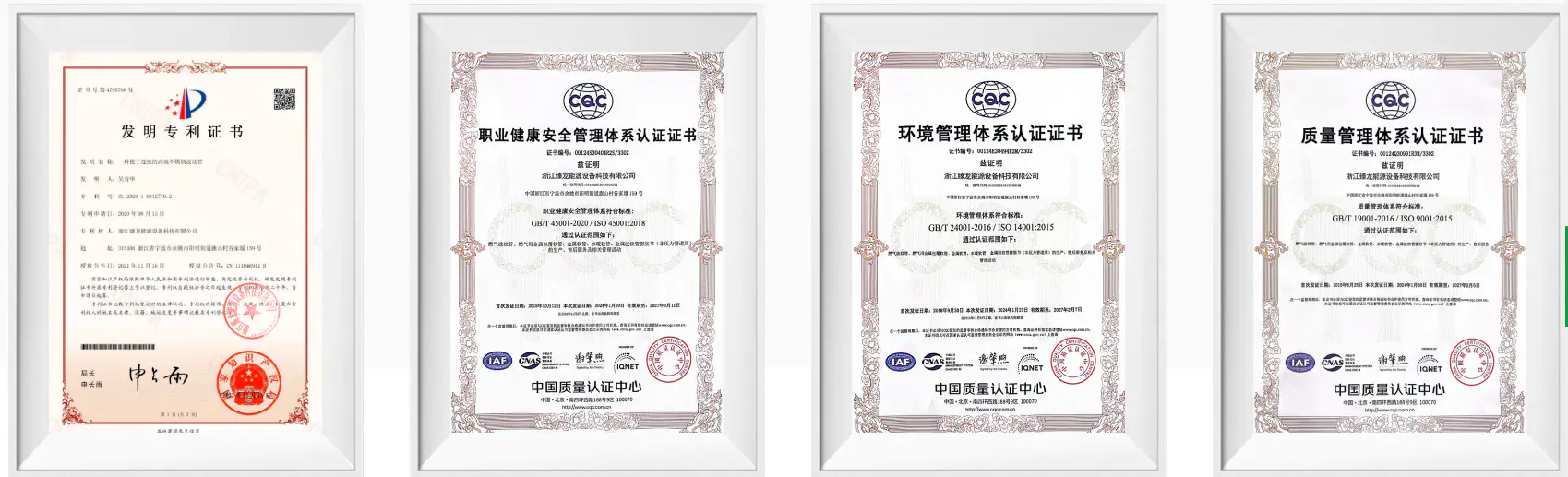
Zhejiang Zhenlong Energy Equipment Technology Co., Ltd. researches, manufactures, and processes energy equipment, with a product range spanning metal hoses, natural gas pipeline components, plumbing fittings, sanitary ware, valves, plastic products, and hardware. The company operates from a facility in Yuyao, Ningbo, Zhejiang, covering an area of about 40 acres with a factory building of roughly 30,000 square meters.
Production capability includes 30 welding and forming lines together with 2 uninterrupted solid melting hydrogen furnace lines, supported by testing equipment such as a metal material analysis direct reading spectrometer and a flow tightness tester used to check finished assemblies before they leave the factory. As a stainless steel gas connector manufacturer and stainless steel gas connector supplier, the company produces stainless steel corrugated tubes for the connecting gas appliances alongside related metal hose and pipe fitting products, supported by an in-house research, design, and production team.
Working as a flexible gas connector manufacturer, Zhejiang Zhenlong Energy Equipment Technology continues to build cooperative relationships with partners both domestically and internationally around shared manufacturing goals.
Frequently Asked Questions
Q1. What is a stainless steel gas connector?
A flexible metal hose assembly that links a gas supply valve to an appliance inlet, built around a corrugated 304 or 304L stainless steel tube core with a protective PVC jacket and threaded end fittings.
Q2. What is a corrugated stainless steel gas tube?
The ridged, accordion-shaped metal tube at the center of the connector. Its annular or spiral corrugations give the tube flexibility while still holding gas pressure safely along its length.
Q3. What is a flexible gas appliance connector?
Any connector designed to bend and flex during installation and appliance movement, as opposed to rigid black iron or copper pipe. Stainless steel corrugated connectors are the most common flexible option used indoors.
Q4. What are stainless steel gas connectors used for?
Joining a fixed gas line or shutoff valve to household and commercial gas appliances, allowing a small amount of movement for cleaning, servicing, or appliance replacement.
Q5. What appliances use gas connectors?
Gas ranges and cooktops, ovens, tankless and storage water heaters, clothes dryers, wall or space heaters, gas fireplaces, meters, and outdoor cooking equipment such as grills and patio heaters.
Q6. What is the difference between a gas hose and gas connector?
The two terms often describe the same product. Connector usually refers to the fixed, code-compliant assembly linking an appliance to a shutoff valve, while hose can sometimes describe a more general flexible tube.
Q7. What size gas connector do I need?
The correct size depends on the appliance's inlet fitting diameter, its BTU demand, and the physical distance to the shutoff valve. The appliance nameplate or installation manual is the most reliable place to check.
Q8. What size gas connector is used for a gas stove?
Most residential gas ranges and cooktops use a 1/2 inch nominal diameter connector, typically between 24 and 48 inches long, though some models may call for a different size as noted in the manual.
Q9. What size gas connector is used for a gas dryer?
Gas dryers commonly use a 1/2 inch nominal diameter connector as well, usually in a longer length of around 48 to 60 inches so the dryer can be pulled out for lint trap access and cleaning.