 English
 中文简体
中文简体 Español
 عربى
عربى
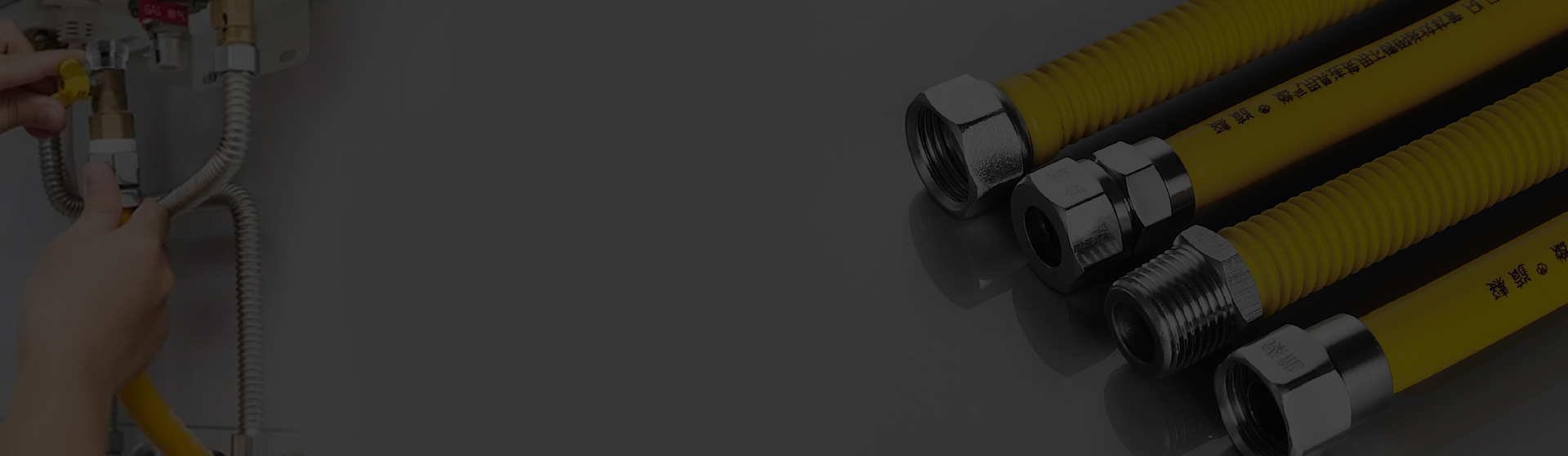

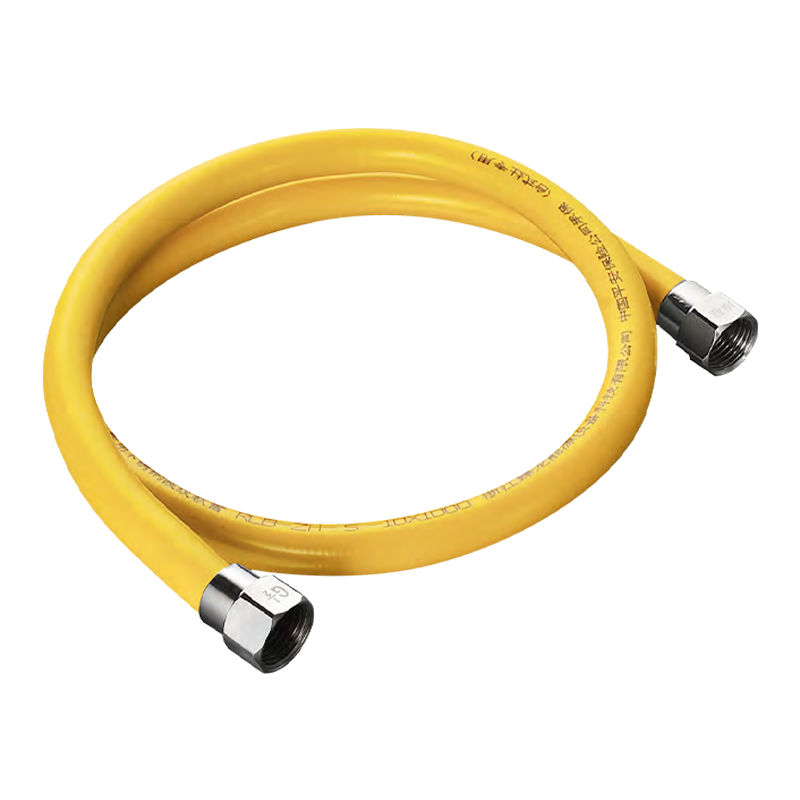
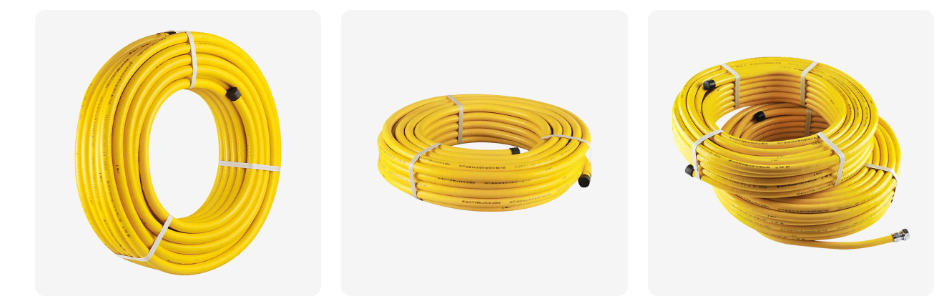
Corrugated stainless steel tubing (CSST) is now one of the most common ways to deliver natural gas inside residential and commercial buildings. But CSST safety is not decided by a single test result or certificate. In practice, a safe CSST system is the combination of four things: the corrosion resistance and fatigue life of the stainless steel itself, the precision of the corrugation process, the quality of the fittings and valves installed at each end, and the electrical bonding and mechanical protection applied during installation. If any one of those links is weak, the whole gas line becomes a risk, no matter how good the pipe looks on the outside.
Content
- 1 What CSST Safety Actually Covers
- 2 Material-Level Safety: Stainless Steel Grade, Corrugation and Corrosion
- 3 Installation Hazards: Bonding, Bending and Mechanical Protection
- 4 Fittings and Valves: Where Leaks Actually Start
- 5 Verifying Safety at the Factory: Manufacturing Quality and Compliance
- 6 Frequently Asked Questions About CSST Safety
What CSST Safety Actually Covers
CSST is a continuous, flexible stainless steel tube with a corrugated wall profile. It replaced rigid black iron pipe in many applications because it is quicker to route, has fewer joints, and can absorb building settlement and seismic movement better than rigid pipe. Fewer joints mean fewer potential leak points, which is the core safety argument for CSST.
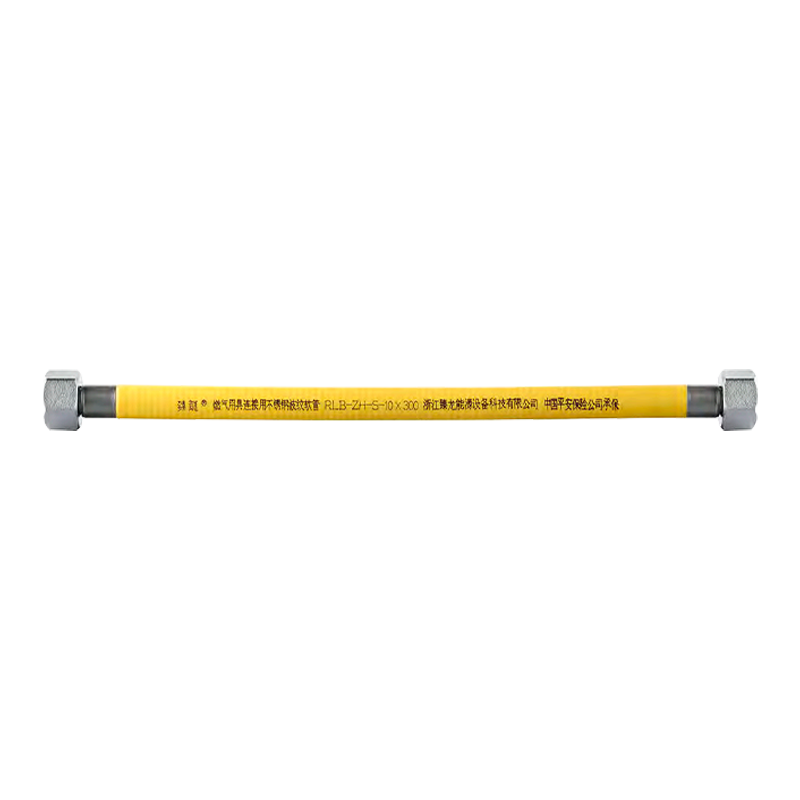
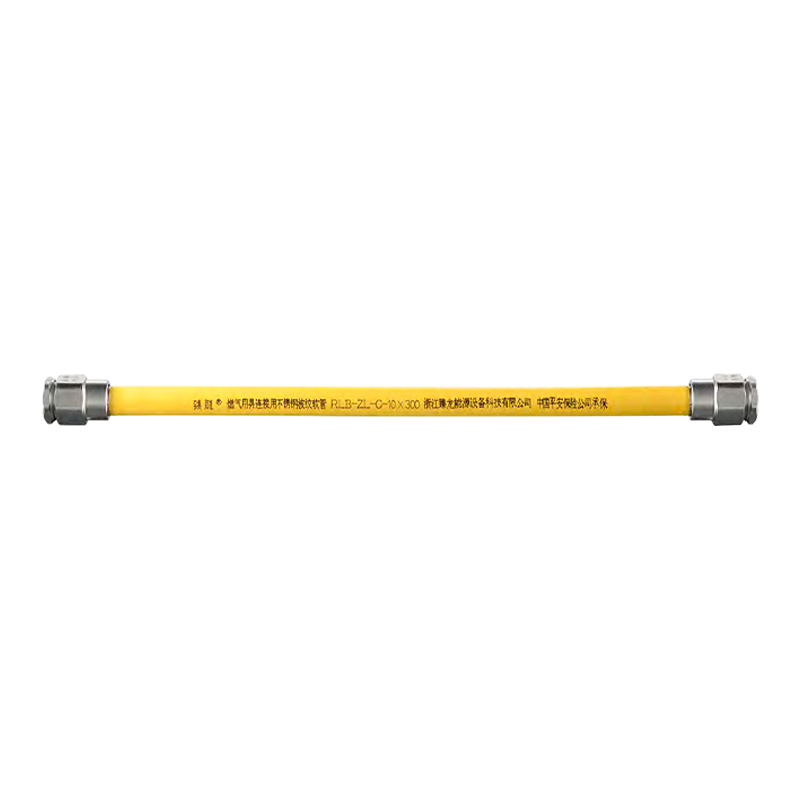
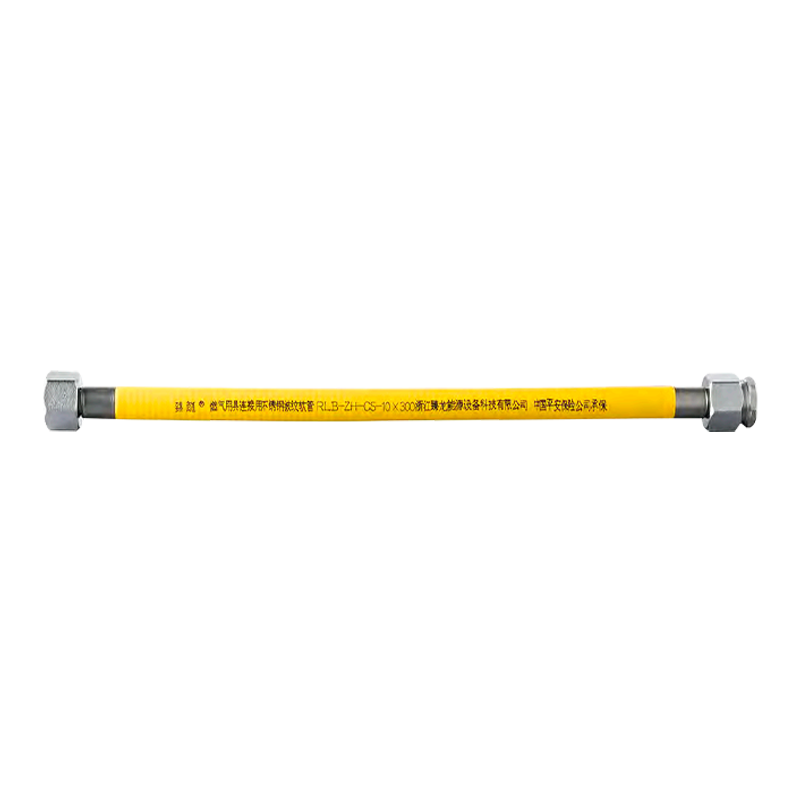
However, the safety conversation rarely stops at the tubing itself. A complete CSST installation includes connectors, ball valves, tees, wall boxes, protective sleeves, and the bonding conductor. Industry incident reviews repeatedly show that most gas leaks are found at the end connections, not in the long run of corrugated tube. That is why a safe CSST system needs to be evaluated as a complete assembly, from the gas meter or manifold to the appliance inlet.
Why The Pipe Alone Is Not Enough
Specifiers sometimes focus only on the stainless steel grade and the wall thickness, then assume the whole system is safe. But the tube is only as reliable as its terminations. A mismatched fitting, an overtightened nut, an unprotected bend, or the absence of electrical bonding can all defeat the material advantages of 304 stainless steel. When you plan a CSST installation, think from the appliance backwards: what will touch the gas, what will hold the joint together, and how will the line be protected where it passes through walls or cabinets.
Material-Level Safety: Stainless Steel Grade, Corrugation and Corrosion
The safety of CSST begins at the mill. Most quality CSST products are made from 304 austenitic stainless steel, a grade with well-documented resistance to general corrosion, good low-temperature toughness, and stable mechanical properties across a wide range of operating temperatures. For gas applications, 304 is the baseline; for aggressive coastal or industrial environments, some projects move to 316 or add a corrosion-resistant outer layer.
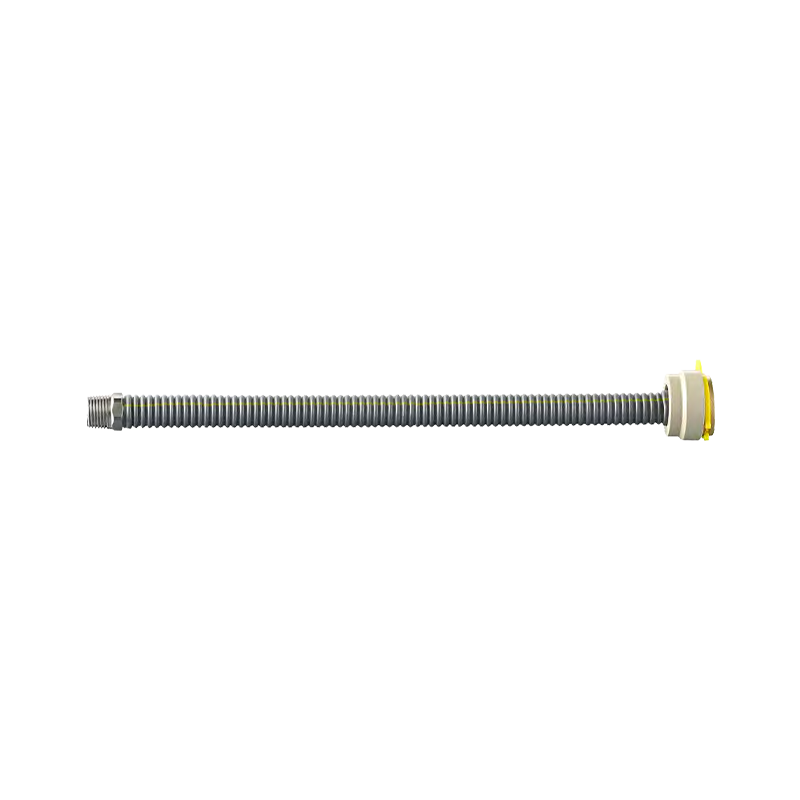
The corrugated profile is not just a flexibility feature. The repeated annular corrugations distribute bending stress over a larger surface area, which softens the impact of vibration from gas appliances and prevents localized strain at a single point. When the corrugation pitch and depth are produced consistently, the tube also has predictable fatigue behavior over many years of pressure cycles. Our engineering review of how the corrugated design reduces the risk of leakage explains why geometry matters as much as metallurgy.
The chart above reflects a common pattern from field failure reports: the highest-energy risks, such as lightning-induced arcing in an unbonded system, pose the greatest threat, while the base stainless steel material itself is rarely the primary failure cause. Actual risk levels depend heavily on your installation environment.
Corrosion Considerations in Real Installations
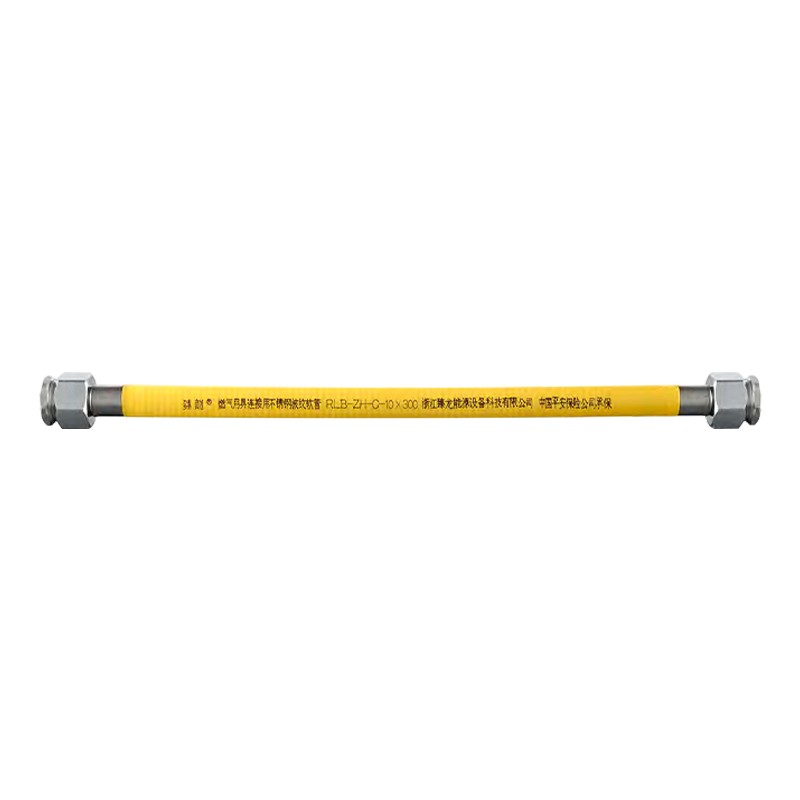
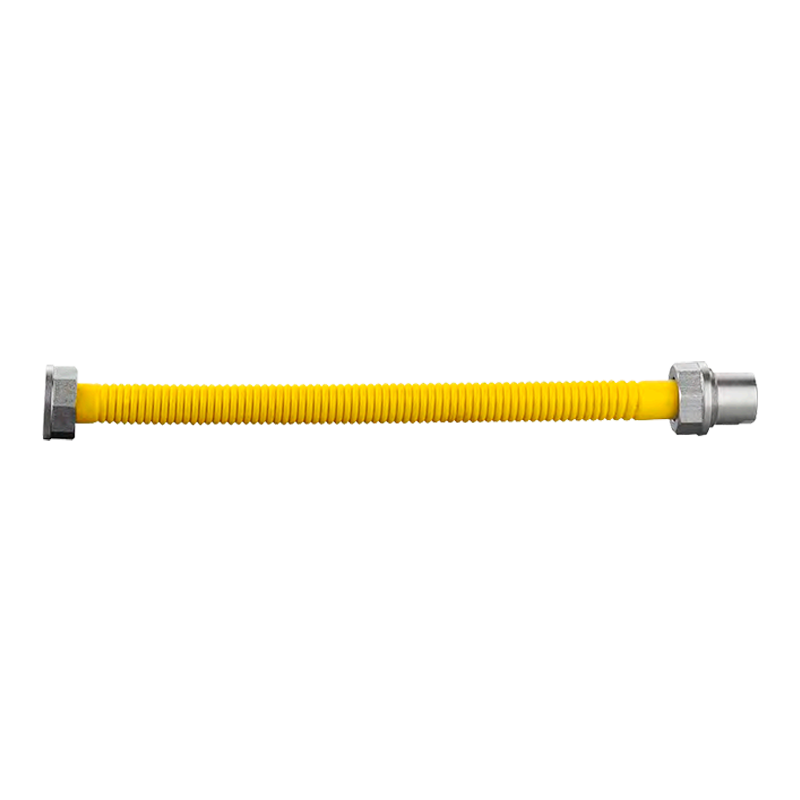
304 stainless steel can suffer pitting or stress corrosion cracking when exposed to chlorides at elevated temperatures. Coastal salt air, de-icing salts tracked into a garage, or cleaning chemicals stored near the gas line can all create a chloride-rich micro-environment. For those situations, a corrosion-resistant stainless steel gas hose with upgraded alloy protection is a more defensible choice than a standard yellow PVC-coated tube. The manufacturing route also matters: a smooth surface from a clean forming and annealing process leaves fewer sites for corrosion to initiate.
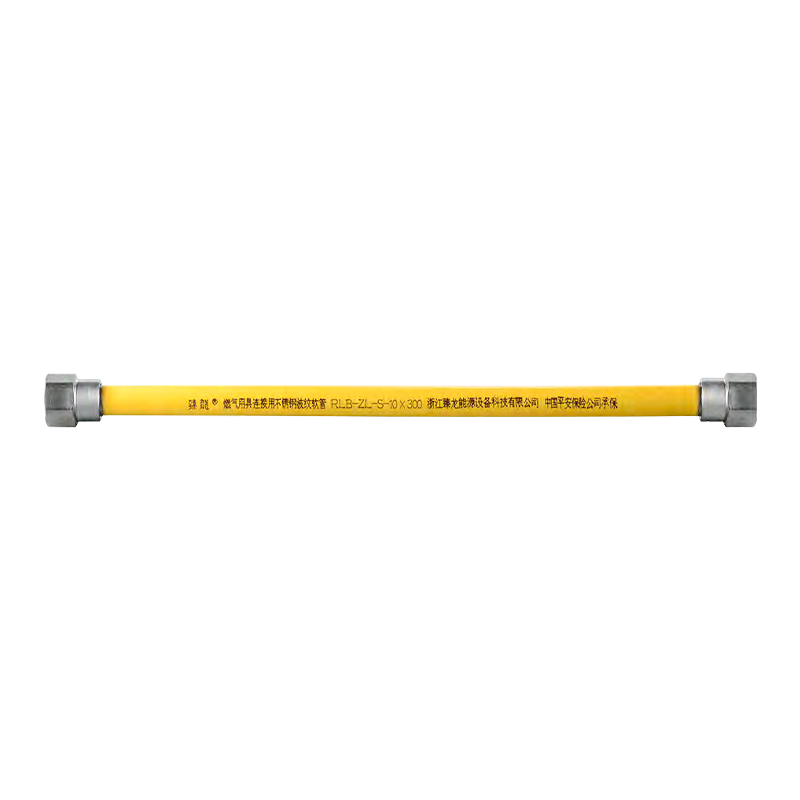 Wholesale Stainless steel corrugated gas hose corrosion-resistant ZLR-05 SupplieZhejiang Zhenlong is China wholesale Stainless steel corrugated gas hose corrosion-resistant ZLR-05 suppliers and OEM/ODM company,The Sta...View Product →
If you are selecting the primary tubing for a whole gas piping system, look for verified material certificates and uniform corrugation geometry. A 304 stainless steel corrugated gas pipe with consistent wall thickness gives you a predictable baseline for pressure rating, bending performance, and long-term durability.
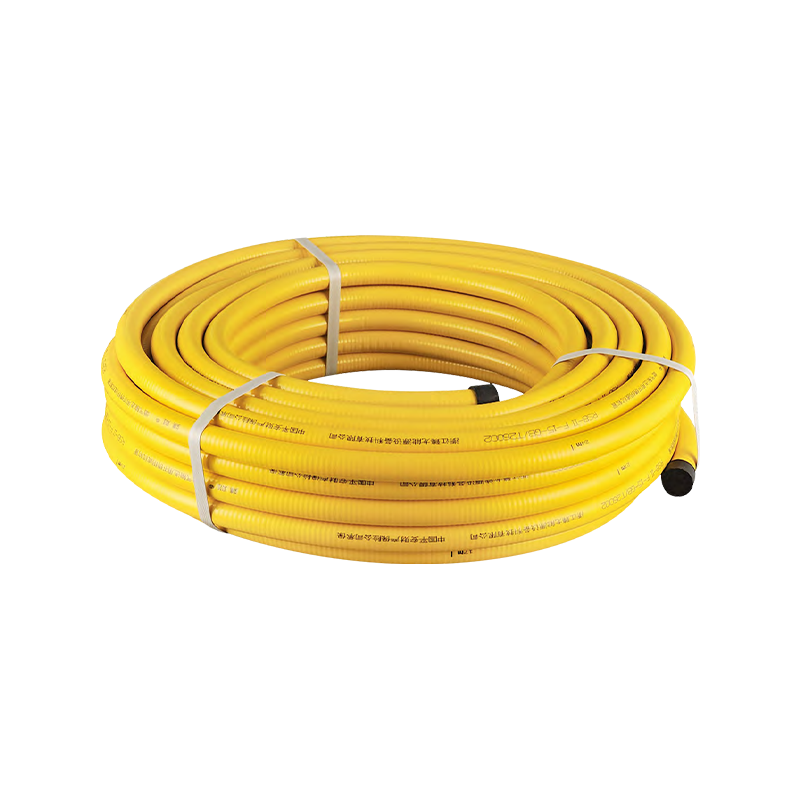 Wholesale 304 stainless steel corrugated gas pipe ZLR-02 Suppliers, CompanyZhejiang Zhenlong is China wholesale 304 stainless steel corrugated gas pipe ZLR-02 suppliers and OEM/ODM company,The 304 stainless steel...View Product →
Installation Hazards: Bonding, Bending and Mechanical Protection
Installation errors cause more CSST safety incidents than material defects. The best-documented issue is lightning damage. If a CSST system is not electrically bonded, a nearby lightning strike can induce a difference in electrical potential between the tubing and nearby grounded metal. That potential difference can create an arc through the thin stainless steel wall, producing a pinhole leak. National codes, including NFPA 54 in the United States, now require bonding for CSST systems. This step is not optional, no matter how convenient the tubing was to route.
Mechanical protection is the second major installation factor. CSST can be bent by hand, but only within the manufacturer's stated minimum bend radius. Repeated bending at the same point, a kink near a connector, or sharp contact with a metal stud can all create a stress concentration that eventually cracks. For lines passing through floors, walls, or cabinets, a protective enclosure is strongly recommended. This is exactly why the wall-embedded switch box became the new safety standard for domestic gas hoses: it fixes the tube in a defined path, keeps it away from sharp edges, and gives installers a clean surface for the valve connection.
For concealed installations, choose a properly rated buried-wall protection box. A well-designed stainless steel buried-wall switch box for home gas hose serves as both a mechanical guard and a structured interface for the shut-off valve, so the flexible tube never takes the weight of the valve or the strain of wall movement.
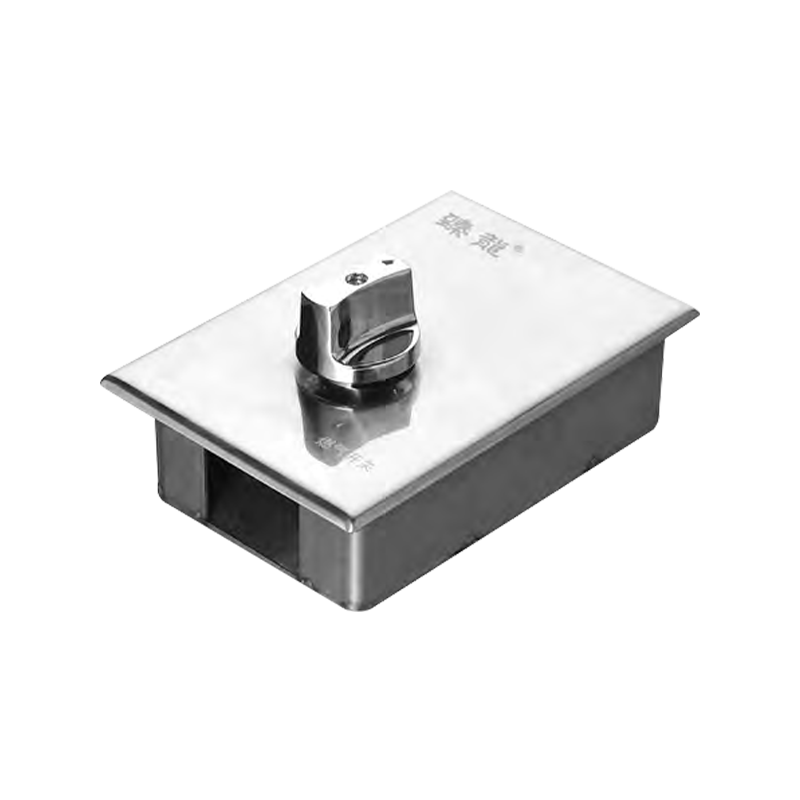 Wholesale Stainless steel buried wall switch box for home gas hose Suppliers, CoZhejiang Zhenlong is China wholesale Stainless steel buried wall switch box for home gas hose suppliers and OEM/ODM company,The Stainless...View Product →
Fittings and Valves: Where Leaks Actually Start
When installers and homeowners describe a CSST leak, the failure point is almost always at a threaded connection, a compression nut, or a valve body, not in the middle of a tube run. That simple observation explains why the fittings are not an afterthought; they are the safety critical layer of the entire gas delivery system.
Ball valves with a solid base isolate the appliance for maintenance. Tees distribute gas to multiple outlets. Wall boxes bring the termination into a controlled position. Each component must have a sealing geometry that matches the corrugated tube end, and the thread type must match your local gas code (for example, NPT in North America or BSP in many other markets). When the tubing, the connector, and the valve are from the same manufacturer, the compatibility is documented; mixing brands on a gas line is a common but avoidable installation risk.
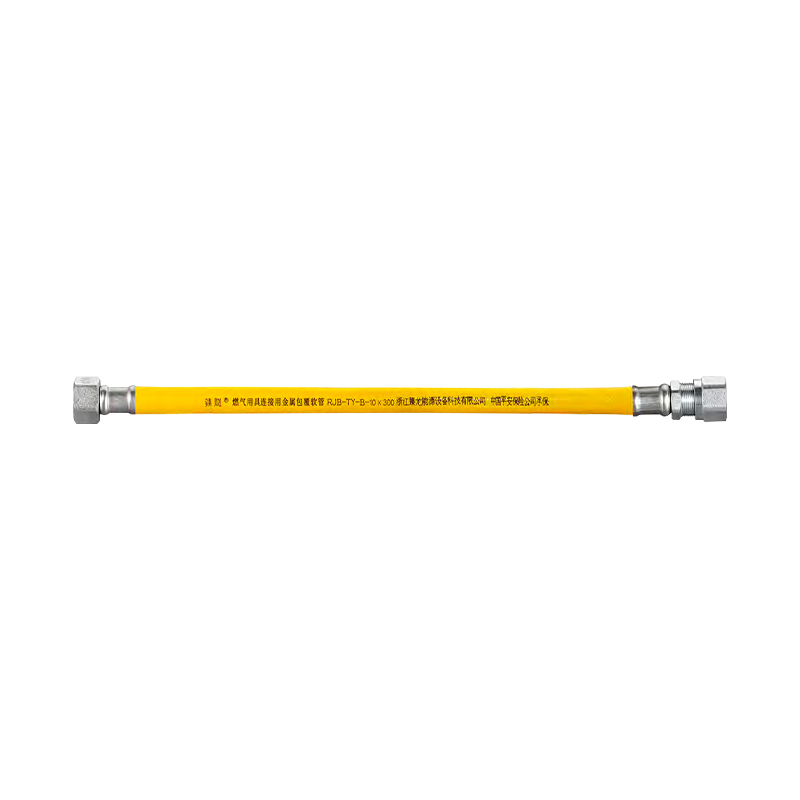
If the job requires extra durability in a kitchen or industrial environment, take time to review how to correctly choose a metal-wrapped stainless steel gas hose before specifying the assembly. Metal wrapping adds abrasion resistance and mechanical strength, but it also changes the bending stiffness and the end-fitting design, so it needs its own careful evaluation.
Verifying Safety at the Factory: Manufacturing Quality and Compliance
A certificate on a website is not the same as a manufacturing system that consistently produces safe tube. When you evaluate a CSST supplier, ask about material analysis, welding process control, and final pressure testing. These are the concrete steps that separate a mature factory from a simple tube importer.
Zhejiang Zhenlong Energy Equipment Technology Co., LTD. is one manufacturer that follows this disciplined path. Based in Yuyao, Ningbo, the company operates a 40-acre facility with a 30,000-square-meter factory building, 30 welding and forming production lines, and two continuous solid-melt hydrogen furnace production lines. Incoming and outgoing materials are checked with a direct-reading spectrometer for metal composition, and finished assemblies are verified with flow-tightness testers. The company holds the People's Republic of China Special Equipment Manufacturing License for pressure piping, has CE certification reports through a national testing center, and is a member of the China Urban Gas Association. Those are not decorative badges; they are evidence that the control points of material traceability, welding, and leak testing are actually in place.
| Check item | Why it matters | Go / no-go cue |
|---|---|---|
| Stainless steel grade and wall thickness | Defines corrosion allowance and pressure rating | Material certificate matches the ordered grade |
| Corrugation uniformity | Irregular waves cause stress concentration | Even pitch and depth across the full length |
| Bonding conductor installed | Prevents lightning-induced arcing through the wall | Per NFPA 54 / local code, measured resistance is low |
| Bend radius respected | Sharp bends crease the corrugation and shorten fatigue life | No kink, no oval deformation at any bend |
| Fitting compatibility | Mismatched threads or sealing surfaces cause leaks | Connector and valve are from the same system family |
| Pressure test after installation | Confirms the whole assembly is gas-tight before service | Test pressure holds for the required duration |
Frequently Asked Questions About CSST Safety
Does CSST need to be bonded?
Yes. An unbonded CSST system is more vulnerable to lightning-induced arcing. Follow NFPA 54 and your local electrical code to bond the tubing before putting it into service.
Can CSST be installed outdoors?
Only if the product carries an explicit outdoor rating for UV and corrosion exposure. Standard yellow PVC-coated CSST is typically intended for indoor gas piping.
What is the minimum bend radius for CSST?
It depends on the tube diameter and wall construction. Always follow the manufacturer's stated minimum; bending beyond that limit will crease the corrugation.
How do I verify a certified CSST product?
Ask for the pressure-piping manufacturing license, the third-party testing report, and any market-specific certifications such as CE. Cross-check the report number if possible.
How long does 304 stainless steel CSST last?
In a dry indoor environment with proper bonding, 304 CSST is normally expected to last several decades. Chloride exposure or mechanical damage will shorten that life.
Are fittings as important as the tube itself?
Statistically, most reported leaks occur at terminations and valves. Invest in matched fittings from the same manufacturer and torque them to specification.