 English
 中文简体
 Español
 عربى

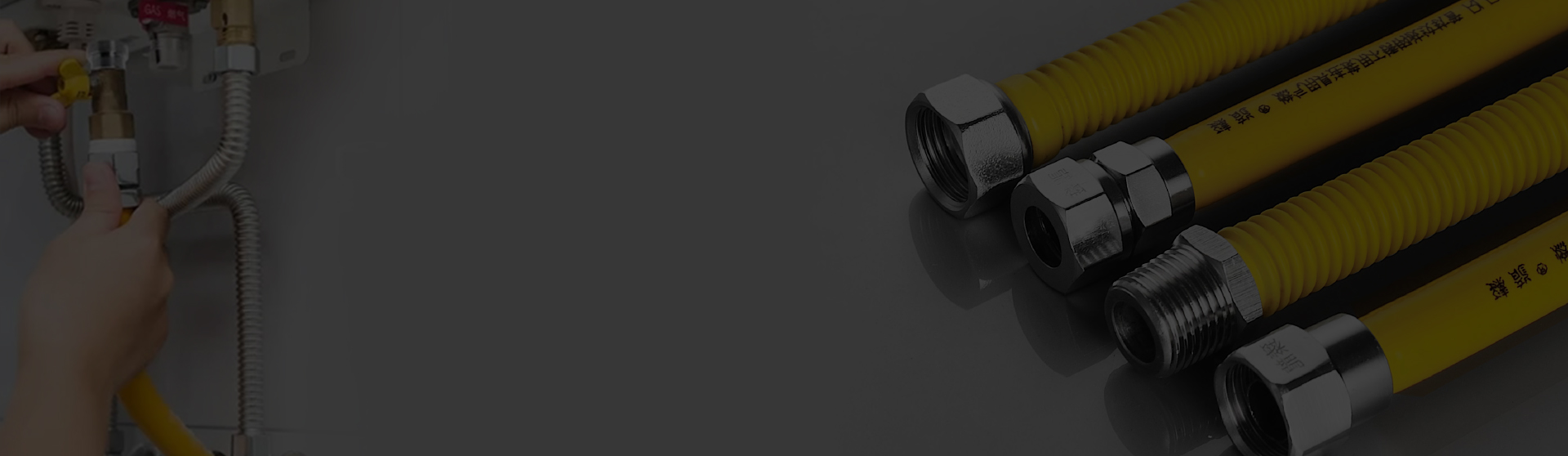

A 199,000 BTU tankless water heater at the far end of a 40 ft run of 1/2-inch CSST is a layout that fails sizing on most published low-pressure tables, and it fails quietly. The burner lights, the unit fires, then it derates or drops out the moment cold inlet water pushes it to full demand. Nothing leaks, no breaker trips, and the tubing is fine. The size is the problem.
So here is the conclusion before the physics: 1/2-inch CSST is an appliance-branch and connector size. At household manifold pressure of roughly 7 in. w.c., it feeds loads up to about 100,000 BTU/hr comfortably on short runs, and its usable capacity drops away quickly once developed length passes 20 to 25 ft. Beyond that point, move to 3/4-inch, or convert the run to a 2 psi system with a dedicated line regulator at the appliance.
Content
- 1 The 1/2-Inch Number Is a Trade Size, Not a Bore
- 2 Why the Same 1/2-Inch Line Carries Less Gas at 40 Feet
- 3 Five Numbers to Collect Before You Cut Tube
- 4 Installation Details That Decide Whether the Job Passes
- 5 Fittings and Valves Decide the Last Five Feet
- 6 Who Manufactures the Tubing Behind These Numbers
- 7 Frequently Asked Questions
The 1/2-Inch Number Is a Trade Size, Not a Bore
The figure on a CSST carton is a nominal trade size inherited from steel pipe conventions. A 1/2-inch tube does not measure 0.500 in. inside; depending on wall thickness and corrugation profile, the bore usually lands somewhere between 0.43 and 0.48 in., with the polymer jacket pushing outside diameter to roughly 0.63 in. This matters when someone pulls a 1/2-inch black iron branch and replaces it with 1/2-inch CSST assuming the capacity transfers one to one. It does not. Smooth-bore steel and corrugated stainless have different friction behaviour, which is exactly why CSST carries its own capacity tables instead of borrowing the pipe tables.
| Trade size | Typical inside diameter | Typical jacket OD | Where it usually belongs |
|---|---|---|---|
| 1/2 in. | 0.43 - 0.48 in. | about 0.63 in. | Range, dryer, fireplace, short appliance branches |
| 3/4 in. | 0.66 - 0.71 in. | about 0.87 in. | Tankless water heaters, furnaces, medium branch runs |
| 1 in. | 0.93 - 1.00 in. | about 1.16 in. | Multi-appliance trunks and long developed lengths |
Brand differences are real. Corrugation pitch, wall thickness and jacket construction all shift the numbers, so a 1/2-inch tube from one listing can carry meaningfully more or less than another at the same length. That is the practical argument against mixing components: the capacity table and the fitting listing belong to the same system, and a mismatch is both a code problem and a warranty problem.
Why the Same 1/2-Inch Line Carries Less Gas at 40 Feet
Capacity falls with length because the pressure budget is fixed. A residential meter delivers gas at about 7 in. w.c., NFPA 54 sizing tables allocate a defined pressure drop across the piping run, and the appliance regulator needs a minimum inlet pressure to work — commonly cited at around 0.3 in. w.c. of available drop at the regulator inlet. A corrugated wall adds turbulence that smooth pipe does not, and every tee, elbow, valve and wall box adds equivalent length. A 20 ft visual run with four fittings behaves like a longer run than the tape measure suggests.
Usable capacity falls fast as the run grows
Capacity index for 1/2-inch CSST at low pressure, normalised so a 10 ft run equals 100. Illustrative trend only - your manufacturer's CFH table governs.
Two consequences follow. First, the far end of a long run is where symptoms appear: the appliance lights and then starves at full fire. Second, raising pressure is often cheaper than raising size. On a 2 psi system with a line regulator at each appliance, the same 1/2-inch tube carries several times the gas, because gas density is higher and the permitted drop is larger relative to supply. The trade-off is one regulator per appliance, tighter installation rules, and an inspector who wants to see the regulator sizing documented.
Five Numbers to Collect Before You Cut Tube
Sizing a 1/2-inch CSST gas line is arithmetic, not judgement. Gather these five inputs and the answer usually makes itself obvious:
- Total connected load - add the nameplate inputs of every appliance served by the run, then apply the diversity allowance your code permits.
- Developed length - the longest physical path including verticals and risers, plus equivalent length for each fitting, valve and wall box.
- Supply pressure - 7 in. w.c. for a standard residential system, or 2 psi with line regulators.
- Allowable pressure drop - taken from the code sizing table for that pressure regime, not estimated.
- Appliance requirement - many installation manuals specify a minimum inlet pressure and a connector size that overrides your preference.
Typical nameplate input of common gas appliances
Input ratings in BTU/hr taken from typical residential nameplates. Always read the actual data plate on the unit being connected.
| Developed length | Load up to 70,000 BTU/hr | 70,000 - 120,000 BTU/hr | 120,000 - 200,000 BTU/hr |
|---|---|---|---|
| Up to 15 ft | 1/2 in. fine | 1/2 in. usually fine | 3/4 in. |
| 16 - 25 ft | 1/2 in. fine | 1/2 in. borderline | 3/4 in. |
| 26 - 40 ft | 1/2 in. borderline | 3/4 in. | 3/4 in. or 2 psi system |
| Over 40 ft | Step to 3/4 in. | 3/4 in. or 2 psi system | 2 psi system with line regulator |
Installation Details That Decide Whether the Job Passes
A correctly sized tube installed badly is still a failed inspection. Four items account for most of the callbacks we hear about.
Bonding is not optional
NFPA 54 Section 7.13 requires CSST systems to be bonded to the grounding electrode system with a conductor no smaller than 6 AWG copper or equivalent. That bond is separate from the appliance equipment ground, and it is one of the most common red tags on a CSST job - roughly ten minutes of work if it is done before the drywall closes.
Bends, support and protection
Manufacturers typically publish a minimum bend radius around 3 in. for 1/2-inch tube. Bending tighter work-hardens the corrugations, and a kinked tube can pass a pressure test today and crack two winters later. Support horizontal runs at roughly 4 ft intervals or as the listing requires, fit strike plates where the tube passes through studs and plates, and never use the tubing to carry the weight of anything else.
Concealment and burial
CSST cannot be embedded directly in concrete, runs through masonry need a sleeve, and underground installation is limited to products and methods the manufacturer lists for it. If the design pushes the line below grade, read our summary of the rules for burying a CSST gas line before the trench is backfilled.
Termination fittings and test pressure
Fittings are system-specific: push the tube fully home to the insertion mark, and never re-use or re-torque a fitting that has been taken apart once. Pressure-test at the manufacturer's specified figure. CSST has a listed rating, and over-pressurising a line to prove it is how good tube gets damaged.
Anatomy of a 1/2-inch CSST branch
- 1 - Wall shutoff box with quarter-turn valve, reachable without tools
- 2 - Strike plate protecting the tube where it passes a stud
- 3 - Support clamp at roughly 4 ft intervals
- 4 - Listed termination fitting entering the appliance
Schematic layout diagram, not to scale. Component selection and spacing follow the manufacturer's installation instructions.
Fittings and Valves Decide the Last Five Feet
A 1/2-inch run is only as good as its two ends. At the appliance you need a listed termination fitting plus a connector rated for that appliance's input; at the wall you need a shutoff someone can reach in a hurry. A wall box with a quarter-turn ball valve is the familiar solution, and a single nozzle valve with an excess-flow cutoff adds protection by closing if the hose downstream is severed. Both must be listed for gas service - a water valve with a matching thread is not a substitute, and inspectors notice.
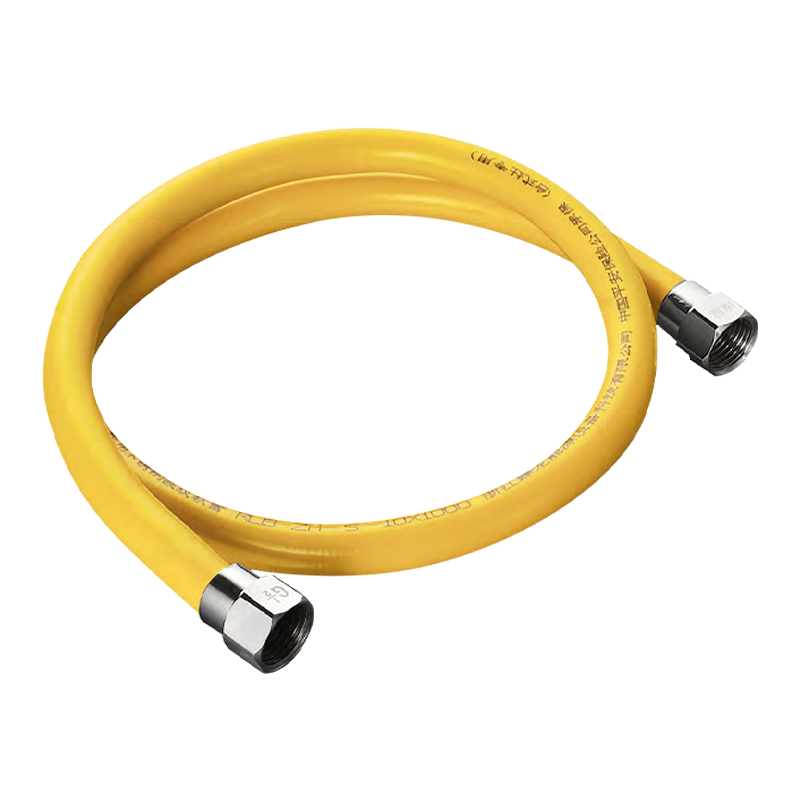
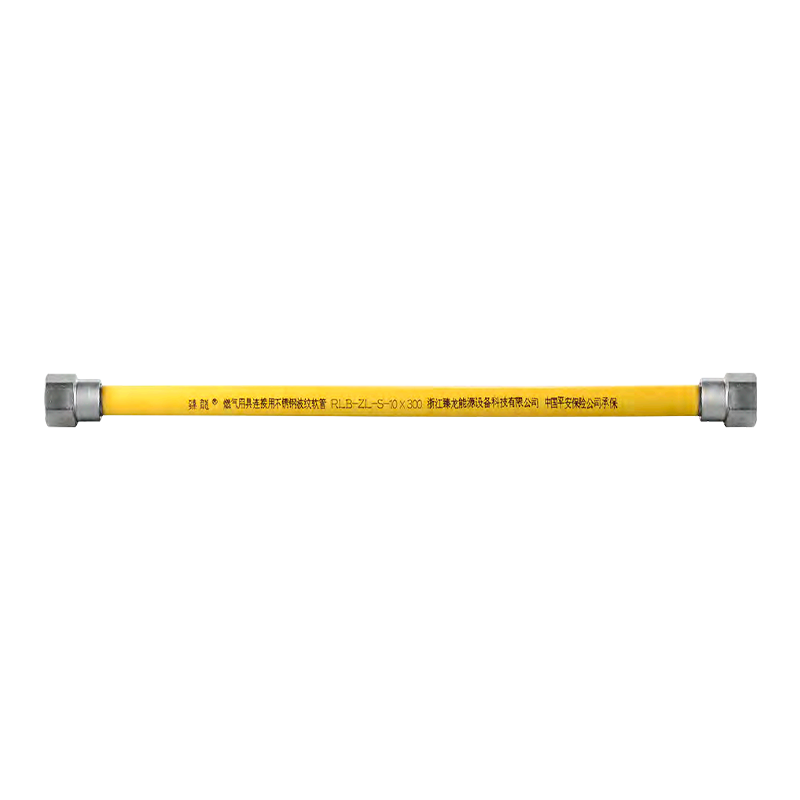
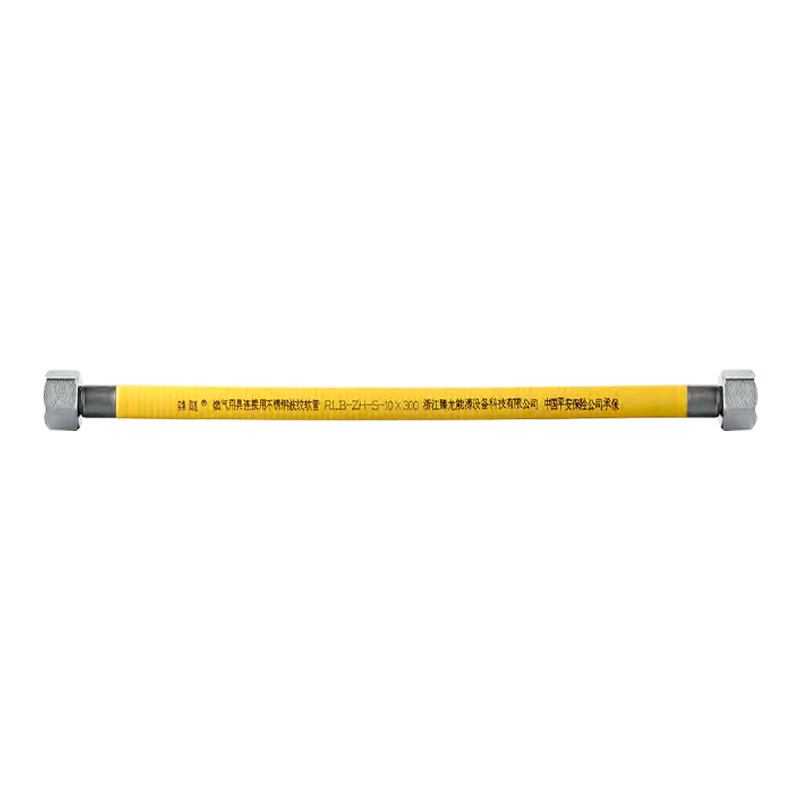
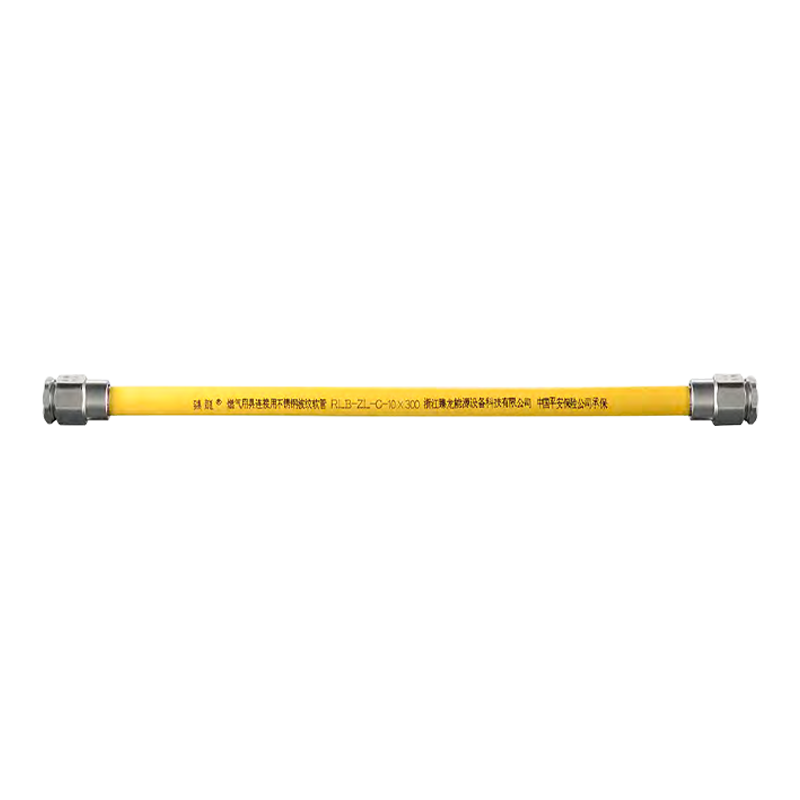
The same logic drives our own product range: stainless steel corrugated tubing and fittings for gas piping systems are produced as a matched set, so the capacity table, the tubing and the connection hardware belong to one system rather than three.
Who Manufactures the Tubing Behind These Numbers
Zhejiang Zhenlong Energy Equipment Technology Co., LTD. is a company engaged in the research and development, manufacturing, and processing of energy equipment. We manufacture and process metal hoses, natural gas pipelines, plumbing fittings, sanitary ware, valves, plastic products and hardware, combining industry and trade under one roof. The plant sits in Yuyao, Ningbo, Zhejiang, covering 40 acres with 30,000 square meters of factory building, 30 welding and forming production lines and 2 uninterrupted solid melting hydrogen furnace production lines. Testing equipment includes a metal material analysis direct reading spectrometer and a flow tightness tester.
We strictly implement the ISO9000:2008 quality management system and hold the People's Republic of China Special Equipment Manufacturing License (Pressure Pipeline) together with an EU CE certification national testing center report. The company is a member of the China Urban Gas Association, and a strong R&D, design and production team supports customers with safe pipe fittings plus comprehensive pre-sales and after-sales service. Our business grows from sincere cooperation with friends at home and abroad.
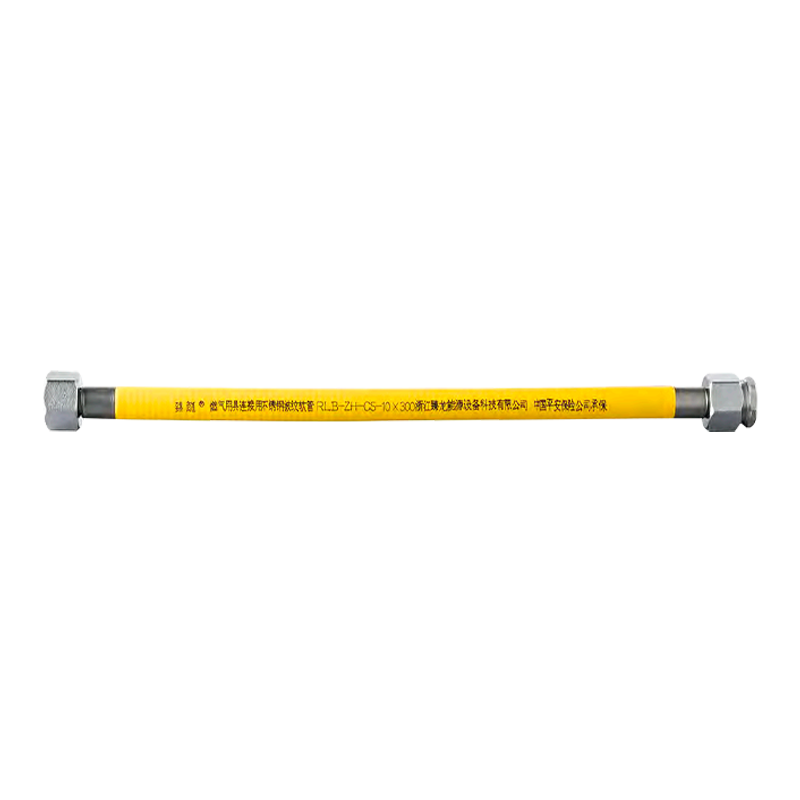
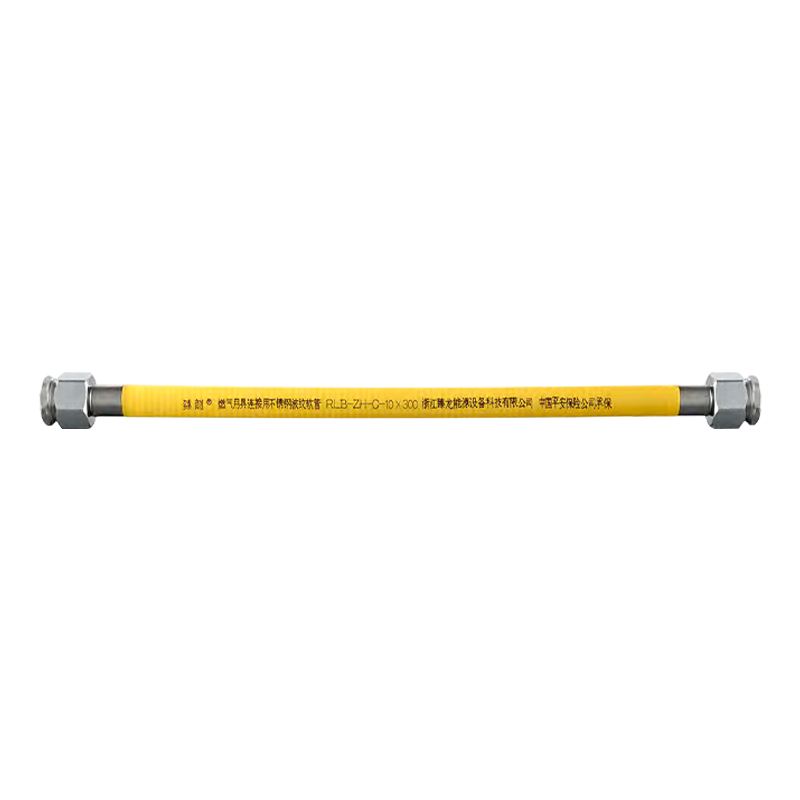
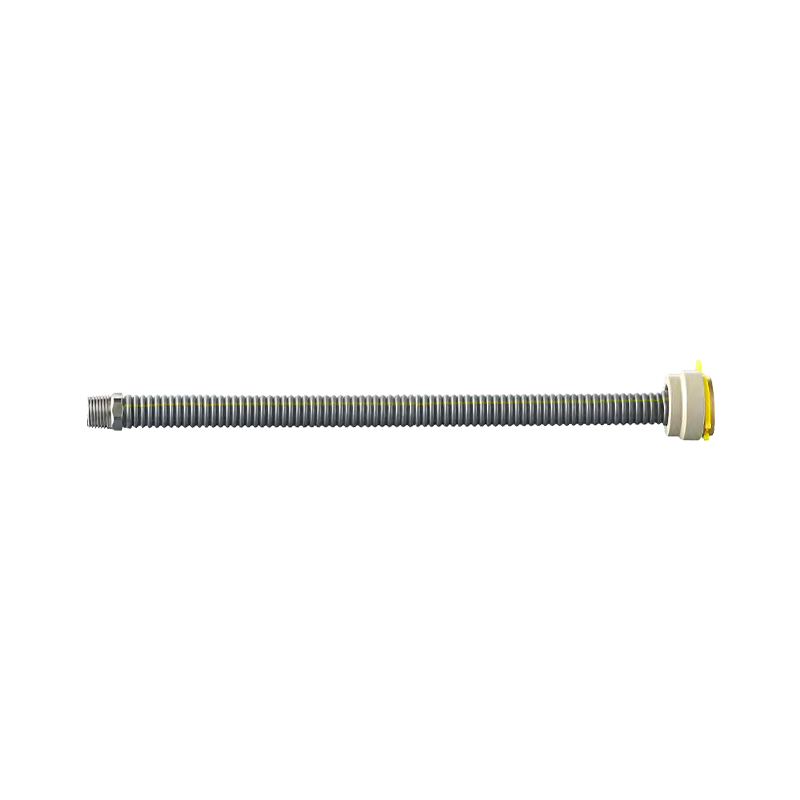
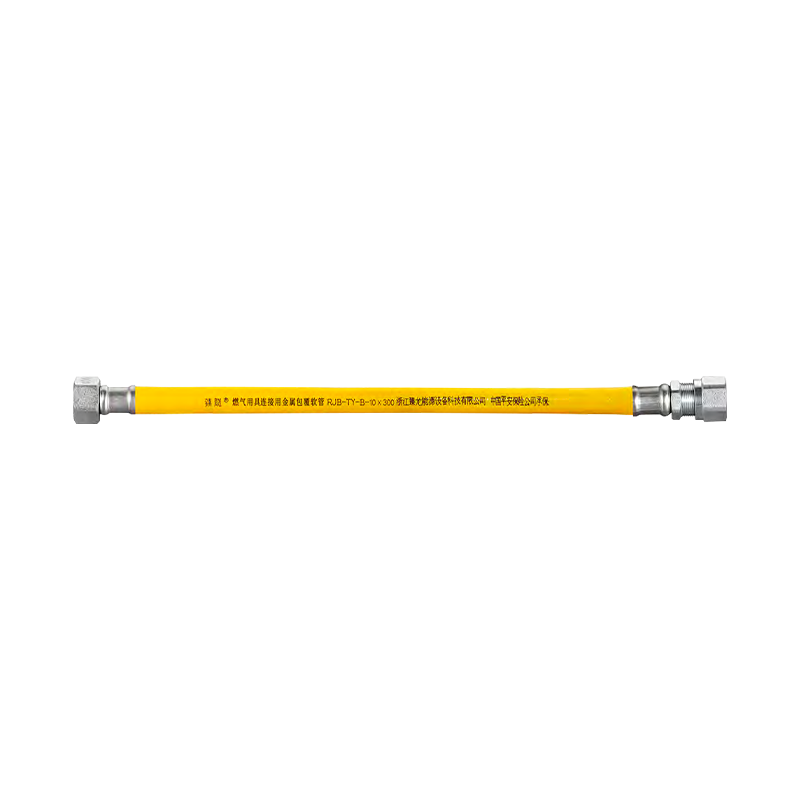
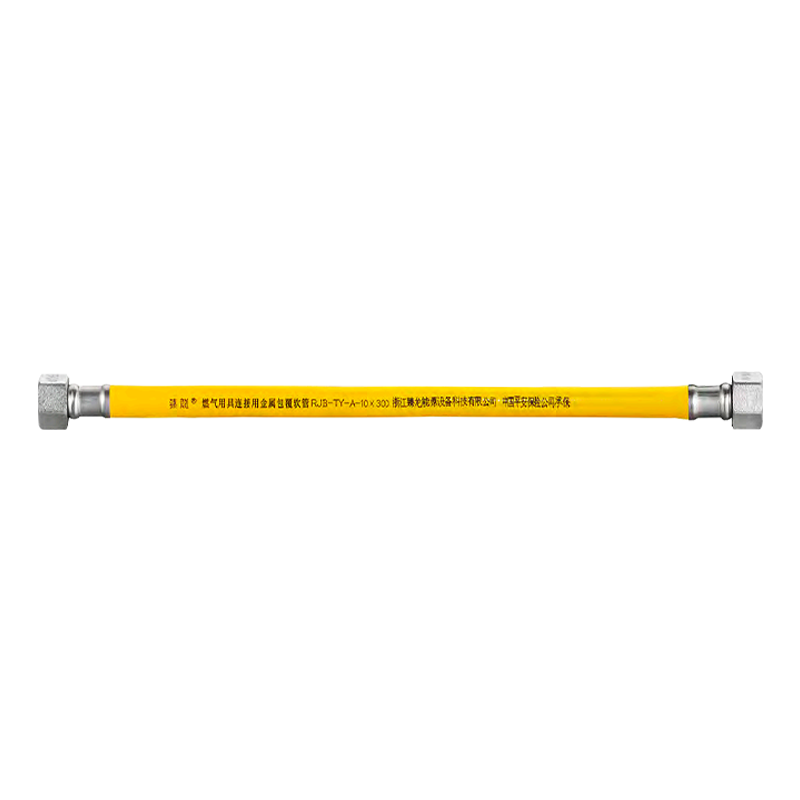
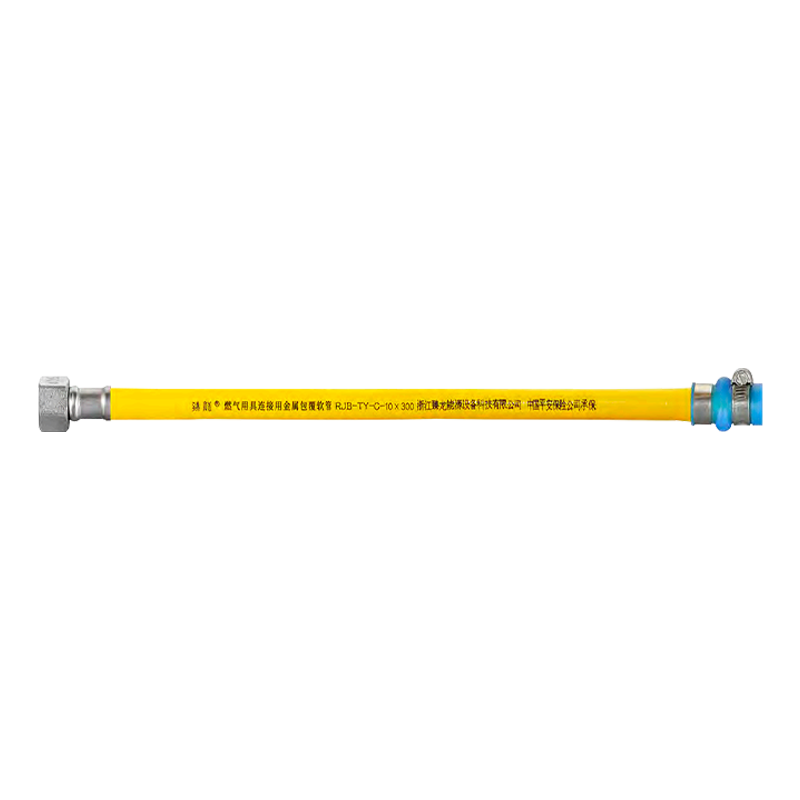
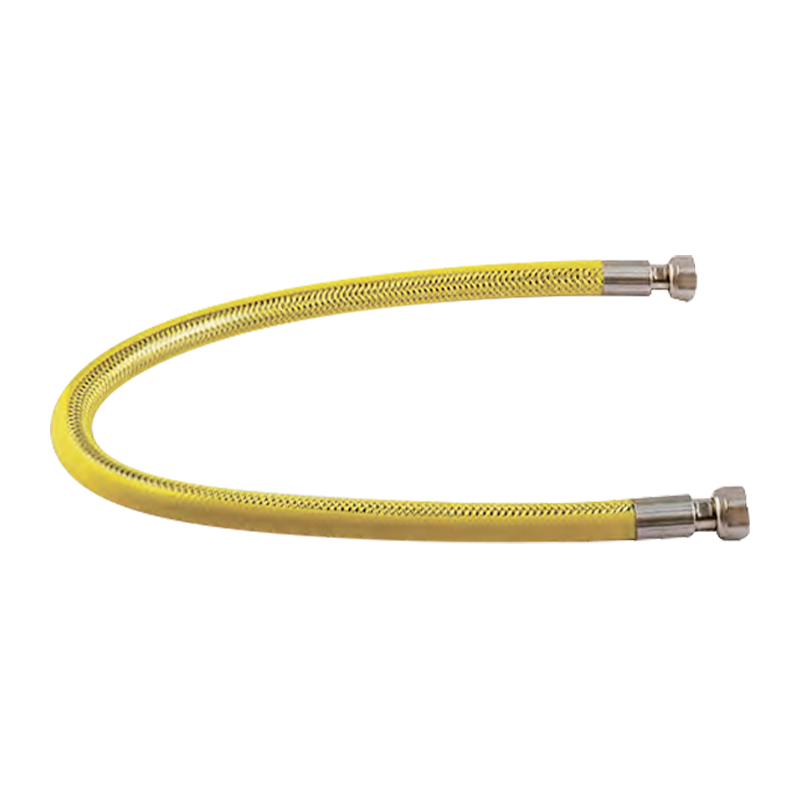
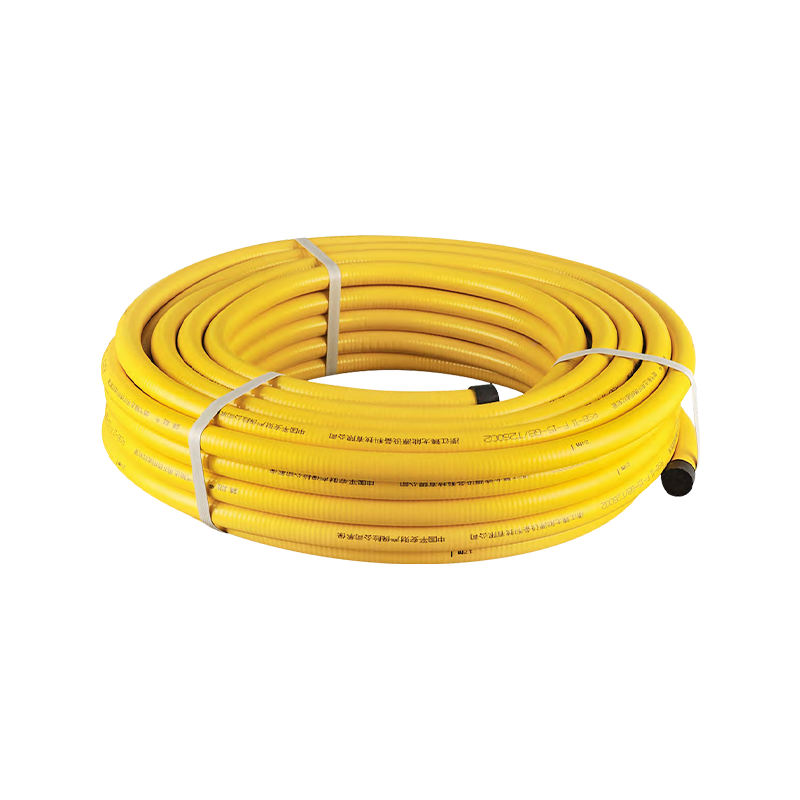 304 Stainless Steel Corrugated Gas Pipe ZLR-02Flexible DN10–50 gas hose with 304 stainless steel bellows and yellow PVC coating for corrosion and temperature protection.View Product →
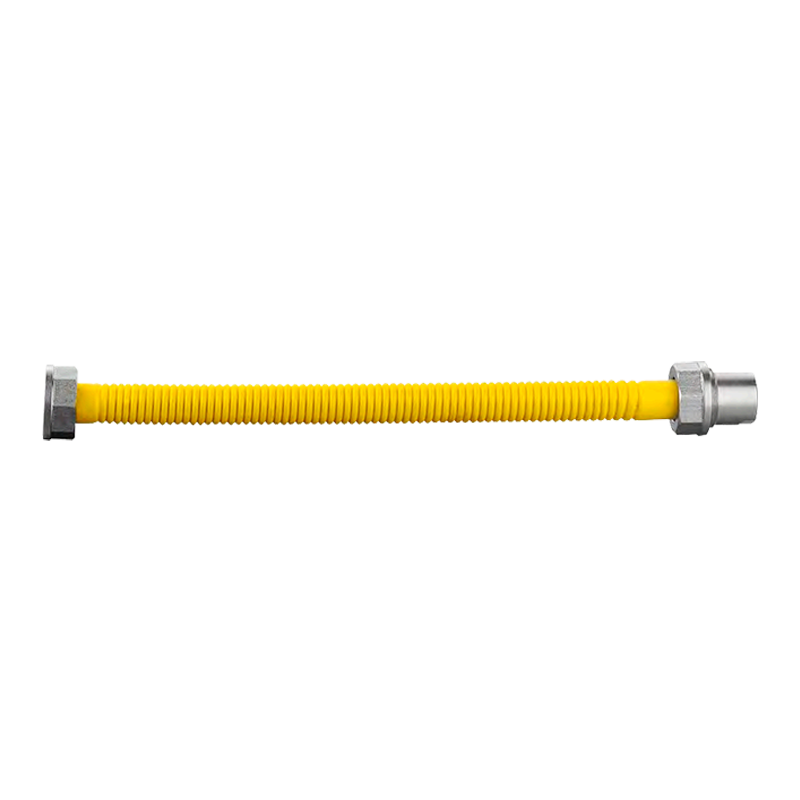
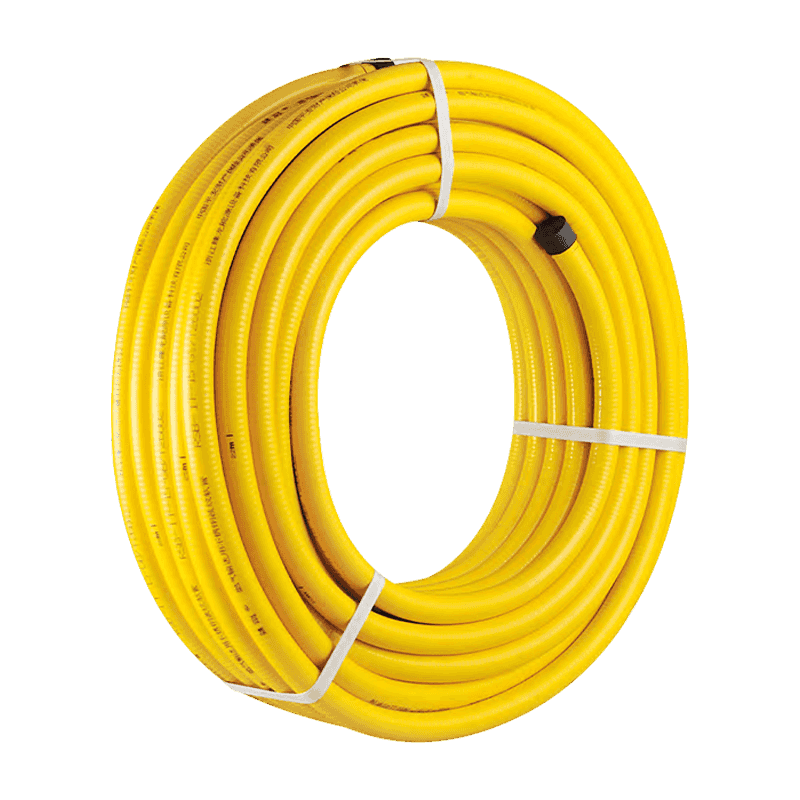 Yellow PVC-Coated Stainless Steel Gas Hose ZLR-01Flexible DN13–50 gas hose with 304 stainless steel bellows, yellow PVC coating, and multiple connection options for industrial and commercial installations.View Product →
 Gas Single Nozzle Valve ZLP-017DN15 single-nozzle valve for precise gas flow control, sealing, and corrosion-resistant performance in residential and industrial gas systems.View Product →
Frequently Asked Questions
Q1. How many BTU can a 1/2-inch CSST gas line carry?
On low-pressure systems, short runs of roughly 10 to 15 ft commonly land near 100,000 BTU/hr in published tables, and the usable figure can fall by about half by 30 to 40 ft. Use the manufacturer's CFH table for the exact number.
Q2. Can 1/2-inch CSST be buried in concrete or underground?
Not directly in concrete. Underground use is limited to products and methods the manufacturer lists for burial, usually inside a sleeve or approved enclosure, and local code has the final word.
Q3. Does CSST need a bonding wire?
Yes. NFPA 54 Section 7.13 calls for a bond of at least 6 AWG copper or equivalent from the CSST system to the grounding electrode. The appliance's equipment ground does not satisfy that requirement.
Q4. What size CSST do I need for a tankless water heater?
Most residential tankless units draw 150,000 to 199,000 BTU/hr, which is beyond 1/2-inch at anything but a very short run. Plan on 3/4-inch, or 1/2-inch on a 2 psi system with a dedicated line regulator.
Q5. What is the minimum bend radius for 1/2-inch CSST?
Around 3 in. for most listings. Tighter bends deform the corrugations and create a fatigue point; if the geometry needs a sharper turn, use a fitting instead of forcing the tube.
Q6. Can I mix fittings from different CSST brands?
No. Fittings are listed as part of a specific tubing system. Mixing them voids the listing and often the warranty, and it is one of the first things an inspector checks.
If you are sizing a 1/2-inch branch for a specific appliance, send over the developed length, inlet pressure and nameplate input. Those three figures are usually enough to confirm whether 1/2-inch holds, or whether the job needs 3/4-inch or a 2 psi layout with line regulators.