 English
 中文简体
 Español
 عربى

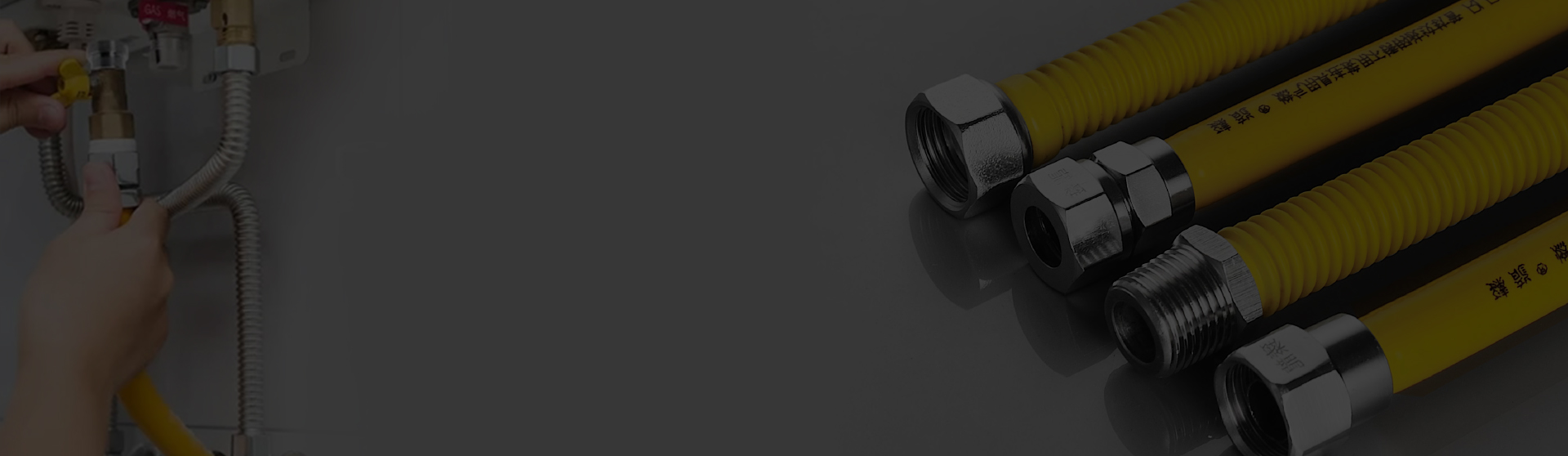

A flexible gas connector is usually the shortest component in a gas installation, and the one with the least room for error. On a domestic water heater it may run less than a meter, turn 90 degrees around a wall, absorb burner vibration, and still be expected to hold a leak-free seal for a decade.
The short answer for anyone specifying or buying these parts: choose a corrugated stainless steel connector that carries a recognised listing, keep its length inside the standard limit, and match both end fittings to the gas valve and the appliance inlet. Those three decisions carry most of the risk. Braid, jacket, nut material and coating improve durability at the margin, not the fundamentals.
The reasoning is unglamorous. A connector leaks for one of three reasons: the tube is mechanically damaged during or after installation, a fitting loses compression, or the material corrodes through. Every purchase specification worth writing maps back to one of those three failure paths.
Content
What Counts as a Flexible Gas Connector
The phrase covers four products that get mixed up on purchase orders, and the difference matters once the goods arrive.
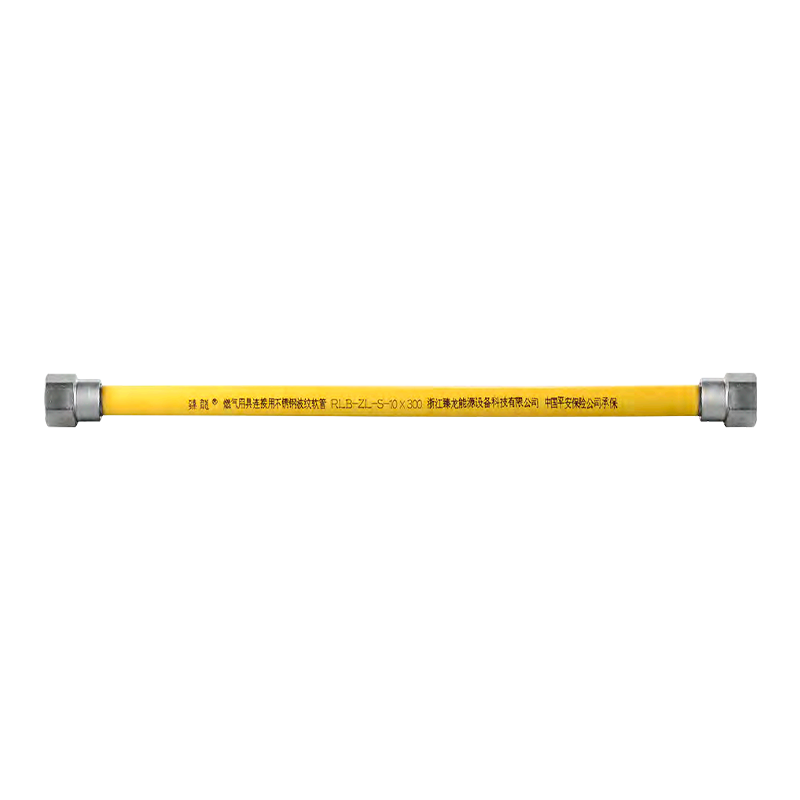
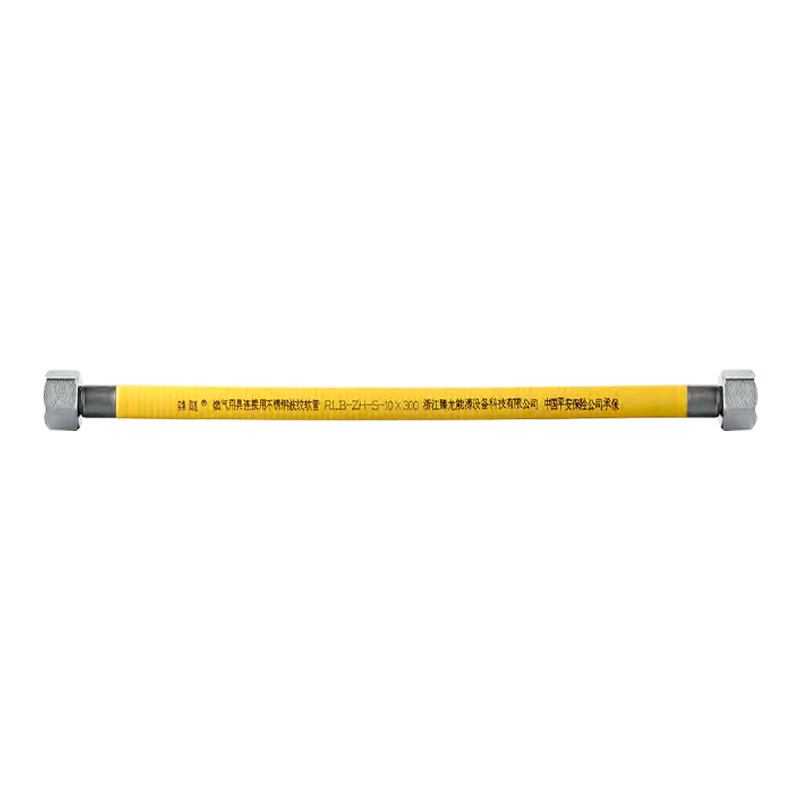
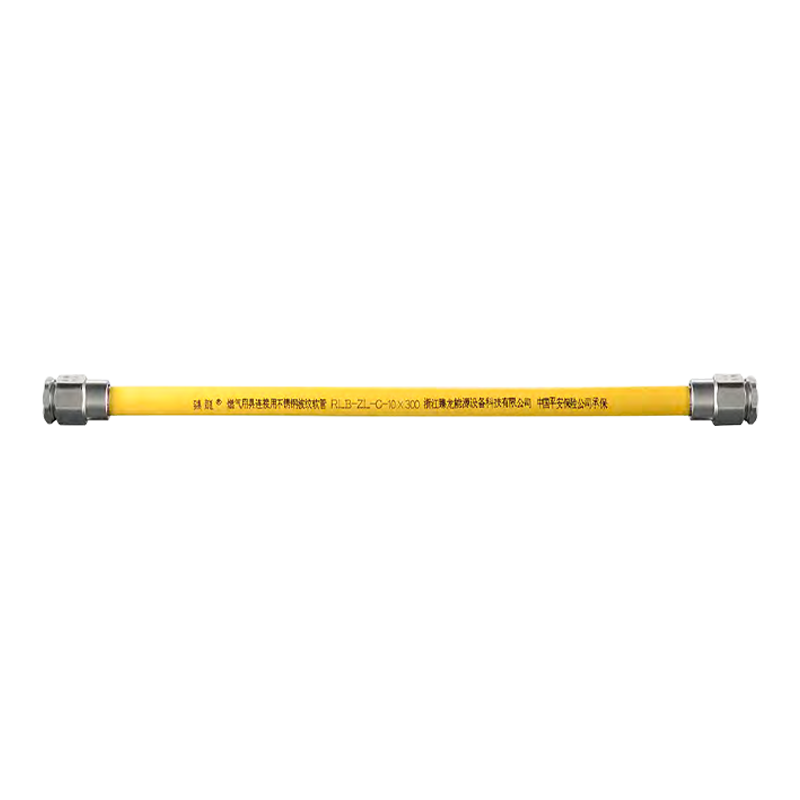
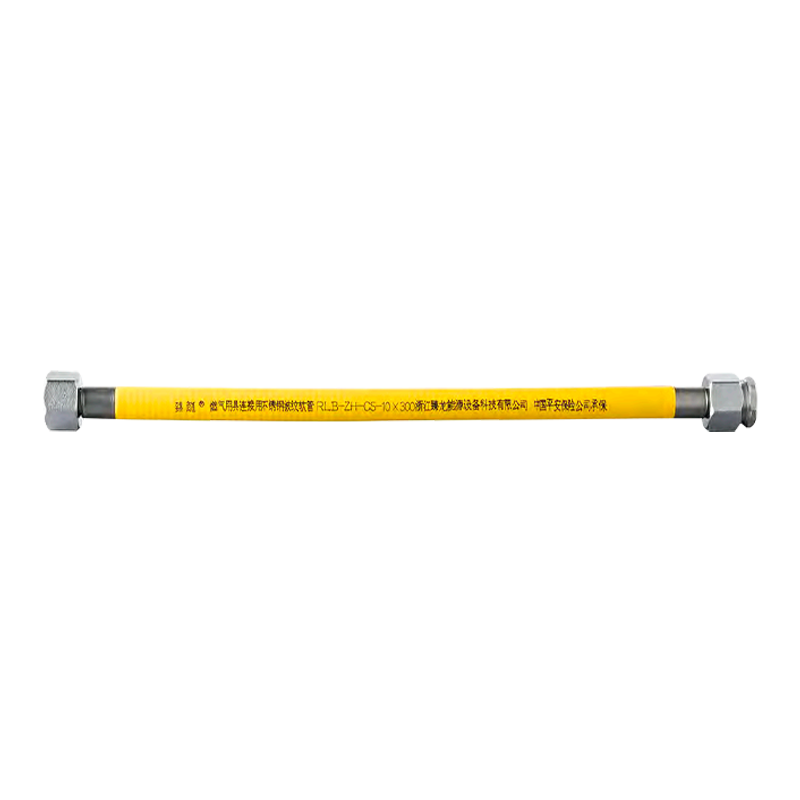
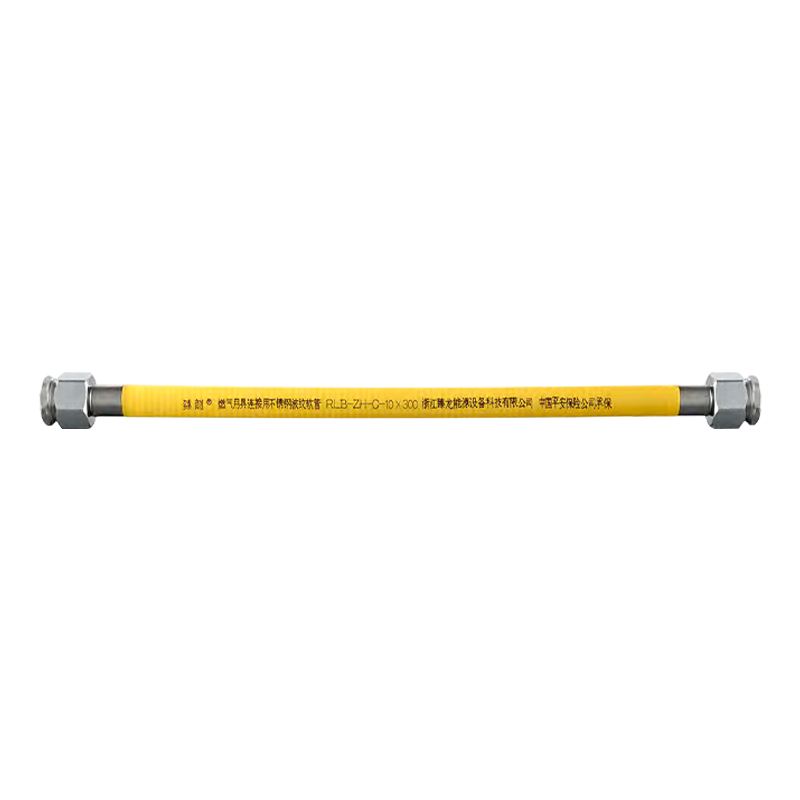
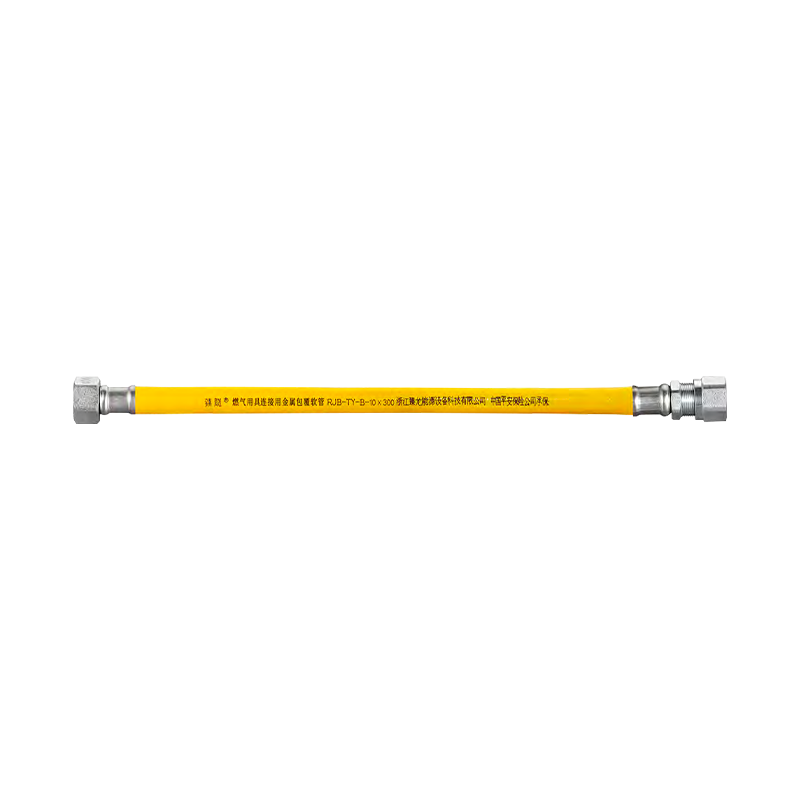
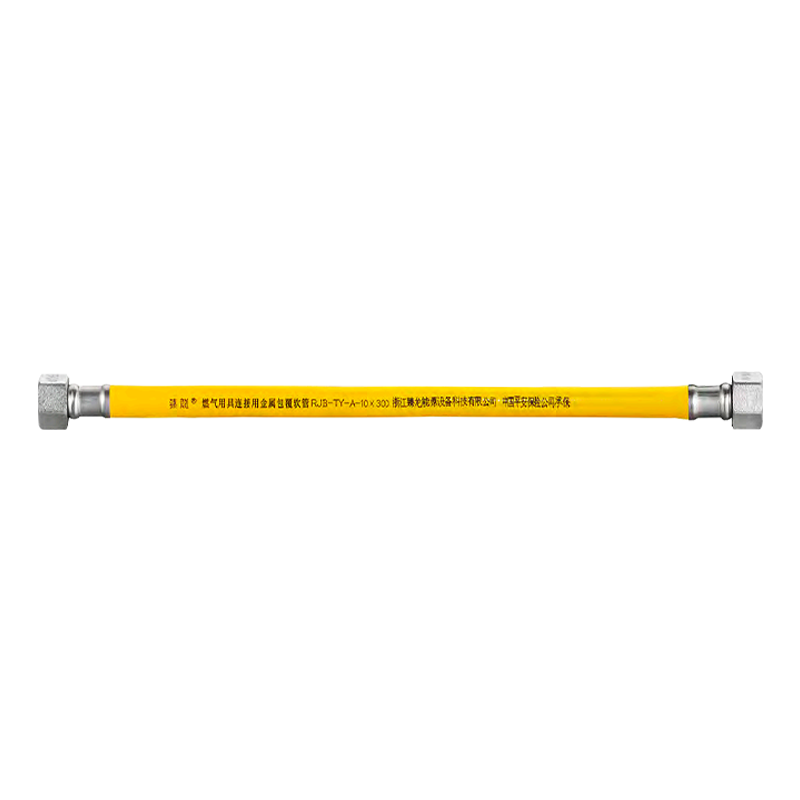
- Appliance connector: a short, factory-assembled hose with crimped or welded end fittings, sold in fixed lengths to link an appliance to a gas outlet. In North America these are covered by ANSI Z21.24 / CSA 6.10; the European corrugated equivalent falls under EN 14800.
- Corrugated stainless steel tubing (CSST): a semi-flexible distribution pipe routed inside walls and ceilings to feed one or more outlets, usually supplied in coils such as 9 m, 23 m and 46 m (30, 75 and 150 ft).
- Metal-wrapped hose: a corrugated stainless tube with a metal or PVC outer layer, used where abrasion, cleaning agents or moisture are expected.
- Braided hose with a polymer core: flexible and inexpensive, widely used in water and low-pressure air service, and still sold for gas in some markets.
A braided polymer hose and a corrugated stainless connector can look similar on a packing list and behave very differently after five years above a hob. The gas path is the deciding line: if the gas touches a polymer, the service life is capped by that polymer.
Three Checks That Decide Whether a Connector Fits
Most rejected shipments fail on something that could have been checked at the quotation stage, before tooling or freight was committed.
| Check | What to verify | Typical value or limit | Consequence if wrong |
|---|---|---|---|
| End connections | Thread type and size at both ends | 1/2 in. NPT, 3/8 in. flare, BSPP, sleeve or flange | Forced adapters, cross-threading, joints that cannot be tightened to spec |
| Length | Routed length, not straight-line distance | Appliance connectors are commonly capped near 1.8 m (6 ft) | Kinked tube, tension on the fitting, failed inspection |
| Listing and marking | Standard reference printed or stamped on the hose and packaging | ANSI Z21.24 / CSA 6.10, EN 14800 | Product refused at site inspection, no traceable liability |
| Pressure and temperature | Margin above supply pressure and ambient heat | Domestic supply is typically around 20 mbar in Europe and 4 to 7 in. w.c. in North America | Wall thinning, jacket cracking, hardened seals |
| Materials | Stainless grade, fitting alloy, jacket type | 304 or 316 stainless; brass or stainless fittings | Pitting, pinhole leaks, galvanic corrosion at the joint |
| Traceability | Batch code, material certificate, pressure test record | Factory test report per batch | No way to isolate a defective lot after delivery |
Inside the Hose: What Each Layer Does
A corrugated stainless connector is not a single tube. It is a stack of layers, and each one answers a specific failure path.
The inner tube, normally 304 stainless, carries the gas. Corrugation is what makes it flexible without thinning the wall at the bend: the movement is shared across many rings instead of concentrating in one spot. The stainless braid, when fitted, takes axial pull and limits how far the corrugation can extend under pressure. The outer layer, whether PVC, flame-retardant PVC or metal wrap, handles abrasion, cleaning chemicals and UV. The ferrule or welded joint between tube and fitting is where the vast majority of field leaks actually begin.
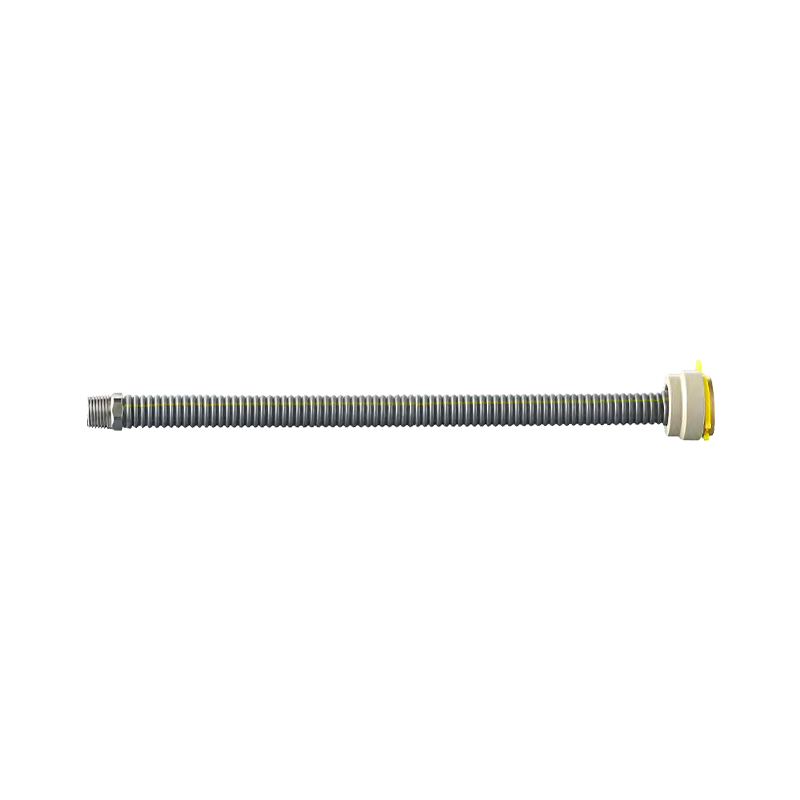
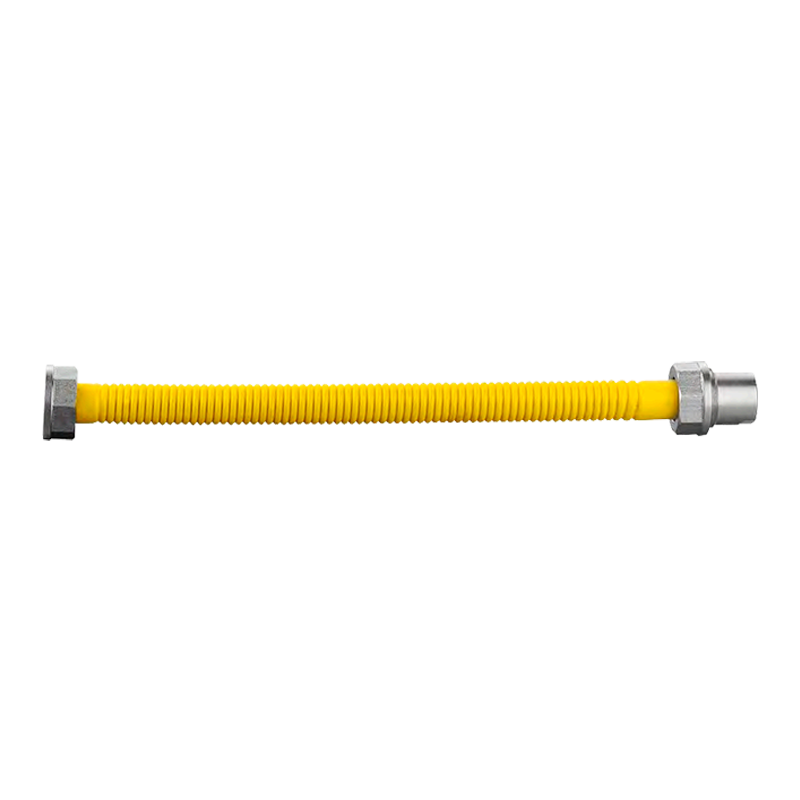 Braided Stainless Steel Corrugated Gas Hose ZLR-16Braided stainless steel corrugated gas hose with PE jacket and threaded fitting; the braid adds pull resistance for movable appliances or long runs.View Product →
Braiding is a choice, not a default. It adds pull resistance and protection, and it costs more. For a fixed appliance with a short, well-supported run, a plain corrugated connector is often sufficient; for a movable appliance, a long horizontal run or a commercial kitchen where the hose is handled daily, the braid earns its price.
Comparing the Common Constructions
Four constructions dominate the market. They are not ranked on one line, because the trade-offs move depending on the application.
Illustrative comparison of typical construction behaviour, based on material properties and field experience; it is not a laboratory test result.
Two conclusions fall out of that picture. First, the polymer-core hose wins on flexibility and loses badly on heat and ageing, which is why the U.S. Consumer Product Safety Commission has warned about older rubber gas connectors and advises replacement when in doubt. Second, the metal-wrapped and the braided corrugated hose trade places depending on environment rather than performance.
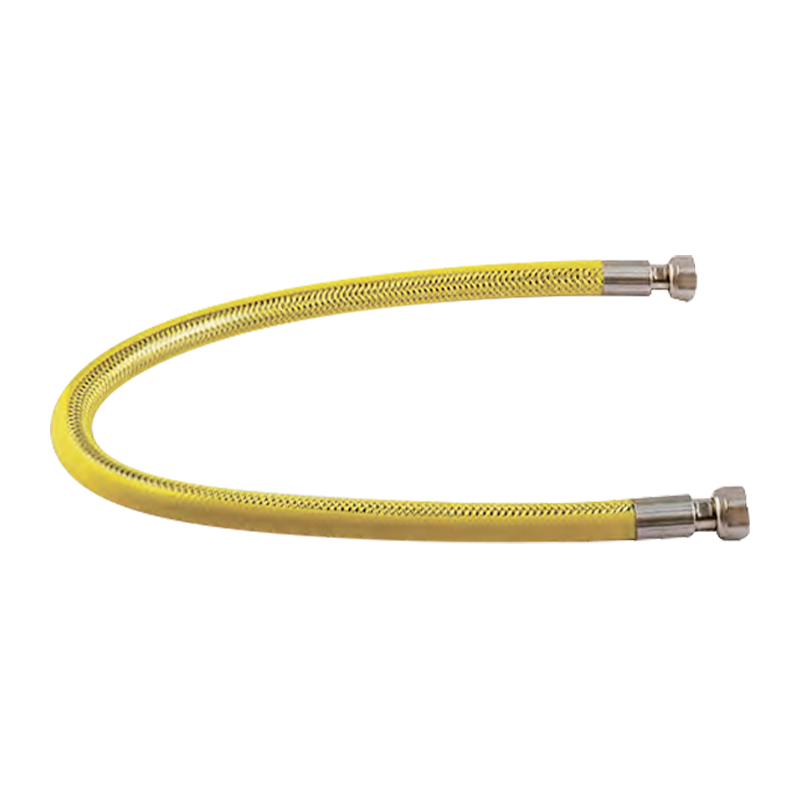 Metal-Wrapped Stainless Steel Corrugated Gas Hose ZLR-14Metal-wrapped corrugated hose with stainless core and mesh, flange connectors, and 30–200 cm lengths; suited to commercial kitchens needing daily wipe-downs and grease resistance.View Product →
In commercial kitchens, a metal-wrapped corrugated hose is often specified for one practical reason: it survives daily wipe-downs and grease, and it does not develop the surface cracking that a thin polymer jacket shows after a few years of cleaning chemicals.
Installation Errors Behind Most Connector Leaks
Once the correct part is on site, the risk shifts from the factory to the fitter. In our experience across gas appliance and gas piping projects, the same four mistakes recur, and they account for the majority of leak callbacks.
Relative tolerance to kinking, pull and abrasion, shown as an illustrative index from 0 to 100.
- Tension instead of slack. The connector is pulled straight between two fixed points. Corrugation is designed to bend, not to be stretched, and the ferrule absorbs the load.
- A hidden kink. A tight radius behind an appliance looks fine until the appliance is pushed back, folding the tube sharply and closing the bore.
- Mixed materials at the joint. A brass fitting threaded onto a bare steel or aluminium surface, with no isolating or sealing provision, invites galvanic corrosion and a slow weep.
- Reuse. A connector that has been in service is not reinstalled. Crimped ferrules and work-hardened corrugation do not return to their original condition.
Regulatory requirements also vary by market and are worth reading before the toolbox opens; the safety logic behind them is set out in our article on how flexible gas connectors improve appliance safety. Local codes such as NFPA 54 in the United States cover connector length limits, protection from physical damage and the requirement that connectors not be concealed in walls or floors.
Choosing a Supplier: Questions With Concrete Answers
Once the specification is settled, the remaining variable is the factory behind it. A useful way to shortlist is to ask for evidence rather than assurances: material grade certificates, burst and leak test records, and the standard reference the product is actually listed against.
Zhejiang Zhenlong Energy Equipment Technology Co.,LTD. is a company engaged in the research and development, manufacturing, and processing of energy equipment; we are an enterprise that manufactures, processes, and combines industry and trade in metal hoses, natural gas pipelines, plumbing fittings, sanitary ware, valves, plastic products, and hardware. Our company is located in Yuyao, Ningbo, Zhejiang, covering an area of 40 acres with a factory building of 30,000 square meters. We have 30 welding and forming production lines, 2 uninterrupted solid melting hydrogen furnace production lines, and testing equipment such as a metal material analysis direct reading spectrometer and a flow tightness tester. We strictly implement the ISO9000:2008 quality management system and hold the People's Republic of China Special Equipment Manufacturing License (Pressure Pipeline) and the EU CE certification national testing center report. We are a member of the China Urban Gas Association. The company has a strong R&D, design, and production team to provide customers with safe pipe fittings and comprehensive pre-sales and after-sales services.
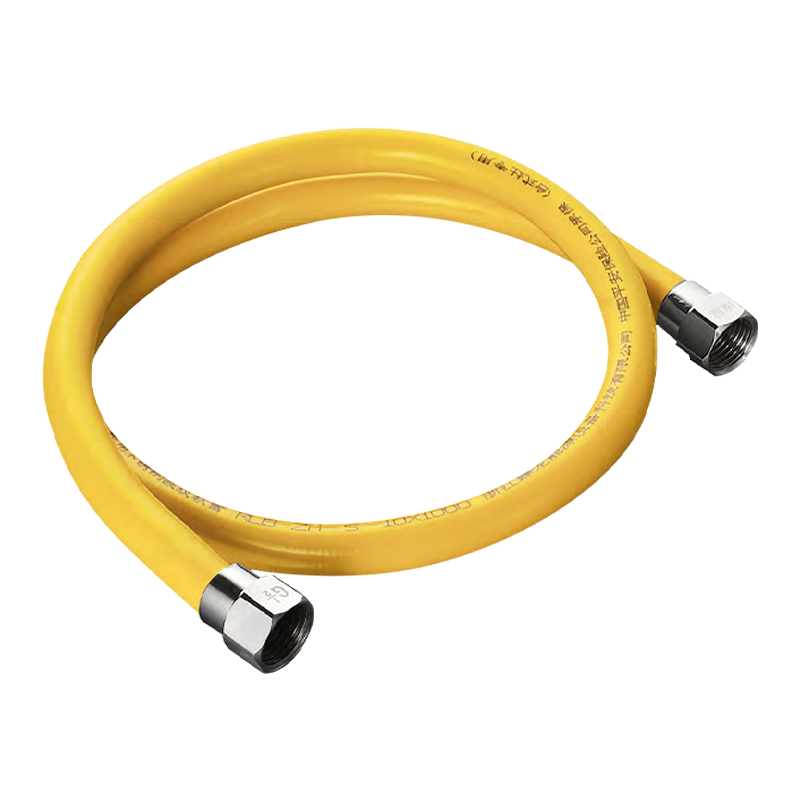 Pressure-Resistant Stainless Steel Corrugated Gas Hose ZLR-04Multilayer pressure-resistant stainless steel corrugated gas hose with PVC cover, wire mesh, welded joints, and 300–2000 mm lengths for gas appliance connections.View Product →
For buyers writing a first enquiry, five questions separate a trading intermediary from a manufacturer:
- Which standard is the connector listed against, and can you supply the test report for the batch?
- Is the corrugated tube seamless or welded, and what is the wall thickness tolerance?
- What pressure and leak test does every unit receive before packing?
- Can fittings be supplied from the same factory, so that thread tolerances match the hose?
- What is the packing method for coils and long lengths, so the tube does not arrive pre-kinked?
Answers to those five questions tell you more about consistency than any catalogue photograph.
Frequently Asked Questions
Q1. How long should a flexible gas connector be?
As short as the routing allows. Appliance connectors are commonly capped near 1.8 m (6 ft) by the product standard, and extra length only creates loops that trap stress.
Q2. Can I reuse a connector after moving an appliance?
No. Ferrules and corrugation do not recover once they have been compressed and bent. Replace the connector instead of reinstalling it.
Q3. How do I check for leaks after installation?
Apply approved leak-detection fluid or soapy water to every joint. Bubbles mean the joint must be remade. Never use a flame, and check that the tube is not under tension.
Q4. Braided hose or corrugated stainless steel?
For gas appliances, corrugated stainless steel. Braid over a polymer core is flexible and cheap, but the polymer is part of the gas path and ages faster.
Q5. How often should a gas connector be replaced?
Inspect it periodically and replace immediately if the tube is kinked, corroded or the jacket is cracked. Aged rubber connectors should be replaced rather than watched.
Q6. What should the packaging marking show?
The standard reference such as ANSI Z21.24 / CSA 6.10 or EN 14800, the nominal size, the batch code and the manufacturer name, so the part can be traced back to a test record.
If one sentence has to carry the whole topic, it is this: buy the listed corrugated stainless connector, size it to the valve and the appliance, keep it short and supported, and never install it under tension. Everything else in the specification is refinement around those four decisions.