 English
 中文简体
 Español
 عربى


A purchasing engineer sends out a two-page request: 1/2-inch bore, 1,000 mm center-to-center, 304 corrugated core, stainless braid, female flare at one end, male NPT at the other, 100% leak tested. Three suppliers quote inside a week. Only one replies with a drawing that carries a crimp diameter tolerance, a pull-off value, a minimum bend radius and a test-record template.
That reply is the difference between a compliant custom stainless steel gas hose assembly and a hose that fails its first pressure check. The product is a short chain of decisions made in the right order — core, braid, end fitting, crimp, test, paperwork — and every decision moves tooling cost, unit price and inspection outcome. Get those six right and the gap between the cheapest quote and the safest one usually turns out smaller than the cost of one leak call-back.
Content
- 1 What a Custom Gas Hose Assembly Actually Contains
- 2 Six Lines That Decide Whether the Assembly Passes
- 3 Material and Construction Choices Worth Paying For
- 4 Tooling, Testing and Why It Changes Your Delivery Date
- 5 Compliance Is Judged on the Assembly, Not the Tube
- 6 Where Assemblies Fail After Installation
- 7 A Practical Buying Checklist
- 8 Frequently Asked Questions
- 8.1 Q1. What is the smallest order you can quote for a custom assembly?
- 8.2 Q2. Can the assembly be supplied with a coloured PVC jacket?
- 8.3 Q3. At what pressure should the finished assembly be tested?
- 8.4 Q4. How long does a stainless assembly last compared with rubber?
- 8.5 Q5. Can the hose be buried inside a wall?
- 8.6 Q6. How do I verify that the crimp is correct?
What a Custom Gas Hose Assembly Actually Contains
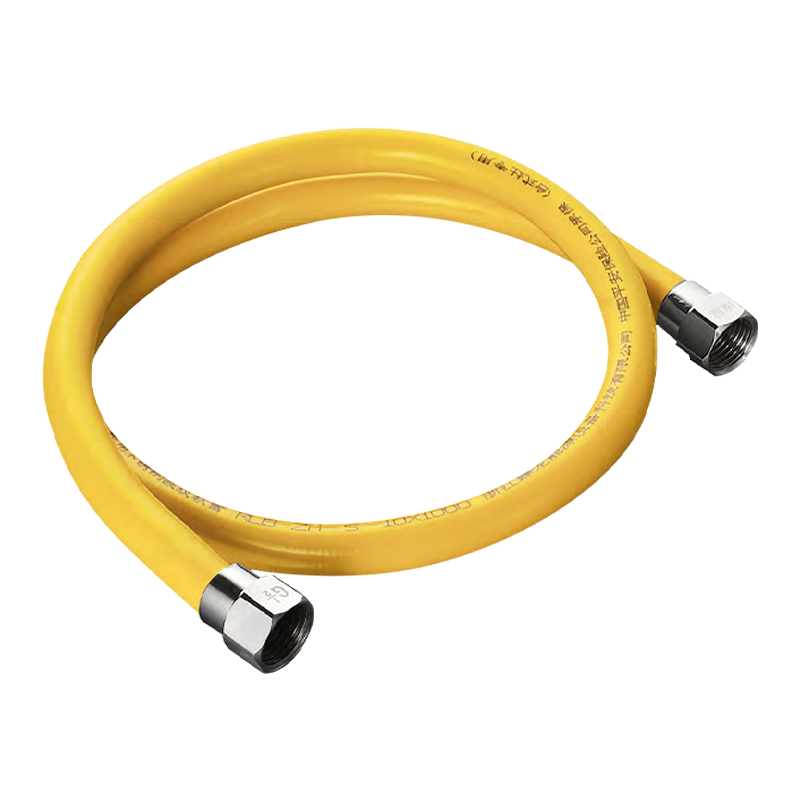
An assembly is a system, not a length of tube with nuts on the ends. Five parts carry the performance:
- Corrugated core — thin-wall 304 or 316L stainless tube with annular corrugation that delivers flexibility without a rubber liner.
- Braid or wrap — stainless wire braid, PVC coating or a full metal wrap that takes pressure load and shields the core from abrasion and rodents.
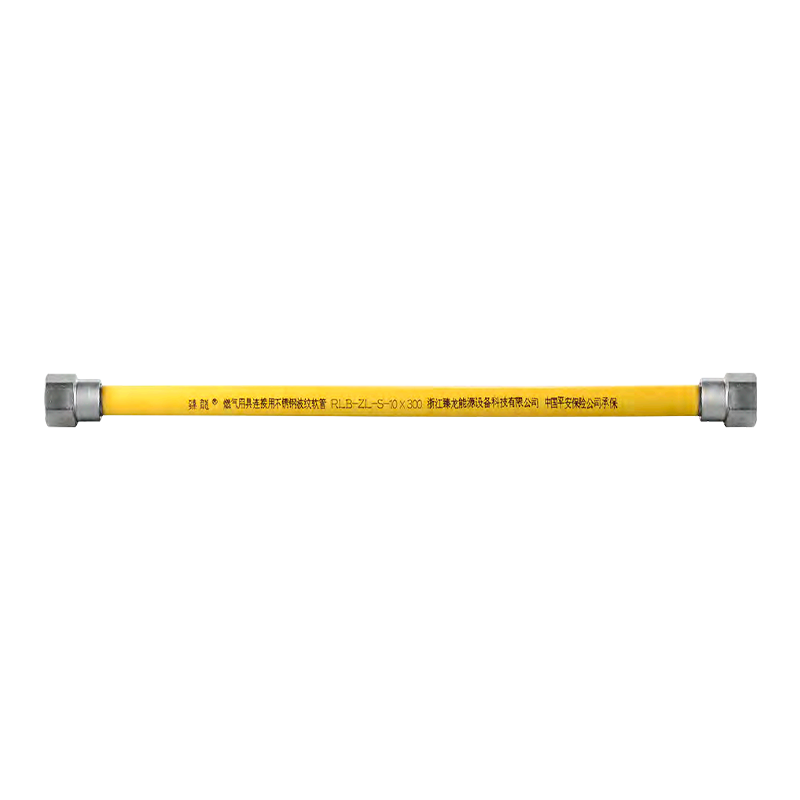
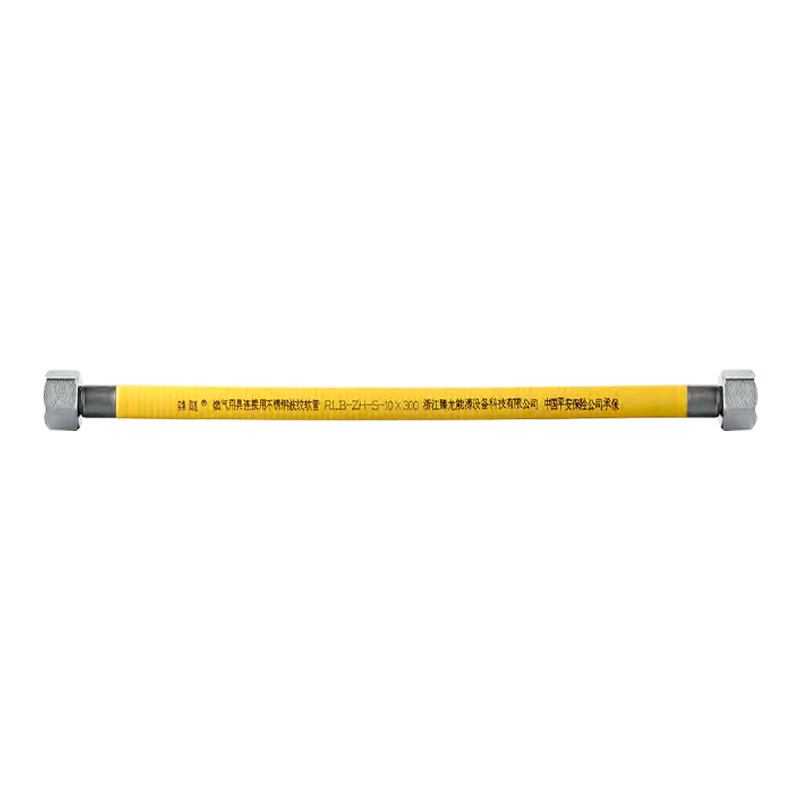
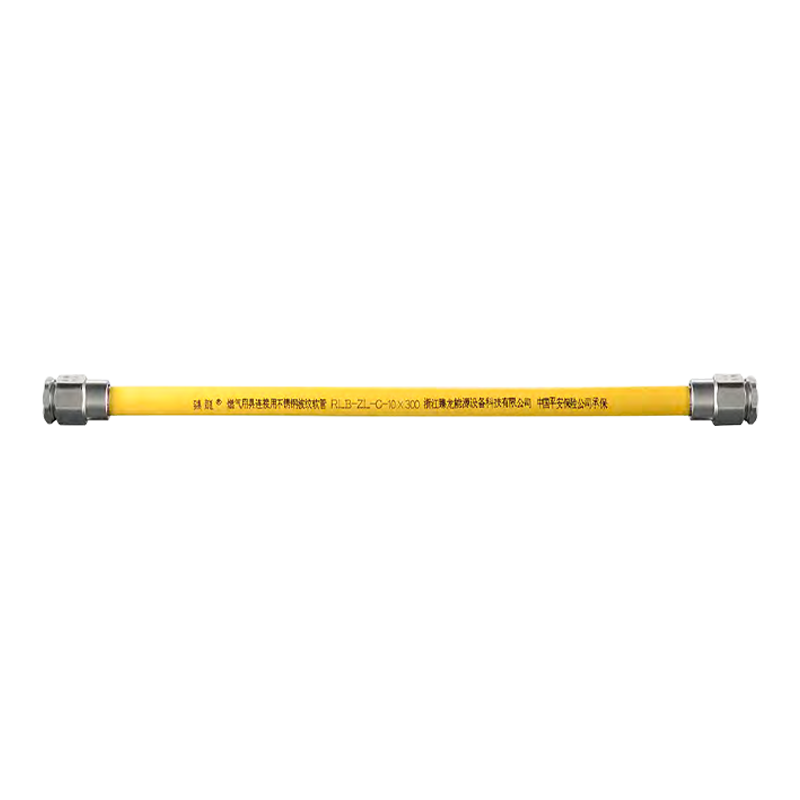
- End fittings — flare, NPT, BSP, flange, compression or quick-connect, machined to the thread standard the appliance inlet actually uses.
- Crimp collar — the joint that decides whether the assembly holds; its diameter and compression depth are the two numbers most often missing from a buyer's drawing.
- Identification — a tag or laser mark with batch, working pressure and standard, which is the first thing a gas inspector reads.
In field returns, the corrugated tube itself is rarely the culprit. Most failures trace back to a crimp made outside its window, a fitting matched to the wrong thread, or a bend radius ignored on site.
Six Lines That Decide Whether the Assembly Passes
Most failed deliveries are specification failures, not manufacturing failures. The buyer wrote "1/2-inch hose, 1 m" and the factory built exactly that — with a flare that could not mate to a BSP inlet.
| Spec line | What to write on the drawing | Why it changes the outcome |
|---|---|---|
| Nominal bore | DN8, DN10 or DN15, stated in mm and inch | Undersizing raises gas velocity and burner noise; oversizing wastes space behind the appliance |
| Working and test pressure | Working pressure plus proof test at 1.5 times that value, held for 60 seconds | Sets braid coverage and crimp depth, and defines the acceptance criterion |
| Length and tolerance | Center-to-center length with a tolerance such as plus or minus 5 mm, plus minimum bend radius | Too long kinks behind the range; too short pre-loads the crimp joint |
| End connections | Thread standard and type — 3/8-inch flare, 1/2-inch NPT, G1/2 male, flange | A 3/8-inch flare is not a 3/8-inch NPT; mismatched threads stop the install |
| Jacket | Bare braid, PVC coated in a specified colour, or full metal wrap | Coating adds UV and corrosion protection; wrap suits fixed appliance connections |
| Test and paperwork | Leak test method, material certificate, crimp pull-off value | Inspectors ask for assembly-level records, not tube mill certificates alone |
Material and Construction Choices Worth Paying For
304 covers most indoor appliance connections. 316L earns its premium where chlorides, coastal air or cleaning chemicals are present, because molybdenum in the alloy resists pitting that 304 will eventually show. Wall thickness and corrugation profile matter as much as the grade: a thinner wall bends more easily but dents on site, and a helical profile behaves differently from an annular one under repeated flexing.
Braid is the pressure member. Wire diameter, carrier count and coverage should be quoted per drawing rather than assumed, because a lighter braid that passes a proof test may still fall short of a burst requirement. For fixed appliances — a boiler, a commercial range — a metal-wrapped construction protects the corrugation from knife edges, cabinet vibration and pests, which is why European practice leans on it.
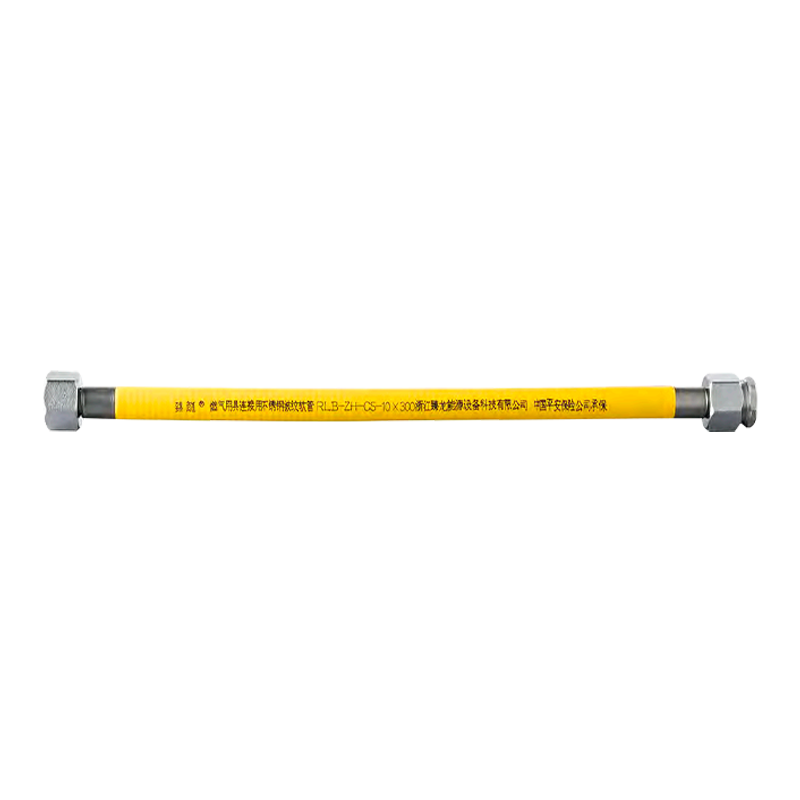
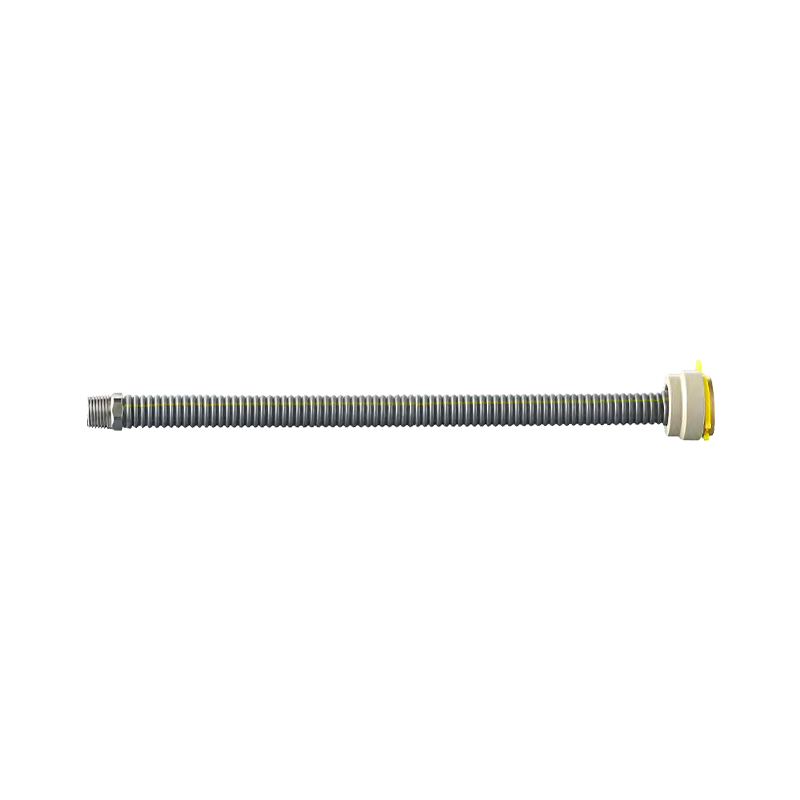
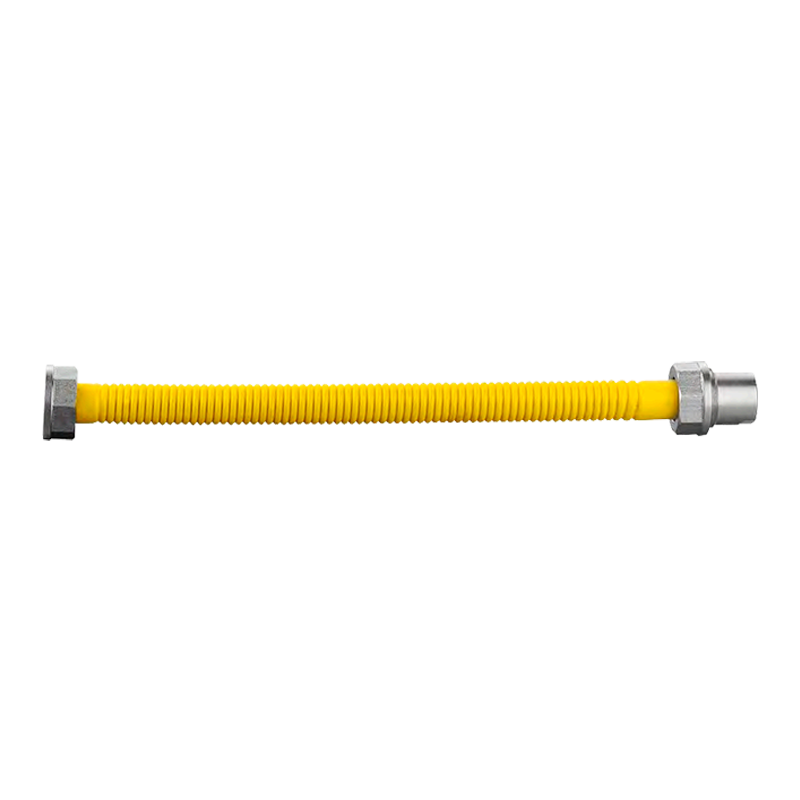 ZLR-16 Braided Stainless Steel Corrugated Gas HoseBraided reinforcement and PE outer coating support flexible gas appliance connections; DN15 sizes and sealing washers suit fixed installations where braid and coverage matter.View Product →
Tooling, Testing and Why It Changes Your Delivery Date
Custom work lives or dies on repeatability. A factory that forms its own corrugation, anneals it in a hydrogen furnace and crimps on the same site controls far more variables than a trader assembling bought-in parts — and when a batch fails a leak test, it can trace the batch instead of blaming the supplier.
Zhejiang Zhenlong Energy Equipment Technology Co.,LTD. works to that model. Based in Yuyao, Ningbo, Zhejiang, the company occupies a 40-acre site with 30,000 square metres of workshop and runs 30 welding and forming production lines plus 2 uninterrupted solid melting hydrogen furnace lines. Metal material analysis is done on a direct reading spectrometer, sealing on a flow tightness tester. The company implements the ISO9000:2008 quality management system, holds the Special Equipment Manufacturing License (Pressure Pipeline) issued in China and an EU CE certification national testing center report, and is a member of the China Urban Gas Association. Its product range covers corrugated tubes for gas appliance connection, metal-wrapped hoses, piping-system tubing and the fittings that go with them — which means one drawing, one crimp process and one test record for the whole assembly.
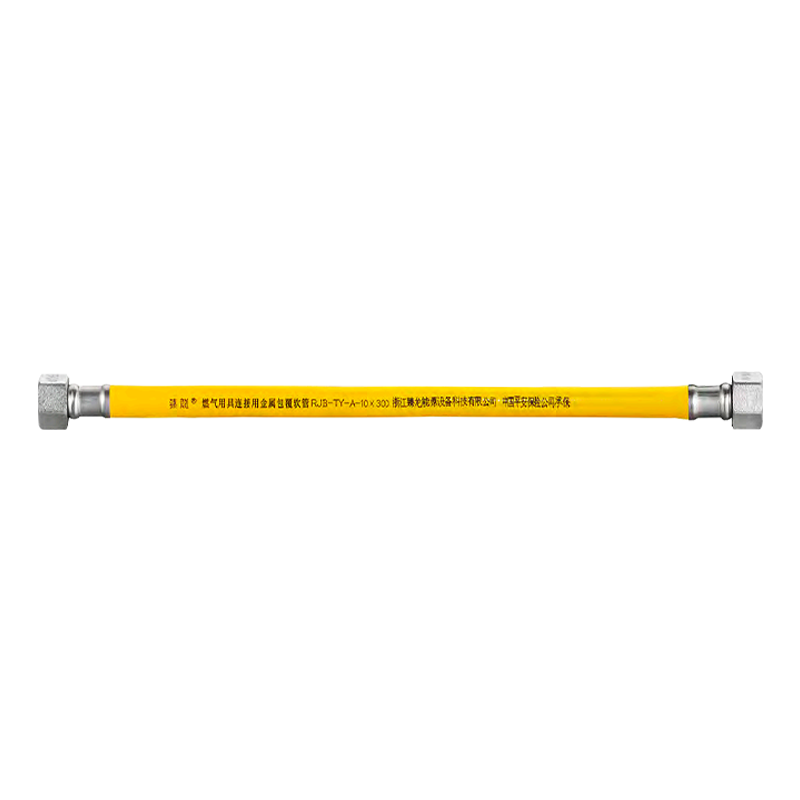
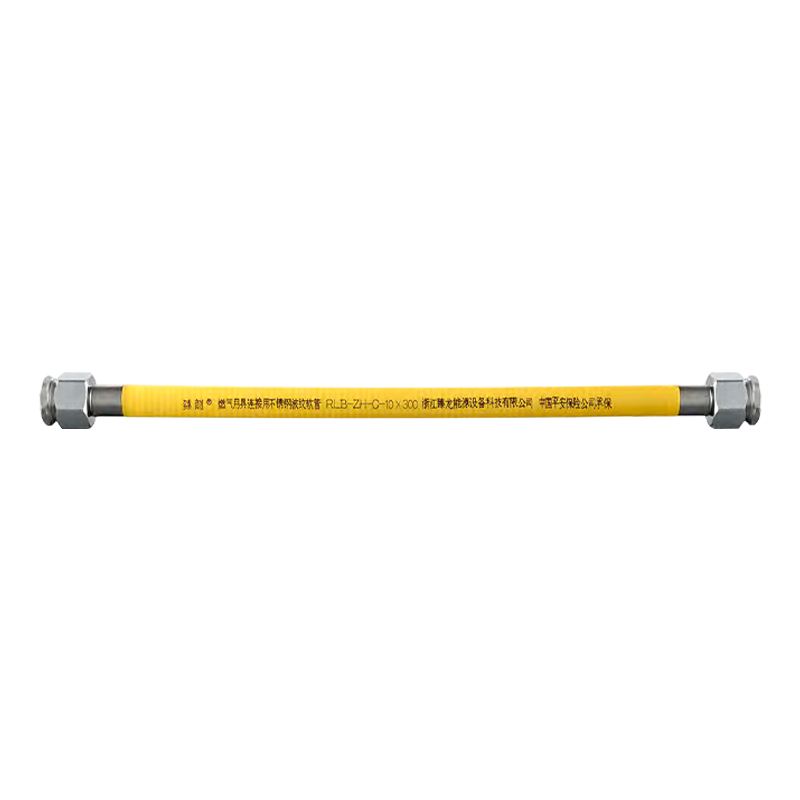 ZLR-10 Seamless Stainless Steel Corrugated Gas PipeSeamless 304 stainless bellows with PVC cover and sealing fittings; DN10 and 300–2000 mm lengths suit gas appliance connections needing flexibility and a firm seal.View Product →
Compliance Is Judged on the Assembly, Not the Tube
Standards apply to the finished connector. In North America, ANSI Z21.24 governs connectors for gas appliances; in Europe, EN 14800 covers corrugated safety metal hose assemblies for gas appliance connection; in China, GB/T 26002 addresses stainless steel corrugated hose for gas transmission. Each one tests the complete unit — core, braid, fittings, crimp — at a defined proof pressure and, in most cases, after a flexing cycle.
This is where a tube mill certificate can mislead a buyer. It proves the strip grade and the weld; it does not prove the crimp. For assembly-level approval, ask for the test report that names the finished assembly, its end fittings, its rated pressure and the date of test. Buyers working to North American codes can start with this breakdown of ANSI Z21.24 compliance for gas appliance connectors before the drawings go out.
Where Assemblies Fail After Installation
- Bending at the fitting instead of along the corrugation. The collar is rigid; forced flexing there fatigues the weld line first.
- Reusing a nut or ferrule. A second torque on a deformed seat is the shortest route to a slow leak at the appliance inlet.
- Ignoring the minimum bend radius. A tight U-bend behind a range restricts flow and puts permanent stress on one corrugation.
- Missing support on long runs. Vibration from a commercial range or boiler walks an unsupported hose into a cabinet edge.
- Jacket damage during pull-through. A nick in the PVC coating under a wall box becomes a corrosion site on the braid.
A Practical Buying Checklist
- Send a drawing with bore, length, tolerance, thread standard, pressure and test method — not a two-line email.
- Specify the appliance inlet thread by standard, not by measured diameter.
- Ask what tooling already exists for your nut and collar before discussing price.
- Approve a sample assembly and keep its test record as the reference.
- Agree on the test-record format and markings before the purchase order, not after delivery.
- Confirm packaging: coil diameter, end caps and labelling for the site.
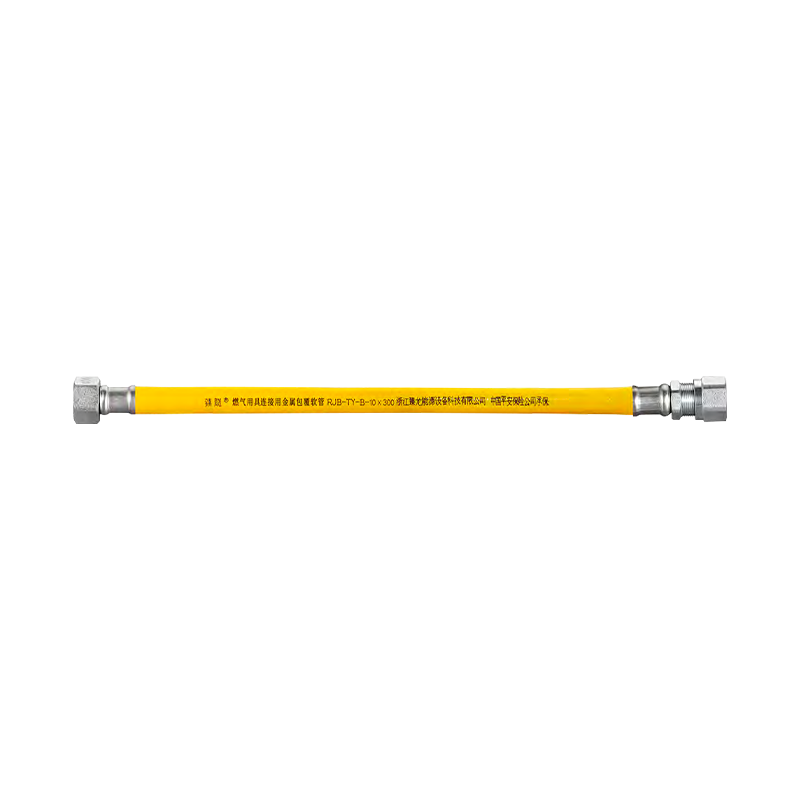
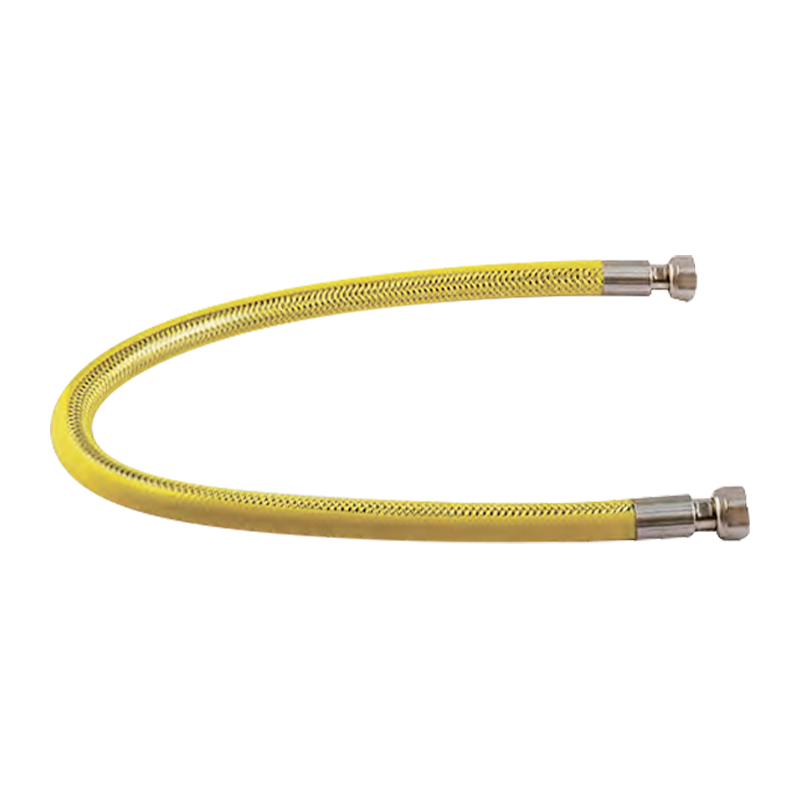 ZLR-14 Metal-Wrapped Stainless Steel Corrugated Gas HoseStainless braid and corrugated core with flange connectors and PVC coating; DN10 lengths suit space-limited gas appliance installations needing flexibility and reinforced strength.View Product →
If you are still mapping the component side of the drawing, the stainless steel corrugated tubes for connecting gas appliances range shows which cores, jackets and fitting combinations are already tooled, which is usually the fastest way to cut both lead time and unit cost.
Frequently Asked Questions
Q1. What is the smallest order you can quote for a custom assembly?
Tooling, not volume, sets the floor. If the nut and collar you need are already machined in-house, a few hundred pieces is realistic; a new die or a non-standard thread pushes the minimum up. Ask what is already tooled before negotiating price.
Q2. Can the assembly be supplied with a coloured PVC jacket?
Yes. Yellow is common for gas identification, black for outdoor runs exposed to sunlight, and clear or natural where inspection access matters. Confirm the temperature range of the compound against the appliance's surface heat.
Q3. At what pressure should the finished assembly be tested?
Common practice is 1.5 times the working pressure, held for 60 seconds with no pressure drop. The exact figure and duration should come from the standard the assembly is certified to, and the result belongs on the test record.
Q4. How long does a stainless assembly last compared with rubber?
Stainless corrugated connectors are typically specified with a design life of ten years or more, while rubber hoses are replaced on a much shorter cycle. Installation quality and the surrounding environment decide most of the real-world difference.
Q5. Can the hose be buried inside a wall?
Only with a wall box or protective conduit and no joints concealed in the wall. Encasing a bare braid in cement invites corrosion, and local code always takes precedence over supplier guidance.
Q6. How do I verify that the crimp is correct?
Ask for three things: the crimp diameter window, the pull-off value for that setting, and the 100% leak test record produced at it. A supplier who cannot quote the window is guessing at quality.