 English
 中文简体
中文简体 Español
 عربى
عربى
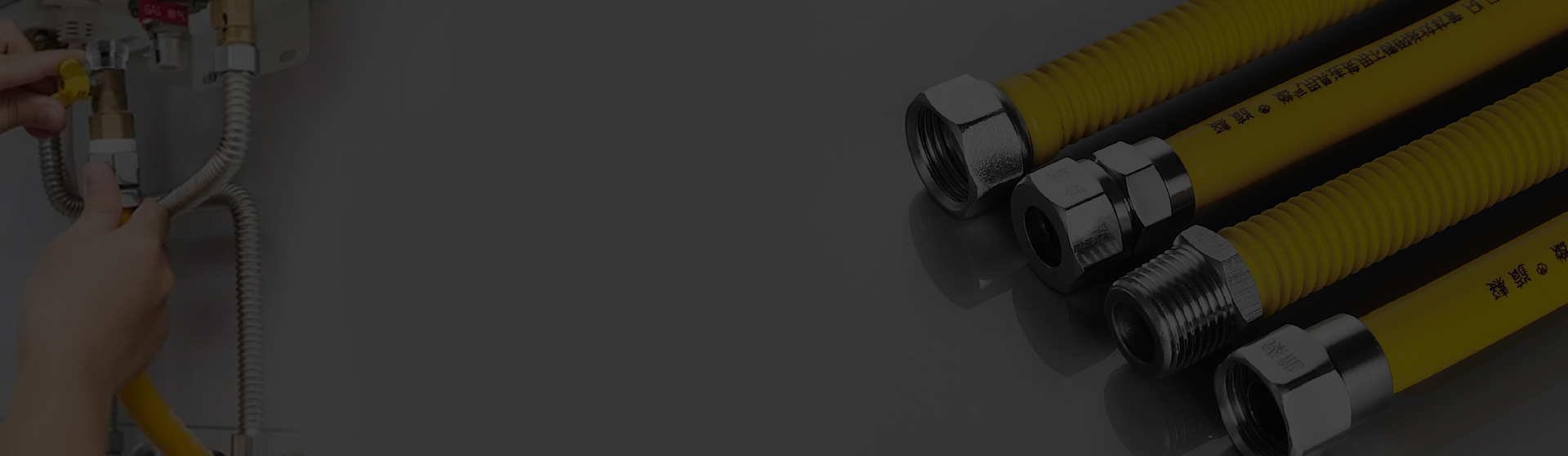

A homeowner calls a licensed gas fitter to run a natural gas line from the basement meter to a patio heater on the deck. The fitter proposes corrugated stainless steel tubing (CSST): fast to install, no threading, and easy to route through framing. Then the homeowner asks the question this article answers: can CSST be used outdoors?
The short answer is yes, under conditions much stricter than indoor installation. Standard yellow-jacket CSST is not rated for exposed outdoor use. On an exterior run, CSST passes code only when the product is listed for outdoor service, or the tubing is completely enclosed in an approved metal conduit or chase, with weatherproof terminations and proper support. This article explains the code rule, why bare CSST fails outdoors, and how to build an exterior gas connection an inspector will approve.
Content
What the Code Says About CSST Outdoors
CSST installations in North America are governed primarily by NFPA 54 (National Fuel Gas Code) and the International Fuel Gas Code, plus state and local amendments. The outdoor rule is short: when CSST is installed outdoors, it must be protected from mechanical damage, and NFPA 54 explicitly requires a conduit or chase for exterior runs. State interpretations can go further. The Massachusetts Department of Public Safety, for example, requires a metal covering over all exposed portions of CSST piping installed above ground outdoors.
Three practical questions appear on nearly every inspection:
- Is this exact CSST product listed for outdoor exposure?
- Is every exposed section running inside an approved metal enclosure?
- Can the termination shed water and survive impacts?
| Location | Code requirement | What it means on site |
|---|---|---|
| Exposed run above ground | Protected from mechanical damage; conduit or chase required | Route the CSST inside a metal chase for the whole exposed length |
| Underground run | Not allowed unless the product is listed for direct burial | Standard yellow CSST must not be covered with soil |
| Exterior wall penetration | Weatherproof seal and listed fitting at the point of entry | Use an outside wall box with a sealed cover |
| Appliance termination outdoors | Corrosion-resistant connector, protected and supported | Keep the hose short, shielded, and inside a weatherproof valve box |
Why Bare Yellow CSST Does Not Last Outside
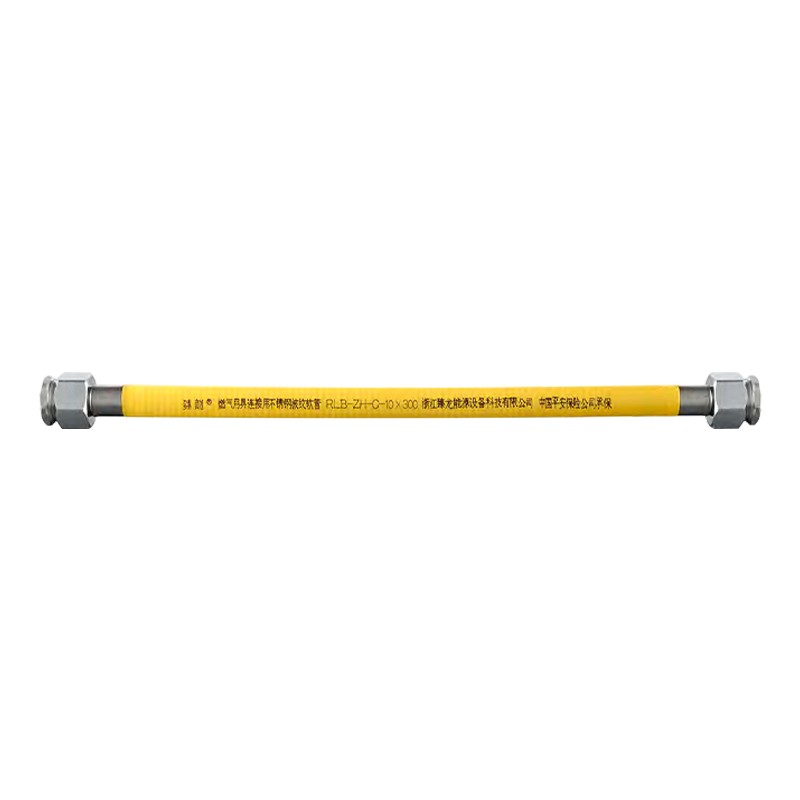
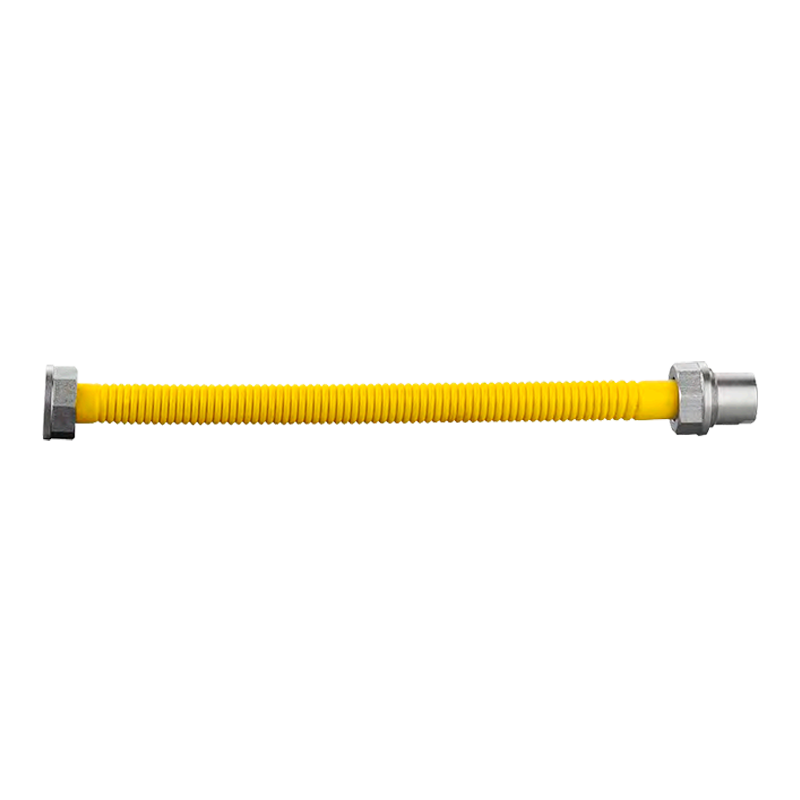
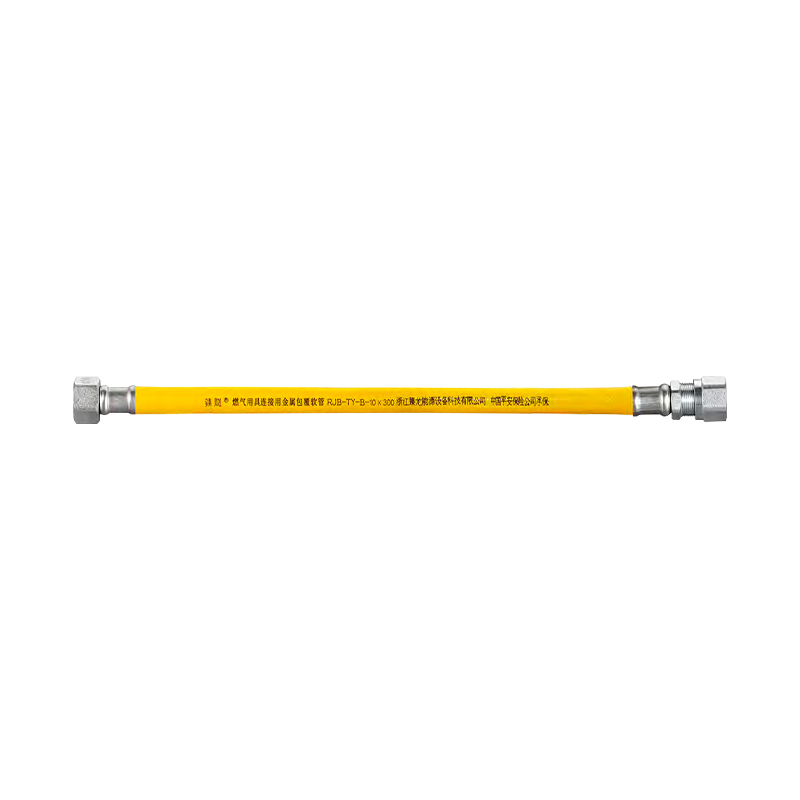
Yellow CSST is a stainless steel bellows wrapped in a polyethylene jacket. The jacket protects the metal during shipping and indoor installation, but it is not designed for years of direct sunlight. Ultraviolet light makes polyethylene brittle: the jacket cracks, moisture reaches the corrugations, and in freeze-thaw climates trapped water drives crevice corrosion at the roots of the corrugations, exactly where the tube must flex.
Outdoor sites also see abuse that indoor framing never creates. Ladders lean on walls, string trimmers slip, hail hits, and animals gnaw. A crushed corrugation is a permanent defect, because CSST cannot be repaired, only replaced. That is the mechanical-damage risk the code wants contained.
In the field, inspectors most often flag three problems on illegal outdoor CSST:
- bare jacket with no conduit or chase
- indoor-only CSST used where an outdoor-rated product is required
- missing bonding conductor on the CSST system
All three are cheap to fix on paper and expensive to fix after the walls are closed.
How to Install CSST Outdoors and Pass Inspection
A code-compliant outdoor CSST run has five parts:
- Select a CSST product whose listing covers outdoor exposure. If the listing is indoor-only, the tubing must be inside an approved metal conduit or chase for its entire exposed length.
- Use a corrosion-resistant metal chase and seal both ends so water and insects stay out.
- Terminate in a weatherproof stainless steel outside wall switch box that holds the valve and keeps the hose connection dry.
- Support the tubing at the spacing NFPA 54 requires: within 4 ft of each termination and at intervals not exceeding 4 ft. Black steel pipe, in comparison, is supported at 12 ft intervals.
- Bond the CSST system with the manufacturer-specified bonding conductor. NFPA 54 requires it indoors and outdoors to reduce lightning-related arcing at leak points.
Maximum support spacing for gas piping materials per NFPA 54. CSST requires supports every 4 ft, much more often than rigid pipe.
Support spacing looks like a minor detail, but it is the most visible difference between an engineered outdoor run and a sloppy one. Unsupported CSST sags, rubs on sharp edges, and collects water in low spots.
Specify Hardware Built for the Exterior
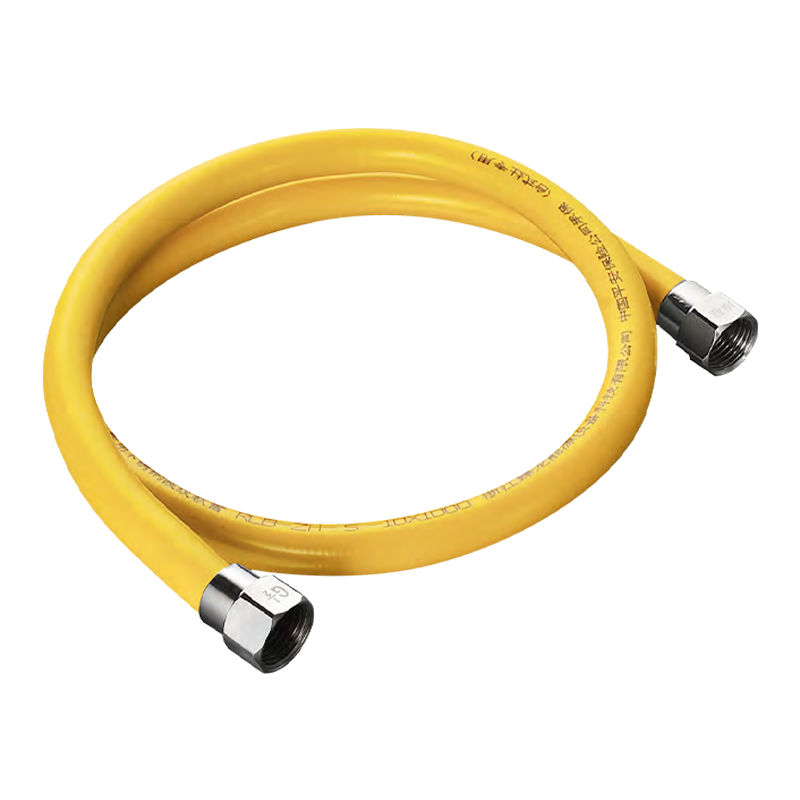
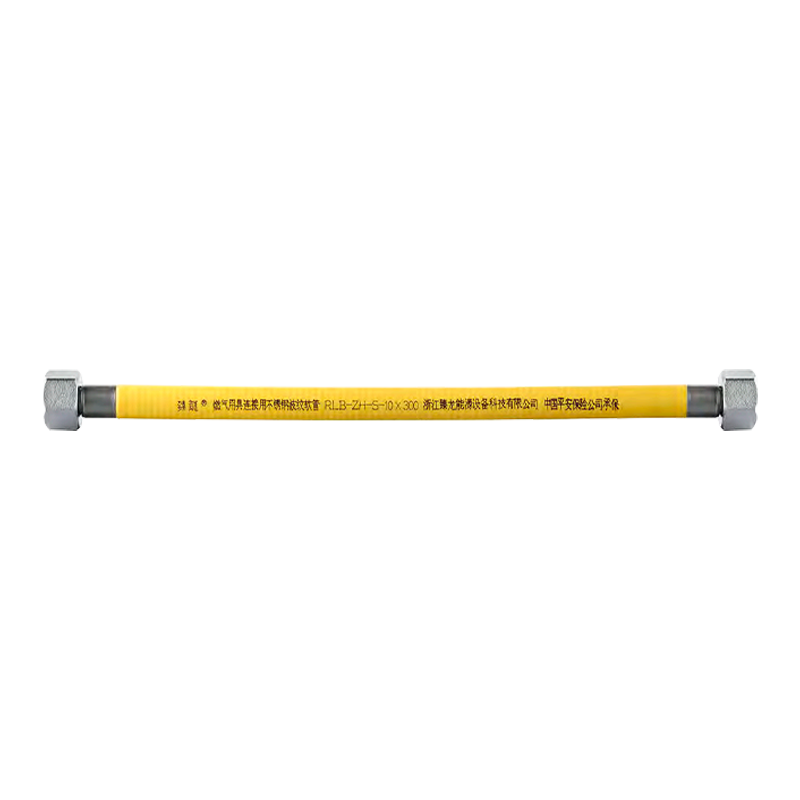
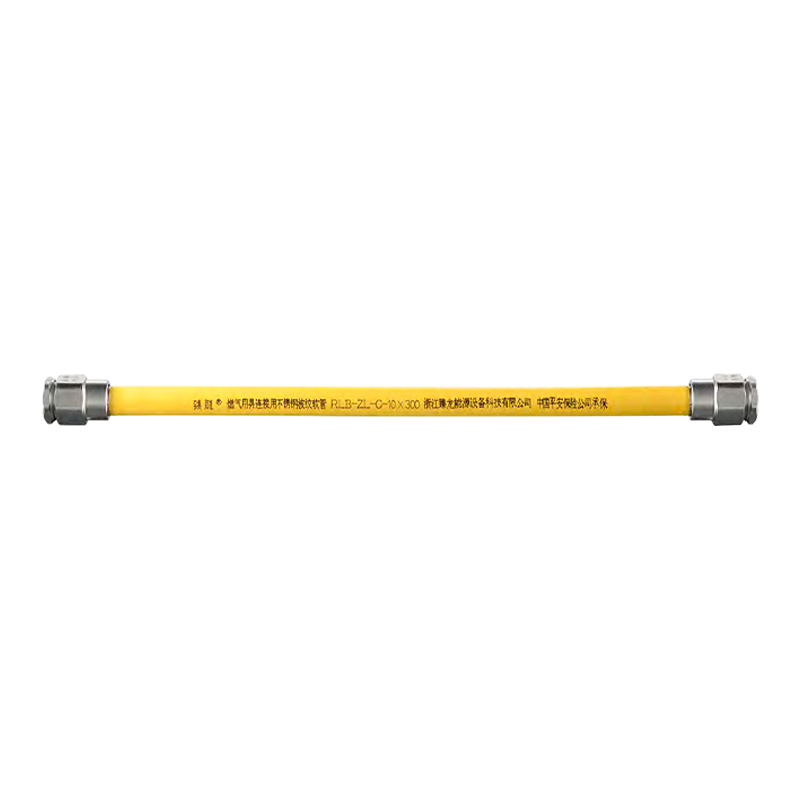
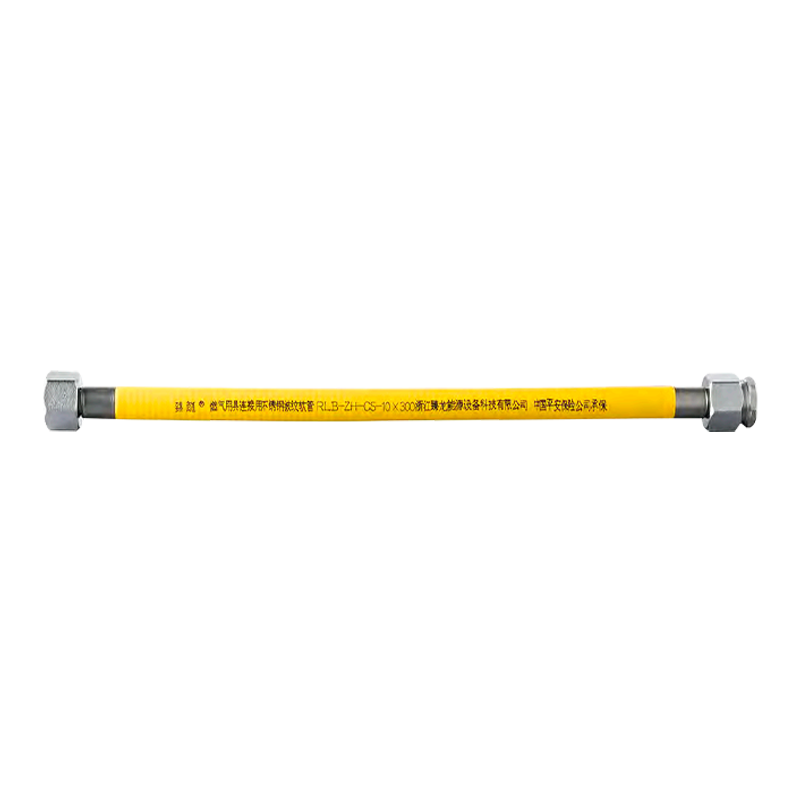
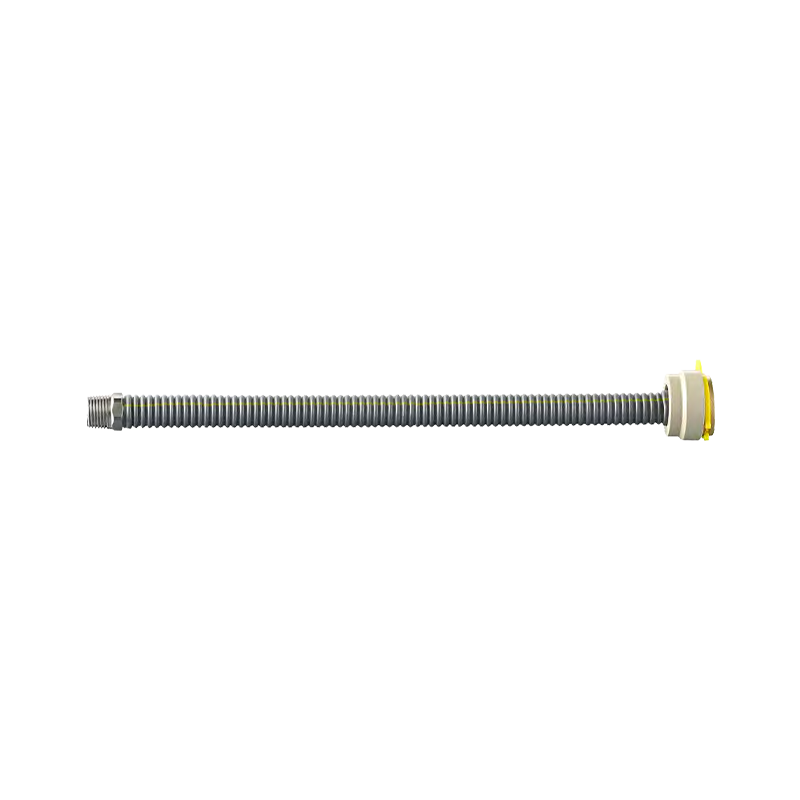
Start with the tubing. A corrosion-resistant stainless steel corrugated hose is engineered to handle the humidity, airborne pollutants, and temperature swings an exterior wall delivers, something a plain yellow tube cannot handle.
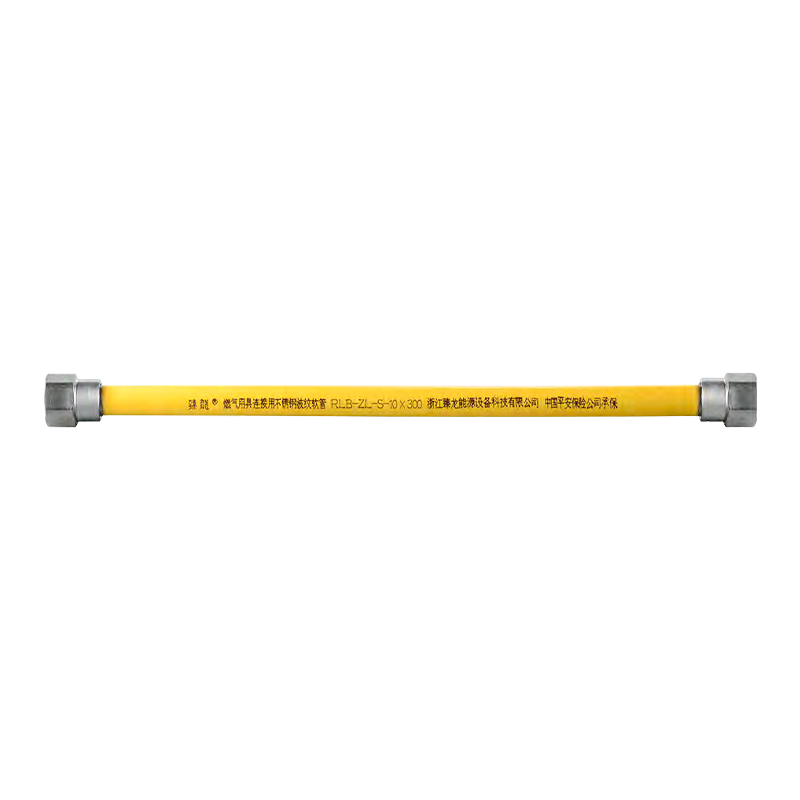 Corrosion-Resistant Stainless Steel Corrugated Gas Hose ZLR-05This 304 stainless steel hose with PVC coating resists humidity and pollutants, ideal for exterior wall runs where durability and leak-proof connections are essential.View Product →
Terminate the run in a stainless steel outside wall switch box. It keeps the shut-off valve dry, gives the fitter a solid mounting point, and preserves the seal where the hose passes through the wall.
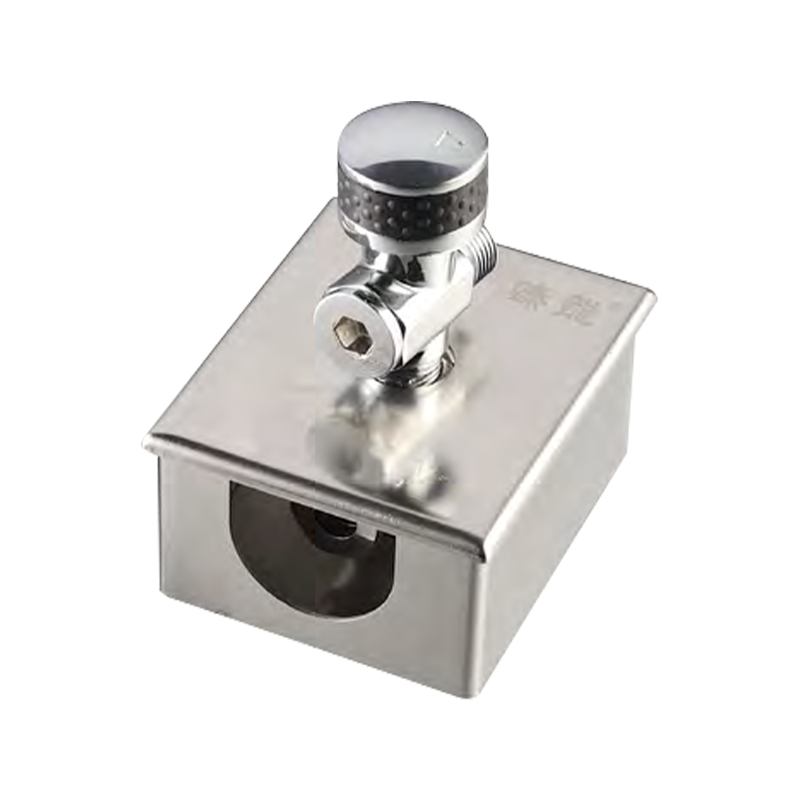 Stainless Steel Outside Wall Switch Box for Gas HoseA weatherproof stainless enclosure that protects shut-off valves and hose connections outdoors, keeping moisture out and ensuring a secure, accessible installation point.View Product →
Where the line drops low, near a driveway, planter, or equipment pad, add a gas pipe guard plate. Inspectors accept it as mechanical protection, and it stops the most common cause of outdoor field damage before it happens.
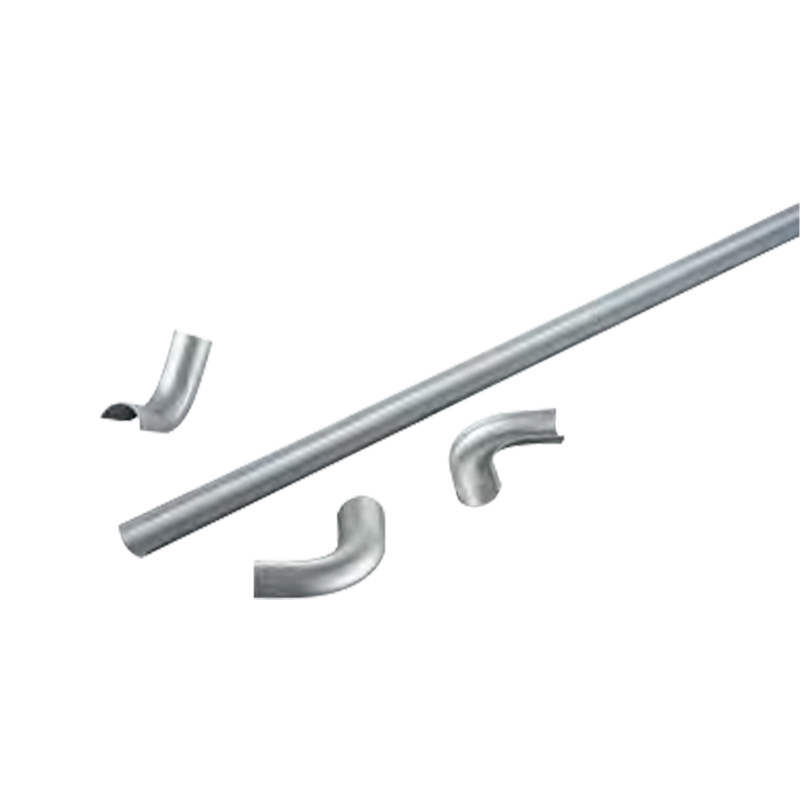 Gas Pipe Guard Plate for Outdoor Line ProtectionA sturdy protective plate that shields low-lying gas lines from impact near driveways or planters, meeting inspector requirements and preventing common field damage.View Product →
Who makes the hardware matters as much as the layout. A safe outdoor gas connection depends on consistent welding, correct material grade, and truthful pressure testing. Zhejiang Zhenlong Energy Equipment Technology Co., Ltd. is a manufacturer rather than a trading company. Based in Yuyao, Ningbo, Zhejiang, it develops and produces gas piping products, metal hoses, plumbing fittings, valves, and related hardware on a 40-acre site with a 30,000 m² factory building. The plant runs 30 welding and forming production lines and two uninterrupted solid melting hydrogen furnace lines, and it checks incoming materials with a metal analysis direct-reading spectrometer and finished products with flow-tightness testers. The company implements the ISO 9000:2008 quality management system, holds the People's Republic of China Special Equipment Manufacturing License (Pressure Pipeline) and EU CE certification, and is a member of the China Urban Gas Association. Its engineering team supports customers before and after the sale, which matters when an outdoor gas installation has to survive local inspection and decades of weather.
- 1 - Metal conduit chase protecting the CSST run
- 2 - Outdoor-rated corrosion-resistant CSST
- 3 - Weatherproof wall switch box at the termination
- 4 - Protective guard plate at low level
Outdoor Gas Line Options Compared
Choosing between black steel and protected CSST comes down to run length, labor cost, and exposure. The radar chart below compares three approaches on the factors that matter outdoors: UV resistance, impact resistance, corrosion resistance, code fit, and installer familiarity. Scores are a practical assessment based on NFPA 54 and common field experience (1 to 5, higher is better).
Outdoor suitability comparison: black steel pipe, exposed yellow CSST, and outdoor-rated CSST protected in a metal chase.
Black steel pipe dominates long exterior runs because painted steel shrugs off sunlight and impact. Protected, outdoor-rated CSST wins on short, shaped runs where threading is expensive and the route is tight. Bare yellow CSST should not appear in an outdoor installation at all.
- Black steel: best for long exposed runs along walls and fences.
- Outdoor-rated CSST in a metal chase: best for short runs through walls, meter areas, and finished surfaces.
- Bare yellow CSST: indoor framing spaces only.
What to Use Instead of CSST on Exterior Walls
Black steel pipe remains the default for long exterior gas lines. It has full mechanical strength, needs no chase, and survives weather when painted. Corrosion at threaded joints is its main weakness, so use a gas-rated joint compound and inspect fittings annually.
For the last few feet from a wall outlet to a barbecue, patio heater, or generator, use a listed quick-connect hose assembly rated for the appliance and its environment. That assembly is a connector, not a piping system: it keeps the appliance movable while the permanent line remains protected.
Frequently Asked Questions
Q1. Can yellow CSST be run exposed on an outside wall?
No. Standard yellow-jacket CSST is not listed for exposed outdoor use. Where the authority having jurisdiction allows it at all, every exposed inch must be covered by an approved metal conduit or chase, with weatherproof terminations.
Q2. Can CSST be buried directly underground?
Only if the product listing explicitly allows direct burial, which is rare. Most jurisdictions require threaded steel pipe for underground runs. Standard CSST must not be covered with soil.
Q3. Does outdoor CSST still need bonding?
Yes. NFPA 54 requires a direct bonding connection for CSST systems indoors and outdoors. The bonding conductor reduces arcing at leak points when lightning strikes nearby; inspectors check it at the same time as the chase.
Q4. Will outdoor-rated corrugated stainless steel last as long as black steel pipe?
With a sealed chase and a weatherproof termination, an outdoor-rated CSST can give decades of service. In marine environments, check fittings and jacket condition annually and replace at the first sign of rust.