 English
 中文简体
 Español
 عربى

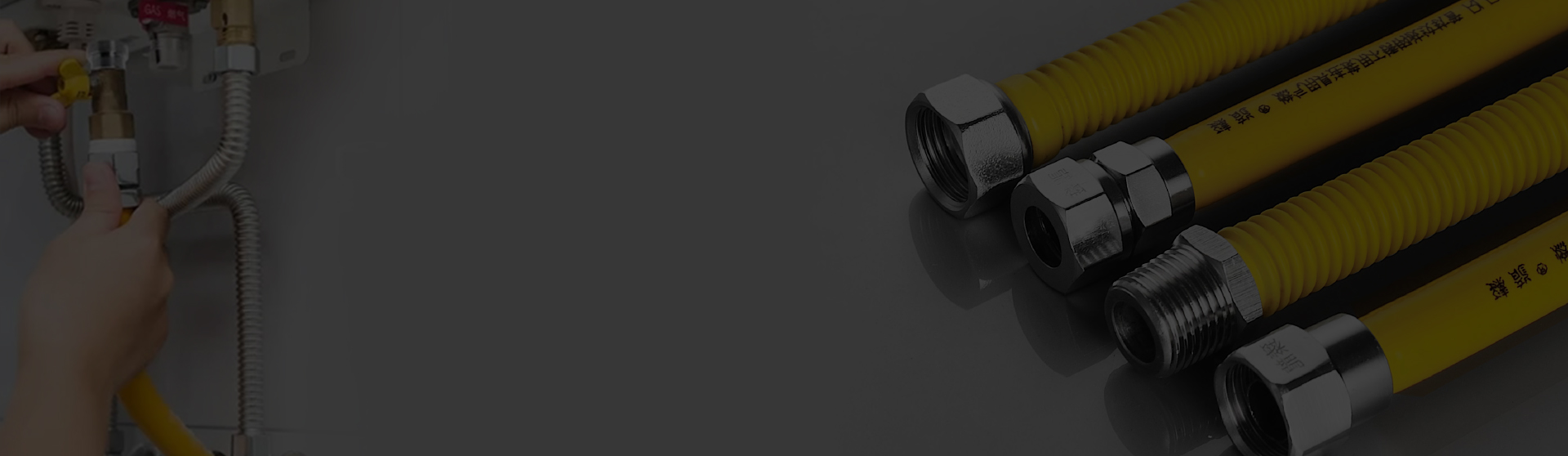

A maintenance team replaces a short rubber gas connector every two years. The line still hums, the fitting loosens, and nobody can say whether the hose is absorbing vibration or adding a fatigue point. That is usually when a corrugated metal hose looks like the obvious upgrade. It is not. It is a short, flexible pressure component with its own rules for bore, pressure at temperature, bend radius, end connection, and certification. Get those five items right, and the assembly can outlast the appliance. Get them wrong, and a stainless braid can hide a kink until the first cold snap.
The practical rule is simple: specify the assembly, not just the hose. The corrugation seals the medium, the braid carries pressure load, and the fittings decide whether the connection stays leak-tight after thermal cycling and vibration.
Content
- 1 What a Corrugated Metal Hose Actually Is
- 2 Where It Belongs, and Where It Does Not
- 3 The Numbers Buyers Should Ask For
- 4 Material and Layer Choices That Change Performance
- 5 Failure Modes: What Kills a Stainless Hose
- 6 Compliance Is a Scope Check, Not a Logo
- 7 Manufacturing Context: What to Verify at the Factory
- 8 Frequently Asked Questions
What a Corrugated Metal Hose Actually Is
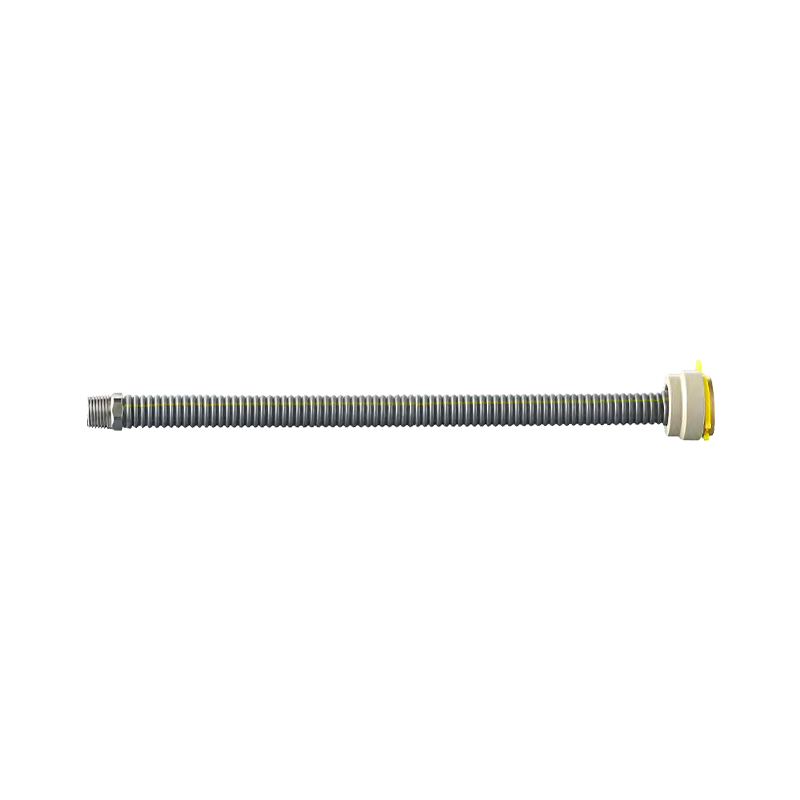
A corrugated metal hose is a thin-wall stainless tube formed into annular or helical waves, then usually covered with a wire braid. The waves provide flexibility; the braid resists internal pressure and limits axial extension. A bare corrugated core is not a complete pressure hose in most gas and industrial assemblies. The braid, ferrules, and end fittings are part of the pressure boundary.
That layered construction explains why two hoses with the same bore can behave very differently. A tight bend may crush the corrugation, a twisted installation may pre-load the braid, and a mismatched thread may pass a visual check but leak after thermal cycling. The assembly drawing, not the catalog photo, is the document that matters.
Figure 1. An exploded isometric view of the three functional layers: sealing core, pressure braid, and end fitting.
Where It Belongs, and Where It Does Not
Corrugated metal hose is not a universal replacement for rubber or rigid pipe. It earns its cost in short flexible connections where vibration, thermal movement, or minor misalignment must be absorbed without placing stress on a valve or appliance inlet.
Good fit
- Gas appliance connectors for cookers, water heaters, and commercial appliances, using assemblies approved for the local gas code.
- Gas piping sections that need vibration isolation or compensation for small settlement and alignment differences.
- Plumbing connections where a rigid offset would load a pump, meter, or fixture.
- Industrial lines carrying steam, hot water, exhaust, or chemicals when the material, braid, and liner are selected for the medium.
Poor fit
- Bare hose buried directly in concrete or soil without an approved sleeve, wall box, or protection system.
- Continuous twisting or repeated sharp bending near the ferrule.
- Chloride-rich, marine, or chemical service where 304 stainless was chosen only because it was in stock.
- Long spans that should be rigid pipe with proper supports rather than one very long flexible hose.
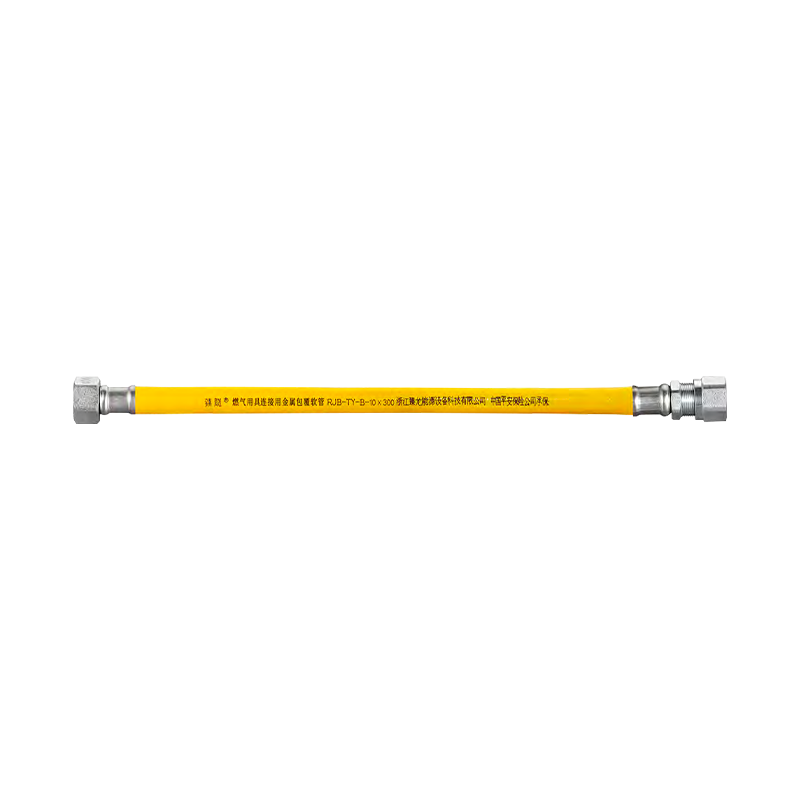
For gas appliance connections, the product family should state the working pressure, bore, end connection, and applicable gas connector standard rather than only the material grade.
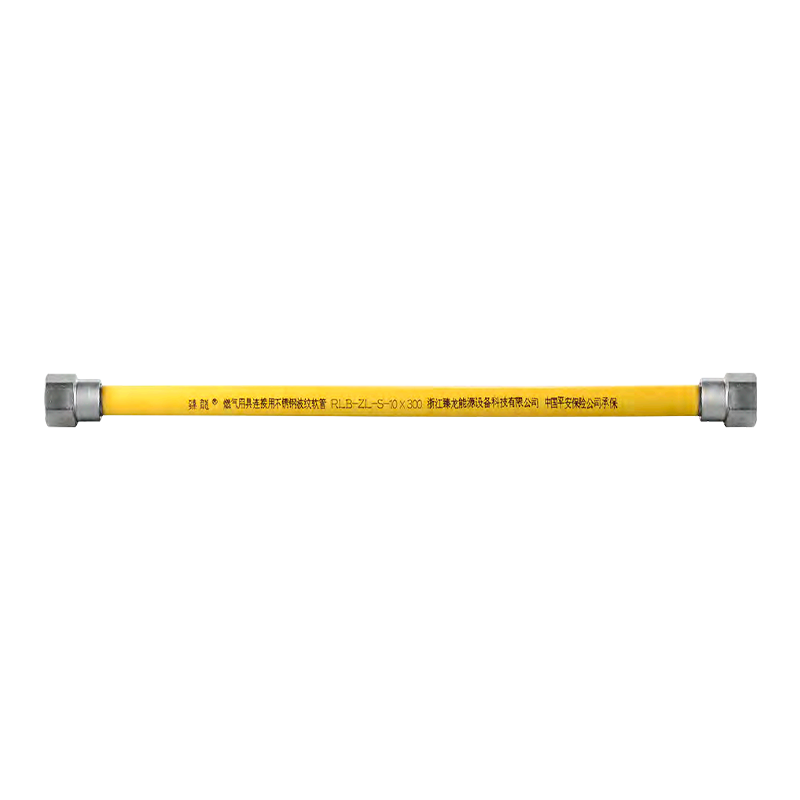
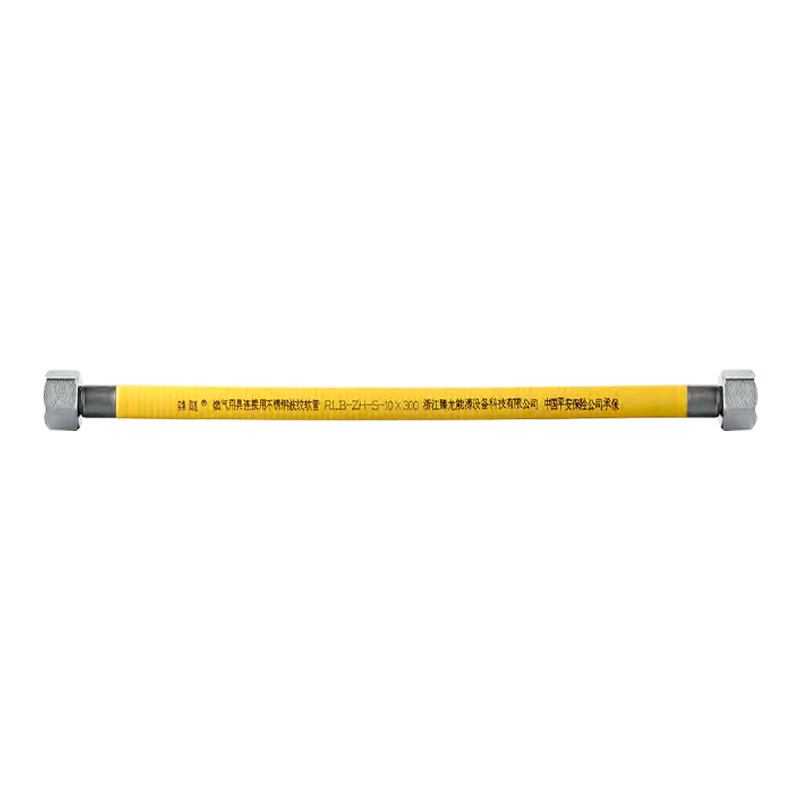
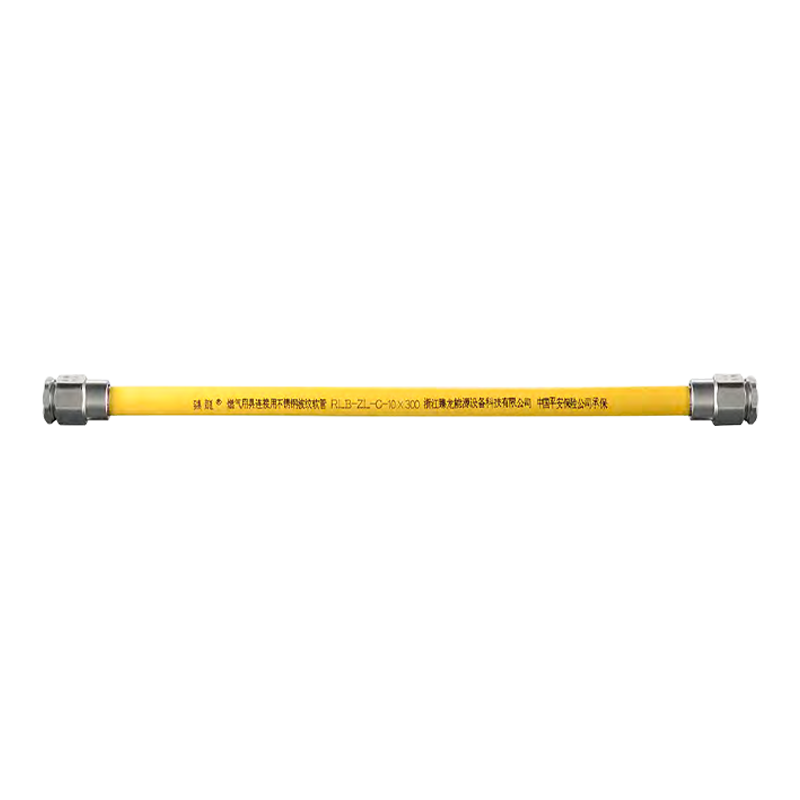
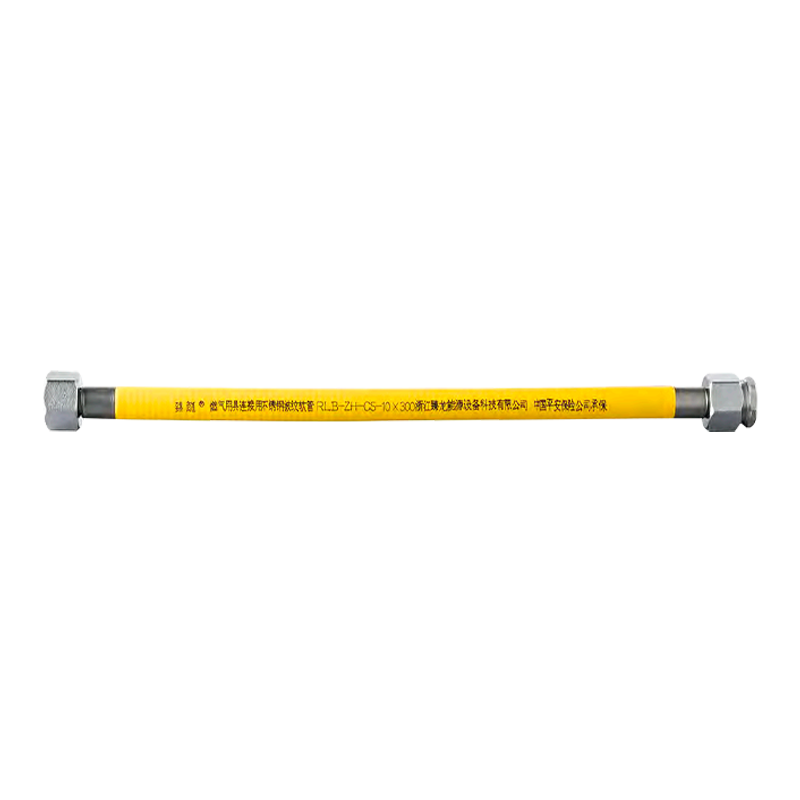
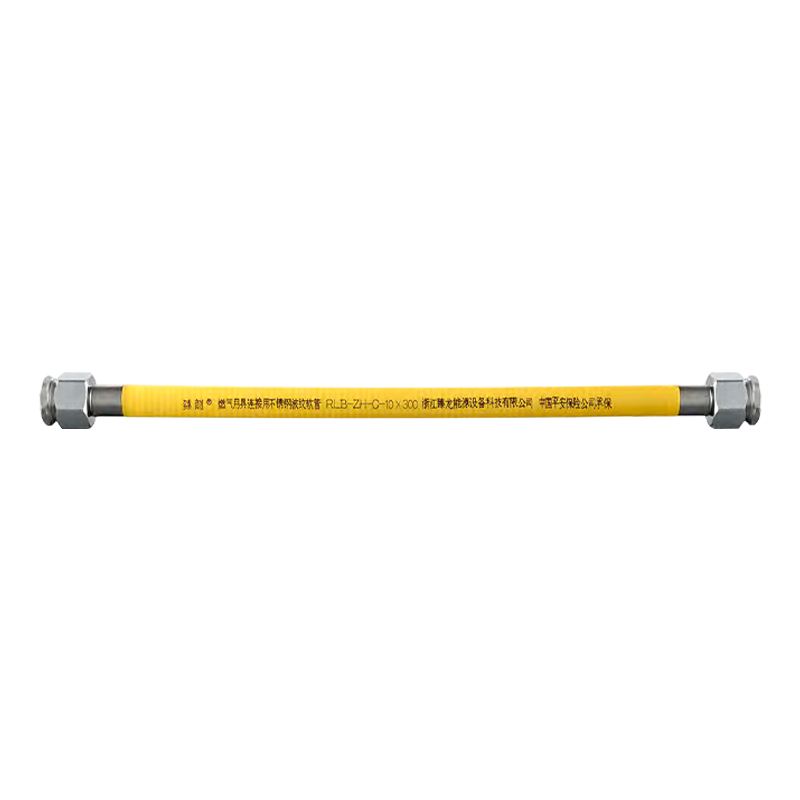
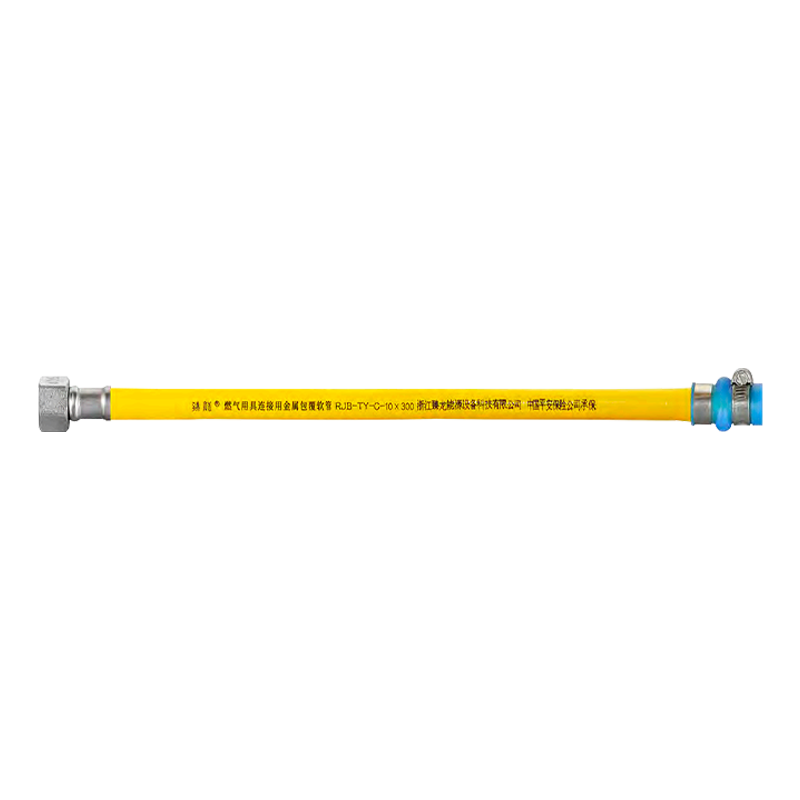
 Stainless Steel Corrugated Gas Appliance ConnectorsCustom stainless steel corrugated tube assemblies for gas cookers, water heaters, meters, and pipe connections; confirm pressure, bore, end connection, gasket, and orientation before ordering.View Product →
A short connector with the wrong thread pitch is still the wrong connector. Confirm the mating port, gasket type, and installation orientation before ordering a full batch.
The Numbers Buyers Should Ask For
Most hose failures are not caused by a missing stainless label. They come from an assembly that was approved on bore and length alone. The approval sheet should carry pressure at temperature, minimum bend radius, end connection details, and test records.
| Consideration | Ask the supplier for | Why it matters | How to verify |
|---|---|---|---|
| Bore and flow | Actual inside diameter, not only nominal thread size | Smaller bore raises pressure drop and can starve an appliance | Compare the assembly drawing with the appliance inlet requirement |
| Pressure at temperature | Working pressure, burst pressure, and a derating curve | A rating at ambient temperature may not apply at the operating temperature | Check the maximum temperature on the line and the corresponding rating |
| Bend radius | Static and dynamic minimum bend radius | Bending tighter than the limit fatigue-cracks the corrugation | Use the installation drawing, not an estimate made on site |
| End connection | Thread standard, flange pattern, gasket material, and torque | Thread or gasket mismatch is a common leak path | Trial-fit one sample with the actual mating port |
| Length and routing | Face-to-face length and recommended natural loop | Excess length can rub or kink; short length can pre-load the fitting | Confirm the installed position before releasing the order |
| Braid and cover | Braid material, coverage, and jacket or metal wrap | The braid carries pressure load; the cover controls abrasion and corrosion | Match the cover to the environment, not just to appearance |
| Certification scope | Test report, certificate scope, and batch traceability | A logo does not prove the specific assembly was tested | Check that the certificate covers the product family and size |
Before you approve a sample, run through a practical pre-purchase checklist for corrugated metal hose and ask for pressure and leak-test records. If the supplier cannot provide a derating curve, a bend radius drawing, and a pressure test record, treat the sample as unverified.
Material and Layer Choices That Change Performance
Stainless steel is the starting point, not the whole specification. The medium, cleaning agents, ambient atmosphere, and installation method decide whether 304 stainless is sufficient or 316L is needed.
304 or 316L?
Grade 304 is common for general gas and water connections. Grade 316L is more resistant to chlorides and is often specified for coastal, marine, and some chemical exposures. A higher grade does not fix a bad bend radius or a missing gasket. For gas service, the elastomer or gasket material and the fitting finish can matter as much as the corrugation alloy.
Braid, jacket, and wrapped cover
The braid provides pressure reinforcement and also protects the corrugation from abrasion. A PVC jacket adds handling protection and flame resistance in some indoor routes, while a metal-wrapped cover is used where the connection must resist abrasion, impact, or commercial kitchen handling. The cover should not trap moisture against the braid in a wet or corrosive location unless the design allows drainage and inspection.
For commercial kitchen gas connections, a metal-wrapped or braided assembly is often preferred because the cover protects the corrugation from repeated movement and cleaning impact.
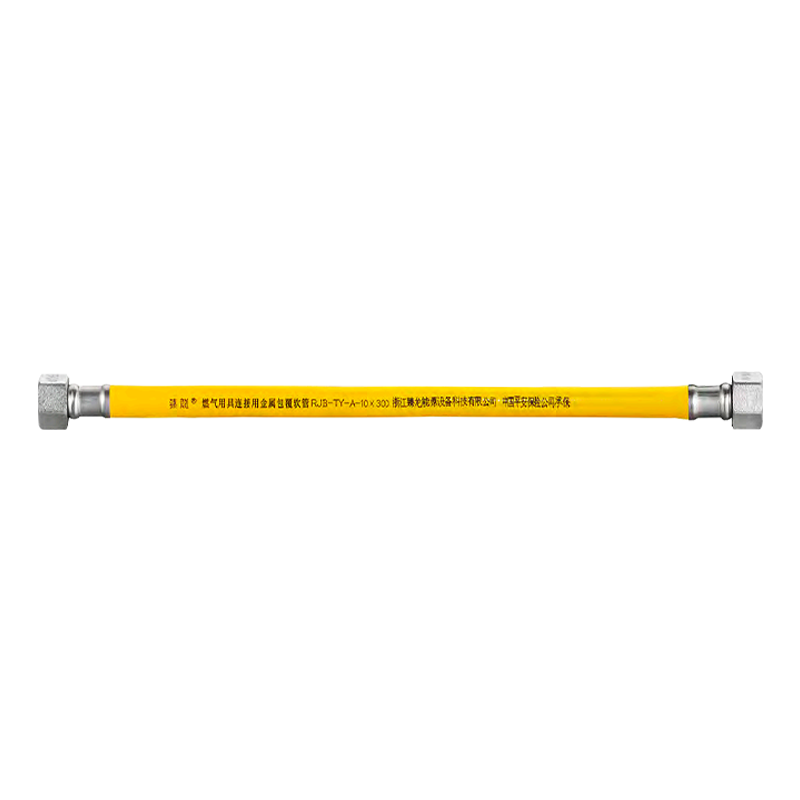
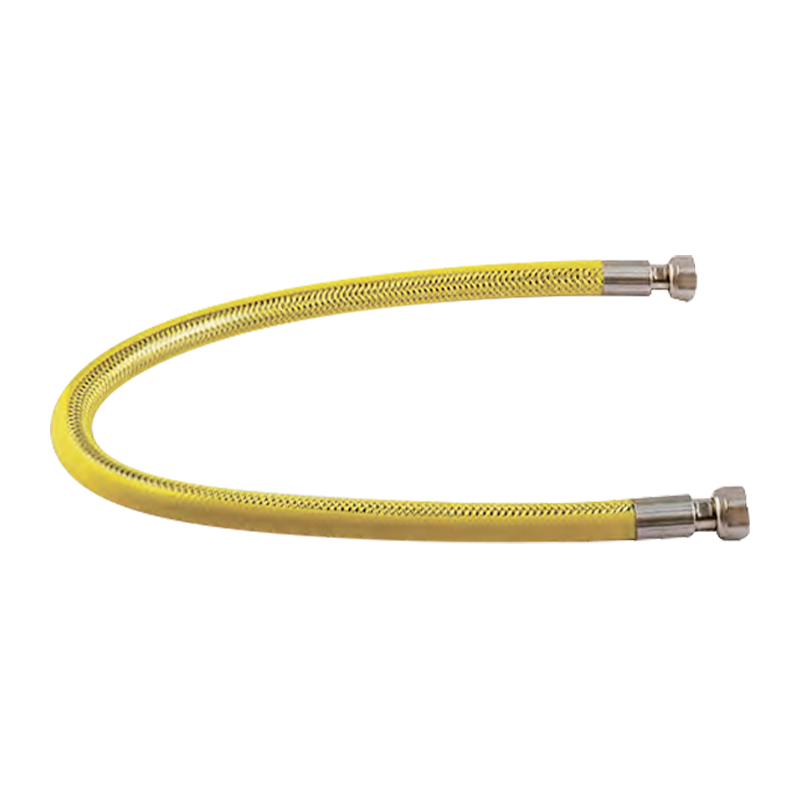
 Metal-Wrapped Stainless Steel Gas HosesFlexible three-layer LPG appliance hoses with inner gas hose, metal sheath, and outer plastic sheath; suited to commercial kitchen, outdoor, and heating connections.View Product →
The cover is not a substitute for correct routing. A wrapped hose that is twisted during installation can still fail at the ferrule, where the braid and corrugation meet.
Failure Modes: What Kills a Stainless Hose
Most field failures are mechanical or installation-related: over-bending at the fitting, torsion during tightening, vibration without support, or corrosion of the braid. A smaller group comes from wrong material selection or a damaged gasket. The failure often appears at the end fitting rather than in the middle of the hose, because that is where the flexible corrugation is restrained and the stress concentrates.
Figure 2. Qualitative comparison on a 1–5 scale based on common engineering trade-offs. It is not a standardized test result; use it to decide which data to request from a supplier.
Four repeat failures
- Over-bending at the ferrule. Use the published dynamic radius and fit a bend restrictor where the hose leaves the fitting.
- Torsion during installation. Tighten the fitting body, not the hose, and align the threads before applying torque.
- Vibration without support. Route a natural loop and support the assembly so movement is absorbed by the corrugation rather than the joint.
- Wrong material or gasket. Match 316L and the gasket to the medium, and confirm that the fitting finish is suitable for the environment.
Compliance Is a Scope Check, Not a Logo
Different markets use different documents. In North America, gas appliance connectors are commonly evaluated to ANSI Z21.24/CSA 6.10. In Europe, EN 14800 addresses safety corrugated metal hose assemblies for gas. ISO 10380 covers corrugated metal hose assemblies more broadly. Local gas codes still decide whether and how the connector may be installed. A CE mark on a hose does not cover the appliance, the fitting selection, or the installer's work.
Ask for the certificate scope, the material certificate for the corrugation and braid, the pressure and leak-test record, and batch traceability. A supplier that can connect the certificate to the exact size and batch is easier to approve than one that sends only a generic catalog page.
Threads and flanges are not interchangeable. A gas hose fitting should match the mating port, gasket, and torque requirement, and the assembly should be checked with the actual appliance or valve inlet. Review the gas hose fittings range together with the hose drawing so that the connection is approved as one system.
Manufacturing Context: What to Verify at the Factory
Zhejiang Zhenlong Energy Equipment Technology Co.,LTD. is engaged in the research and development, manufacturing, and processing of energy equipment. The company manufactures and trades metal hoses, natural gas pipelines, plumbing fittings, sanitary ware, valves, plastic products, and hardware. Its site in Yuyao, Ningbo, Zhejiang covers 40 acres with 30,000 square meters of factory buildings. It operates 30 welding and forming production lines and 2 uninterrupted solid melting hydrogen furnace production lines, supported by a metal material analysis direct-reading spectrometer, a flow tightness tester, and other inspection equipment. The company states that it implements the ISO9000:2008 quality management system, holds the People's Republic of China Special Equipment Manufacturing License (Pressure Pipeline), and has an EU CE certification national testing center report. It is a member of the China Urban Gas Association and describes strong R&D, design, and production teams serving customers with safe pipe fittings and pre-sales and after-sales support.
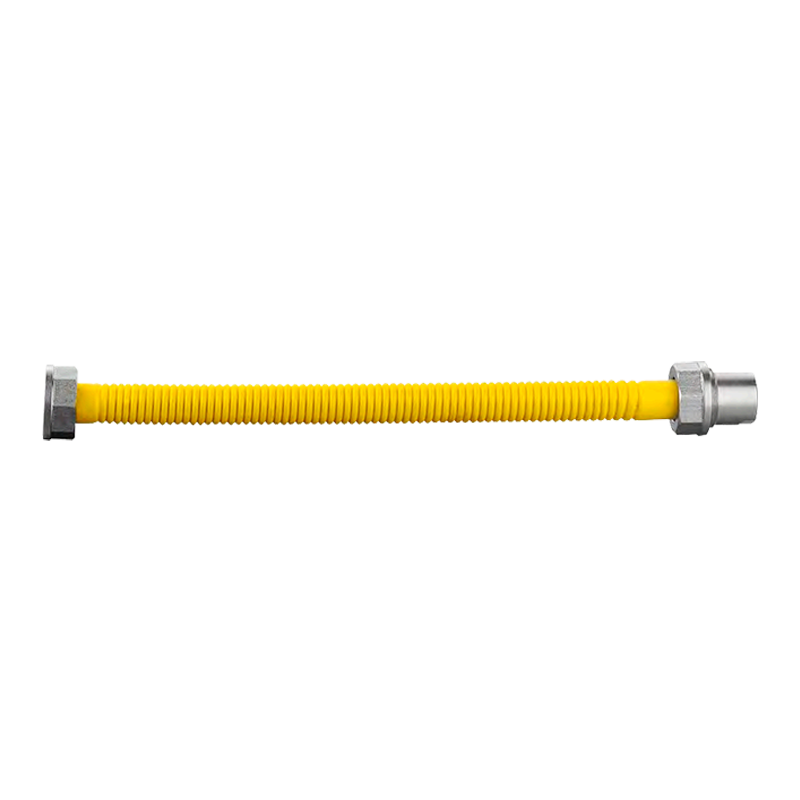
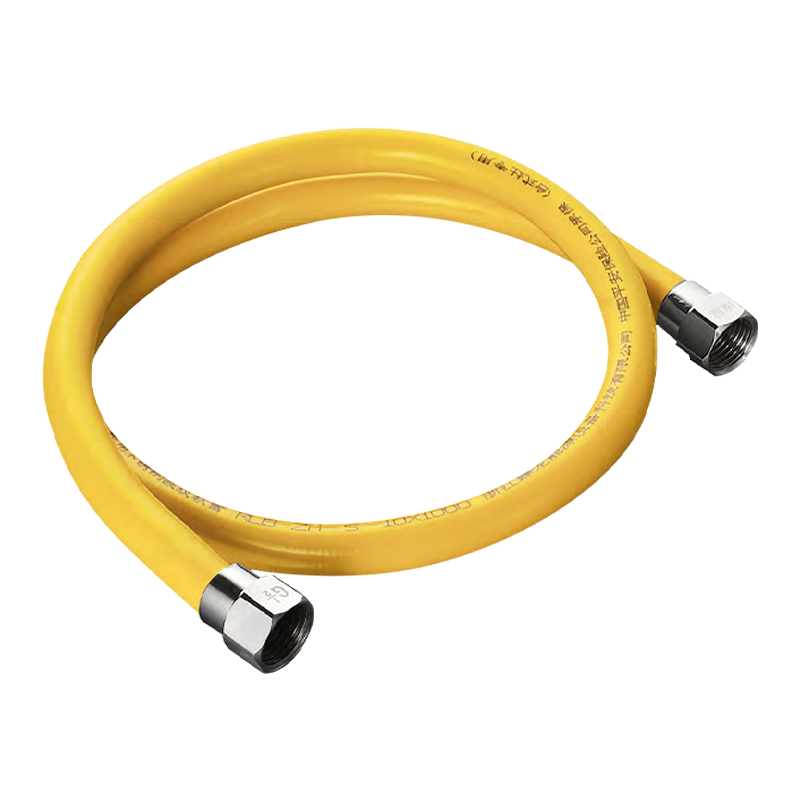
 Welded Corrugated Stainless Steel Gas Hose RangeStainless steel corrugated gas hose variants including braided, flanged, PVC-coated, and metal-wrapped types for buyers comparing construction and performance.View Product →
For buyers, the useful question is not how large the factory is, but which production line, test record, and certificate apply to the exact assembly being purchased. Ask for the route card, the pressure test log, and the batch identification before the goods leave the factory.
Frequently Asked Questions
Q1. What is the difference between corrugated and interlocked metal hose?
A corrugated hose has a continuous formed wall and is normally braided to carry pressure. An interlocked hose is made from strip that locks together and is generally not gas-tight without a liner. For gas service, specify a leak-tight corrugated assembly with the correct approval.
Q2. What minimum bend radius should I use?
Use the manufacturer's published static and dynamic radius for the exact bore and assembly. Do not reuse one radius for every size. Keep the live bend outside the ferrule and provide a bend restrictor where the hose leaves the fitting.
Q3. Can a stainless gas hose be buried in a wall?
Only with an approved wall box, sleeve, or conduit and only where local gas codes allow it. Do not embed a bare hose directly in concrete. The route should remain inspectable and protected from movement and corrosion.
Q4. Do I need 304 or 316L stainless?
304 is common for general gas and water connections. 316L is preferred for chlorides, coastal air, and some chemical exposure. The medium, cleaning agents, and environment should drive the choice, not the label alone.
Q5. How do I check the pressure rating at temperature?
Ask for a derating curve or a table that shows working pressure at the maximum operating temperature. A room-temperature rating is not enough for a hot-water, steam, or engine-exhaust application.
Q6. How often should a gas appliance hose be replaced?
Follow the local gas code, the appliance instructions, and the manufacturer's service guidance. Inspect for kinks, braid damage, corrosion, loose fittings, and cracked gaskets. Replace any damaged assembly immediately rather than waiting for a calendar date.