 English
 中文简体
中文简体 Español
 عربى
عربى

Content
- 1 10 Things to Know Before Buying Corrugated Metal Hose
- 1.1 1. Material Selection: 304 vs 316L vs 321 Stainless Steel
- 1.2 Material Performance Comparison
- 1.3 2. Understanding Pressure Ratings and Safety Factors
- 1.4 Pressure Derating with Temperature
- 1.5 3. Temperature Range and Thermal Performance
- 1.6 4. Bend Radius: Static vs Dynamic
- 1.7 Bend Radius by Hose Diameter
- 1.8 5. Vibration Isolation and Absorption Capabilities
- 1.9 6. Fittings and Connection Types
- 1.10 7. Braid Configuration: Single vs Double Braid
- 1.11 8. Braid Configuration Comparison
- 1.12 8. Media Compatibility and Chemical Resistance
- 1.13 9. Service Life and Replacement Considerations
- 1.14 10. Installation Best Practices
- 1.15 About Zhejiang Zhenlong Energy Equipment Technology Co., Ltd.
- 1.16 Frequently Asked Questions About Corrugated Metal Hoses
10 Things to Know Before Buying Corrugated Metal Hose
A stainless steel corrugated hose is a flexible, durable solution for conveying fluids and gases under pressure while accommodating movement, vibration, and thermal expansion. Before making a purchase, buyers must evaluate ten critical factors that determine performance, safety, and longevity. This guide provides actionable insights for selecting the right corrugated metal hose for your application.
The global market for stainless steel corrugated hoses continues to expand across industries including oil and gas, chemical processing, power generation, food and beverage, and HVAC systems. A stainless steel corrugated hose manufacturer typically offers a range of materials, sizes, and configurations to meet diverse requirements. Understanding these ten key considerations helps buyers make informed decisions and avoid costly mistakes.
1. Material Selection: 304 vs 316L vs 321 Stainless Steel
The choice of stainless steel grade is one of the most critical decisions when purchasing a stainless steel corrugated hose. Common materials include 304, 304L, 316L, and 321 stainless steel, each offering distinct properties.
| Grade | Corrosion Resistance | Temperature Range | Primary Applications | Relative Cost |
|---|---|---|---|---|
| 304 / 304L | Good | -200°C to +420°C[reference:0] | General purpose, water, gas | Lowest |
| 316 / 316L | Superior | -200°C to +600°C[reference:1] | Chemical processing, marine, steam[reference:2] | Higher |
| 321 | Very good | -269°C to +600°C[reference:3] | High-temperature, steam[reference:4] | Higher |
316L stainless steel is often recommended for chemical and marine environments due to its molybdenum content, which enhances corrosion resistance[reference:5][reference:6]. For high-temperature steam applications, 321 stainless steel provides excellent stability[reference:7]. A reliable stainless steel corrugated hose manufacturer can help match the grade to your specific media and operating conditions.
2. Understanding Pressure Ratings and Safety Factors
Pressure rating is one of the most important specifications for any stainless steel corrugated hose. Different configurations offer varying pressure capacities.
For bulk corrugated hoses without end fittings, pressure ratings typically range from 30 bar to 150 bar at +20°C, depending on the dimension[reference:8]. Pre-assembled hoses with straight end pieces generally have lower ratings, typically up to 16 bar at +20°C[reference:9]. Hoses with threaded connections can handle up to 25 bar at +20°C[reference:10].
It is critical to note that working pressure decreases with increasing temperature[reference:11]. A stainless steel corrugated hose supplier should provide derating factors for elevated temperatures. For high-pressure applications, braided stainless steel flexible hose configurations with single or double braiding offer enhanced pressure resistance[reference:12].
| Configuration | Max Working Pressure (bar) | Temperature | Braid Type |
|---|---|---|---|
| Bulk hose (no fittings) | 30 - 150 | +20°C | Single braid |
| Straight end pieces | Up to 16 | +20°C | Single braid |
| Threaded connections | Up to 25 | +20°C | Single braid |
| Double braid (1/4 inch) | 2700 psi (~186 bar) | Ambient | Double braid[reference:13] |
Always select a hose with a working pressure that exceeds your system's maximum operating pressure. A high pressure corrugated hose with double braiding provides additional safety margins[reference:14].
Pressure Derating with Temperature
Working pressure decreases as temperature increases. This derating curve illustrates the relationship for typical stainless steel corrugated hoses.
Double-braided hoses maintain higher pressure ratings at elevated temperatures
3. Temperature Range and Thermal Performance
A stainless steel corrugated hose must withstand both the operating temperature of the conveyed media and the ambient environment. Different grades offer different temperature capabilities.
For standard applications, 304 stainless steel hoses operate effectively from -200°C to +420°C[reference:15]. For more demanding thermal conditions, 316L and 321 grades extend the upper range to +600°C[reference:16][reference:17]. Some specialized steam corrugated hose configurations can handle temperatures up to +800°C[reference:18].
For cryogenic applications, stainless steel corrugated hoses can operate at temperatures as low as -269°C (-454°F)[reference:19][reference:20]. This makes them suitable for industrial corrugated metal hose applications in LNG, liquid nitrogen, and other cryogenic fluid transfer systems.
Steam flexible metal hose applications require careful attention to both temperature and pressure ratings. For continuous steam service, 321 stainless steel is often recommended due to its stabilized structure that resists sensitization at elevated temperatures[reference:21].
4. Bend Radius: Static vs Dynamic
Bend radius is a critical specification that determines how tightly a stainless steel corrugated hose can be bent without damage. Two types of bend radius must be considered: static and dynamic[reference:22].
Static bend radius applies when the hose is bent once and remains in that position. Dynamic bend radius applies when the hose undergoes repeated or continuous flexing during operation[reference:23]. For corrugated metal hoses, the minimum bend radius is typically measured from the centerline of the hose[reference:24].
Industry practice recommends increasing the minimum bend radius by 25% when high pressures or high temperatures are involved[reference:25]. A custom stainless steel corrugated hose supplier can provide specific bend radius data for different diameters and braid configurations.
| Inside Diameter | Static Min. Bend Radius | Dynamic Min. Bend Radius | Single Braid (max pressure psi) |
|---|---|---|---|
| 1/4" | 1.0 | 4.5 | 1800[reference:26] |
| 3/8" | 1.2 | 5.0 | 1558[reference:27] |
| 1/2" | 1.5 | 5.5 | 1186[reference:28] |
| 3/4" | 2.1 | 8.0 | 898[reference:29] |
| 1" | 2.7 | 9.0 | 718[reference:30] |
Dynamic bend radius is typically larger than static radius. A stainless steel corrugated hose factory can provide detailed bend radius charts for your specific configuration.
Bend Radius by Hose Diameter
Comparison of static and dynamic minimum bend radii for different hose diameters.
Dynamic bend radius is significantly larger than static radius for all hose diameters
5. Vibration Isolation and Absorption Capabilities
One of the primary reasons for using a stainless steel corrugated hose is its ability to absorb and isolate vibration in piping systems. In environments where pumps, compressors, or other equipment generate vibration, rigid tubing can fatigue and crack over time[reference:31][reference:32].
A vibration isolation metal hose absorbs these dynamic forces, protecting connected components and extending system life[reference:33]. The corrugated structure, combined with the wire braid, provides both flexibility and damping characteristics[reference:34].
For applications involving pumps and compressors, a vibration isolation metal hose can significantly reduce stress on rigid piping connections[reference:35]. The wire braid acts as a restraint against hose elongation while also helping to dampen vibration[reference:36].
When selecting a hose for vibration isolation, consider the frequency and amplitude of the vibration, the number of expected flex cycles, and the operating conditions. A stainless steel corrugated hose supplier can recommend appropriate configurations based on your specific vibration profile.
6. Fittings and Connection Types
The end fittings of a stainless steel corrugated hose are critical for proper installation and leak-free operation. Various connection types are available, each suited to different applications[reference:37].
- Threaded connections: NPT, BSP, and metric threads for standard piping connections
- Flanged connections: For high-pressure applications and easy disassembly[reference:38]
- Welded ends: For permanent, leak-free installations[reference:39]
- Compression fittings: For quick connections in low-pressure systems[reference:40]
- Quick-action couplings: For applications requiring frequent disconnection[reference:41]
For custom corrugated metal hose OEM applications, a stainless steel corrugated hose manufacturer can provide custom end fittings tailored to your specific equipment interfaces. When selecting fittings, consider pressure rating, temperature compatibility, and the need for periodic disconnection.
7. Braid Configuration: Single vs Double Braid
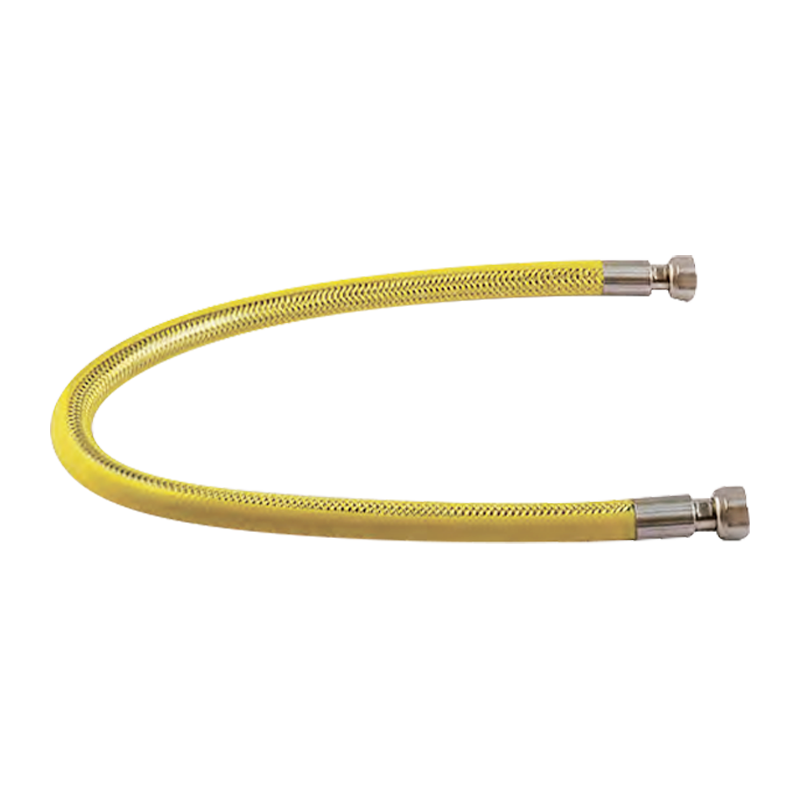
The external braid on a stainless steel corrugated hose provides pressure containment, abrasion protection, and vibration damping. Understanding the differences between single and double braid configurations is essential[reference:42][reference:43].
Single braid configurations offer a balance of flexibility and pressure capacity for most applications. Double braid configurations provide significantly higher pressure ratings at the cost of reduced flexibility[reference:44].
For example, a 1/4-inch annular corrugated hose with single braid has a maximum working pressure of 1800 psi, while the same hose with double braid can handle 2700 psi[reference:45]. A braided stainless steel flexible hose with double braid is recommended for high-pressure applications.
The braid material is typically 304 stainless steel, though 316 braid is available upon request[reference:46]. A stainless steel corrugated hose factory can provide guidance on the appropriate braid configuration for your pressure and flexibility requirements.
8. Braid Configuration Comparison
Radar comparison of single braid vs double braid configurations across key performance metrics.
Double braid offers superior pressure capacity and abrasion resistance at the cost of flexibility
8. Media Compatibility and Chemical Resistance
The compatibility of a stainless steel corrugated hose with the conveyed media is paramount for safety and longevity. Different stainless steel grades offer varying levels of chemical resistance[reference:47].
For most industrial applications, 321 stainless steel provides sufficient corrosion resistance[reference:48]. When additional chemical resistance is required, 316 stainless steel is recommended due to its higher nickel and molybdenum content[reference:49]. A chemical resistant metal hose made from 316L is ideal for aggressive chemical environments[reference:50].
For food grade stainless steel flexible hose applications, 304 or 316L stainless steel are commonly used due to their cleanability and corrosion resistance[reference:51]. These materials meet sanitary standards for food and beverage processing.
For extremely aggressive media, specialty alloys such as Inconel 625 and Hastelloy C-276 offer corrosion resistance superior to stainless steel[reference:52]. A stainless steel corrugated hose supplier can provide compatibility data for specific media and operating conditions.
9. Service Life and Replacement Considerations
The service life of a stainless steel corrugated hose depends on operating conditions, media, and maintenance practices. Under normal conditions, stainless steel corrugated hoses typically last 8 to 10 years or more, significantly longer than traditional rubber hoses[reference:53].
Several factors affect service life[reference:54]:
- Chemical composition of the conveyed media and surrounding environment
- Operating temperature and pressure fluctuations
- Frequency and magnitude of flexing cycles
- Exposure to external damage, weld splatter, or corrosive fumes[reference:55]
Regular inspection is essential for maximizing service life. Signs that replacement may be needed include visible braid damage, leakage, excessive stiffness, or cracking of the corrugated tube. A custom stainless steel corrugated hose from a reputable stainless steel corrugated hose manufacturer can provide extended service life through quality materials and construction.
10. Installation Best Practices
Proper installation is essential for maximizing the performance and service life of a stainless steel corrugated hose. Following best practices prevents premature failure and ensures safe operation.
- Avoid torque: Do not twist the hose assembly during installation when aligning bolt holes or making up pipe threads[reference:56]
- Prevent sharp bends: Use elbows to avoid severe bends near the end of the hose assembly[reference:57]
- Single-plane flexing: Install the hose so that flexing occurs in only one plane[reference:58]
- Avoid axial movement: Corrugated metal hose installed in-line should not be subjected to axial movement[reference:59]
- Handle with care: Always lift or carry metal hose to prevent abrasion damage to the braid[reference:60]
- Proper storage: Store hose assemblies away from spillage, corrosive fumes, weld splatter, and general damage[reference:61]
For custom corrugated metal hose OEM applications, a stainless steel corrugated hose manufacturer can provide installation drawings and specific torque specifications for your assembly.
About Zhejiang Zhenlong Energy Equipment Technology Co., Ltd.
Zhejiang Zhenlong Energy Equipment Technology Co., Ltd. is a company engaged in the research, development, manufacturing, and processing of energy equipment. The company specializes in the manufacture and processing of metal hoses, natural gas pipelines, plumbing fittings, sanitary ware, valves, plastic products, and hardware.
Located in Yuyao, Ningbo, Zhejiang, the company covers an area of 40 acres with a factory building of 30,000 square meters. The facility features 30 welding and forming production lines, 2 uninterrupted solid melting hydrogen furnace production lines, and advanced testing equipment including a metal material analysis direct reading spectrometer and flow tightness tester.
As a professional stainless steel corrugated hose manufacturer and stainless steel corrugated hose factory, Zhenlong Energy strictly implements the ISO9000:2008 quality management system. The company holds the People's Republic of China Special Equipment Manufacturing License (Pressure Pipeline) and EU CE certification.
As a member of the China Urban Gas Association, the company has a strong R&D, design, and production team. Zhenlong Energy provides customers with safe pipe fittings and comprehensive pre-sales and after-sales services. The company produces stainless steel corrugated hose in materials including 304 and 316L stainless steel, designed to resist corrosion and high temperatures while providing flexibility for piping systems.
Zhenlong Energy originates from sincere cooperation with friends at home and abroad, working together to create brilliance. Whether you need stainless steel corrugated hose OEM solutions, custom stainless steel corrugated hose designs, or high pressure corrugated hose for demanding applications, Zhenlong Energy provides quality products and comprehensive service.
Frequently Asked Questions About Corrugated Metal Hoses
Q1: What is a stainless steel corrugated hose?
A stainless steel corrugated hose is a flexible metal tube with a corrugated inner wall and an external wire braid. It is designed to convey fluids and gases under pressure while accommodating movement and vibration.
Q2: What are corrugated metal hoses used for?
They are used in oil and gas, chemical processing, power generation, food and beverage, HVAC, and steam systems for vibration isolation, thermal expansion compensation, and flexible connections.
Q3: How much pressure can a corrugated hose handle?
Pressure ratings range from 16 bar for pre-assembled hoses with straight ends to over 2700 psi for double-braided configurations. Ratings decrease with increasing temperature.
Q4: Why are stainless steel hoses braided?
The braid provides pressure containment, prevents hose elongation under pressure, offers abrasion protection, and helps dampen vibration.
Q5: Can corrugated hoses be welded?
Yes. TIG welding is commonly used to attach fittings and connectors to corrugated stainless steel hoses, ensuring leak-proof connections.
Q6: How long do metal hoses last?
Under normal conditions, stainless steel corrugated hoses typically last 8 to 10 years or more, significantly longer than rubber alternatives.
Q7: What is the bend radius?
Bend radius is the minimum radius to which a hose can be bent without damage. Static bend radius applies to stationary installations; dynamic bend radius applies to applications with repeated flexing.
Q8: What fittings are available?
Available fittings include threaded (NPT, BSP), flanged, welded ends, compression fittings, and quick-action couplings.
Q9: Is 316 better than 304?
316 stainless steel offers superior corrosion resistance due to its molybdenum content, making it better for chemical and marine environments. 304 is more cost-effective for general applications.
Q10: Can stainless steel hoses be used for steam?
Yes. 321 and 316L stainless steel hoses are suitable for steam applications, with temperature capabilities up to 600°C or higher.