 English
 中文简体
中文简体 Español
 عربى
عربى
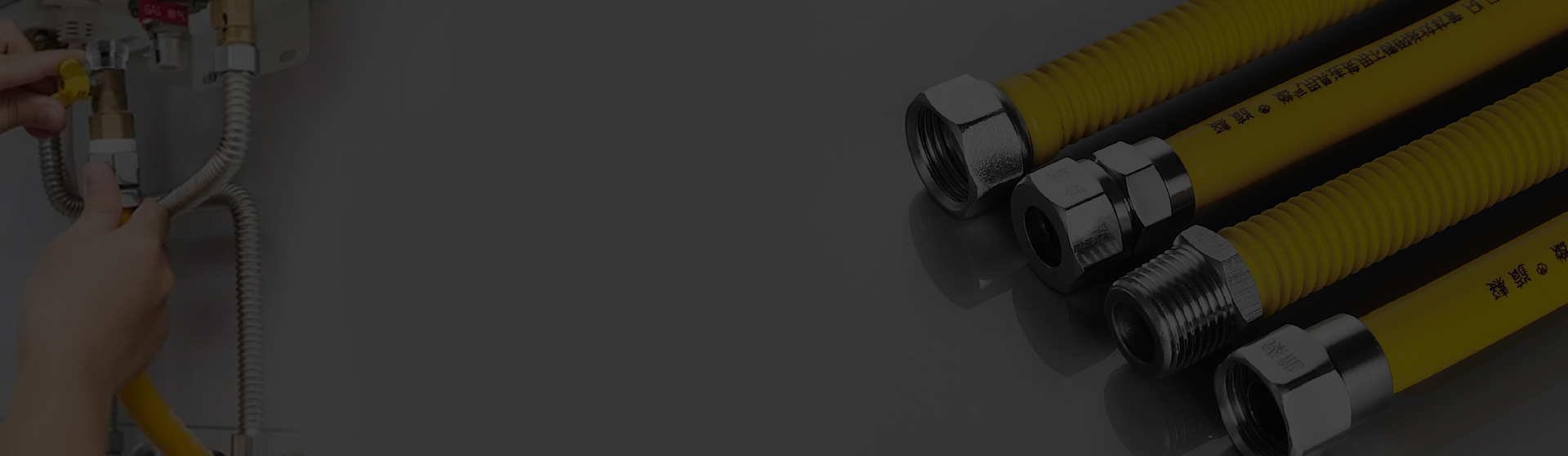

Direct answer: Yes — stainless steel corrugated hoses are well-suited for high-temperature applications. Grade 304 stainless steel is rated for continuous service up to 870°C (1,600°F), and Grade 316 up to 925°C (1,700°F) in non-cycling thermal environments. In practical piping applications including steam, hot gas, and exhaust systems, corrugated stainless hoses maintain structural integrity and pressure retention across the full range of temperatures encountered in industrial and commercial installations — far exceeding the capability of rubber, PTFE-lined, or composite hose alternatives in the same temperature range.
Content
- 1 Why Stainless Steel Handles High Temperatures Better Than Other Hose Materials
- 2 Stainless Steel Grade Comparison for High-Temperature Service
- 3 How Temperature Affects Pressure Rating: What Engineers Need to Know
- 4 Stainless Steel Corrugated Hose for Gas Connection Use: Specific Requirements
- 5 Key Construction Features That Affect High-Temperature Performance
- 6 Custom Stainless Steel Corrugated Hose Manufacturer Supplier: What to Specify
- 7 About Zhejiang Zhenlong Energy Equipment Technology Co., Ltd.
- 8 Frequently Asked Questions
Why Stainless Steel Handles High Temperatures Better Than Other Hose Materials
The thermal performance of a stainless steel corrugated hose derives from the alloy's intrinsic material properties — not a coating or treatment that degrades over time. Stainless steel retains its tensile strength, corrosion resistance, and dimensional stability at temperatures where rubber degrades, PTFE softens, and composite materials delaminate. This makes it the default material specification for high-temperature flexible piping in demanding applications.
The corrugated geometry — a series of annular or helical convolutions along the hose length — plays an equally important role. Under thermal expansion, a rigid pipe joint experiences significant axial stress as connected equipment heats and cools. The corrugated stainless hose absorbs this thermal movement through elastic deformation of its convolutions, protecting both the hose itself and the connected equipment from fatigue stress. A typical DN25 stainless corrugated hose can absorb ±15 to 25 mm of axial movement and significant angular deflection, accommodating the full thermal expansion range of most connected pipework without stress concentration.
This combination of high-temperature material capability and mechanical flexibility makes stainless corrugated hoses the standard specification for exhaust connections, steam distribution, boiler connections, and industrial process piping wherever both heat exposure and vibration or movement are present simultaneously.
Stainless Steel Grade Comparison for High-Temperature Service
The performance of a stainless steel corrugated hose at elevated temperature depends critically on the alloy grade specified. Different grades have different maximum service temperatures, corrosion resistance profiles, and pressure retention characteristics that must be matched to the application.
| Grade | Key Alloying Elements | Max Continuous Temp | Corrosion Resistance | Typical Application |
|---|---|---|---|---|
| 304 / 304L | 18% Cr, 8% Ni | 870°C | Good (general use) | Gas, water, steam, general industrial |
| 316 / 316L | 16% Cr, 10% Ni, 2% Mo | 925°C | Superior (chloride resistance) | Marine, chemical, coastal environments |
| 321 | 18% Cr, 9% Ni, Ti stabilized | 925°C | Good at high temp cycling | Exhaust systems, repeated thermal cycling |
| 310S | 25% Cr, 20% Ni | 1,100°C | Excellent at very high temp | Furnace piping, heat treatment |
For most gas connection, steam, and industrial process applications, Grade 304 is the standard specification — it covers the temperature range of the overwhelming majority of commercial and industrial installations at the most widely available material cost. Grade 316 is specified where chloride exposure is present alongside high temperature, and Grade 321 is preferred for applications involving repeated thermal cycling where sensitization (carbide precipitation at grain boundaries) in standard 304 would be a long-term concern.
How Temperature Affects Pressure Rating: What Engineers Need to Know
A critical but frequently overlooked aspect of high-temperature hose selection is the relationship between temperature and allowable working pressure. All metals experience a reduction in yield strength as temperature increases — stainless steel is no exception. A corrugated hose rated at 16 bar at ambient temperature will have a lower allowable working pressure at 400°C, and lower still at 700°C.
The degree of strength reduction varies by alloy grade, but as a general planning guide for Grade 304 stainless steel corrugated hoses, the following derating factors apply:
- At 200°C: Approximately 85% of ambient pressure rating retained
- At 400°C: Approximately 72% of ambient pressure rating retained
- At 600°C: Approximately 55% of ambient pressure rating retained
- At 800°C: Approximately 35% of ambient pressure rating retained
Always obtain the manufacturer's certified pressure-temperature rating table for the specific hose assembly and grade, and apply this data — not ambient-temperature ratings alone — when sizing hoses for high-temperature high-pressure service. A hose that is adequately rated at room temperature may require upsizing or upgrading to a higher-grade alloy to maintain adequate safety margin at operating temperature.
For safety-critical applications including steam, combustible gas, and toxic fluid transfer, the design pressure should include a safety factor applied to the derated pressure at maximum operating temperature — typically a minimum factor of 4:1 (burst pressure to working pressure) in accordance with pressure piping safety standards.
Stainless Steel Corrugated Hose for Gas Connection Use: Specific Requirements
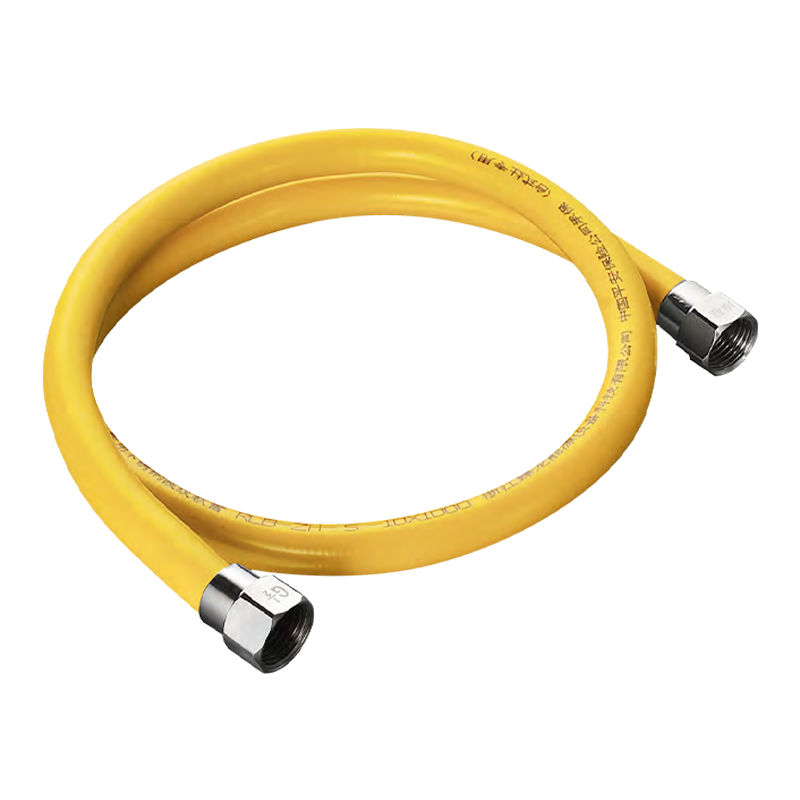
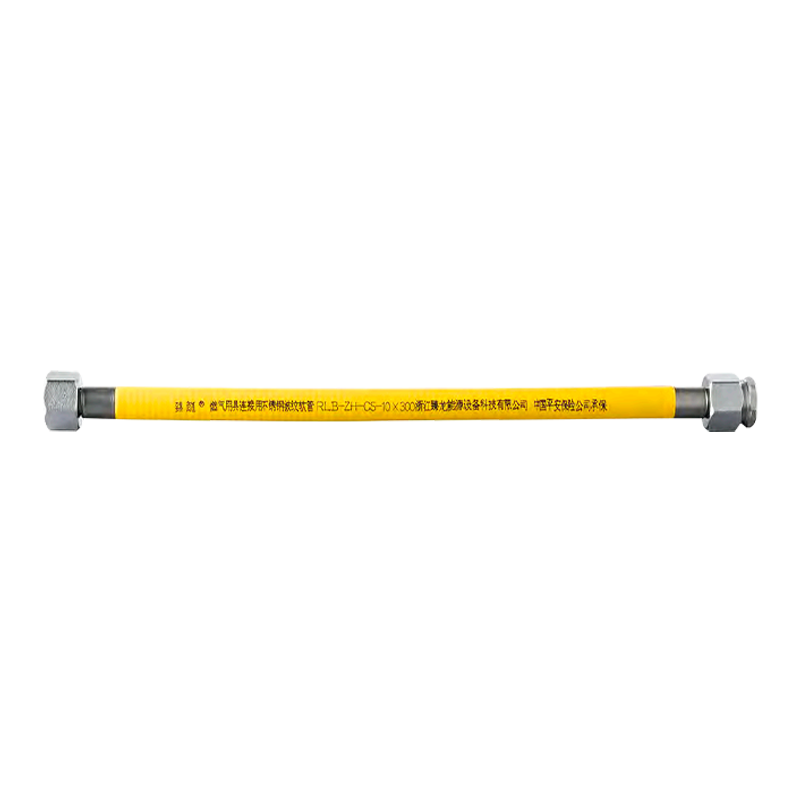
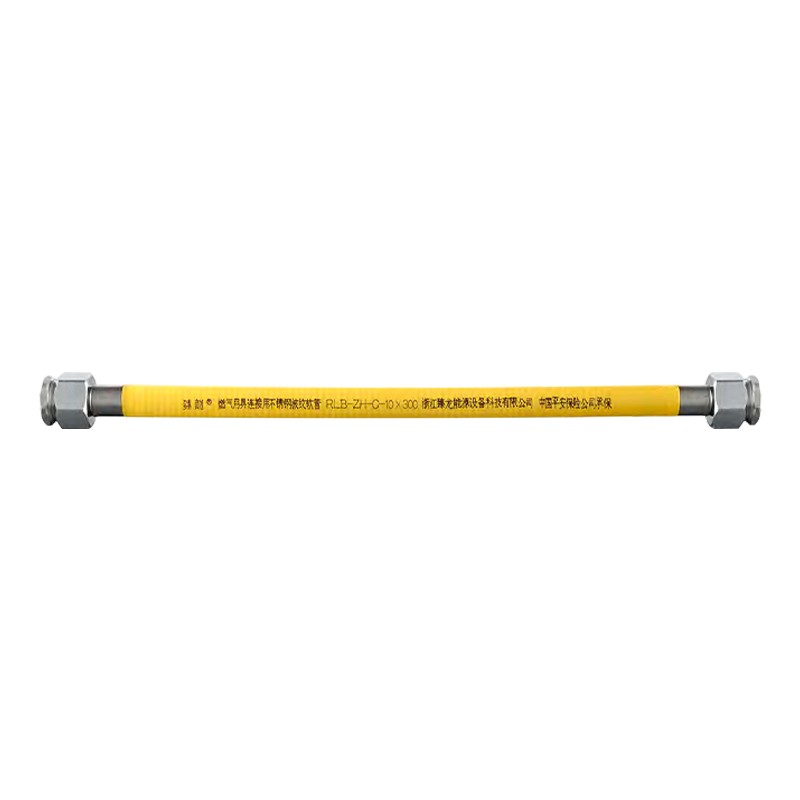
A stainless steel corrugated hose for gas connection use operates in a service environment with specific regulatory, material, and performance requirements that differ from general-purpose fluid transfer applications. Natural gas connections — both residential and commercial — are among the most common and most regulated uses for corrugated stainless hoses.
Regulatory Standards for Gas Hoses
Gas connection hoses are subject to national and international standards that specify minimum performance requirements for pressure rating, leak tightness, flexibility, end fitting integrity, and compatibility with gas compositions. Key standards include:
- EN 14800: European standard for corrugated stainless steel gas hoses for domestic and commercial appliance connections. Specifies pressure testing, bending radius, temperature range, and marking requirements.
- ISO 21012: International standard for cryogenic flexible hose assemblies, applicable where gas is transported at low temperature.
- GB/T 26002 (China): National standard for corrugated stainless steel gas hoses, aligning with domestic safety requirements for natural gas and LPG residential and commercial installations.
- CE certification: Required for product sale in EU markets, confirming compliance with applicable European Directives including the Pressure Equipment Directive (PED).
End Fitting Selection for Gas Connections
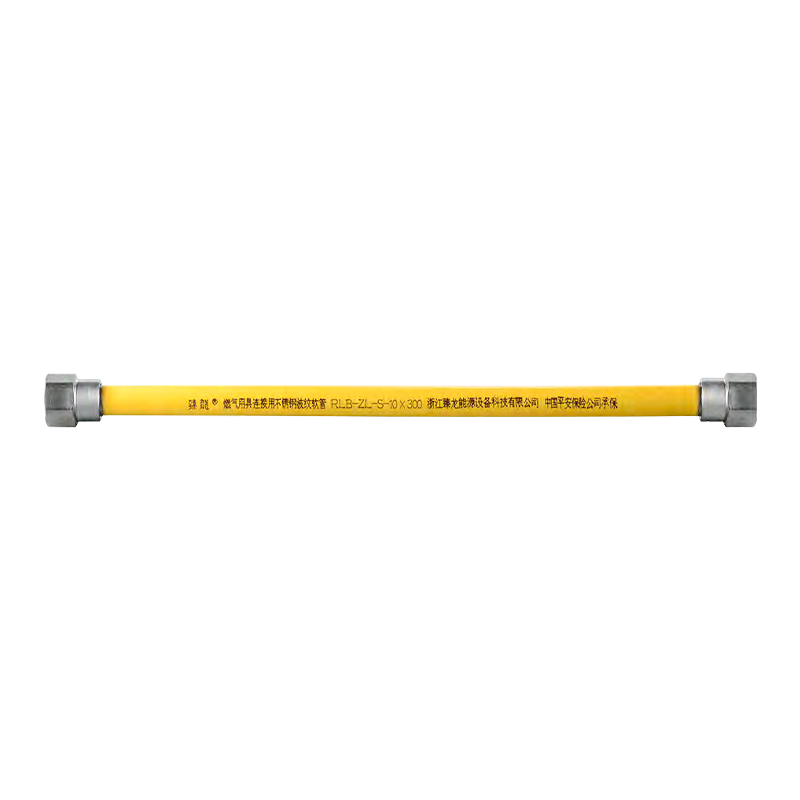
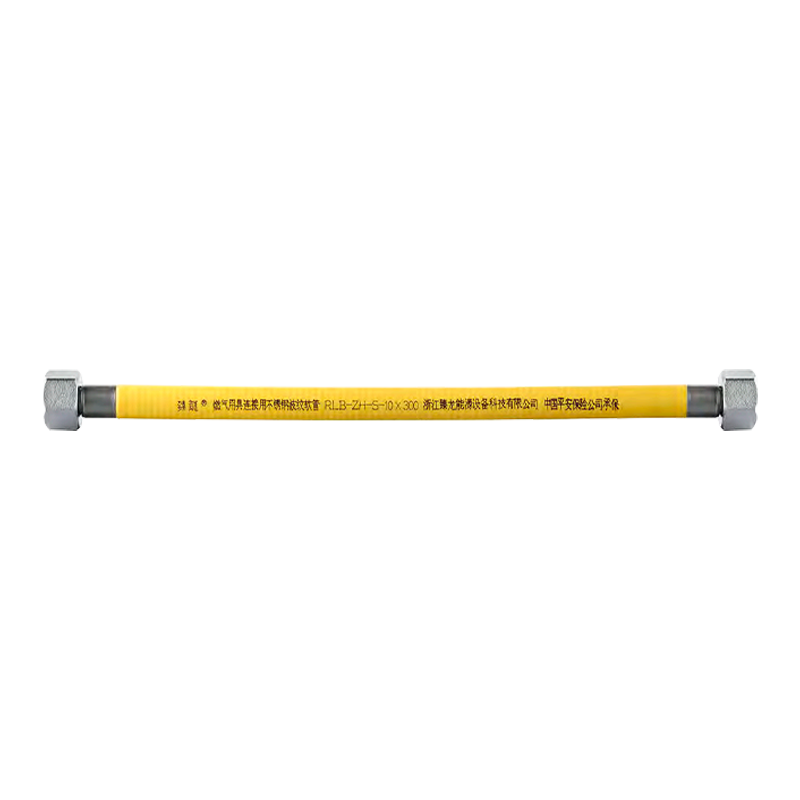
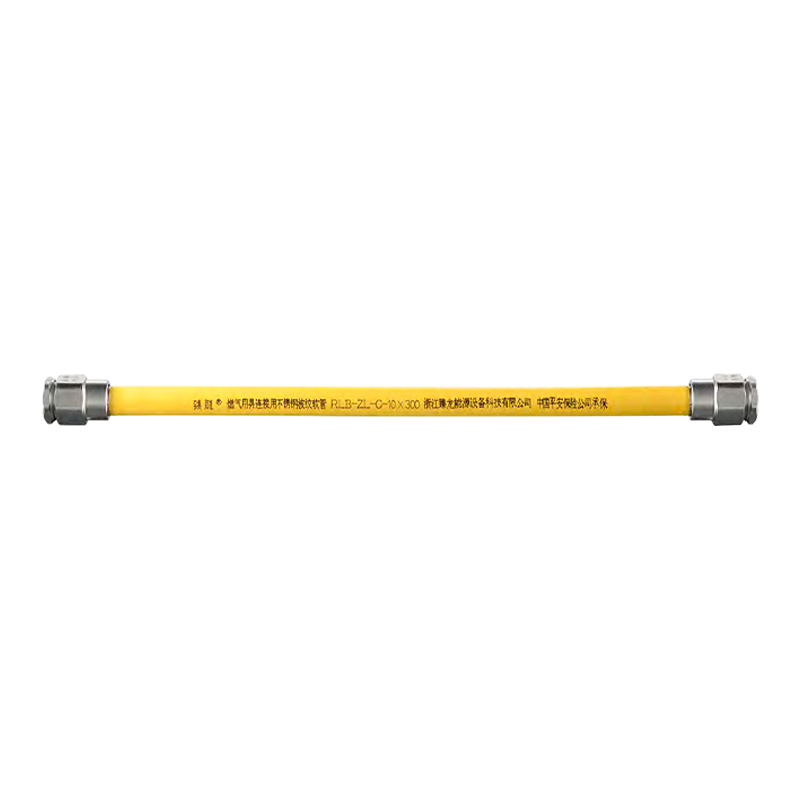
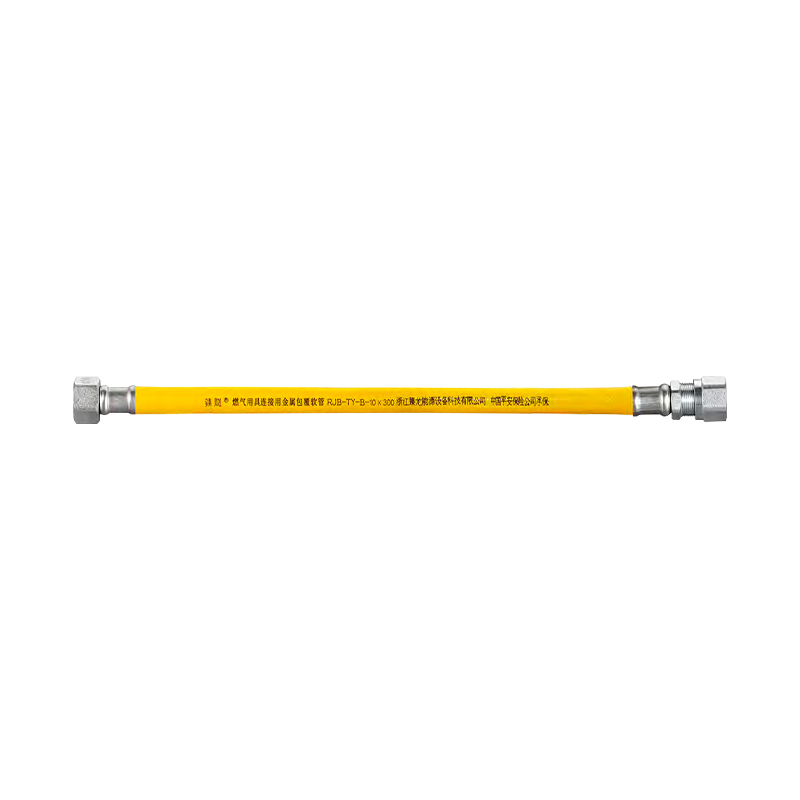
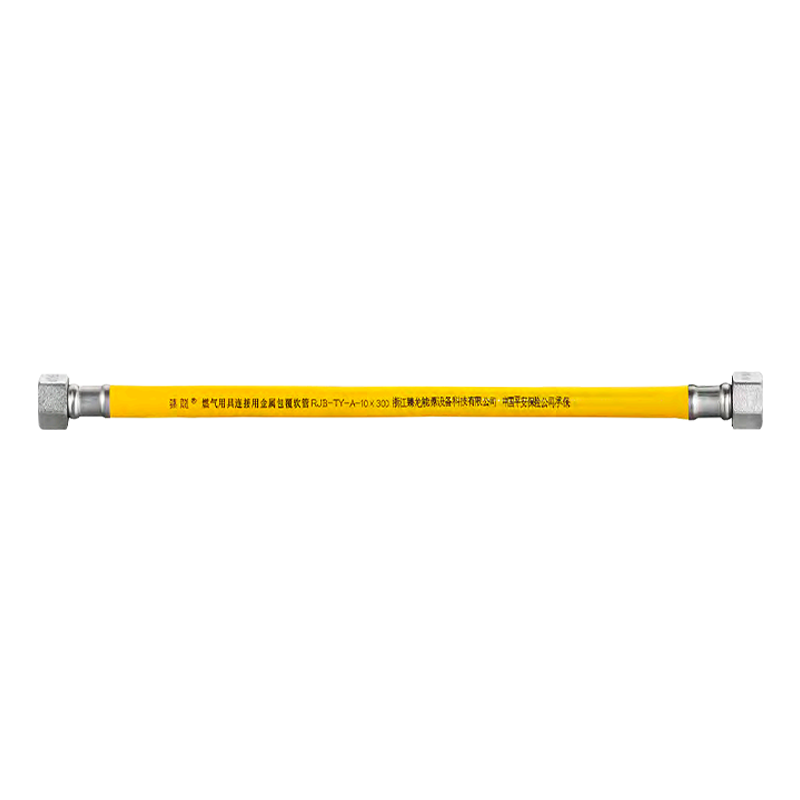
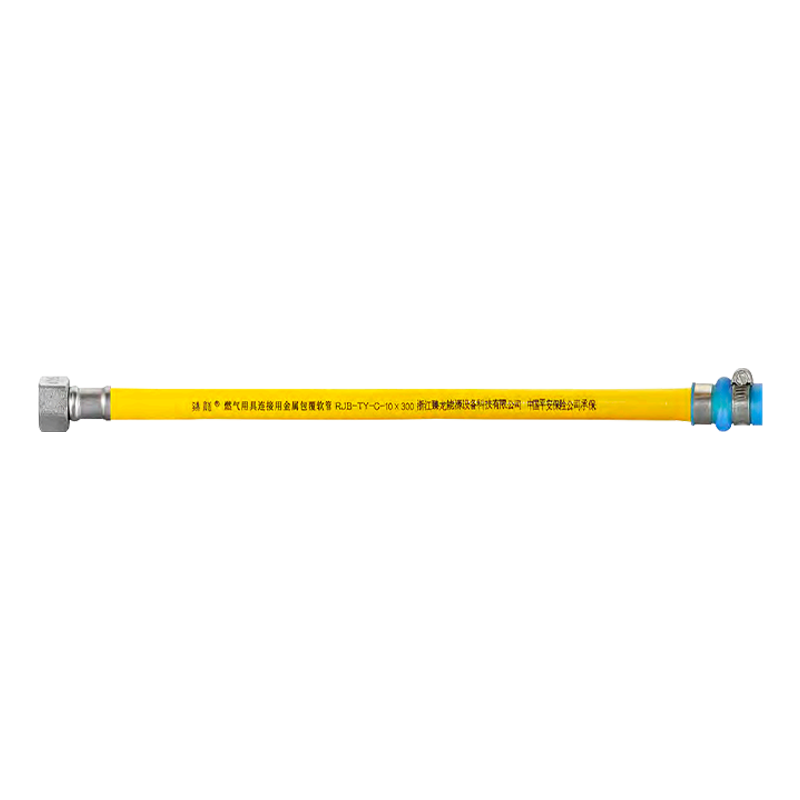
The end fitting is the most failure-prone component in a corrugated gas hose assembly. Fittings must be designed to maintain a gas-tight seal across the full temperature and pressure cycling range of the application, and must be compatible with the thread standards used in the connected appliance and gas supply infrastructure. Common end fitting configurations for gas corrugated hoses include:
- Compression fittings: Swaged or compression-attached to the hose end, providing a mechanically secure connection that does not rely on sealant compounds that can dry and crack at elevated temperatures.
- Threaded connectors: BSP, NPT, or metric thread profiles to match the appliance and gas supply connection. Thread form and engagement length must comply with the applicable gas fitting standard for the installation country.
- Flange connections: For larger diameter gas supply hoses in commercial and industrial applications, flanged end fittings provide a more secure and inspection-accessible connection than threaded alternatives.
Minimum Bending Radius in Installation
Corrugated stainless hoses for gas connections must be installed without exceeding the minimum bending radius specified by the manufacturer. Exceeding this radius creates localized stress concentration at convolution crests that, under repeated thermal cycling and vibration, can lead to fatigue cracking — the most common mode of in-service failure for incorrectly installed gas hoses. As a general guideline, minimum bending radius is approximately 6 to 8 times the nominal bore diameter for standard corrugated stainless hoses, though this varies by wall thickness and convolution pitch. Never form a bend sharper than the manufacturer's specified minimum radius during installation.
Key Construction Features That Affect High-Temperature Performance
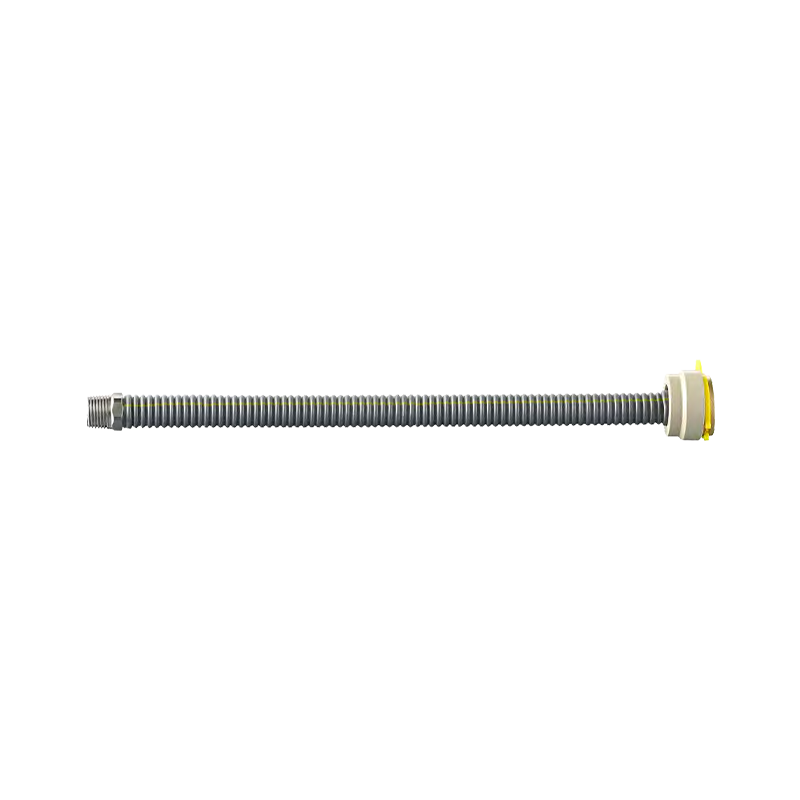
The performance of a stainless steel corrugated hose under high-temperature service conditions is determined not only by the alloy grade of the corrugated tube itself, but also by the braid layer construction, convolution geometry, and end fitting attachment method.
Braid Layer: Single vs Double
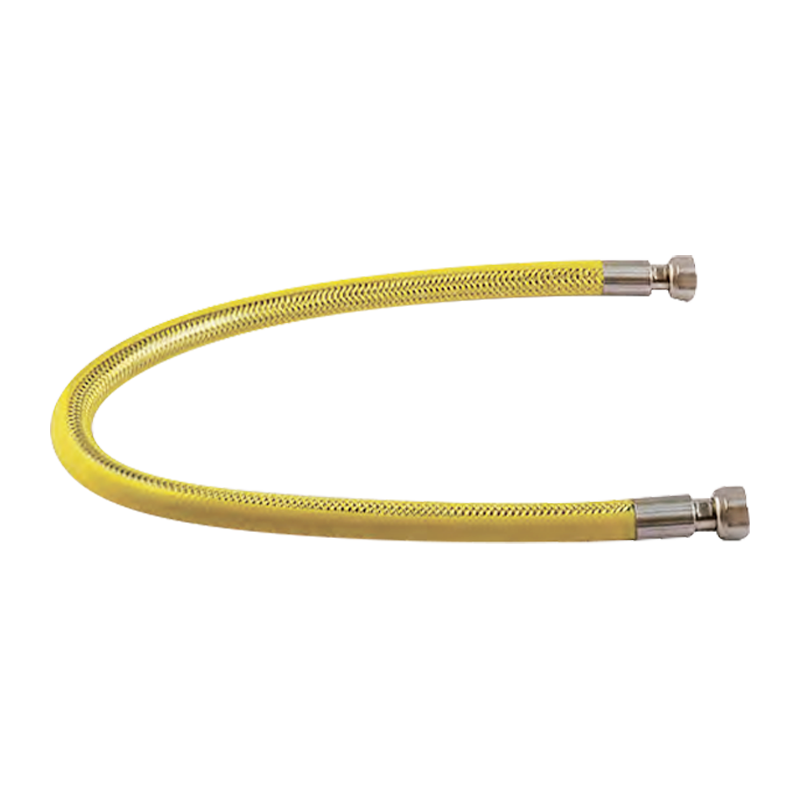
Most stainless corrugated hoses include one or two layers of stainless steel wire braid over the corrugated inner tube. The braid provides:
- Pressure containment: The braid carries the hoop stress generated by internal pressure, allowing the thin-wall corrugated tube to be rated for significantly higher pressure than it could achieve unbraided.
- Mechanical protection: The braid protects the corrugated tube from external impact damage, abrasion from adjacent components, and UV degradation in outdoor installations.
- Pressure rating uplift: A single-braid hose typically achieves working pressures of 16 to 25 bar in standard diameters; a double-braid hose of the same bore and wall thickness typically achieves 25 to 40 bar — approximately 60% higher pressure capability for the same temperature range.
For high-temperature applications where both elevated temperature and significant pressure are present simultaneously — such as steam or high-pressure hot gas — double-braid construction is the appropriate specification, as it provides the higher pressure rating at elevated temperature that the derated single-braid equivalent may not achieve with adequate safety margin.
Convolution Profile: Annular vs Helical
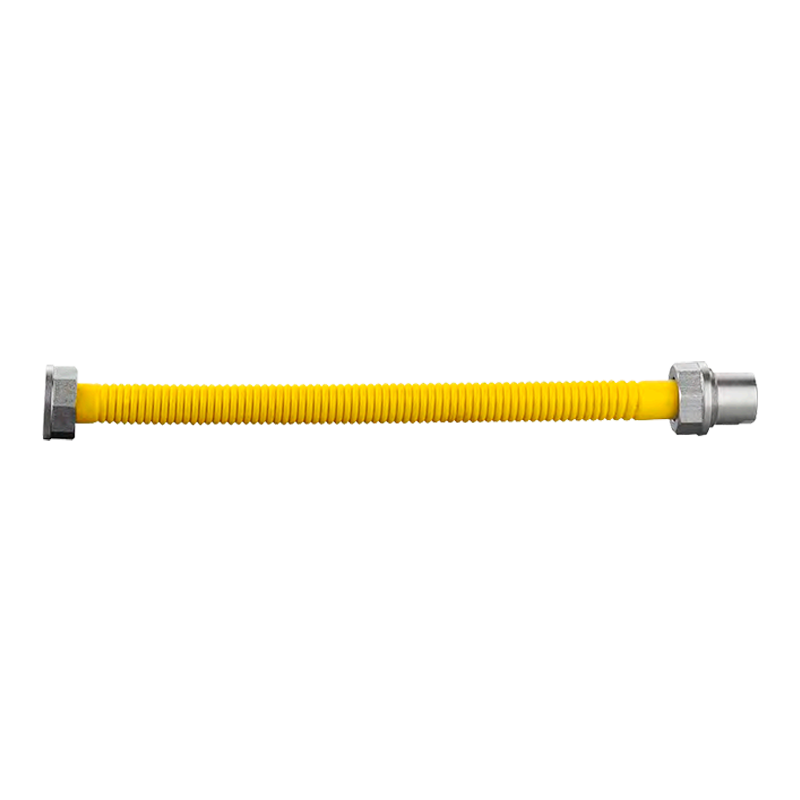
Annular corrugations — rings that are independent and not interconnected along the hose axis — provide greater flexibility and better axial movement absorption than helical corrugations. Annular hoses are preferred for vibration isolation and thermal expansion absorption applications. Helical hoses — with a continuous spiral convolution — have higher pressure capability per wall thickness but lower flexibility. For gas connections involving significant vibration (appliance connections, generator exhaust) or significant thermal movement, annular corrugation is the standard choice.
| Construction Feature | Standard Option | High-Performance Option | Impact on High-Temp Service |
|---|---|---|---|
| Alloy grade | 304 stainless steel | 316L or 321 stainless | Higher temp ceiling; corrosion resistance |
| Braid layers | Single braid | Double braid | ~60% higher working pressure at temp |
| Convolution type | Helical | Annular | Better thermal movement absorption |
| Wall thickness | Standard (0.2–0.3 mm) | Heavy wall (0.4–0.6 mm) | Higher burst pressure; longer fatigue life |
| End fitting attachment | Swaged / compression | TIG welded | Weld joint integrity at elevated temp |
Custom Stainless Steel Corrugated Hose Manufacturer Supplier: What to Specify
Working with a custom stainless steel corrugated hose manufacturer supplier for non-standard applications requires a clear and complete specification to ensure the delivered product meets the operational requirements. Generic catalogue hoses are adequate for standard gas connection and plumbing applications; demanding or safety-critical applications benefit from a purpose-specified assembly.
Parameters Required for Custom Hose Specification
- Nominal bore (DN): The internal diameter of the corrugated tube, determining flow capacity. Specify in millimeters or inches, matching the connected pipe or appliance connection size.
- Overall length: The end-to-end length of the hose assembly including fittings. Account for any compression or elongation of the corrugated section under operating conditions.
- Working pressure at maximum operating temperature: Provide both values simultaneously — the manufacturer's pressure-temperature rating table must confirm adequate safety margin at this specific combination.
- Operating medium: The fluid or gas being conveyed. Natural gas, LPG, steam, compressed air, and corrosive chemicals each require verification of material compatibility with the specified alloy grade.
- End fitting specification: Thread size, type (BSP, NPT, metric), and gender for each end; whether fittings are swaged, welded, or compression-attached.
- Movement requirements: Axial compression/extension range, angular deflection, and lateral offset if the hose must absorb specific equipment movement or vibration amplitudes.
- Certification requirements: CE, ATEX, PED, GB standard compliance, or industry-specific certifications required by the installation's regulatory framework.
About Zhejiang Zhenlong Energy Equipment Technology Co., Ltd.
Zhejiang Zhenlong Energy Equipment Technology Co., Ltd. is a company engaged in the research and development, manufacturing, and processing of energy equipment, located in Yuyao, Ningbo, Zhejiang, China. As a professional stainless steel corrugated hose manufacturer and factory, the company manufactures and processes metal hoses, natural gas pipelines, plumbing fittings, sanitary ware, valves, plastic products, and hardware — operating as an integrated industry and trade enterprise.
The facility covers an area of 40 acres with a factory building of 30,000 square meters, equipped with 30 welding and forming production lines and 2 uninterrupted solid melting hydrogen furnace production lines. Testing infrastructure includes metal material analysis direct reading spectrometers and flow tightness testers, supporting comprehensive quality control at every production stage.
Zhenlong strictly implements the ISO 9000:2008 quality management system and holds the People's Republic of China Special Equipment Manufacturing License (Pressure Pipeline) and the EU CE certification national testing center report. The company is a member of the China Urban Gas Association and maintains a strong R&D, design, and production team to provide customers with safe pipe fittings and comprehensive pre-sales and after-sales services.