 English
 中文简体
 Español
 عربى

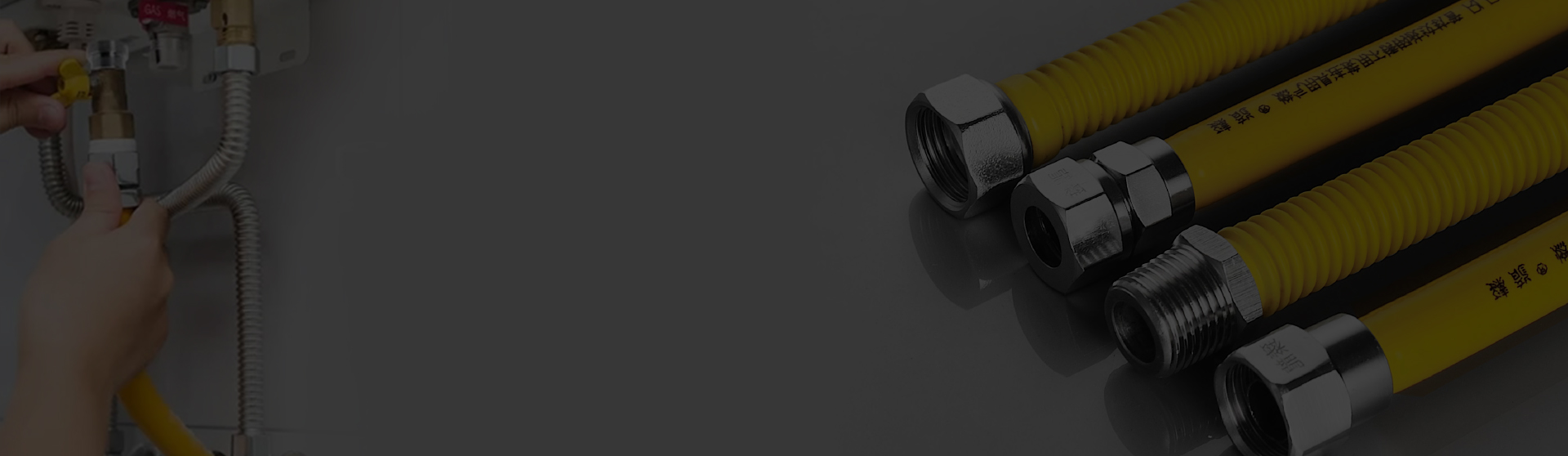

A maintenance team replacing a gas connection on a rooftop boiler has two hoses on the bench: a flexible rubber hose with a printed size and a stainless steel corrugated assembly with a batch code. Both may fit the thread. Only one gives the buyer a defensible answer when the gas inspector asks for the standard, the test pressure, and the material certificate.
The short answer: for natural gas, choose a hose certified for the application, not merely a hose that is “flexible.” Match the material and construction to the installation environment, confirm the nominal bore and length against the appliance demand, use the correct end fittings and sealing method, and keep the test documentation with the job file. Price matters, but certification, traceability, and installation detail matter more because a gas leak is not a maintenance nuisance; it is a safety event.
Content
- 1 The Short Answer: Certify First, Then Match the Connection
- 2 Material and Construction: Why Rubber, PVC, and Stainless Steel Behave Differently
- 3 Size, Length, and Flow: Avoid the Two Common Sizing Errors
- 4 Standards and Certifications: What the Paperwork Should Show
- 5 Fittings, Sealing, and Installation: Where Leaks Actually Start
- 6 What a Mature Factory Adds to the Specification
- 7 FAQ: Flexible Gas Hose Selection for Natural Gas
- 7.1 Q1. Can I use a water hose for natural gas?
- 7.2 Q2. Is a stainless steel corrugated hose better than rubber?
- 7.3 Q3. How long should a gas appliance hose be?
- 7.4 Q4. Do I need a new gasket when replacing a gas hose?
- 7.5 Q5. How often should a flexible gas hose be replaced?
- 7.6 Q6. Can a gas hose be buried in a wall?
The Short Answer: Certify First, Then Match the Connection
Do not begin with the hose diameter. Begin with the question: what standard does the authority having jurisdiction, the gas utility, or the appliance manufacturer require? For gas appliance connectors in North America, the common reference is ANSI Z21.24/CSA 6.10. In Europe, corrugated safety metal hose assemblies are often specified against EN 14800. Local codes may add requirements for length, restraint, concealment, and shutoff access.
A hose sold as “gas hose” but lacking a marked standard, batch code, and test report is a procurement risk. The same applies to a water hose used for gas, or an LPG hose installed on natural gas without dual approval. The practical test is simple: can the supplier show the standard, the nominal pressure, the temperature range, the compatible gas, and the date or batch of manufacture?
- Confirm the hose is marked for natural gas, not only “gas” or “air.”
- Check the standard and the certification body or test report reference.
- Match the end connections to the appliance and supply line before ordering.
- Reject hoses with no batch traceability or mixed fittings.
- Keep the installation instructions and leak-test record with the job file.
For a closer look at how appliance connector compliance is checked in practice, see this buyer-oriented explanation of ANSI Z21.24 compliance for gas appliance connectors.
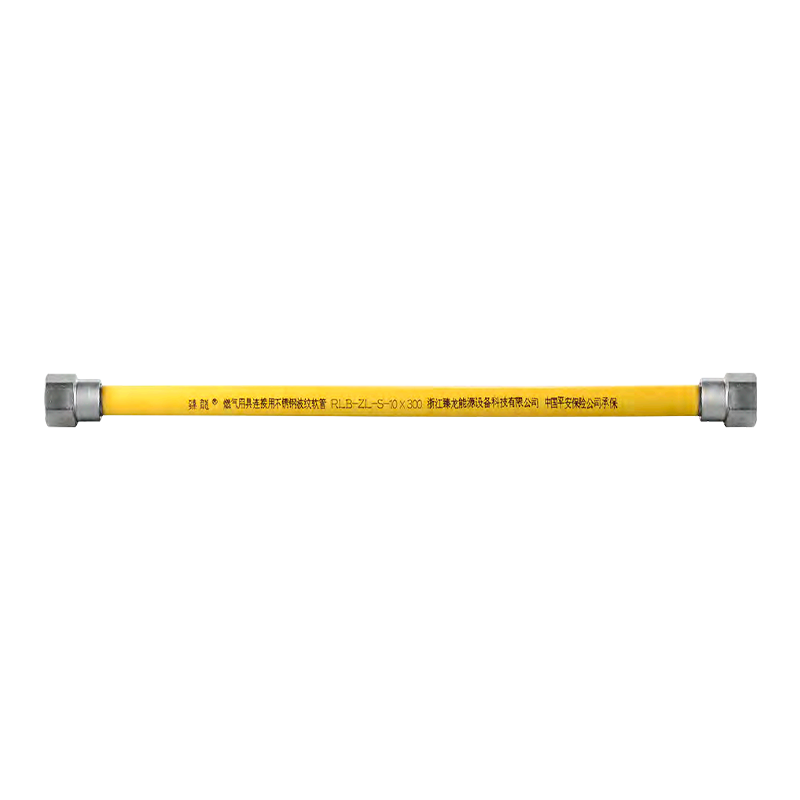
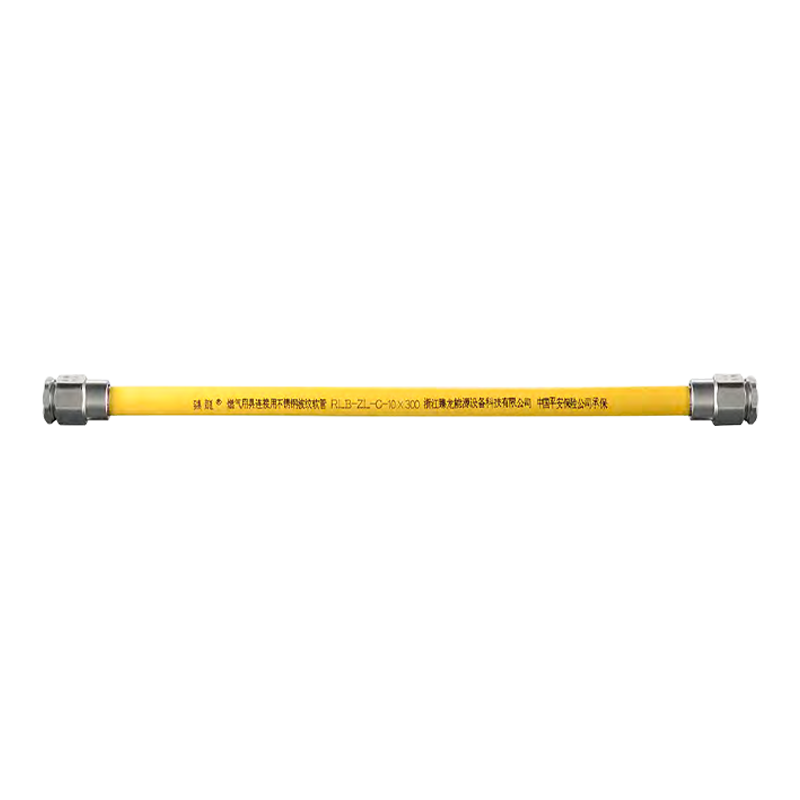
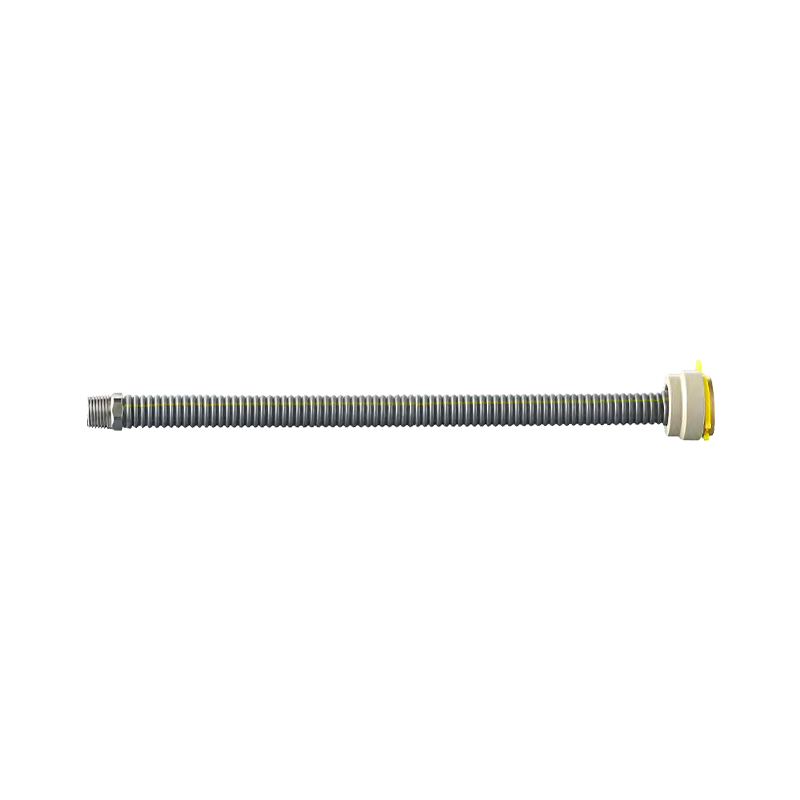
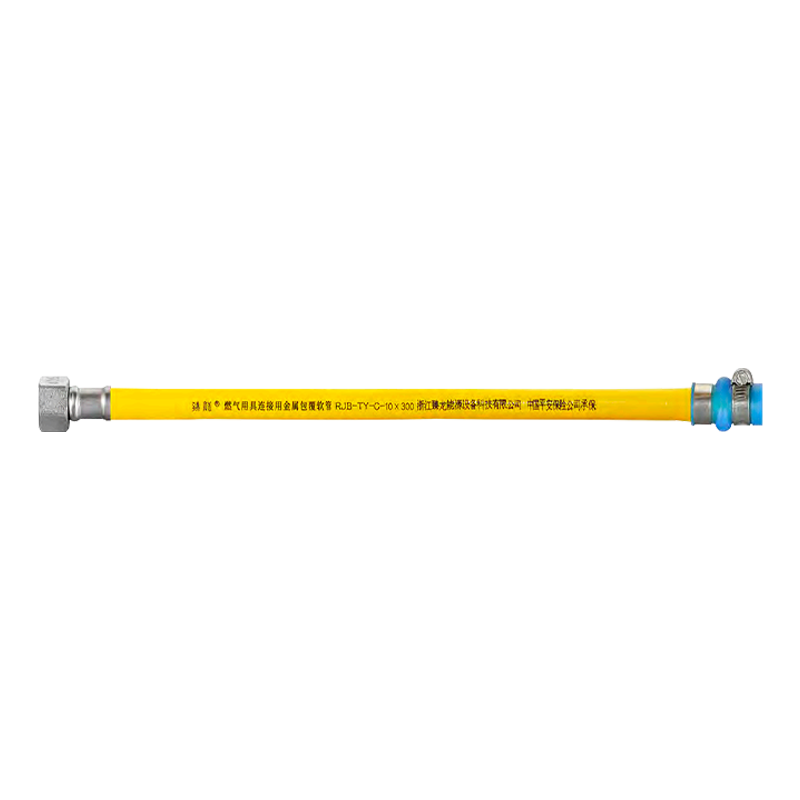
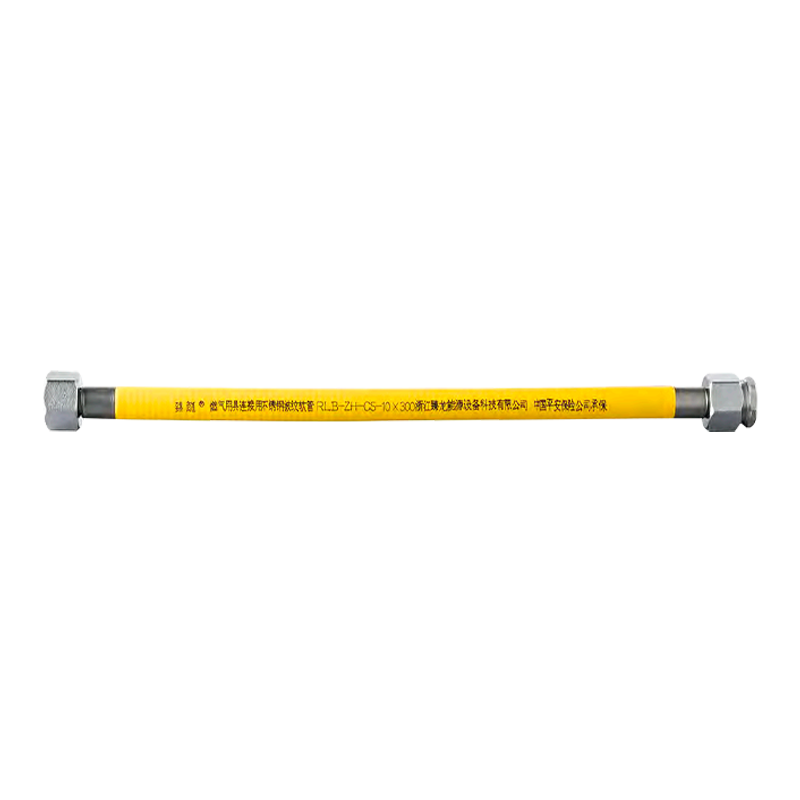
 Stainless Steel Corrugated Tubes for Gas Appliance ConnectionsBrowse flexible 304/304L stainless steel corrugated gas hoses with PVC cover and fittings for cookers, water heaters, meters, and gas piping.View Product →
Material and Construction: Why Rubber, PVC, and Stainless Steel Behave Differently
Natural gas is not aggressive in the way many industrial chemicals are, but the installation environment is. Odorant, moisture, UV exposure, kitchen grease, cleaning agents, vibration, and repeated movement all affect the hose. Rubber and PVC hoses are flexible and inexpensive, but they can harden, crack, or become brittle with age and heat. A stainless steel corrugated core resists corrosion and high temperature; the corrugation provides flexibility without relying on rubber. A braid or metal wrap adds pressure resistance and mechanical protection.
For appliance connections, a metal-wrapped or braided stainless steel hose is often the safer choice because it resists abrasion and accidental contact better than a bare rubber hose. For concealed runs or wall boxes, the hose and fittings must be designed for that installation method. “Flexible” does not mean “unsupported.” A hose allowed to hang, kink, or rub against a sharp edge will fail at the point of abrasion, not at the fitting.
| Construction | Typical role | Strengths | Procurement check |
|---|---|---|---|
| Rubber or PVC hose | Short, exposed low-pressure appliance connections | Low cost, easy handling | Gas-specific marking, age resistance, replacement interval |
| Stainless steel corrugated core | Appliance and piping connections | Heat and corrosion resistance, flexibility | Material grade, wall thickness, bend radius |
| Braided stainless corrugated | Vibration and pressure service | Added pressure and abrasion resistance | Braid coverage, end-fitting crimp or weld quality |
| Metal-wrapped or PVC-coated | Appliance connections needing mechanical protection | Resists impact, grease, and abrasion | Coating adhesion, flame-retardant claim, fitting compatibility |
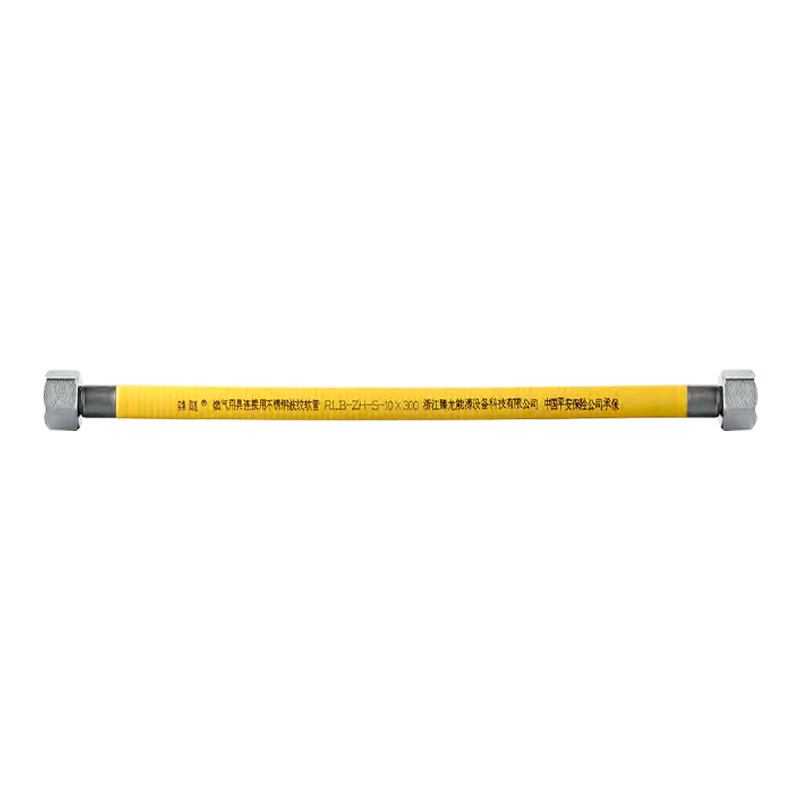
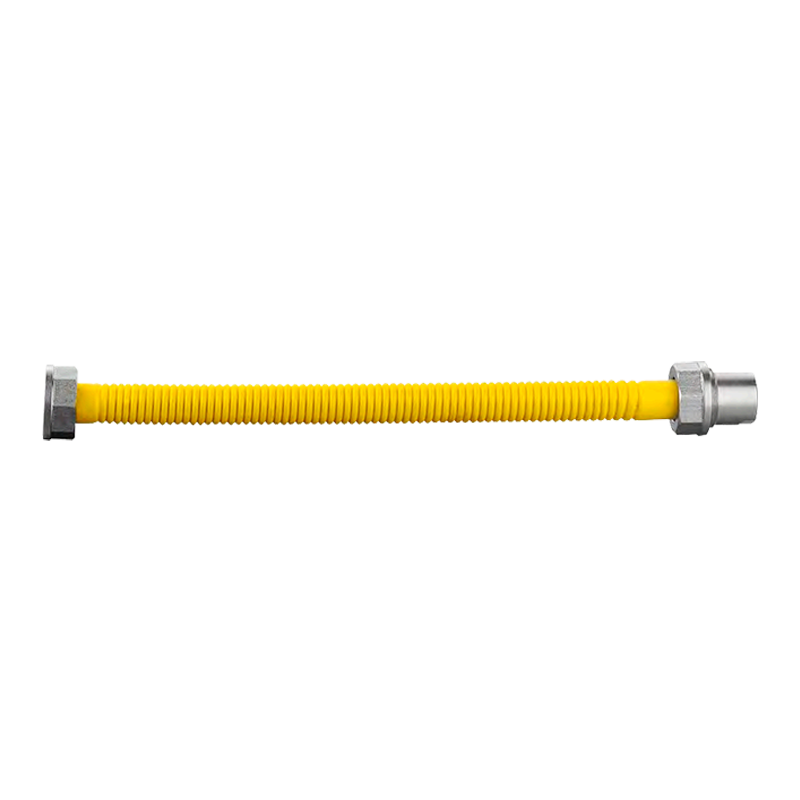
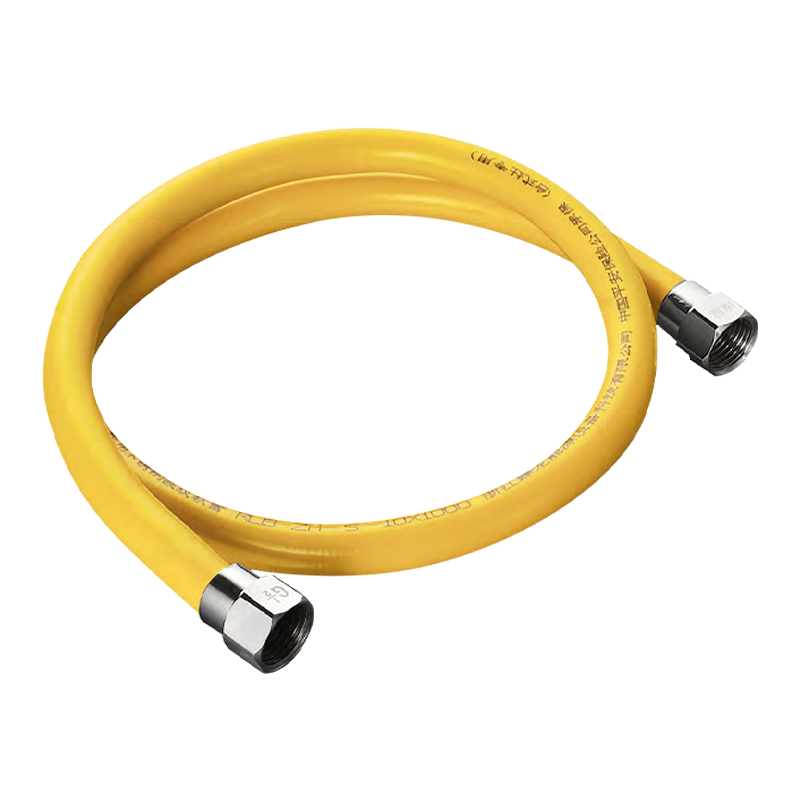
 ZLR-09 304 Stainless Steel Corrugated Gas HoseFlexible 304 stainless steel corrugated hose, DN10 and 300–2000 mm lengths, with flat gasket and high-strength nuts for gas appliance and piping connections.View Product →
Size, Length, and Flow: Avoid the Two Common Sizing Errors
The first sizing error is choosing a bore that is too small because the thread happens to fit. The second is ordering extra length “for flexibility” and then leaving a loop of trapped gas or a tight bend behind the appliance. Natural gas appliance connectors are usually short, but the pressure drop across a long, undersized hose can affect burner performance. For branch lines and manifolds, sizing belongs to the piping design, not to a catalogue guess.
| Variable | What to verify | Risk if ignored |
|---|---|---|
| Nominal bore | Appliance input, supply pressure, and allowed pressure drop | Weak flame, unstable combustion, nuisance shutdowns |
| Length | Shortest practical route with room for movement | Kinks, trapped gas, strain on fittings |
| Bend radius | Manufacturer’s minimum, measured at the hose centreline | Corrugation fatigue and leaks |
| Environment | Heat, UV, grease, vibration, and physical impact | Premature ageing or abrasion damage |
Standards and Certifications: What the Paperwork Should Show
Certification is not decoration. For a gas connector it should indicate that the assembly has been evaluated for leakage, tensile strength, torsion, temperature, corrosion, and repeated movement under the relevant standard. Ask for the test report, the batch or date code, and the material certificate for the stainless steel. If the hose is part of a pressure piping system, confirm that the manufacturer holds the required special equipment manufacturing licence for pressure piping in the destination market.
Be careful with claims that are only marketing language. “Premium stainless steel” is not a standard. “100% leak tested” means little without the test method and acceptance limit. A useful supplier will state the standard, the pressure rating, the temperature range, the compatible gas, and the fitting thread standard. If the answer is vague, the hose is probably not the right one for a safety-critical connection.
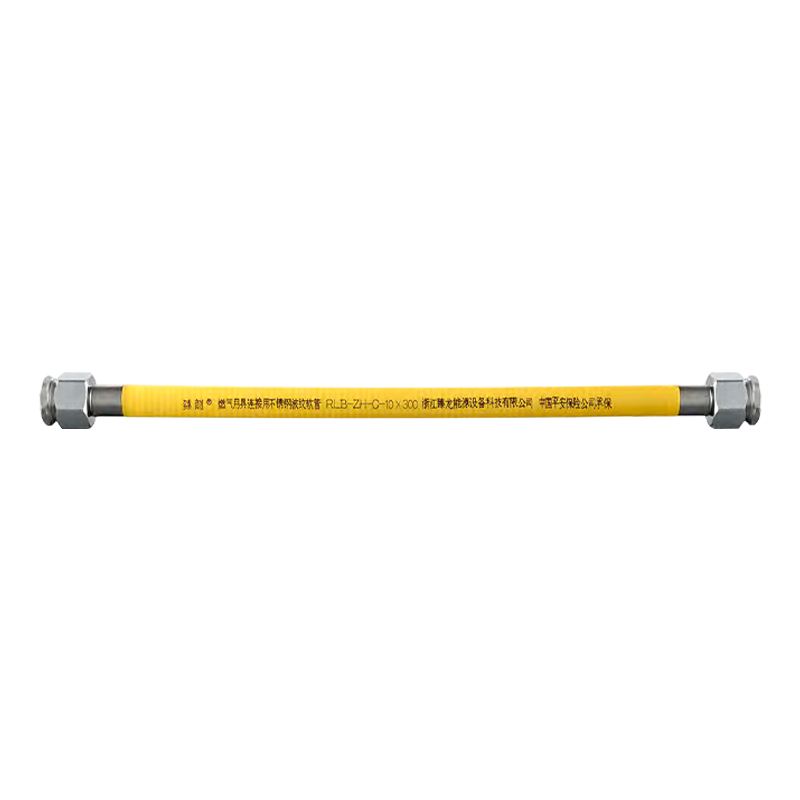
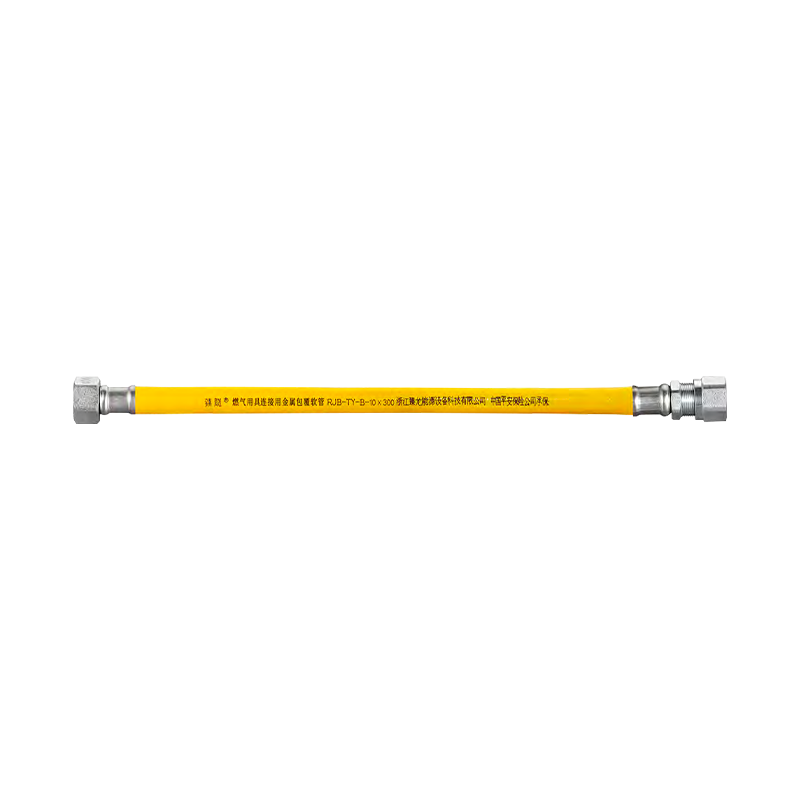
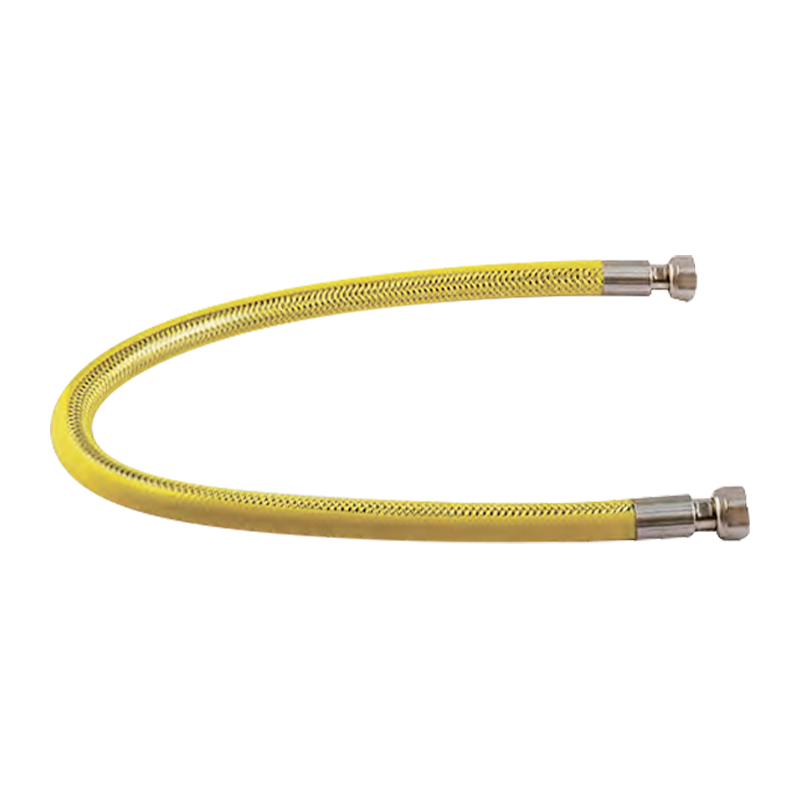 ZLR-14 Braided Stainless Steel Corrugated Gas HoseDN10 corrugated gas hose with stainless braid, PVC coating, flange connector, and G1/2 nut, available in 30–200 cm lengths for appliance connections.View Product →
Fittings, Sealing, and Installation: Where Leaks Actually Start
Most gas hose problems appear at the connections, not in the middle of the hose. Threads must match: NPT, BSPP, BSPT, and metric threads are not interchangeable, and a tapered thread should not be forced into a parallel port. Use the gasket or seal specified by the fitting manufacturer, apply gas-compatible sealant only where allowed, and tighten to the recommended torque. Do not reuse deformed olives, old rubber washers, or fittings that have been over-tightened.
- Inspect the hose for cuts, kinks, corrosion, and damaged fittings before installation.
- Support the hose so its weight is not carried by the appliance connection.
- Keep the bend radius above the manufacturer’s minimum and avoid sharp edges.
- Leak-test every joint with a suitable detector or soap solution, never with a flame.
- Record the batch code and test result; schedule inspection before the hose reaches its service limit.
For concealed wall installations, use a purpose-made wall box and shutoff arrangement rather than burying a bare hose in plaster. The hose should be replaceable without demolishing the wall, and the shutoff valve should remain accessible. A flexible hose is a component in a system; the system is only as safe as its weakest connection.
What a Mature Factory Adds to the Specification
Zhejiang Zhenlong Energy Equipment Technology Co.,LTD. is a company engaged in the research and development, manufacturing, and processing of energy equipment. The company manufactures and processes metal hoses, natural gas pipelines, plumbing fittings, sanitary ware, valves, plastic products, and hardware. It is located in Yuyao, Ningbo, Zhejiang, covering 40 acres with a 30,000 square metre factory building. It operates 30 welding and forming production lines and 2 uninterrupted solid melting hydrogen furnace production lines, with testing equipment including a metal material analysis direct-reading spectrometer and a flow tightness tester.
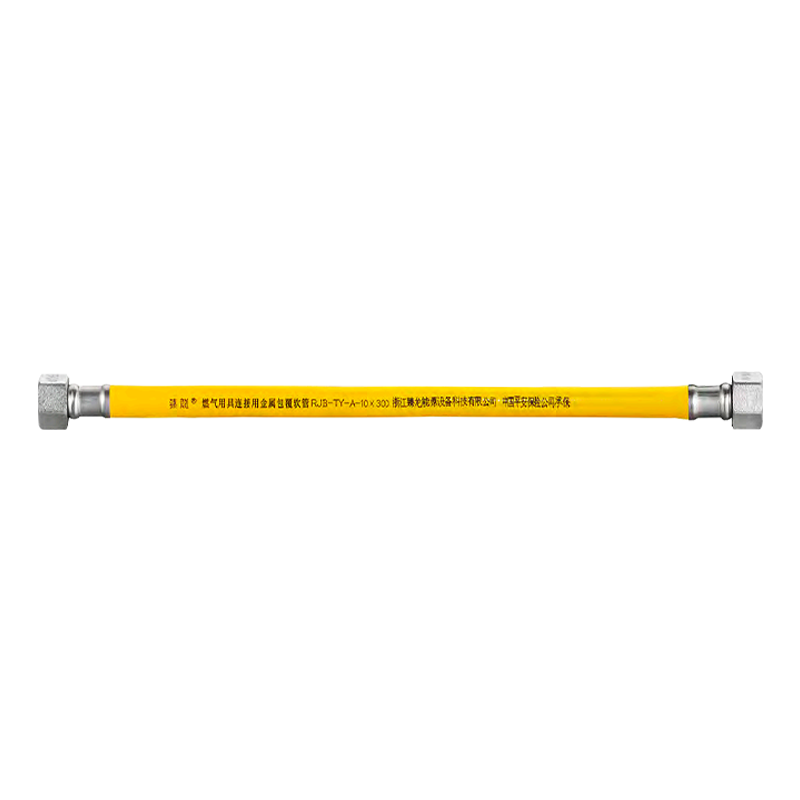
The company states that it implements the ISO9000:2008 quality management system and holds a People’s Republic of China Special Equipment Manufacturing License (Pressure Pipeline), an EU CE certification national testing centre report, and membership of the China Urban Gas Association. It also states that it has a strong R&D, design, and production team to provide safe pipe fittings and comprehensive pre-sales and after-sales service. For buyers comparing constructions, the company’s stainless steel corrugated tubes for connecting gas appliances show how material, braid, coating, and fittings are combined in one product family.
FAQ: Flexible Gas Hose Selection for Natural Gas
Q1. Can I use a water hose for natural gas?
No. A water hose is not certified for gas service and may fail under gas exposure, heat, or pressure. Use a hose marked for natural gas and the applicable standard.
Q2. Is a stainless steel corrugated hose better than rubber?
Usually yes for heat, corrosion, and mechanical protection, but the correct choice depends on the appliance, installation environment, and local code. Certification matters more than the material label alone.
Q3. How long should a gas appliance hose be?
Use the shortest practical length that allows safe movement and routing without kinks. Excess length can create trapped gas, strain, and a tripping or abrasion risk.
Q4. Do I need a new gasket when replacing a gas hose?
Yes, unless the manufacturer specifies a reusable seal. Replace deformed washers, olives, and seals, and use only gas-compatible sealing materials approved for the fitting.
Q5. How often should a flexible gas hose be replaced?
Follow the manufacturer’s service life and local inspection rules. Replace any hose showing cracks, hardening, corrosion, kinks, or damaged fittings, regardless of its age.
Q6. Can a gas hose be buried in a wall?
Only with a system designed for concealed installation, such as an approved wall box and accessible shutoff. Do not bury a bare appliance hose in plaster or concrete.