 English
 中文简体
 Español
 عربى

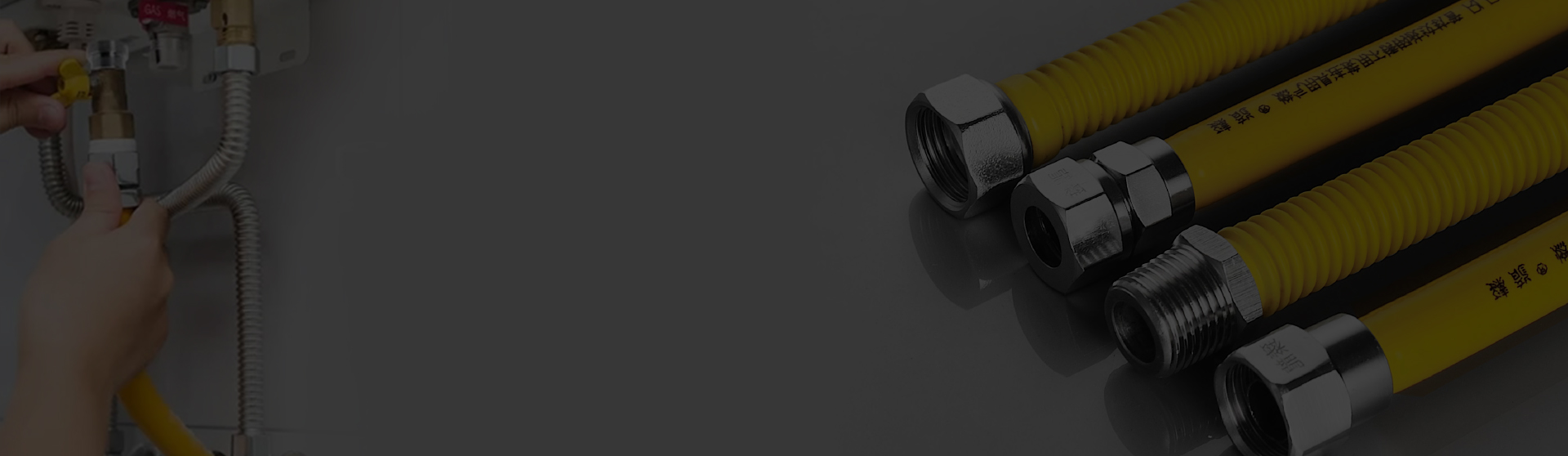

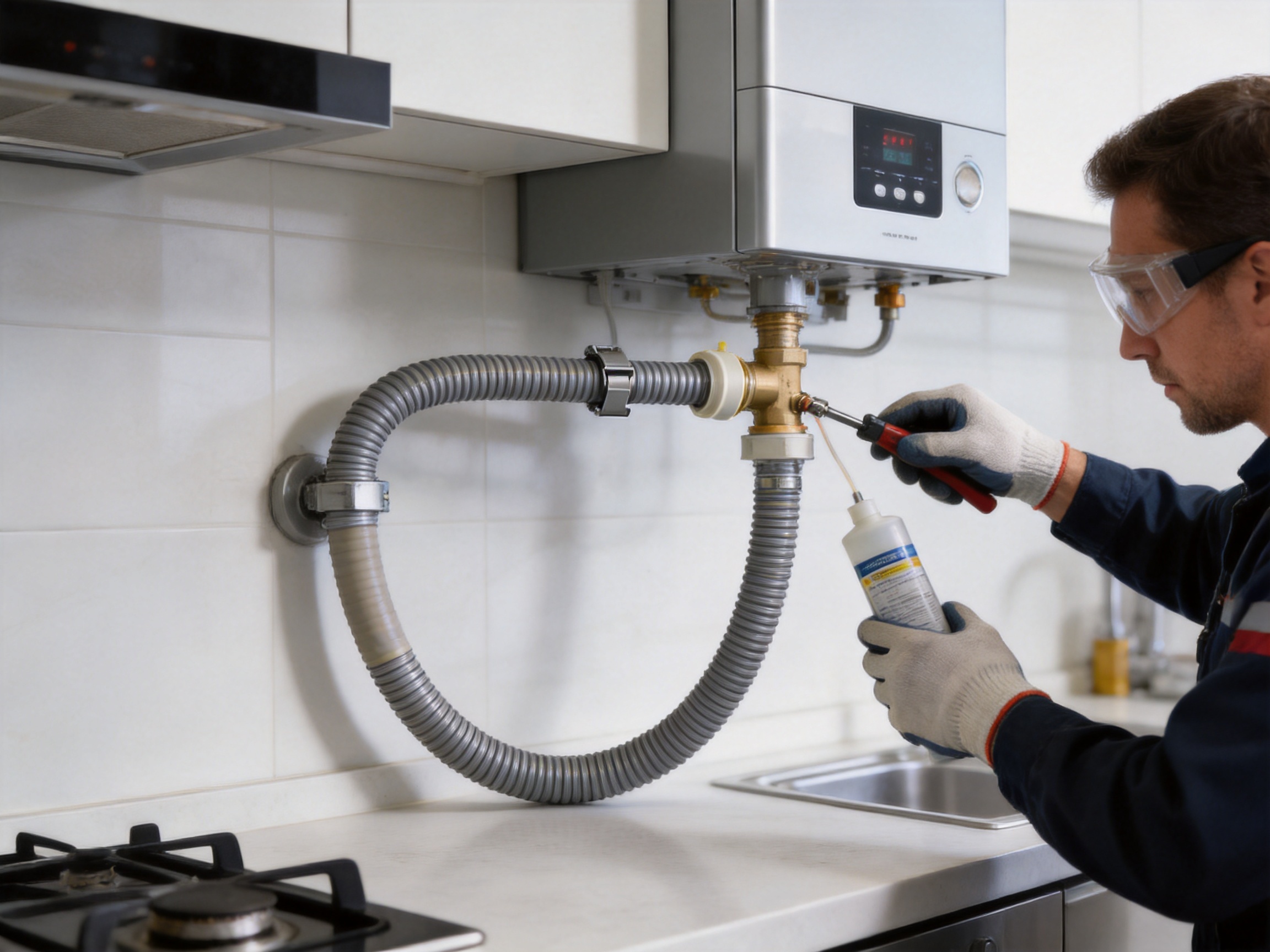
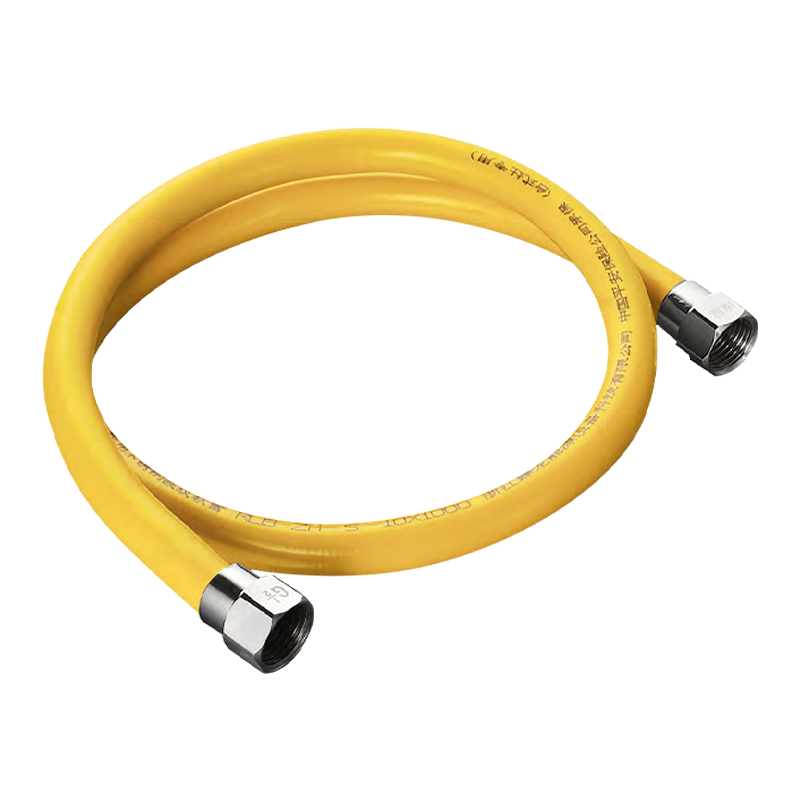
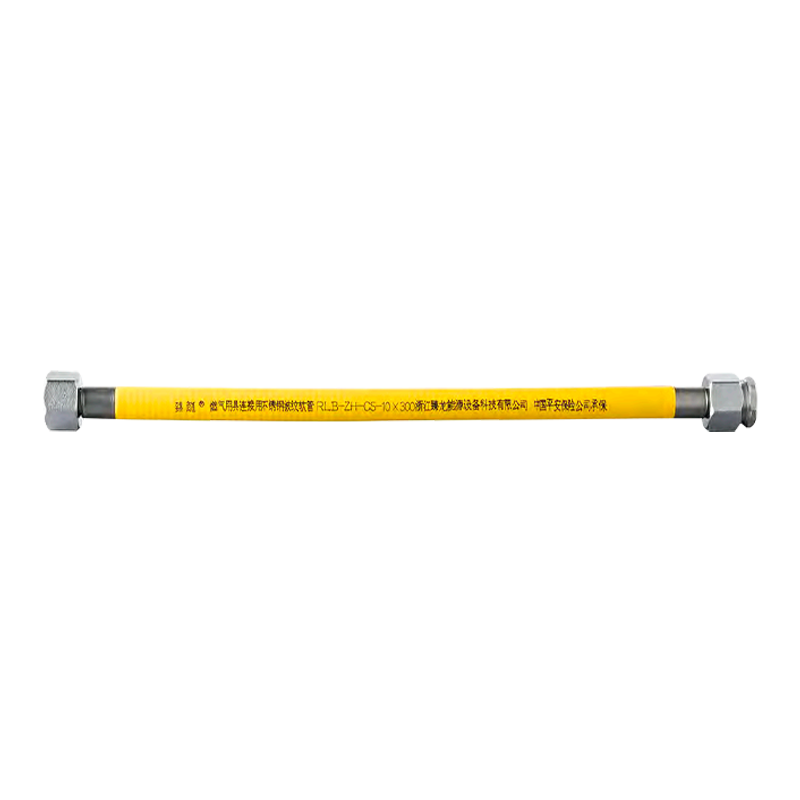
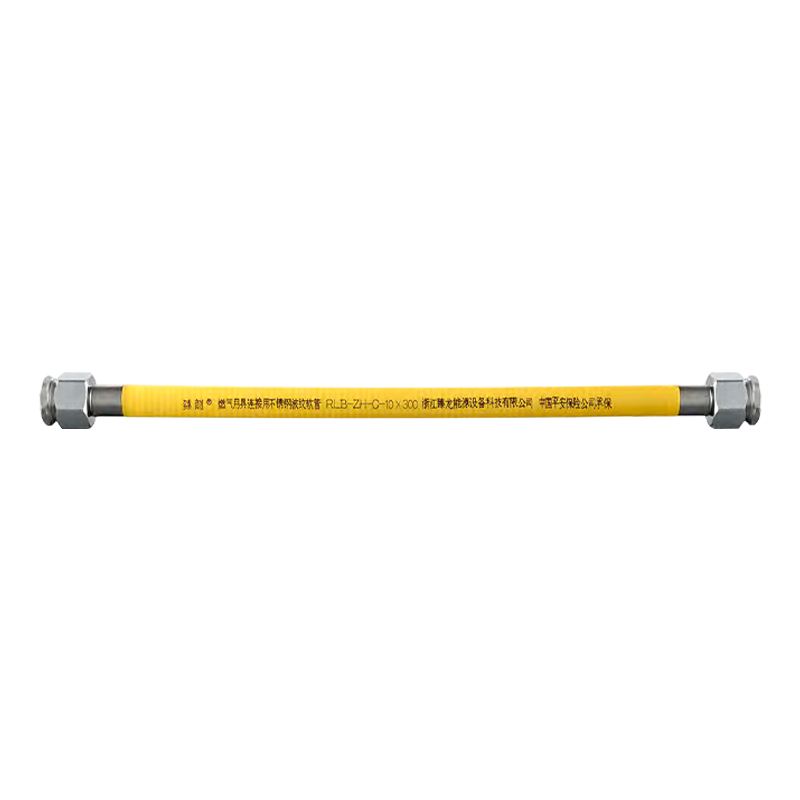
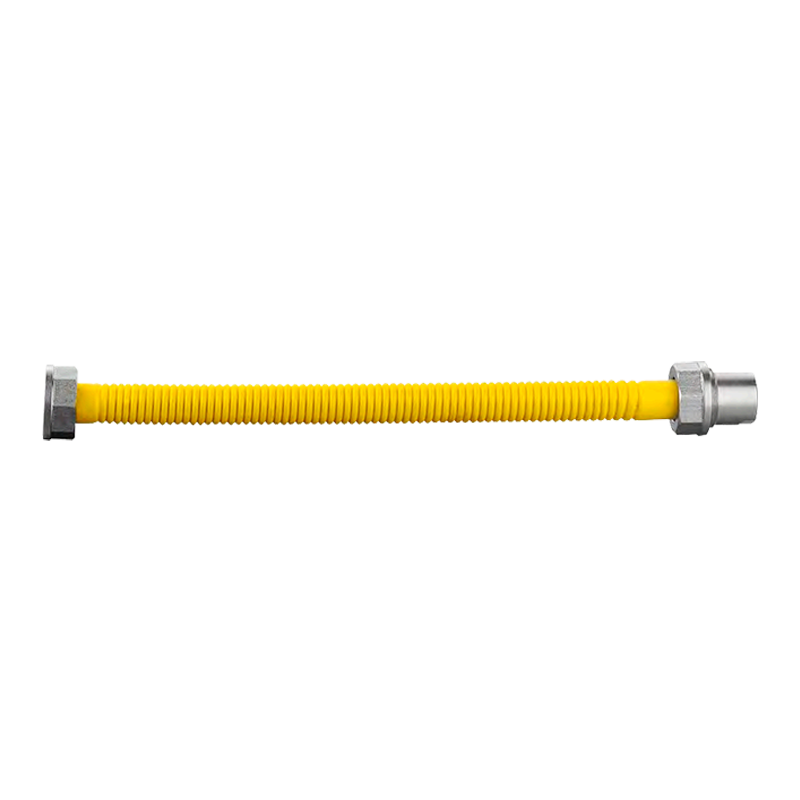
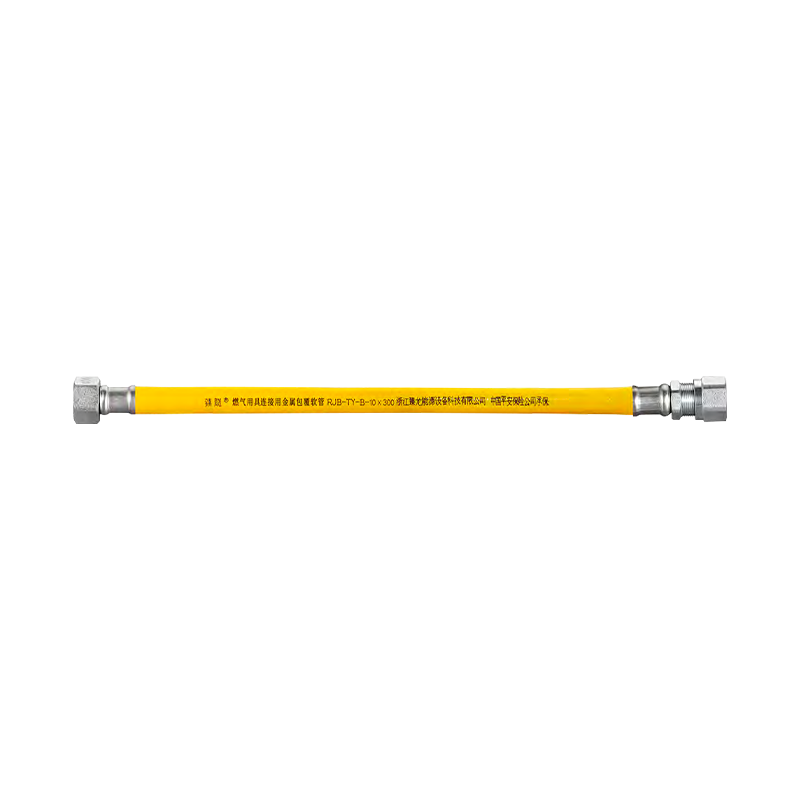
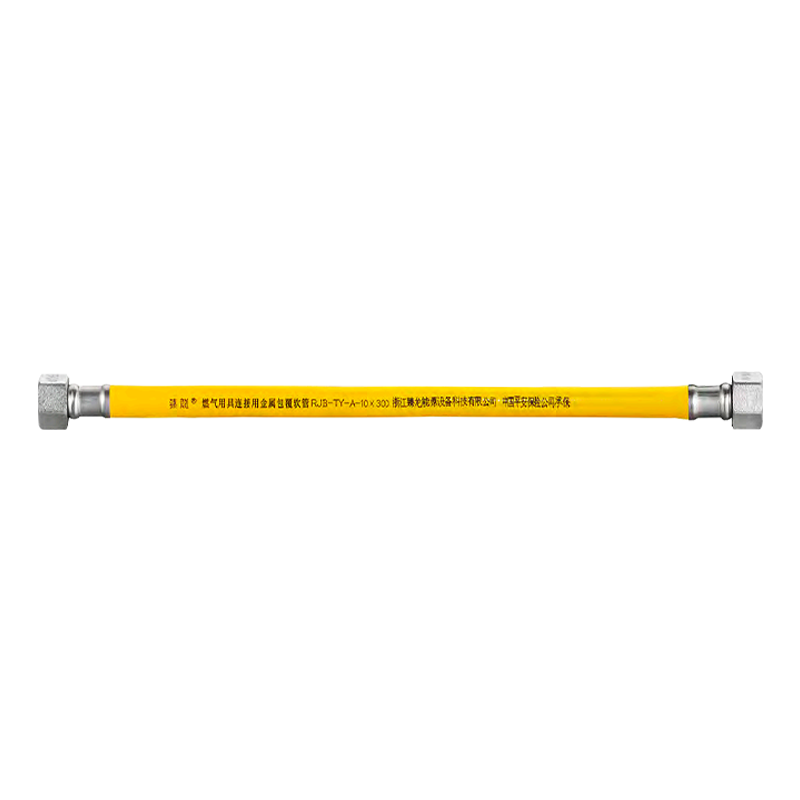
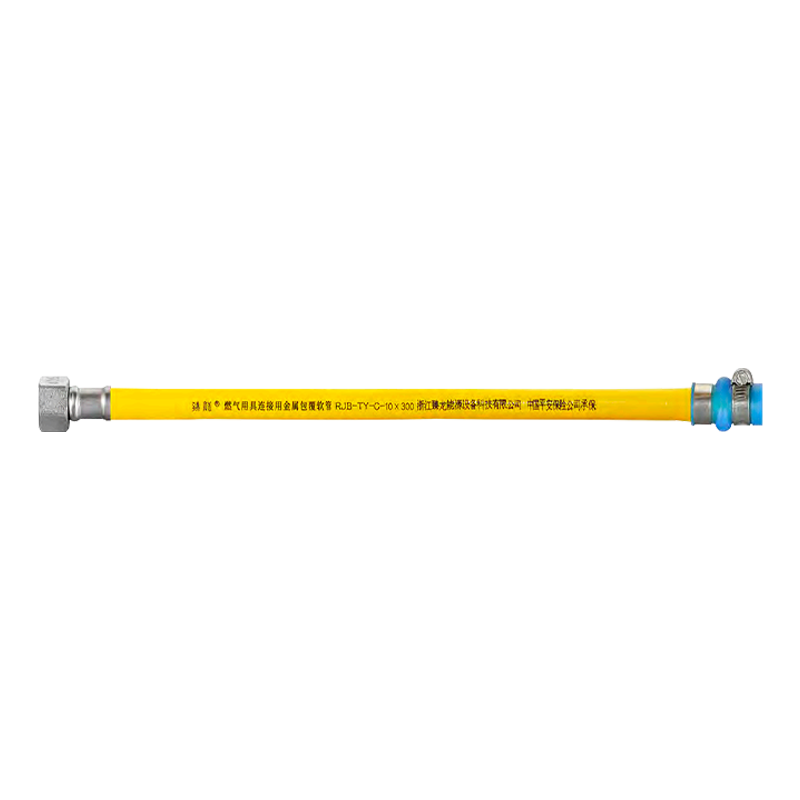
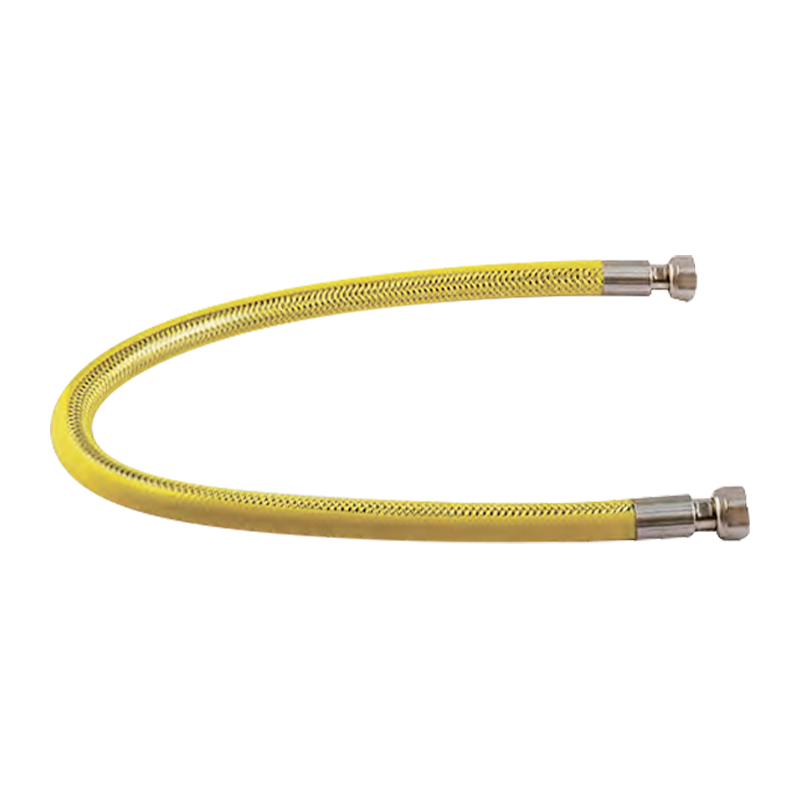
Gas connection components must perform reliably under pressure, temperature variation, vibration, installation movement, and long-term environmental exposure. A hose installed between a gas appliance and a fixed pipeline is not merely a flexible accessory. It is a safety-critical connection that must maintain mechanical integrity, resist corrosion, prevent leakage, and remain serviceable throughout its operating life. The Stainless Steel Corrugated Gas Hose with Metal Flange ZLR-15 is designed for this demanding role, combining a stainless steel spiral corrugated tube, protective polyethylene coating, metal end connections, and quick-release connection features in one compact assembly.
The product is categorized as a stainless steel corrugated tube for connecting gas appliances. Its nominal designation is DN15, and its listed dimensions include an outside diameter of 20 mm and an inside diameter of 18 mm. The standard listed connection configuration includes a G 1/2 meter-pipe outer-wire connector and an M30x2 meter-pipe anti-theft inner-wire connector with an M buckle. Available lengths are listed from 30 cm to 60 cm, allowing the hose to accommodate common appliance connection distances while avoiding unnecessary loops or sharp bends.
This article examines the construction, manufacturing logic, application advantages, installation considerations, quality controls, and service value of the ZLR-15. It also explains why a properly engineered stainless steel corrugated gas hose can offer practical advantages over ordinary rigid connectors, low-grade flexible hoses, and unprotected metallic tubing. The discussion is based on the supplied product information and the manufacturing capabilities of Zhejiang Zhenlong Energy Equipment Technology Co., Ltd.
Content
- 1 1. Product Overview
- 2 2. Why Corrugated Stainless Steel Is Used for Gas Connections
- 3 3. Protective Value of the PE Outer Coating
- 4 4. Metal Flanges and Connection Security
- 5 5. Quick-Release Clips and Maintenance Efficiency
- 6 6. Manufacturing Process and Technical Capabilities
- 7 7. Advantages Over Conventional Alternatives
- 8 8. Applications
- 9 9. Installation Best Practices
- 10 10. Inspection and Maintenance
- 11 11. Customization and OEM/ODM Support
- 12 12. Company Manufacturing Strengths
- 13 13. Purchasing Considerations
- 14 14. Frequently Asked Questions
- 14.1 What is the primary purpose of the ZLR-15?
- 14.2 What material is used for the corrugated tube?
- 14.3 What are the listed dimensions?
- 14.4 What lengths are available?
- 14.5 What protection does the PE coating provide?
- 14.6 Does the hose resist vibration?
- 14.7 What connection types are listed?
- 14.8 Are tools required for the quick-release clips?
- 14.9 Can the hose be used for every gas appliance?
- 14.10 Can the hose be installed outdoors?
- 14.11 How should the hose be inspected?
- 14.12 Can the hose be reused after removal?
- 14.13 What manufacturing capabilities support this product?
- 15 15. Conclusion
- 16 References
- 17 Product: Stainless steel corrugated gas hose with metal flange ZLR-15
1. Product Overview
The ZLR-15 is a flexible gas appliance connector built around SS304 stainless steel spiral bellows. The corrugated profile gives the metal tube controlled flexibility while preserving a continuous metallic barrier between the gas passage and the surrounding environment. Unlike a plain straight tube, the bellows structure can accommodate limited movement, alignment variation, and vibration generated by appliances, valves, pumps, or nearby equipment.
The hose is also covered with a polyethylene, or PE, protective layer. This outer coating helps isolate the stainless steel corrugated tube from moisture, dust, cleaning agents, installation contact, and general environmental wear. In practical applications, the coating can reduce surface damage caused by rubbing against adjacent components and can provide an additional visual and physical barrier during installation and operation.
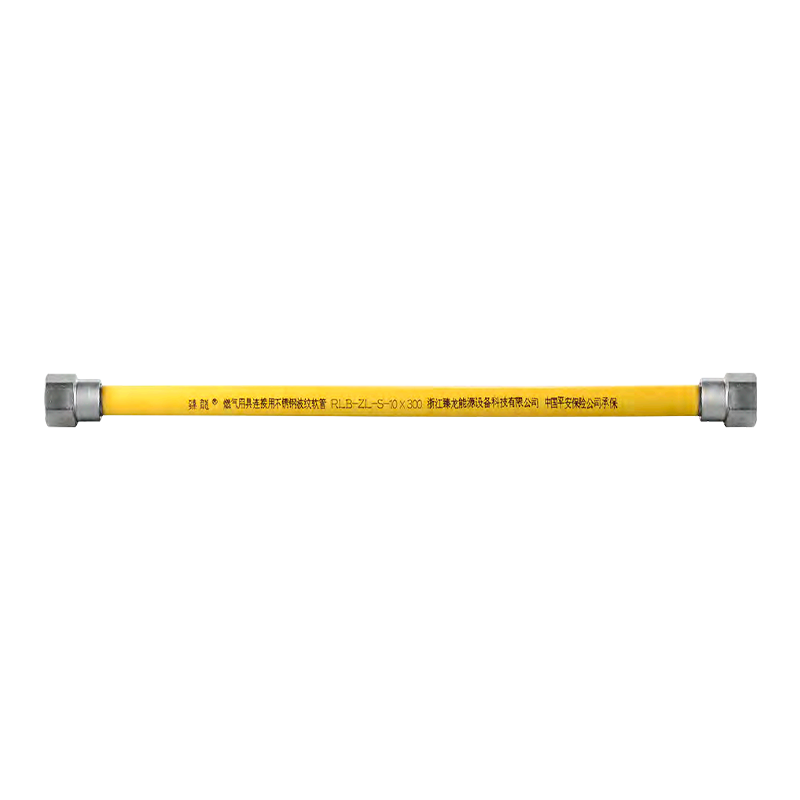
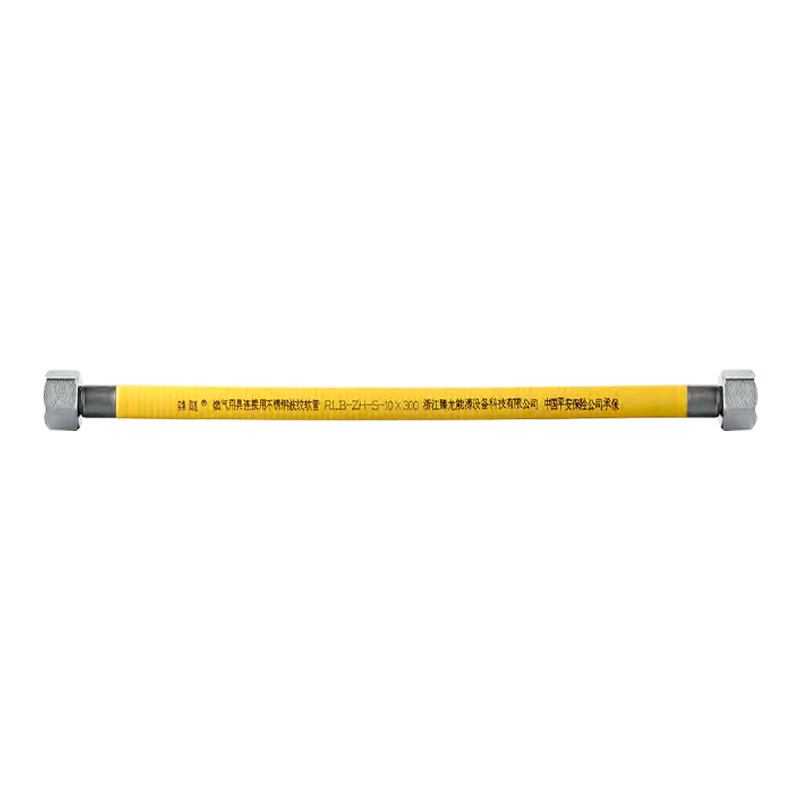
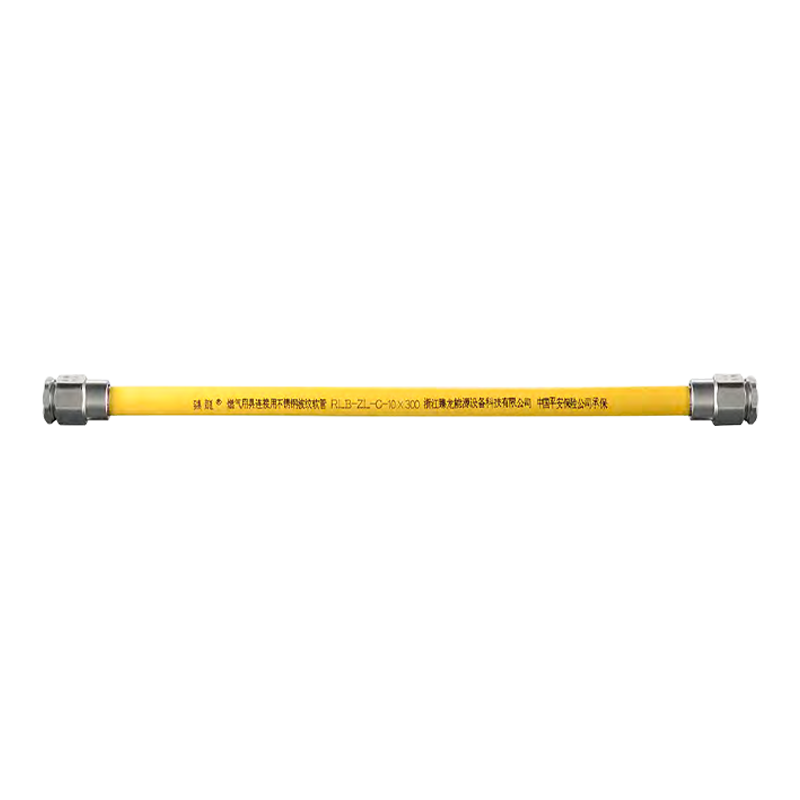
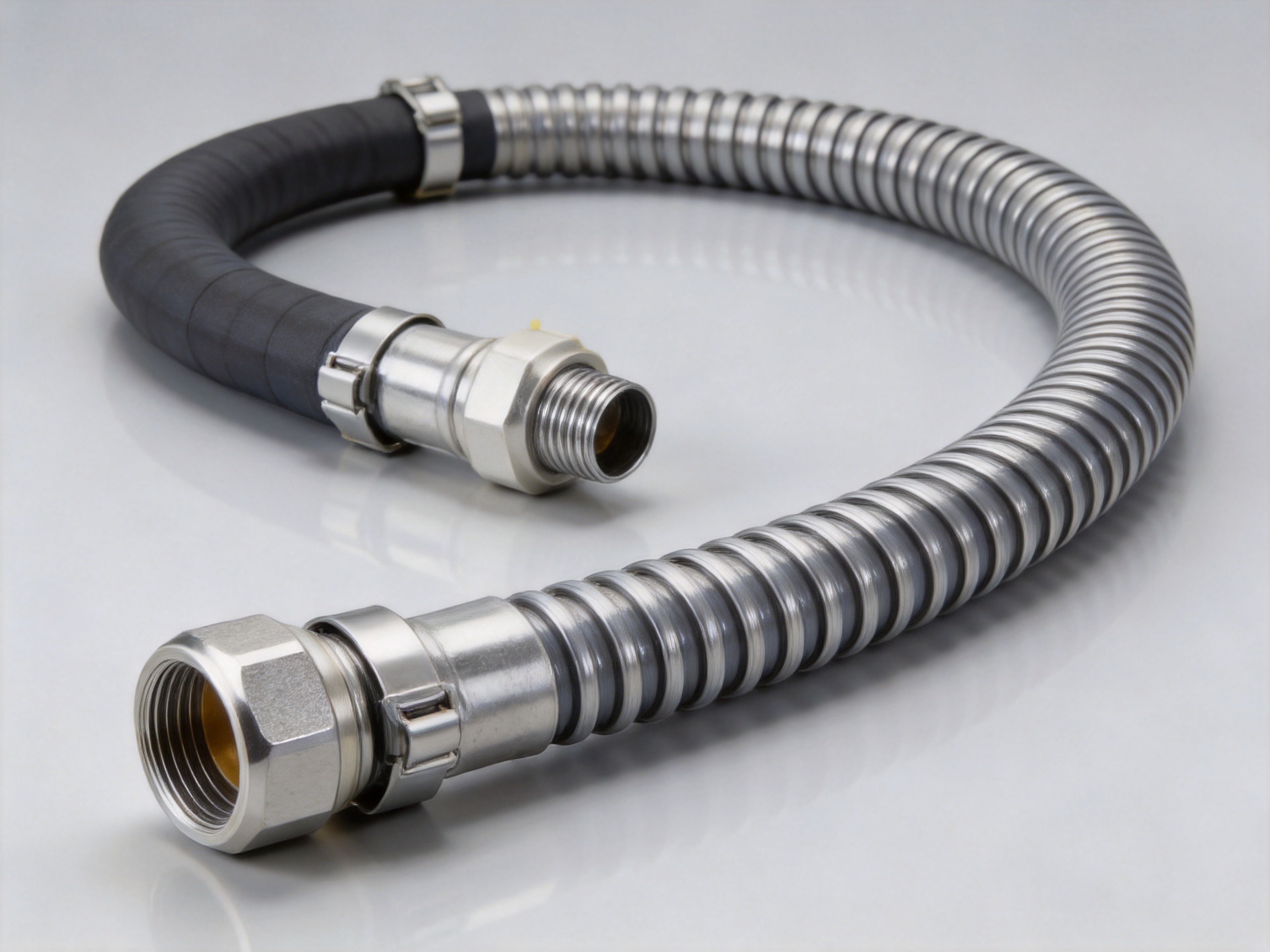
Metal connection components are installed at both ends of the assembly. The listed configuration includes a G 1/2 connection and an M30x2 anti-theft inner-wire connection with an M buckle. These components are intended to create a firm interface between the flexible hose and the appliance or gas piping system. Depending on the installation design, the metal end fittings may be connected to a valve, appliance inlet, fixed pipe, or compatible adapter.
Quick-release clips are incorporated into the design to support fast and convenient assembly. Tool-free or reduced-tool connection features can be valuable during appliance installation, maintenance, replacement, and inspection. However, connection procedures should always follow the applicable installation instructions, local gas codes, and the requirements of the relevant appliance manufacturer.
| Item | Listed Specification | Practical Significance |
|---|---|---|
| Product model | ZLR-15 | Product identification for selection, purchasing, and replacement |
| Product category | Stainless steel corrugated tube for connecting gas appliances | Designed for flexible gas appliance connections |
| Nominal size | DN15 | Common small-diameter connection class for appliance service |
| Outside diameter | 20 mm | Important for routing and clearance planning |
| Inside diameter | 18 mm | Relevant to flow passage and connection compatibility |
| Bellows material | SS304 stainless steel | Provides corrosion resistance, strength, and temperature durability |
| Outer protection | PE coating | Helps protect the hose from moisture and environmental wear |
| Connection details | G 1/2 outer-wire connector and M30x2 inner-wire connector with M buckle | Supports connection with compatible gas piping and appliances |
| Available length | 30 cm to 60 cm | Offers flexibility for different installation distances |
| Connection assistance | Quick-release clips | Supports convenient assembly and servicing |
2. Why Corrugated Stainless Steel Is Used for Gas Connections
A gas hose must combine flexibility with resistance to pressure and environmental stress. These characteristics can be difficult to achieve with a single material. A rigid metal tube may offer strength but can be difficult to align. A soft polymer hose may be easy to route but can be more vulnerable to cutting, heat, aging, or deformation depending on its formulation and service conditions. A corrugated stainless steel tube offers a balanced solution by using geometry to create flexibility without abandoning a metallic pressure boundary.
The corrugations function as a series of controlled expansion and bending zones. When the hose is gently moved, the corrugated wall can flex through the profile rather than concentrating all movement in one straight section. This can reduce the risk of excessive localized stress compared with an inflexible tube forced into misalignment. The design is particularly useful where the appliance must be moved slightly for cleaning, inspection, installation, or maintenance.
SS304 stainless steel is widely valued for its combination of mechanical strength, corrosion resistance, formability, and availability. In a gas connection, these properties support long-term service in kitchens, utility rooms, commercial installations, equipment rooms, and other areas where humidity and temperature changes may occur. Stainless steel also provides a clean, durable surface for forming the bellows and joining the end components.
The material choice does not mean that the hose is immune to every chemical or environmental condition. Compatibility must still be evaluated for the actual gas medium, cleaning products, atmosphere, temperature range, pressure, and installation environment. Nevertheless, SS304 provides a strong engineering foundation for a compact appliance connector when combined with suitable forming, welding, inspection, and protective coating processes.
2.1 Flexibility Without Sacrificing Connection Stability
The main functional advantage of a corrugated hose is its ability to accommodate limited movement. This helps installers align the appliance inlet with the fixed gas connection without applying excessive force to the appliance, valve, or pipework. It can also reduce the need for multiple rigid elbows and adapters, which may otherwise increase assembly time and create additional potential leakage points.
Flexibility must be used correctly. Corrugated hoses should not be twisted, sharply kinked, stretched, compressed beyond their design capability, or installed in a way that places continuous strain on the fittings. The hose should be routed with a natural bend radius and should not be used as a support for the appliance. Correct installation preserves the advantages of the corrugated structure and helps prevent premature fatigue.
2.2 Resistance to Vibration and Movement
Gas appliances may generate small vibrations during operation. Nearby pumps, fans, compressors, burners, or industrial equipment may also transmit movement through connected pipework. A corrugated stainless steel hose can absorb limited dynamic movement more effectively than a fully rigid connection. Its spiral profile helps distribute bending activity across multiple corrugations, provided that the movement remains within the product’s intended service conditions.
This feature is especially useful where a connection is exposed to repeated but moderate movement. The hose can act as a flexible transition between a fixed supply line and an appliance that experiences thermal expansion, operational vibration, or occasional repositioning. The result is a connection arrangement that can be easier to maintain and less sensitive to minor alignment changes.
3. Protective Value of the PE Outer Coating
The PE outer coating adds a second layer of protection around the metal bellows. The coating helps limit direct contact between the stainless steel and external moisture, dirt, cleaning residues, and other contaminants. In residential kitchens and commercial food-service spaces, this protective layer may be particularly useful because hoses can be exposed to water vapor, grease, detergents, and frequent cleaning.
The coating can also reduce the effect of incidental rubbing. During installation, a hose may pass near cabinetry, brackets, pipe supports, appliance panels, or other surfaces. A properly applied protective jacket can help prevent surface scuffing and reduce the likelihood of mechanical damage from ordinary contact. It also gives the assembly a more uniform, finished appearance that can make inspection and routing easier.
PE is a practical coating material because it is lightweight, electrically insulating, moisture-resistant, and suitable for many general industrial and domestic environments. Its performance remains dependent on the actual grade, thickness, temperature exposure, ultraviolet exposure, and chemical environment. Therefore, the hose should be installed according to the manufacturer’s intended application and should not be exposed to conditions outside its specified limits.
The coating should be inspected periodically for cuts, deep abrasions, melting, blistering, unusual discoloration, or separation from the underlying metal. Damage to the protective layer does not automatically indicate an immediate gas leak, but it can expose the metal hose to more severe environmental attack and should be assessed promptly.
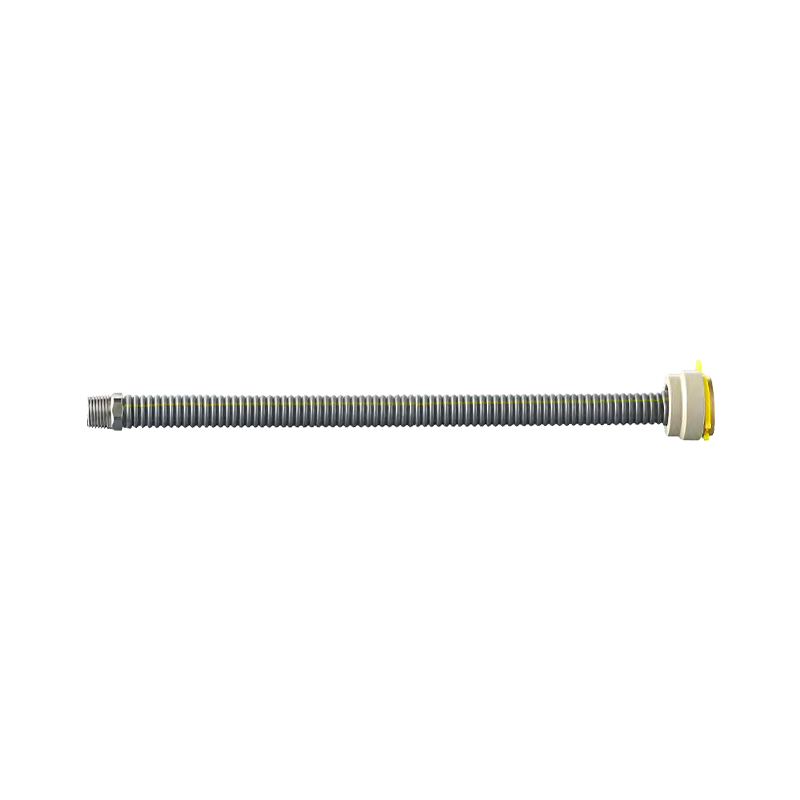
Stainless steel corrugated gas hose with metal flange ZLR-15
4. Metal Flanges and Connection Security
The end connection is as important as the flexible tube itself. A high-quality bellows cannot provide a reliable installation if the fittings are poorly formed, incorrectly sized, or inadequately joined. The ZLR-15 uses metal connection components at both ends, creating a robust transition between the flexible stainless steel section and the gas piping or appliance inlet.
The listed specification identifies a G 1/2 meter-pipe outer-wire connector. G-thread connections are commonly used in piping and fluid equipment, but thread designation alone does not confirm compatibility. Installers must verify thread type, size, sealing method, gasket requirements, and the matching connection standard before assembly. An apparently similar thread may not provide a safe or leak-tight connection if the angle, pitch, sealing face, or gender differs.
The other listed connection is an M30x2 meter-pipe anti-theft inner-wire connector with an M buckle. This configuration is intended to improve connection retention and support controlled installation. Anti-theft or security-oriented features can be useful in public, commercial, rental, or equipment-room applications where unauthorized removal is a concern. The exact function of the M buckle should be understood from the installation documentation supplied with the product.
Metal fittings provide dimensional stability and mechanical strength at the connection points. They are less likely than soft connection materials to deform during normal tightening when the correct tools and torque practices are used. Nevertheless, installers should avoid excessive tightening, because over-tightening can damage threads, deform sealing components, or place unnecessary stress on the hose assembly.
A leak-tight joint depends on the complete connection system. It requires compatible threads or sealing surfaces, appropriate gaskets or seals where specified, clean mating surfaces, correct alignment, suitable tightening, and a final leak test. Thread sealant should not be applied automatically to every connection. The correct sealing method depends on whether the joint seals on the thread, a gasket, a conical surface, or another designed interface.
5. Quick-Release Clips and Maintenance Efficiency
Quick-release clips are intended to make installation and removal more convenient. In appliance service work, a connection that can be released quickly may reduce downtime and simplify access to the appliance. This can be beneficial for commercial kitchens, property maintenance, equipment replacement, and scheduled inspection programs.
Convenience should not be confused with reduced safety requirements. A quick-release mechanism must be completely engaged, correctly aligned, and inspected after connection. The clip should not be forced into position if the fittings are misaligned. Any visible deformation, looseness, incomplete engagement, or missing retaining component should be corrected before the gas supply is restored.
One advantage of a well-designed quick-release feature is repeatability. Installers can follow a consistent connection sequence rather than relying on improvised positioning. This may help reduce installation variation across multiple sites. For wholesalers and service companies, it can also shorten replacement procedures and reduce the number of specialized tools required for routine work.
The connection should be checked after the appliance has been positioned and before final commissioning. Movement of the appliance can unintentionally load the hose or fitting. The hose should remain naturally routed, without tension, twisting, sharp bends, or contact with hot surfaces. A quick-release feature is most valuable when combined with disciplined inspection and proper installation training.
6. Manufacturing Process and Technical Capabilities
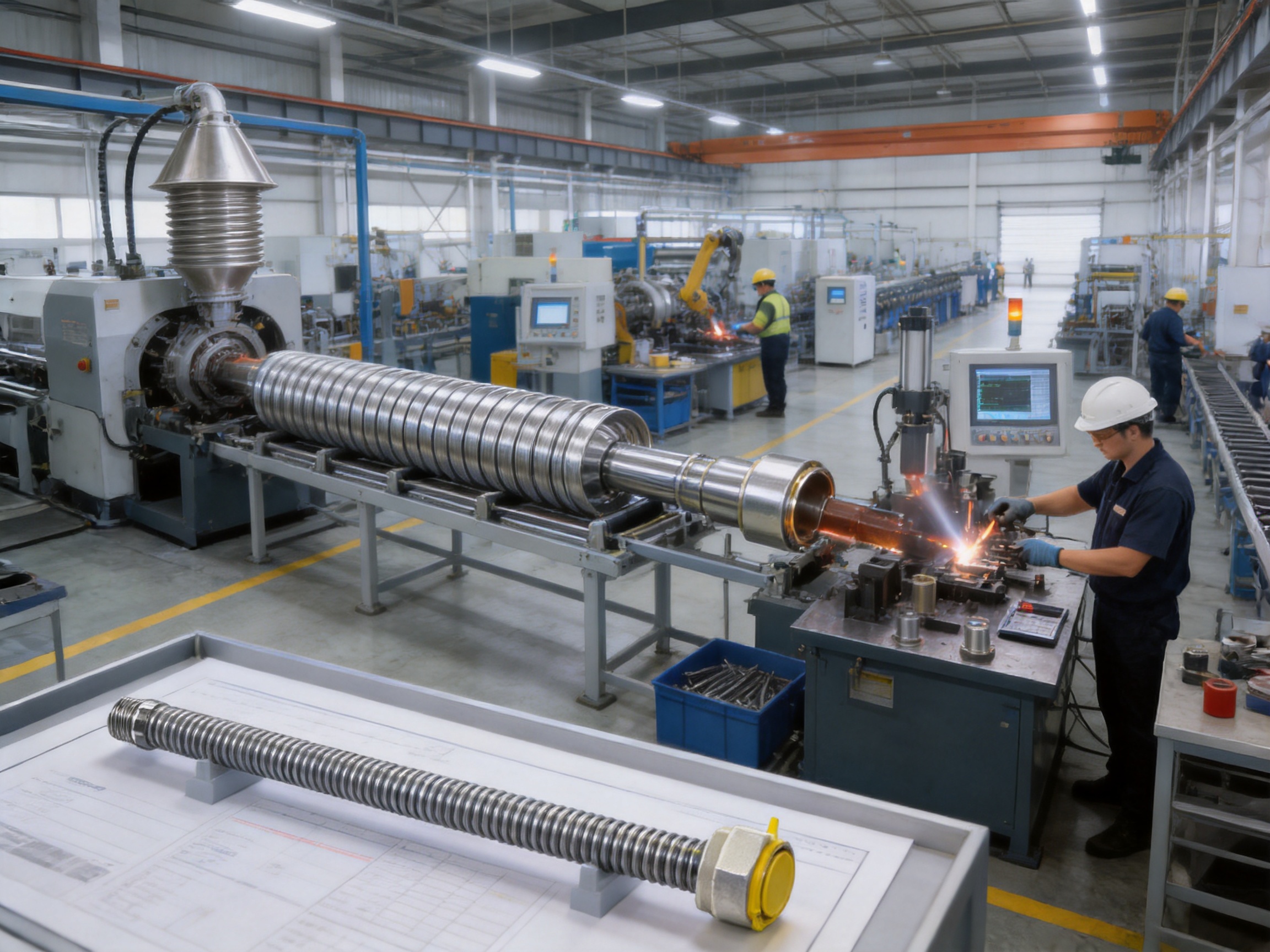
The performance of a corrugated gas hose depends heavily on manufacturing consistency. Forming thin stainless steel into a repeated corrugated or spiral profile requires controlled tooling, accurate dimensions, stable material quality, and careful handling. Welding and fitting operations must also be controlled so that the hose remains flexible while the end connections maintain mechanical and sealing integrity.
Zhejiang Zhenlong Energy Equipment Technology Co., Ltd. operates as an integrated industrial and trading enterprise engaged in the research, development, manufacturing, and processing of energy equipment. Its product scope includes metal hoses, natural gas pipelines, plumbing fittings, sanitary ware, valves, plastic products, and hardware. This broad product base is relevant to gas hose production because it provides experience across metallic forming, piping components, polymer products, and related connection systems.
The company’s facility covers approximately 40 acres and includes a factory building of about 30,000 square meters. The supplied company information identifies 30 welding and forming production lines. A multi-line production structure can support higher capacity, product specialization, and more consistent process organization. It may also help the manufacturer respond to different connection sizes, lengths, coating requirements, and customized production orders.
6.1 Material Preparation and Forming
The first manufacturing priority is material control. Stainless steel strip or tube material must be suitable for forming and compatible with the intended service. Material identification, thickness control, surface condition, and dimensional inspection are important before the corrugation process begins. Proper preparation helps reduce defects such as cracking, uneven wall thickness, surface scoring, and unstable corrugation geometry.
Forming creates the characteristic spiral bellows structure. The process must maintain consistent pitch, depth, diameter, and alignment along the hose. Excessive forming force may damage the metal, while insufficient forming control may produce uneven flexibility or a nonuniform internal passage. Automated or dedicated forming equipment can improve repeatability compared with uncontrolled manual operations.
For the ZLR-15, the listed SS304 material and dimensions of 20 mm outside diameter and 18 mm inside diameter provide a defined basis for production control. These dimensions should be verified at suitable stages of manufacturing, particularly after forming, welding, coating, and fitting installation. Dimensional consistency is essential for reliable connection compatibility and predictable flow behavior.
6.2 Welding and End-Fitting Assembly
Welding joins the corrugated section to the metal end components or to the relevant transition pieces. This is a high-value process because the welded area must withstand pressure, movement, vibration, and thermal cycling. Poor welding can cause leakage, reduced fatigue life, distortion, or premature failure at the most mechanically stressed part of the assembly.
The company reports extensive welding and forming capability, including 30 production lines. This suggests that welding is a central part of its manufacturing infrastructure rather than an occasional subcontracted operation. Consistent welding procedures, controlled heat input, suitable fixtures, and trained operators can help improve joint repeatability and reduce distortion.
After welding, the assembly may require visual inspection, dimensional verification, and leak or pressure testing. The exact test method depends on the product design and applicable standard. A practical quality system should identify unacceptable weld appearance, incomplete fusion, cracks, pinholes, excessive spatter, misalignment, and deformation. Testing should be performed using calibrated equipment and documented procedures.
6.3 PE Coating and Surface Protection
The PE coating process must provide uniform coverage without blocking the connection interfaces or interfering with the flexibility of the bellows. Surface preparation is important because oil, dust, moisture, or foreign material can reduce coating adhesion. Coating thickness, continuity, finish, and end termination should be checked after application.
A well-controlled coating process improves resistance to everyday environmental exposure. It can also make the hose easier to handle and identify during installation. However, the coating should not conceal defects in the underlying metal or welds. For that reason, quality inspection should occur before coating as well as after coating, ensuring that the protective layer adds value without replacing fundamental metal and weld inspection.
6.4 Testing and Quality Management
The company states that it uses testing equipment including metal material analysis direct-reading spectrometers and flow tightness testers. A direct-reading spectrometer can support material verification by analyzing alloy composition. This is valuable for confirming that the selected stainless steel corresponds to the required material category and for reducing the risk of material mix-ups.
Flow tightness testers can support leak detection and sealing verification. For gas hoses, tightness is a basic performance requirement. Testing may identify leakage through the bellows, welds, fittings, seals, or quick-release connections. The exact test pressure, medium, duration, and acceptance criteria should be established according to the applicable product standard and intended application.
The company also reports implementation of the ISO9000:2008 quality management system. A quality management system can provide a framework for documentation, process control, corrective action, supplier management, inspection records, and customer service. Certification or system implementation should not be treated as a substitute for product-specific testing, but it can support a more disciplined and traceable manufacturing environment.
The company further states that it holds a People’s Republic of China Special Equipment Manufacturing License for pressure pipelines and has EU CE certification testing reports. These credentials indicate experience with regulated equipment and conformity-related procedures. Buyers should request current, product-relevant certificates, test reports, declarations, and applicable standards before using the hose in a regulated project or exporting it to a particular market.
7. Advantages Over Conventional Alternatives
The ZLR-15 offers several practical advantages when compared with conventional rigid pipe sections, unprotected metal tubes, and basic flexible connectors. These advantages arise from the combination of materials and features rather than from any single component.
7.1 Compared with Rigid Pipe Sections
Rigid pipe requires accurate measurement, cutting, threading, bending, and alignment. It may need several elbows to connect an appliance positioned away from the main supply line. Each additional fitting can increase installation labor and create another joint that must be assembled and inspected. A flexible corrugated hose can simplify the final connection by accommodating reasonable alignment differences directly.
The ZLR-15’s 30 cm to 60 cm length range can help installers select a suitable connection without excessive slack. Correct length selection is important. A hose that is too short may be placed under tension, while an excessively long hose may form unnecessary loops or contact unsuitable surfaces. The available range provides flexibility for common appliance layouts while maintaining a compact design.
7.2 Compared with Uncoated Metallic Tubing
An uncoated metal hose may be exposed directly to moisture, cleaning chemicals, abrasion, and dirt. The PE outer layer on the ZLR-15 provides an additional environmental barrier. This can improve handling, reduce surface contact damage, and help preserve the appearance of the assembly.
The coating is especially useful in locations where the hose passes through cabinetry or near areas subject to routine cleaning. It should still be protected from direct flame, excessive heat, sharp edges, and aggressive chemicals. The coating improves resistance but does not eliminate the need for sensible routing and inspection.
7.3 Compared with Basic Low-Grade Flexible Hoses
Some low-cost flexible hoses may use materials or fittings that offer limited resistance to heat, corrosion, movement, or mechanical damage. The ZLR-15 uses SS304 corrugated bellows, metal fittings, and a protective PE coating. This combination is intended to provide a stronger and more durable connection architecture than a simple flexible tube with minimal end reinforcement.
The product also incorporates quick-release clips and defined connection components. These features can improve installation consistency and service convenience. In commercial or maintenance-heavy applications, the total cost of ownership may depend more on reliability, replacement time, and inspection efficiency than on initial purchase price alone.
7.4 Compared with Improvised Connections
Improvised assemblies assembled from unrelated adapters, short rigid sections, and incompatible hose pieces may create uncertain sealing and mechanical behavior. A purpose-designed hose integrates the flexible section, protective covering, end fittings, and connection features into one tested product configuration. This can simplify procurement, documentation, installation, and replacement.
8. Applications
The primary application of the ZLR-15 is the connection of gas appliances to a compatible gas piping system. Potential installations include residential kitchens, apartment utility areas, restaurants, commercial kitchens, food-service facilities, workshops, equipment rooms, and selected industrial gas supply arrangements. Suitability depends on the gas type, pressure, temperature, local code, appliance instructions, and product certification requirements.
In residential applications, the hose may be used to connect a cooker, range, water heater, or other compatible gas appliance. The flexibility helps accommodate cabinets, wall outlets, appliance movement, and minor differences between the fixed pipe and appliance inlet. The PE coating can provide useful protection in kitchens where moisture and cleaning are common.
In commercial kitchens, maintenance access and replacement speed are important. Appliances may be moved for cleaning or service, and connection components may need to be inspected regularly. A flexible hose with quick-release features can support these tasks, provided that the hose is selected, installed, and maintained according to commercial gas safety requirements.
In industrial or equipment-room applications, the hose may be considered for smaller gas appliance connections or auxiliary equipment. Industrial users should evaluate pressure, flow, temperature, vibration, chemical exposure, and duty cycle in detail. A product suitable for a domestic appliance is not automatically suitable for a high-pressure process line, continuous-motion system, or extreme-temperature environment.
8.1 Installation Environment
The hose should be installed away from direct flame, radiant heat sources, sharp edges, moving machinery, electrical damage hazards, and locations where it can be crushed. It should not be buried, embedded in walls, passed through inaccessible voids, or installed where inspection and replacement are impossible unless the applicable code specifically permits such use.
The connection should remain visible or accessible enough for inspection. The hose should not support the weight of the appliance or be used as a handle. If the appliance is movable, the installer should confirm that normal movement does not stretch, twist, or sharply bend the hose.
9. Installation Best Practices
Before installation, verify the model, nominal size, hose length, thread type, fitting orientation, gas medium, and pressure rating. Confirm that the G 1/2 and M30x2 connection details match the appliance and fixed piping system. Do not force a connection that appears close but does not engage smoothly.
Inspect the product for shipping damage. Look for cuts in the PE coating, dents in the corrugated tube, damaged threads, bent fittings, missing clips, contamination, and signs of impact. A damaged hose should be isolated and evaluated rather than installed simply because the damage appears minor.
Shut off and isolate the gas supply before connecting the hose. Ensure that the mating surfaces are clean and free from debris. Position the hose so that it follows a smooth route. Avoid twisting the hose while tightening the end fittings. If the connection includes a gasket or specified sealing washer, install it correctly and replace it if damaged.
Tighten the fittings using the correct method and suitable tools. Hold the stationary fitting while tightening the mating component so that torque is not transferred into the bellows. Do not use the corrugated section as a gripping surface. Excessive force can damage the hose, fitting, thread, or seal.
Engage the quick-release clips fully and verify that they are locked. Where an anti-theft or retaining buckle is supplied, install it according to the product instructions. Confirm that the hose is not under tension and that its bend is gradual. The finished installation should not contain kinks, sharp folds, loops that can catch on equipment, or contact points that can abrade the coating.
After installation, restore the gas supply gradually and perform a leak test using an approved method. Never use an open flame to search for leaks. A qualified technician should verify the connection and appliance operation before the system is placed into normal service. Leak testing should be repeated after any maintenance activity that disturbs the connection.
10. Inspection and Maintenance
Routine inspection is a simple but important way to preserve gas connection safety. The inspection interval should reflect local regulations, appliance manufacturer instructions, operating conditions, and the level of use. Commercial installations with frequent appliance movement may require more frequent checks than lightly used residential equipment.
Inspect the PE coating for cuts, abrasion, cracking, melting, swelling, discoloration, or separation. Examine the corrugated section for dents, flattening, deep scratches, corrosion, unusual deformation, or evidence of excessive movement. Check the fittings for thread damage, looseness, corrosion, and misalignment.
Verify that the quick-release clips remain fully engaged and that any retaining buckle is present and secure. Look for signs of movement at the connection points, such as polished rubbing marks, displaced coating, or repeated contact with a cabinet edge. These signs may indicate that the hose is being subjected to movement or routing conditions beyond its intended use.
If a gas odor is detected, immediately follow the emergency procedures applicable to the site. Do not operate electrical switches or create ignition sources in the affected area. Shut off the gas supply if it is safe to do so, ventilate the area, evacuate if necessary, and contact a qualified gas professional or emergency service. The hose should not be reused after a confirmed leak unless it is specifically approved and repaired by an authorized party; replacement is often the safer approach.
11. Customization and OEM/ODM Support
The manufacturer identifies itself as an OEM/ODM producer of metal hoses, corrugated hoses, pipe fittings, and related precision-engineered pipe products. This capability can be valuable for distributors, appliance manufacturers, construction contractors, gas equipment brands, and project integrators that require more than a standard catalog item.
Possible customization areas may include hose length, connection configuration, fitting material, coating color, packaging, labeling, product identification, and project-specific assembly requirements. Any customization should be evaluated through engineering review and sample approval. Changes to the bellows, wall thickness, connection geometry, coating, or welding process may affect pressure performance, flexibility, fatigue resistance, and certification status.
OEM and ODM buyers should provide detailed technical information at the quotation stage. This may include gas type, operating pressure, temperature range, required flow, connection standards, installation orientation, minimum bend radius, expected movement, service life, environmental exposure, packaging requirements, and destination-market regulations.
Sample testing should confirm dimensional compatibility, leakage performance, connection security, coating quality, and practical installation behavior. For larger projects, production samples and first-article approvals can help ensure that the delivered product matches the approved design. Traceability records, inspection reports, material documentation, and batch identification may also be important for project control.
12. Company Manufacturing Strengths
Zhejiang Zhenlong Energy Equipment Technology Co., Ltd. combines research and development, manufacturing, processing, and trade functions. This integrated structure can help customers communicate technical requirements directly to a manufacturer with production capability rather than relying entirely on a trading intermediary.
The company’s product portfolio covers metal hoses, natural gas pipelines, plumbing fittings, sanitary ware, valves, plastic products, and hardware. Such a range suggests experience with both metallic and nonmetallic components used in fluid and energy systems. For buyers sourcing complete connection assemblies, this broader capability may simplify supplier coordination and encourage better compatibility between hoses, valves, fittings, and related products.
The reported 30 welding and forming production lines indicate substantial manufacturing capacity. The large factory area and dedicated production infrastructure can support organized material flow, production scheduling, inspection stations, warehousing, and order fulfillment. Capacity alone does not guarantee product quality, but it provides a foundation for stable supply when combined with process control and effective quality management.
The company also reports two uninterrupted solid melting hydrogen furnace production lines. This equipment is associated with high-temperature material processing and may support the broader manufacturing of metal components. Buyers should request detailed process information when a specific product requires particular metallurgical treatment or heat-processing controls.
Research and development capability is another important strength. Corrugated hoses require coordinated decisions about metal selection, bellows geometry, end fittings, coating, welding, packaging, and installation use. An experienced engineering team can help adapt these variables to different applications while maintaining practical manufacturability.
The company states that it is a member of the China Urban Gas Association and holds a Special Equipment Manufacturing License for pressure pipelines, along with EU CE certification testing reports. These affiliations and documents may support buyer confidence, but the relevant certificate scope and validity should always be confirmed for the exact model, configuration, market, and application.
13. Purchasing Considerations
When purchasing the ZLR-15, buyers should first confirm whether DN15 is suitable for the required gas flow and connection size. Nominal size is not the only selection factor. The appliance inlet, fixed pipe outlet, operating pressure, gas type, and applicable standard must all be compatible.
Length selection should be based on the actual installed distance. The available 30 cm to 60 cm range allows buyers to select a hose that reaches the appliance without tension. The shortest practical length is usually preferable when it permits a smooth, stress-free route. Excess length should not be tightly coiled or forced into a small space.
Buyers should also clarify the connection arrangement. The listed G 1/2 and M30x2 components may be suitable for specific appliances and adapters but not for every installation. Thread and seal compatibility must be checked before ordering. Product drawings, samples, and fitting photographs can reduce ordering errors for large projects.
For export projects, documentation is essential. Request material information, inspection procedures, pressure or tightness test records, applicable certificates, packaging details, and any required declaration of conformity. Where a local authority or gas utility has approval requirements, confirm them before placing a production order.
Packaging should protect the fittings, threads, coating, and corrugated section during transport. Individual sleeves, end caps, cartons, pallet protection, and moisture control may be appropriate depending on shipment duration and destination. Clear model and length markings can simplify receiving inspection and warehouse management.
14. Frequently Asked Questions
What is the primary purpose of the ZLR-15?
The ZLR-15 is designed to connect gas appliances with compatible gas piping systems. Its corrugated stainless steel body provides controlled flexibility, while the metal end fittings create the connection interface.
What material is used for the corrugated tube?
The listed specification identifies SS304 stainless steel for the spiral bellows. SS304 is selected for its combination of strength, corrosion resistance, formability, and temperature durability.
What are the listed dimensions?
The product is identified as DN15, with a listed outside diameter of 20 mm and inside diameter of 18 mm. Buyers should still verify connection compatibility and flow requirements for the actual installation.
What lengths are available?
The listed length range is 30 cm to 60 cm. The correct length should provide a smooth route without stretching, twisting, sharp bending, or unnecessary looping.
What protection does the PE coating provide?
The PE outer coating helps protect the stainless steel hose from moisture, corrosion-related environmental exposure, surface abrasion, and general wear. It does not make the product suitable for direct flame or uncontrolled high-temperature exposure.
Does the hose resist vibration?
The spiral corrugated design provides flexibility and can accommodate limited vibration and movement. It must not be subjected to excessive motion, twisting, sharp kinks, or continuous mechanical strain.
What connection types are listed?
The supplied specification lists a G 1/2 meter-pipe outer-wire connector and an M30x2 meter-pipe anti-theft inner-wire connector with an M buckle. Compatibility must be verified against the appliance and piping system before installation.
Are tools required for the quick-release clips?
The product description states that quick-release clips support fast, tool-free connections. The exact installation sequence should follow the product instructions, and the connection must be fully engaged and checked before the gas supply is restored.
Can the hose be used for every gas appliance?
No. The hose must be suitable for the gas type, pressure, temperature, connection dimensions, installation environment, and local regulations. Appliance manufacturer instructions and applicable gas codes must be followed.
Can the hose be installed outdoors?
Outdoor suitability depends on environmental exposure, ultraviolet radiation, temperature, moisture, chemicals, and local requirements. The PE coating provides protection, but outdoor use should be confirmed with the manufacturer and the relevant installation authority.
How should the hose be inspected?
Inspect the PE coating, corrugated tube, fittings, clips, retaining components, and routing. Look for cuts, melting, corrosion, dents, kinks, looseness, abrasion, or signs of leakage. Any suspected defect should be assessed by a qualified professional.
Can the hose be reused after removal?
Reuse should not be assumed. The hose, seals, clips, and fittings should be inspected, and local rules or manufacturer instructions should determine whether reuse is permitted. Replacement is often appropriate when a connection has been damaged, heavily tightened, contaminated, or exposed to abnormal conditions.
What manufacturing capabilities support this product?
The manufacturer reports research and development resources, 30 welding and forming production lines, material-analysis equipment, flow-tightness testing equipment, quality management implementation, and experience in metal hoses, gas pipelines, fittings, valves, plastic products, and hardware.
15. Conclusion
The Stainless Steel Corrugated Gas Hose with Metal Flange ZLR-15 is designed as a durable and flexible connection solution for compatible gas appliances. Its SS304 spiral bellows provide controlled flexibility, vibration resistance, and a strong metallic gas passage. Its PE outer coating adds protection against moisture, abrasion, and environmental wear. Metal end fittings, quick-release clips, and the listed G 1/2 and M30x2 connection configuration support convenient and secure installation when correctly matched to the piping system.
Compared with rigid pipe sections, the hose can simplify alignment and reduce the need for multiple elbows. Compared with unprotected metal tubing, it provides an additional protective layer. Compared with basic low-grade flexible connectors, its combined stainless steel, metal fitting, coating, and connection design offers a more engineered approach to appliance gas connection.
The company’s manufacturing infrastructure strengthens the product proposition. Its reported welding and forming lines, material-analysis spectrometers, flow-tightness testers, factory resources, R&D team, quality management system, and experience in energy equipment provide a foundation for repeatable production and customized supply. Buyers should nevertheless verify the exact product documentation, test reports, certifications, operating limits, and local approval requirements for each project.
When selected correctly and installed by qualified personnel, the ZLR-15 can provide a compact, serviceable, and dependable transition between gas appliances and fixed piping. Its best performance depends on correct sizing, compatible connections, smooth routing, protection from excessive heat and mechanical abuse, regular inspection, and prompt replacement whenever damage or leakage is suspected.
References
1. Product specification for Stainless Steel Corrugated Gas Hose with Metal Flange ZLR-15, supplied technical information.
2. Manufacturer information for Zhejiang Zhenlong Energy Equipment Technology Co., Ltd., including company profile, factory resources, production lines, equipment, and quality capabilities.
3. General engineering principles for stainless steel corrugated tubing, flexible metal hose design, and appliance connection practice.
4. General guidance on gas appliance connector installation, leak testing, inspection, and maintenance.
5. Quality management principles associated with ISO 9000-series systems.
6. General material and fabrication references for SS304 stainless steel, welded assemblies, polyethylene protective coatings, and threaded pipe connections.