 English
 中文简体
 Español
 عربى

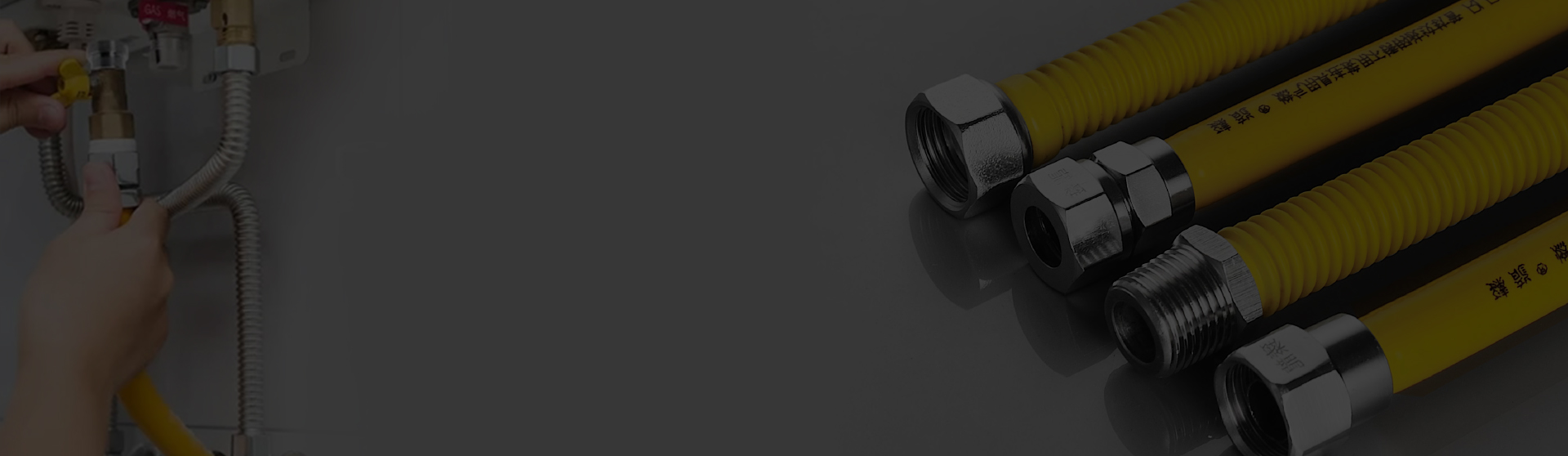

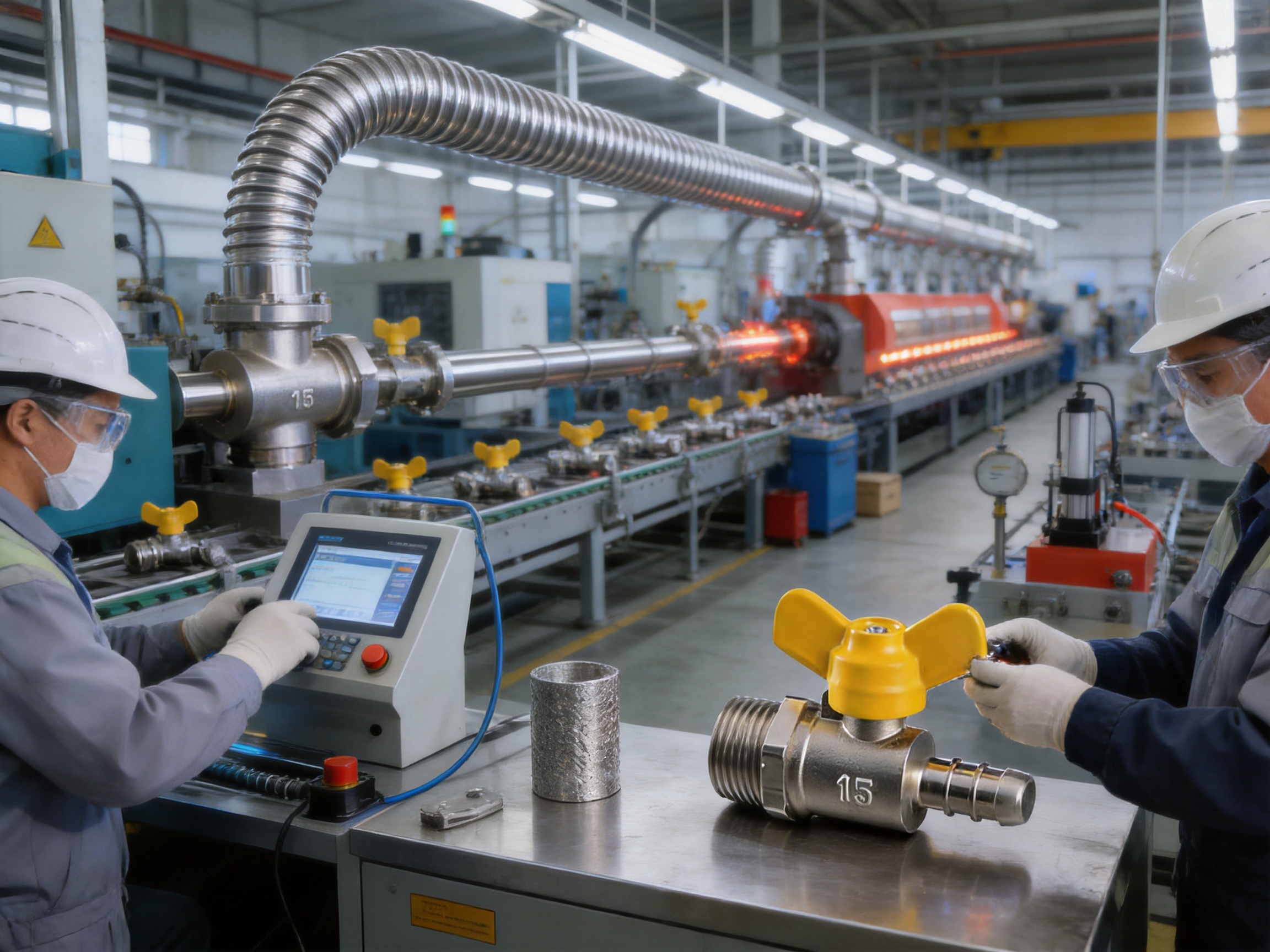
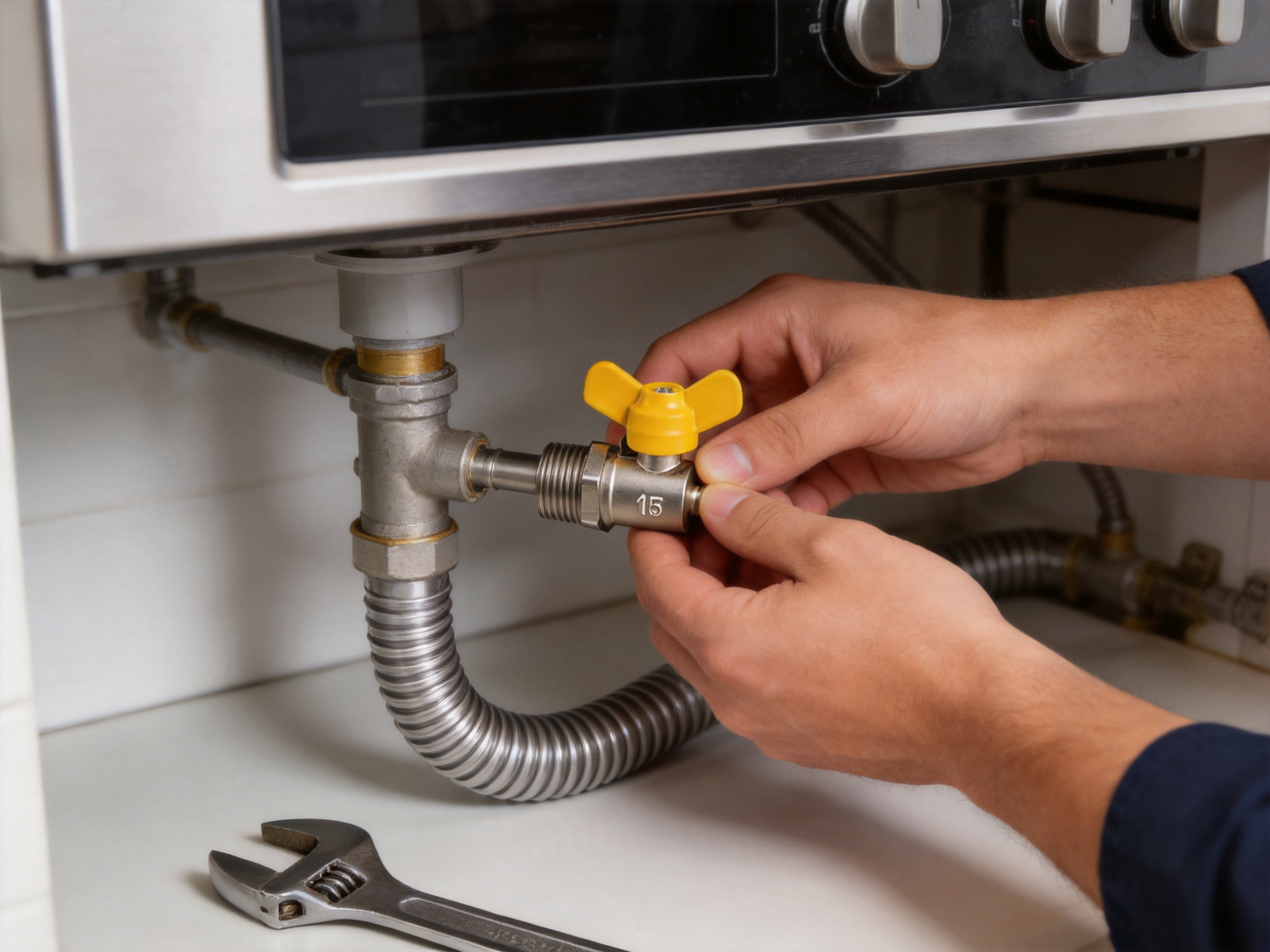
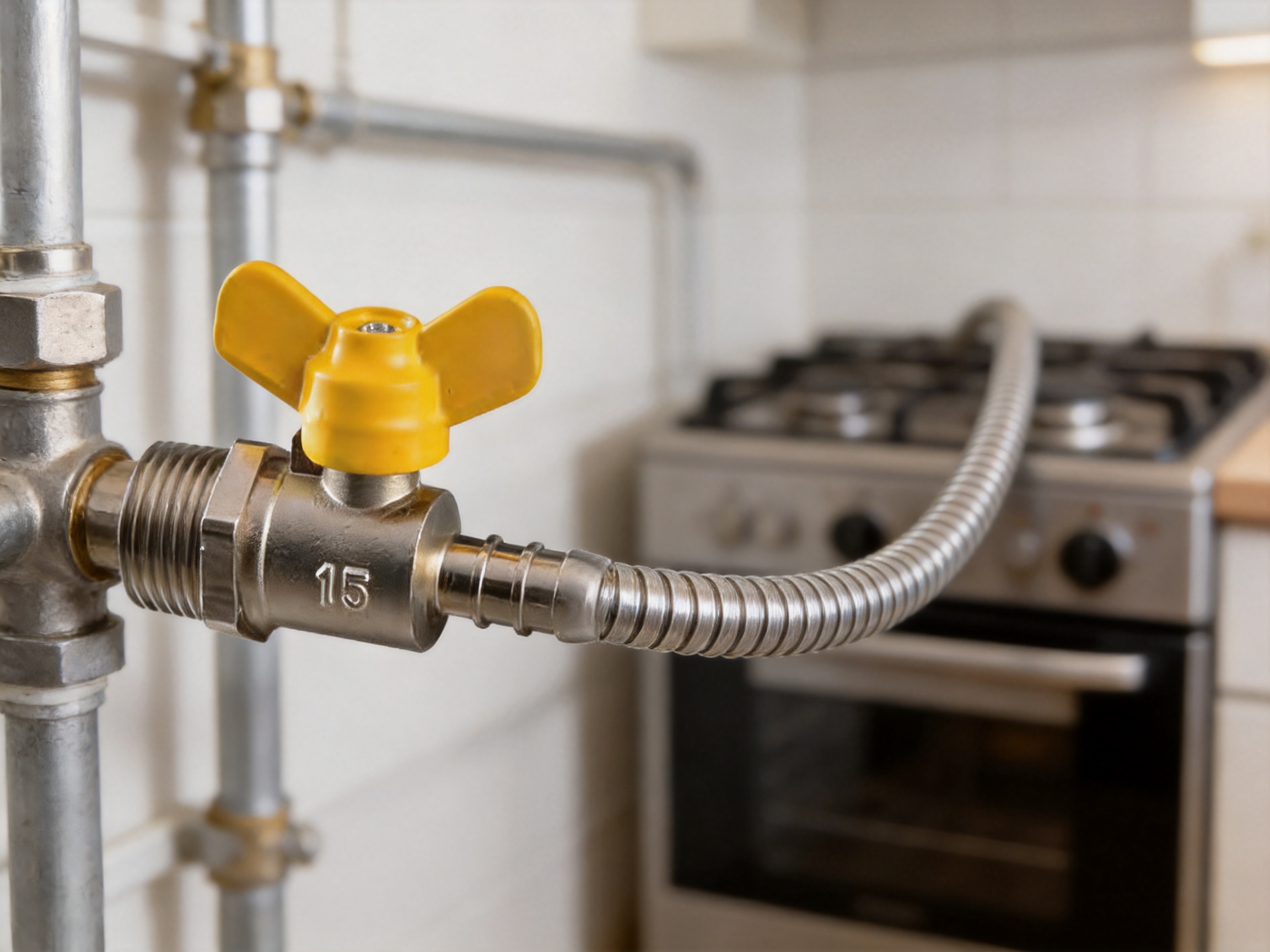
Gas distribution systems depend on components that can control flow accurately, maintain a secure seal, and remain dependable under changing pressure and temperature conditions. Among these components, the valve installed at the connection point between a gas supply line and a flexible hose has a particularly important role. It must support safe gas transfer while also allowing installers, maintenance personnel, and users to operate the system conveniently. The Gas Single Nozzle Valve is designed for this purpose, providing a practical connection and shutoff solution for gas transmission applications involving stainless steel corrugated hoses and related pipe fittings.
Identified as the ZLP-017 Single Spout Front Valve and manufactured in DN15 specification, this product combines a compact single-nozzle structure with durable materials, controlled sealing surfaces, and a configuration intended to simplify installation. It is suitable for residential gas applications, commercial equipment connections, and selected industrial gas distribution environments where a reliable small-diameter valve is required. Its design emphasizes controlled flow, connection security, corrosion resistance, and long-term service stability.
The valve is manufactured by Zhejiang Zhenlong Energy Equipment Technology Co., Ltd., a company focused on the research, development, processing, and manufacture of energy equipment, metal hoses, gas pipelines, pipe fittings, valves, plumbing products, and related hardware. Through integrated production capabilities, dedicated forming and welding lines, material analysis equipment, flow and tightness testing, and quality management procedures, the company provides a manufacturing foundation suited to safety-related piping products.
This article examines the construction, operating value, manufacturing strengths, installation considerations, maintenance requirements, and application potential of the Gas Single Nozzle Valve. It also compares the practical benefits of its single-nozzle configuration with common alternatives and explains how production control can influence the performance of a gas connection component.
Content
- 1 1. Product Overview
- 2 2. The Importance of a Reliable Gas Valve
- 3 3. Single-Nozzle Design and Its Practical Advantages
- 4 4. Performance Benefits Compared with Basic or Multi-Part Alternatives
- 5 5. Materials, Corrosion Resistance, and Surface Integrity
- 6 6. Manufacturing Capabilities Behind the Product
- 7 7. Testing and Quality Assurance
- 8 8. Product Development and Engineering Support
- 9 9. Applications in Residential Gas Systems
- 10 10. Applications in Commercial and Industrial Environments
- 11 11. Installation Guidance and Best Practices
- 12 12. Maintenance and Service Life
- 13 13. Procurement Advantages for Distributors and OEM Buyers
- 14 14. Packaging, Traceability, and Customer Service
- 15 15. Why Manufacturing Integration Matters
- 16 16. Selection Checklist for the Gas Single Nozzle Valve
- 17 17. Safety Considerations
- 18 18. Questions and Answers
- 18.1 Q1: What is the Gas Single Nozzle Valve used for?
- 18.2 Q2: What is the product specification?
- 18.3 Q3: What is the main advantage of the single-nozzle configuration?
- 18.4 Q4: Can the valve be used for every gas application?
- 18.5 Q5: Is DN15 the same as a specific thread size?
- 18.6 Q6: Does the valve help prevent gas leakage?
- 18.7 Q7: What materials are used in the valve?
- 18.8 Q8: Is the valve suitable for residential use?
- 18.9 Q9: Can it be used in commercial or industrial systems?
- 18.10 Q10: What testing capabilities does the manufacturer have?
- 18.11 Q11: What manufacturing resources does the company operate?
- 18.12 Q12: Does the company support OEM and ODM production?
- 18.13 Q13: How should the valve be maintained?
- 18.14 Q14: Can a leaking valve be repaired in the field?
- 18.15 Q15: What should buyers request before placing an order?
- 19 19. Conclusion
- 20 References
- 21 Product: Gas single nozzle valve
1. Product Overview
The Gas Single Nozzle Valve is a compact valve and connection component designed for gas distribution systems. Its primary function is to regulate or stop the flow of gas at a designated point in the pipeline. The single nozzle provides a direct connection interface for the associated hose or fitting, while the valve body provides the flow-control mechanism and sealing structure necessary for safe service.
The supplied product information identifies the unit as a Single Spout Front Valve, with the product number ZLP-017 and a nominal DN15 specification. DN15 is commonly associated with a small nominal pipe size used in household, light commercial, and equipment-level gas connections. The actual connection method, thread standard, sealing material, and installation orientation should always be confirmed against the project specification and local gas regulations before installation.
| Product Attribute | Specification or Description |
| Product name | Gas Single Nozzle Valve |
| Model or numbering | ZLP-017 |
| Product type | Single spout front valve |
| Nominal specification | DN15 |
| Application category | Stainless steel corrugated hose fittings for gas transmission |
| Primary function | Gas flow control and secure hose connection |
| Typical application areas | Residential, commercial, and selected industrial gas systems |
| Key performance objectives | Leak prevention, corrosion resistance, pressure stability, and service durability |
The product description emphasizes a single-nozzle arrangement that supports efficient gas flow and consistent pressure regulation. This configuration can reduce unnecessary connection complexity, making the valve easier to install in locations where space is limited. A simpler connection path can also reduce the number of possible leak points when compared with a system assembled from several separate adapters, couplings, and intermediate fittings.
Although the valve has a compact structure, its role should not be underestimated. A small valve may be exposed to frequent operation, vibration from connected equipment, pressure fluctuations, temperature changes, and contact with moisture or corrosive contaminants. For this reason, the quality of the material, forming accuracy, joining process, sealing surfaces, and final inspection all influence the service performance of the finished product.
2. The Importance of a Reliable Gas Valve
Gas is transported through networks in which every connection must maintain controlled containment. Unlike many ordinary water applications, gas systems require particular attention to leakage because escaped gas can create fire, explosion, health, and environmental risks. A valve used in such a system must therefore do more than provide a convenient on-and-off function. It must maintain a stable seal during normal operation and remain mechanically sound over the expected service life.
A reliable gas valve helps users isolate a downstream appliance or hose without shutting down an entire building or distribution branch. This is valuable during equipment maintenance, replacement, inspection, or emergency response. In a residential kitchen, for example, a local valve can help control the gas supply to a cooking appliance. In a commercial or industrial setting, a similar valve may be used at an equipment connection, service branch, or flexible hose assembly.
The valve must also accommodate the practical realities of installation. Pipework is often routed through confined spaces, around cabinets, behind equipment, or along walls. A compact single-nozzle valve allows the installer to create a direct and orderly connection without adding excessive length or multiple changes in direction. Fewer components can make the completed assembly easier to inspect and maintain.
Pressure control is another important consideration. The valve should provide a predictable internal passage so that gas can move through the system without unnecessary restriction when open, while still allowing effective isolation when closed. The description of the Gas Single Nozzle Valve highlights efficient flow and consistent pressure regulation, indicating that its design is intended to balance passage performance with shutoff capability.
Long-term reliability also depends on resistance to external conditions. Moisture, condensation, cleaning chemicals, salt-containing atmospheres, and temperature variation can gradually affect unprotected metal surfaces. A valve produced from suitable high-quality materials and processed under controlled conditions is better positioned to resist corrosion and wear. This is particularly relevant for fittings installed in kitchens, utility rooms, workshops, commercial kitchens, and semi-outdoor service areas.
3. Single-Nozzle Design and Its Practical Advantages
The defining feature of this product is its single-nozzle configuration. A single nozzle creates one dedicated outlet or connection spout, allowing the valve to connect directly with the associated hose or fitting. This is different from multi-outlet valves designed to distribute gas to several branches. For applications requiring one controlled gas connection, the single-nozzle arrangement offers a focused and efficient solution.
3.1 Simplified Installation
Installation efficiency is one of the most visible benefits of a single-nozzle design. When the valve, connection interface, and hose are correctly matched, the installer can complete the assembly with fewer intermediate components. This can reduce the amount of alignment work required and help prevent incorrect stacking of adapters or couplings.
A simpler assembly may also reduce installation time. In commercial construction and appliance installation, reducing the number of parts can make the work more predictable. It may also support more consistent installation quality because there are fewer individual interfaces to inspect. However, simplified installation does not eliminate the need for qualified personnel, appropriate tools, leak testing, and compliance with local codes.
3.2 Reduced Connection Complexity
Every threaded or mechanically joined interface in a gas system represents a location that must be properly tightened, sealed, and inspected. A direct single-nozzle connection can reduce the number of interfaces compared with an assembly made from multiple reducers, extensions, and directional fittings. Fewer interfaces can make the finished system easier to understand and troubleshoot.
This advantage is especially useful where the valve is positioned behind an appliance or inside a service cabinet. A compact connection may allow the hose to follow a smoother route, reducing the chance of sharp bending or interference with nearby components. A well-organized installation is easier for future technicians to inspect because the isolation point and hose connection are visually identifiable.
3.3 Effective Sealing Capability
The product description specifically refers to enhanced sealing capability and tight connections. In gas service, sealing performance depends on several factors: the dimensional accuracy of the connection, the condition of mating surfaces, the suitability of the sealing material, the installation torque, and the stability of the assembly under vibration and pressure cycling.
A valve designed around a dedicated single-nozzle connection can provide a controlled sealing geometry. When the valve body, nozzle, thread, gasket, or other sealing elements are manufactured within suitable tolerances, the completed joint can achieve dependable containment. Proper installation remains essential, but a well-produced component gives the installer a better foundation for achieving a secure connection.
3.4 Compactness and Space Efficiency
Gas equipment is often installed in areas where every millimeter of available space matters. Cabinets, wall cavities, appliance compartments, and utility rooms may require pipe fittings to be both functional and compact. The single-nozzle valve is suited to applications where a single controlled outlet is needed without the additional bulk of a manifold or multi-branch fitting.
Space efficiency can also improve accessibility. A valve that is easy to locate and operate is more useful during routine maintenance or emergency isolation. The installation should always leave adequate clearance for operation, inspection, and replacement, but the compact nature of the product can help the designer achieve a cleaner overall arrangement.
4. Performance Benefits Compared with Basic or Multi-Part Alternatives
Product comparisons should be based on application requirements rather than general claims. A multi-outlet manifold may be preferable when several appliances must be supplied from one point, while a specialized industrial valve may be necessary for very high flow rates or demanding process conditions. Nevertheless, for a single gas connection in the DN15 range, the Gas Single Nozzle Valve offers several practical advantages over basic uncoordinated fittings or unnecessarily complex assemblies.
4.1 More Focused Functionality
The valve is designed for one clear purpose: controlling one gas connection. This focused function avoids the need to purchase a larger or more complex component when only one outlet is required. A properly selected single-nozzle valve can provide a closer match between the product and the actual service condition.
Using a component that is correctly sized for the application can support better installation quality. An oversized or overly complex valve may require additional reducers, adapters, or supports. Each extra component can increase installation effort and create more opportunities for alignment problems, accidental damage, or future maintenance confusion.
4.2 Fewer Potential Leak Points
A complete gas assembly may contain the valve, hose, adapters, unions, elbows, and appliance inlet. The exact number varies according to the system. When a single-nozzle valve allows a direct connection, it can reduce the number of separate joints in comparison with a multi-part arrangement. Fewer joints do not automatically guarantee zero leakage, but they can simplify leak prevention and testing.
During inspection, technicians can focus on the principal valve body, nozzle connection, and adjoining hose interfaces. This can make maintenance procedures more efficient. The advantage is particularly meaningful in locations where access is restricted and each additional fitting makes visual and physical inspection more difficult.
4.3 Consistent Connection Geometry
When a valve and its nozzle are produced as an integrated product, the connection geometry is established during the manufacturing process rather than being created by combining several unrelated parts. This can improve dimensional consistency and help the finished assembly maintain a more predictable profile.
Consistent geometry is beneficial when valves are installed in batches. Contractors and equipment manufacturers can work with a repeatable connection format, simplifying procurement, assembly planning, and quality checks. Consistency also supports replacement because a correctly specified valve can be installed without redesigning the surrounding arrangement.
4.4 Durability in Everyday Service
The valve is described as resistant to corrosion and wear. These characteristics are valuable in installations exposed to frequent handling, cleaning, humidity, or moderate environmental contamination. The use of suitable materials and controlled processing can help preserve the body, connection surfaces, and operating components during normal service.
Durability does not mean that the valve is immune to all damage. Improper tools, excessive force, cross-threading, impact, incompatible chemicals, or operation outside the approved pressure and temperature range can shorten service life. Even a robust valve should be protected through correct selection, installation, and maintenance.
5. Materials, Corrosion Resistance, and Surface Integrity
Material selection is a major factor in the performance of gas pipe fittings. A valve must retain its structural strength and sealing accuracy while exposed to the gases, atmospheric conditions, and mechanical stresses associated with the installation. The supplied information describes the product as being made with high-quality materials and highlights resistance to corrosion and wear.
Corrosion can affect a valve in several ways. It may reduce wall thickness, roughen sealing surfaces, interfere with moving parts, or weaken threaded sections. Even surface corrosion that appears minor can become a concern if it prevents proper tightening or damages the contact area between the valve and hose fitting. Selecting a material appropriate for the application and applying suitable production controls helps reduce these risks.
Surface integrity is also important for sealing. A sealing surface with scratches, pits, burrs, or deformation may not achieve the required contact with its mating component. Manufacturing processes such as forming, machining, deburring, cleaning, and inspection should therefore be coordinated to protect the final connection surfaces.
Stainless steel corrugated hose systems often require fittings that can withstand movement and installation adjustment while maintaining a stable connection. The valve must be compatible with the selected hose assembly and connection standard. Material compatibility should be evaluated for the complete system rather than for the valve alone. This includes the hose, nut, gasket, thread, appliance inlet, pipe material, and any sealing compound used during installation.
For export and project applications, buyers may also require documentation concerning material grade, surface treatment, pressure rating, temperature range, and test results. These details should be confirmed according to the specific order and governing standard. The DN15 designation identifies nominal size, but it does not by itself define every performance characteristic of the valve.
6. Manufacturing Capabilities Behind the Product
The reliability of a gas valve is strongly connected with the manufacturing system used to produce it. A company may have a good product design, but repeatable performance requires stable material procurement, controlled forming and welding, accurate assembly, inspection, and traceable quality procedures. Zhejiang Zhenlong Energy Equipment Technology Co., Ltd. has developed an integrated manufacturing structure covering research and development, production, processing, and trade.
The company operates in Yuyao, Ningbo, Zhejiang, and has a production site described as covering approximately 40 acres, with a factory building of about 30,000 square meters. This scale provides space for multiple production processes, equipment organization, material handling, inspection, storage, and order preparation. A suitably organized factory can help separate raw-material operations from finished-product inspection and can support more consistent workflow control.
According to the supplied company information, the factory has 30 welding and forming production lines. These lines are relevant to the manufacture of metal hoses, gas pipelines, and related fittings because forming accuracy and joining quality directly influence the performance of the finished assembly. A substantial number of dedicated lines can also support production flexibility, allowing different product families and specifications to be organized according to process requirements.
The company also operates two uninterrupted solid melting hydrogen furnace production lines. Furnace processes can be important for the preparation and treatment of metal materials used in energy equipment. Stable thermal conditions and controlled processing contribute to material consistency. The exact treatment applied to any individual valve should be confirmed through product-specific technical documentation, but the presence of dedicated furnace capacity demonstrates investment in in-house manufacturing infrastructure.
In-house capability can offer advantages over a supply chain that depends entirely on disconnected subcontractors. When forming, welding, material treatment, testing, and product assembly are managed within an integrated organization, engineering and quality teams can communicate more directly. Process adjustments may be implemented more efficiently, and production feedback can be connected to product development.
Integrated manufacturing also supports customization. Buyers of gas fittings may require special packaging, private labeling, connection variations, batch quantities, or coordinated assemblies. A company with its own research, production, and processing resources is generally better positioned to review such requirements than a trading organization that only resells standard products.
7. Testing and Quality Assurance
Gas fittings require testing that addresses both material quality and functional performance. The company reports using equipment such as direct-reading spectrometers for metal material analysis and flow tightness testers. These capabilities are important because the chemical composition of the material and the containment performance of the finished product both affect service reliability.
7.1 Direct-Reading Spectrometer Analysis
A direct-reading spectrometer can be used to analyze the elemental composition of metal materials. Material analysis helps verify whether incoming or in-process materials correspond to the required grade or specification. This is significant because visually similar metals may have different corrosion resistance, strength, forming behavior, or welding characteristics.
Material verification can reduce the risk of substitution or inconsistency in production. When the material is appropriate for the intended service, subsequent forming and joining processes can be carried out with greater confidence. For safety-related components, material identification is an important part of manufacturing discipline.
7.2 Flow and Tightness Testing
Flow testing can provide information about how a valve performs as gas passes through the internal passage. The objective may include evaluating flow characteristics, pressure loss, or functional consistency. Tightness testing, by contrast, focuses on whether the valve and its connections prevent unwanted gas escape under specified conditions.
Testing can be performed at different stages, depending on the production plan. Components may be checked after assembly, after pressure exposure, or during final inspection. A documented testing procedure helps ensure that products are assessed according to repeatable criteria rather than subjective judgment.
7.3 Quality Management Procedures
The company states that it strictly implements the ISO9000:2008 quality management system. Quality management is not limited to final inspection. It can include document control, supplier evaluation, process instructions, equipment maintenance, employee training, nonconformance handling, corrective action, and customer feedback.
A systematic quality approach is valuable for products that may be manufactured in repeated batches. It helps create a consistent link between customer requirements, design specifications, production instructions, inspection records, and shipment approval. For buyers, this can improve confidence that a repeat order will be produced under controlled conditions.
The company also reports holding a Special Equipment Manufacturing License for pressure pipelines issued by the People’s Republic of China and EU CE certification testing reports. These credentials and reports indicate attention to regulated equipment and market access requirements. Buyers should still verify the current validity, scope, product applicability, and documentation associated with a particular order before using the valve in a regulated project.
8. Product Development and Engineering Support
Gas fittings are not isolated objects; they form part of a larger system. A valve may need to work with corrugated hoses, rigid pipelines, appliance connectors, pressure regulators, meters, brackets, and other accessories. Product development therefore benefits from an understanding of the complete gas transmission arrangement.
The company describes itself as having a strong research, development, design, and production team. This combination can support engineering improvements in valve geometry, sealing structures, forming processes, material selection, packaging, and compatibility with related products. It can also help the manufacturer respond to practical feedback from installers, distributors, and end users.
For OEM and ODM customers, engineering support may be particularly important. A buyer may need a valve that fits a specific hose assembly, cabinet layout, appliance connection, or local market requirement. The development process may include reviewing drawings, evaluating samples, confirming materials, testing prototypes, and establishing production controls for the approved design.
Customization should always preserve the fundamental safety requirements of the product. Changes to nozzle dimensions, thread specifications, seal materials, body geometry, or pressure conditions can affect performance. Any variation should therefore be reviewed by qualified engineering personnel and validated through appropriate testing before mass production or field use.
9. Applications in Residential Gas Systems
Residential gas systems commonly require compact and accessible isolation valves for appliances such as cookers, ovens, water heaters, and other approved gas equipment. The DN15 Gas Single Nozzle Valve can be considered for applications where one appliance or hose connection requires local flow control.
In a kitchen installation, the valve may be located between a fixed gas pipe and a flexible corrugated hose leading to an appliance. The installer should position the valve so that it remains accessible and is not subjected to unnecessary strain from the appliance or hose. The hose should not be twisted, compressed, sharply bent, or used to support the weight of the appliance.
In residential utility areas, the valve may be used near a gas water heater or other approved equipment. Moisture and condensation should be controlled, and the fitting should be protected from accidental impact. If the valve is installed inside a cabinet or enclosure, the space should permit inspection and operation in accordance with local requirements.
Residential users should not modify, disassemble, or repair a gas valve without appropriate qualifications. If a smell of gas is detected, the gas supply should be isolated if it is safe to do so, ignition sources should be avoided, and qualified emergency or utility personnel should be contacted according to local procedures.
10. Applications in Commercial and Industrial Environments
Commercial kitchens, hospitality facilities, workshops, laboratories, equipment rooms, and light industrial sites may require numerous local gas isolation points. The single-nozzle valve can be useful where each appliance or equipment branch needs an individual connection and shutoff function.
Commercial environments often impose more demanding operating conditions than residential installations. Valves may experience frequent operation, vibration from machinery, cleaning chemicals, higher ambient temperatures, and heavier maintenance traffic. The described corrosion resistance and wear resistance can be beneficial, but the final suitability must be determined by reviewing the pressure, temperature, gas type, operating frequency, and environmental exposure.
In industrial systems, the valve should be selected as part of a complete engineered design. Flow demand, pressure drop, emergency shutoff requirements, hazardous-area classification, inspection intervals, and applicable regulations may exceed the information conveyed by a basic product description. The Gas Single Nozzle Valve may serve as a component in appropriate low- or moderate-capacity applications, but it should not be assumed suitable for every industrial gas service without technical confirmation.
For equipment manufacturers, the valve can be incorporated into packaged gas appliances or modular connection assemblies. A repeatable DN15 component can simplify product design and supply planning when the same connection format is used across multiple models. Batch production and inspection records can further support production traceability.
11. Installation Guidance and Best Practices
Installation should be performed by personnel qualified under the regulations applicable to the location and gas service. The following guidance is general and does not replace the manufacturer’s installation instructions, local codes, or the requirements of the gas utility or authority having jurisdiction.
11.1 Confirm Compatibility Before Installation
Before installation, confirm the gas type, operating pressure, maximum and minimum temperature, nominal size, connection standard, hose specification, sealing method, and required flow capacity. The DN15 designation should be matched with the actual pipe and hose dimensions. Do not assume that two components are compatible solely because they have the same nominal diameter.
11.2 Inspect the Components
Inspect the valve, hose, fittings, and sealing elements for visible damage. Look for dents, cracks, damaged threads, burrs, corrosion, contamination, or missing components. Any part that appears damaged or questionable should be quarantined and reviewed before use.
11.3 Maintain Correct Alignment
The valve and hose should be aligned without forced bending or side loading. Cross-threading can damage the connection and prevent proper sealing. The installer should begin threaded engagement carefully by hand, then use suitable tools according to the approved installation method. Tools should be applied to the intended flats or gripping areas rather than to delicate operating parts.
11.4 Avoid Excessive Tightening
Over-tightening can deform threads, damage sealing components, distort the valve body, or make future maintenance difficult. Under-tightening can result in leakage or loosening during service. The correct tightening method and torque, where specified, should be followed. Thread sealants must be compatible with the gas, materials, and connection design.
11.5 Test the Completed Assembly
After installation, the complete assembly should be tested for leakage using an approved procedure. Open flames must never be used for leak detection. The valve should also be operated to confirm that it opens and closes correctly and that the system responds as expected. Test results should be recorded when required by the project or local regulations.
11.6 Protect the Valve During Service
The valve should not be used as a handle, support, lifting point, or substitute for a pipe bracket. The connected hose should be supported and routed in a manner that avoids strain on the nozzle. The valve should remain accessible for emergency isolation, inspection, and replacement.
12. Maintenance and Service Life
Regular inspection helps identify problems before they become serious. The inspection frequency depends on the application, local rules, operating environment, and equipment manufacturer’s recommendations. Residential systems may require periodic checks, while commercial and industrial systems may need documented inspection and maintenance schedules.
During inspection, technicians should look for visible corrosion, discoloration, mechanical damage, loose connections, abnormal movement, damaged insulation or hose coverings, and signs of gas leakage. The operating handle or mechanism should move as intended without excessive stiffness or looseness. Any unusual odor, sound, or performance change should be investigated promptly.
Cleaning should be performed with methods and materials that are compatible with the valve body, finish, seals, and surrounding hose. Aggressive chemicals, abrasive tools, and uncontrolled heating can damage the component. If the valve is exposed to salt spray, industrial chemicals, or persistent moisture, the inspection interval may need to be shortened.
Replacement is appropriate when the valve has been damaged, corroded, contaminated, subjected to a severe event, or shown to be leaking. Gas valves should generally not be repaired through improvised machining, welding, or replacement of unapproved parts. A replacement must match the required specification and should be installed and tested by qualified personnel.
13. Procurement Advantages for Distributors and OEM Buyers
For distributors, the Gas Single Nozzle Valve offers a focused product that can serve common small-diameter gas connection requirements. Its clear model identification, DN15 specification, and defined single-spout configuration can simplify catalog organization and customer selection. Distributors can position it alongside corrugated hoses, gas pipe fittings, valves, and installation accessories to create a complete product offering.
For OEM buyers, manufacturing integration is a significant consideration. The supplier’s product range includes metal hoses, natural gas pipelines, plumbing fittings, sanitary ware, valves, plastic products, and hardware. This breadth may allow buyers to coordinate multiple components through one manufacturing partner, reducing communication complexity and improving compatibility between related products.
OEM and ODM projects may also benefit from the company’s production scale and process resources. Dedicated forming and welding lines, material analysis, flow tightness testing, and quality management can support repeat orders and project-specific development. A buyer should request technical drawings, material information, inspection standards, packaging details, sample approval procedures, and production lead times as part of the procurement process.
Effective procurement should include a clear technical agreement. The agreement may specify the gas medium, nominal size, connection dimensions, pressure and temperature limits, material grade, sealing components, surface finish, marking, inspection requirements, packaging, and documentation. Clear requirements reduce ambiguity and help ensure that the supplied product matches the intended installation.
14. Packaging, Traceability, and Customer Service
Gas fittings should be packaged to prevent impact, contamination, moisture exposure, and thread damage during storage and transportation. Small valves can be individually protected, separated from heavy components, and packed in a way that prevents movement inside the carton. Thread protectors or suitable internal packaging may be used where appropriate.
Marking and traceability can support inventory control and after-sales service. Product number, nominal size, batch information, or other identification may help distributors and installers confirm that the correct valve has been selected. The exact marking method should be confirmed with the manufacturer for each product series.
The company describes its service as including comprehensive pre-sales and after-sales support. Pre-sales assistance may include product selection, drawing review, application discussion, sample coordination, and quotation support. After-sales service may involve installation questions, quality feedback, replacement coordination, and technical communication. For gas-system components, responsive communication is valuable because problems may affect safety, construction schedules, and equipment operation.
15. Why Manufacturing Integration Matters
The Gas Single Nozzle Valve is a relatively compact product, but its performance depends on a chain of decisions extending from material selection to final testing. An integrated manufacturer can coordinate these decisions within one organization. This can improve communication among design, production, quality, and customer service teams.
Integrated production may also shorten the feedback cycle. If a customer reports that a connection is difficult to install or that a certain environment causes unusual wear, engineers and process managers can review the design and manufacturing records. Possible improvements may involve a dimensional adjustment, material change, surface treatment, packaging revision, or installation instruction update.
Manufacturing integration does not replace independent verification or field compliance. Buyers still need to review technical documentation and confirm that the product is approved for the intended market and service conditions. However, a factory with its own equipment, testing capabilities, and quality system offers a stronger foundation for repeatable product performance than a purely transactional supply model.
The company’s reported factory size, production lines, furnace capacity, material analysis instruments, tightness testing equipment, quality system, and regulatory credentials collectively demonstrate an industrial manufacturing platform. These strengths are relevant to customers seeking more than a basic commodity fitting. They indicate the ability to support product development, controlled production, batch inspection, and ongoing technical service.
16. Selection Checklist for the Gas Single Nozzle Valve
Before purchasing or installing the product, the following points should be reviewed:
| Selection Item | Recommended Confirmation |
| Gas medium | Confirm that the valve materials and seals are suitable for the gas being transported. |
| Nominal size | Verify that DN15 matches the system design and mating hose or pipe. |
| Connection standard | Confirm thread, nozzle, gasket, and fitting dimensions. |
| Pressure range | Check operating and test pressure requirements against the product documentation. |
| Temperature range | Review minimum and maximum temperatures, including abnormal conditions. |
| Flow requirement | Ensure that the internal passage meets the equipment or branch demand. |
| Installation environment | Consider humidity, chemicals, salt exposure, vibration, and mechanical impact. |
| Regulatory requirements | Confirm applicable national, regional, utility, and project standards. |
| Inspection and testing | Establish leak-testing, pressure-testing, and documentation requirements. |
| Replacement planning | Record model, specification, and supplier information for future maintenance. |
This checklist is useful for distributors, engineers, contractors, and end users. It encourages product selection based on the complete service condition rather than nominal size alone. When the valve is selected correctly and installed according to approved procedures, its single-nozzle design can deliver a clean, dependable connection for gas transmission systems.
17. Safety Considerations
Gas equipment must be treated as safety-critical equipment. The Gas Single Nozzle Valve should only be used within its approved operating limits and in systems designed by qualified professionals. Product descriptions cannot replace engineering calculations, local regulations, or the instructions provided for the connected appliance and hose.
Do not use the valve with an incompatible gas, pressure, temperature, hose, or fitting. Do not install it in a location where it may be submerged, struck, overheated, or inaccessible unless the application has been specifically evaluated and approved. Do not paint over operating markings or conceal the valve in a way that prevents inspection and emergency operation.
If leakage is suspected, do not operate electrical switches or create sparks near the suspected area. Follow the emergency procedures applicable to the building and local gas authority. The valve may be closed if it is safe to do so, but damaged components should be inspected and replaced by qualified personnel before the system returns to service.
18. Questions and Answers
Q1: What is the Gas Single Nozzle Valve used for?
The valve is used to control or isolate gas flow at a single connection point. It is designed for gas distribution systems involving stainless steel corrugated hose fittings and related piping components.
Q2: What is the product specification?
The supplied information identifies the product as model ZLP-017, also described as a Single Spout Front Valve, with a DN15 nominal specification.
Q3: What is the main advantage of the single-nozzle configuration?
The single-nozzle configuration provides one direct, controlled connection. It can simplify installation, reduce connection complexity, save space, and make inspection easier when only one gas branch or appliance connection is required.
Q4: Can the valve be used for every gas application?
No. Suitability depends on the gas medium, pressure, temperature, flow demand, connection standard, installation environment, and applicable regulations. The product must be technically confirmed for the intended service before installation.
Q5: Is DN15 the same as a specific thread size?
DN15 identifies a nominal pipe size, but it does not by itself define the complete thread or connection standard. The exact connection dimensions should be confirmed through the manufacturer’s technical drawing or product documentation.
Q6: Does the valve help prevent gas leakage?
The product is designed with sealing performance and tight connections in mind. However, leakage prevention depends on the valve design, material quality, correct matching components, proper installation, suitable sealing methods, and final leak testing.
Q7: What materials are used in the valve?
The product description states that high-quality materials are used and emphasizes corrosion and wear resistance. The exact material grade, seal material, and surface treatment should be confirmed for the specific order.
Q8: Is the valve suitable for residential use?
It may be suitable for residential gas applications such as appliance connections, provided that the size, connection, pressure, gas type, and local requirements are compatible. Installation should be completed by qualified personnel.
Q9: Can it be used in commercial or industrial systems?
It may be considered for appropriate commercial or industrial gas connections, but the complete service conditions must be reviewed. Higher pressures, temperatures, flow rates, hazardous environments, or special process requirements may require a different product or additional certification.
Q10: What testing capabilities does the manufacturer have?
The company reports using direct-reading spectrometers for metal material analysis and flow tightness testers for product performance evaluation. These capabilities support material verification and leakage-control testing.
Q11: What manufacturing resources does the company operate?
The company reports a factory covering approximately 30,000 square meters, 30 welding and forming production lines, and two uninterrupted solid melting hydrogen furnace production lines. It also maintains research, development, processing, and quality-control capabilities.
Q12: Does the company support OEM and ODM production?
The company describes itself as an integrated industry and trade enterprise with product development, manufacturing, processing, and engineering capabilities. OEM or ODM requirements should be discussed directly, including drawings, materials, testing, packaging, and minimum order conditions.
Q13: How should the valve be maintained?
Maintenance should include periodic inspection for corrosion, damage, leakage, loose connections, and operating problems. The valve should be kept accessible and protected from impact and excessive environmental exposure. Damaged or leaking valves should be replaced by qualified personnel.
Q14: Can a leaking valve be repaired in the field?
Improvised repair is not recommended for a gas valve. The component should be isolated, assessed by qualified personnel, and replaced with an approved matching product when necessary.
Q15: What should buyers request before placing an order?
Buyers should request the technical drawing, connection details, material information, pressure and temperature limits, testing requirements, applicable certifications, packaging specifications, and any available inspection documentation relevant to the intended application.
19. Conclusion
The Gas Single Nozzle Valve provides a focused solution for single-point gas flow control in systems using stainless steel corrugated hoses and related fittings. Its DN15 single-spout configuration is designed to support direct connection, compact installation, effective sealing, and dependable operation. Compared with more complicated multi-part arrangements, it can reduce connection complexity, improve space efficiency, and make inspection and maintenance more straightforward.
The product’s value is supported by the manufacturing capabilities of Zhejiang Zhenlong Energy Equipment Technology Co., Ltd. The company combines research and development, metal hose and pipe fitting production, valve manufacturing, welding and forming lines, furnace processing, material analysis, tightness testing, and quality management. Its experience across energy equipment and related hardware enables it to address both standard supply and potential OEM or ODM requirements.
For the best results, the valve should be selected as part of a complete engineered gas system. Buyers and installers must confirm gas compatibility, pressure, temperature, flow, connection standards, regulatory requirements, and installation procedures. When these factors are properly controlled, the Gas Single Nozzle Valve can contribute to secure, orderly, and durable gas transmission for residential, commercial, and suitable industrial applications.

Gas single nozzle valve
References
1. Product information supplied for the Gas Single Nozzle Valve, model ZLP-017, Single Spout Front Valve, DN15.
2. Company information supplied for Zhejiang Zhenlong Energy Equipment Technology Co., Ltd., including manufacturing facilities, production lines, testing equipment, quality systems, and product categories.
3. General principles of gas pipeline installation, valve selection, connection sealing, leak testing, and maintenance for fuel-gas systems.
4. General quality-management principles for manufacturing organizations and controlled production processes.
5. General engineering guidance concerning stainless steel corrugated hoses, flexible gas connections, pipe fittings, pressure containment, and corrosion control.
6. General safety practices for the installation, inspection, isolation, and maintenance of residential, commercial, and industrial gas equipment.