 English
 中文简体
中文简体 Español
 عربى
عربى
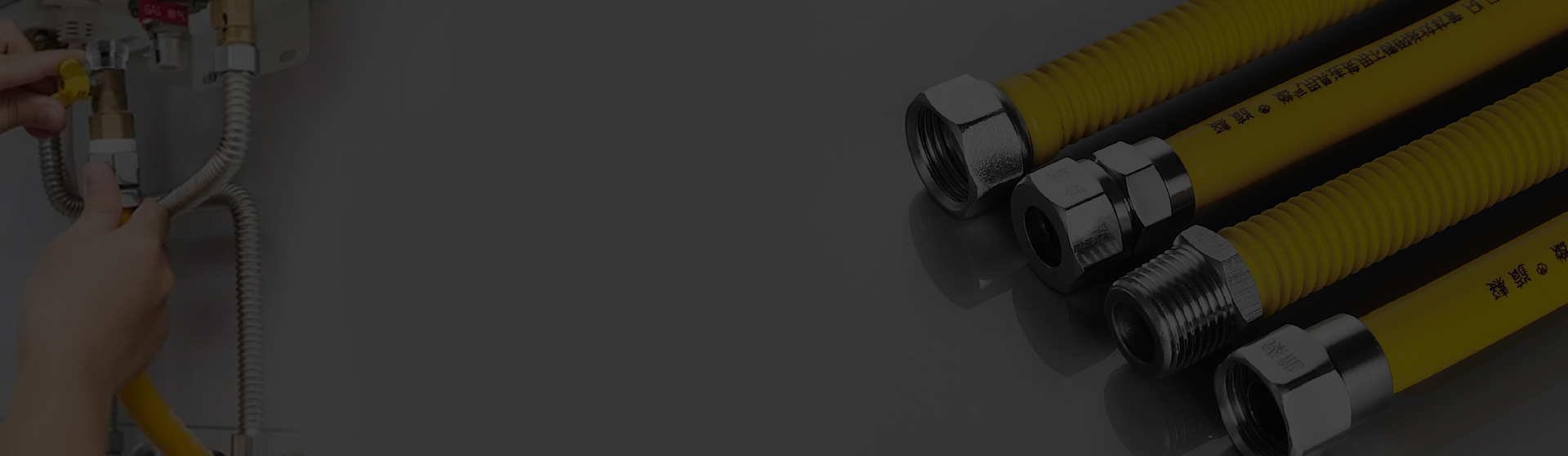

Corrugated metal hoses fail primarily due to five causes: fatigue cracking from excessive vibration or movement, stress corrosion cracking from incompatible media, improper installation that creates torsion or over-bending, mechanical abrasion of the outer braid, and pressure surge damage from water hammer or thermal cycling. The good news is that every one of these failure modes is preventable — either through correct specification at the design stage or proper installation and maintenance practice in the field.
Industry maintenance data consistently shows that over 70% of flexible metal hose failures occur not because the hose was defective, but because it was incorrectly specified, incorrectly installed, or operated outside its rated parameters. Understanding the root causes of failure is therefore the most direct path to preventing unplanned downtime, leakage, and safety incidents across natural gas, industrial fluid, and high-pressure pipeline applications.
Content
- 1 The Five Root Causes of Corrugated Metal Hose Failure
- 2 Correct Specification: Matching the Hose to the Application
- 3 Installation Best Practices That Prevent Premature Failure
- 4 Material Selection Guide for Corrugated Hoses
- 5 Maintenance and Inspection: Extending Service Life in Service
- 6 When to Replace Rather Than Repair
- 7 About Zhejiang Zhenlong Energy Equipment Technology Co., Ltd.
- 8 Frequently Asked Questions
The Five Root Causes of Corrugated Metal Hose Failure
Each failure mode has a distinct signature that experienced engineers can identify during inspection. Knowing which mode is at play determines the correct corrective action.
1. Fatigue Cracking from Cyclic Flexing
Corrugated hoses are designed to flex — but within defined limits. Every flex cycle introduces micro-stress at the corrugation crests. When a flexible metal hose assembly is subjected to continuous vibration, repeated angular deflection, or movement beyond its minimum bend radius, these micro-stresses accumulate until crack initiation occurs, typically at the corrugation root or at the weld junction between the hose body and the end fitting.
Fatigue failure is especially common in pump connector applications, where metal hoses absorb pump vibration continuously. A hose rated for dynamic flexing at a specified frequency will achieve its design life; one subjected to higher-frequency or higher-amplitude movement than specified will fail prematurely — sometimes within weeks.
2. Stress Corrosion Cracking
Stress corrosion cracking (SCC) is one of the most insidious failure modes because it can progress rapidly and without obvious external warning signs. It occurs when a sensitized stainless steel hose is simultaneously under tensile stress and exposed to specific corrosive agents — most notably chlorides, but also hydrogen sulfide and certain acidic media.
Standard 304 and 316 stainless steel corrugated hoses are susceptible to chloride-induced SCC at temperatures above approximately 60°C. In coastal installations, chemical plants, or any environment where chloride-containing fluids or marine air are present, 316L or duplex stainless steel should be specified, and operating temperature should be kept below SCC threshold ranges where possible.
3. Torsion and Installation-Induced Stress
Corrugated hoses are not designed to resist torsional loading — rotation about their longitudinal axis. When installers thread end fittings without isolating the hose body from rotation, the corrugated tube and braid are twisted, which pre-stresses the hose before it even enters service. A torsion angle as small as 5–10 degrees per diameter of hose length can reduce fatigue life by 30–50%.
Torsion damage is identifiable by a helical deformation pattern visible on the outer braid. Prevention requires using a second wrench to hold the hose body fixed while tightening end fittings, and ensuring the hose is not pre-bent or torqued during routing.
4. Mechanical Abrasion of the Outer Braid
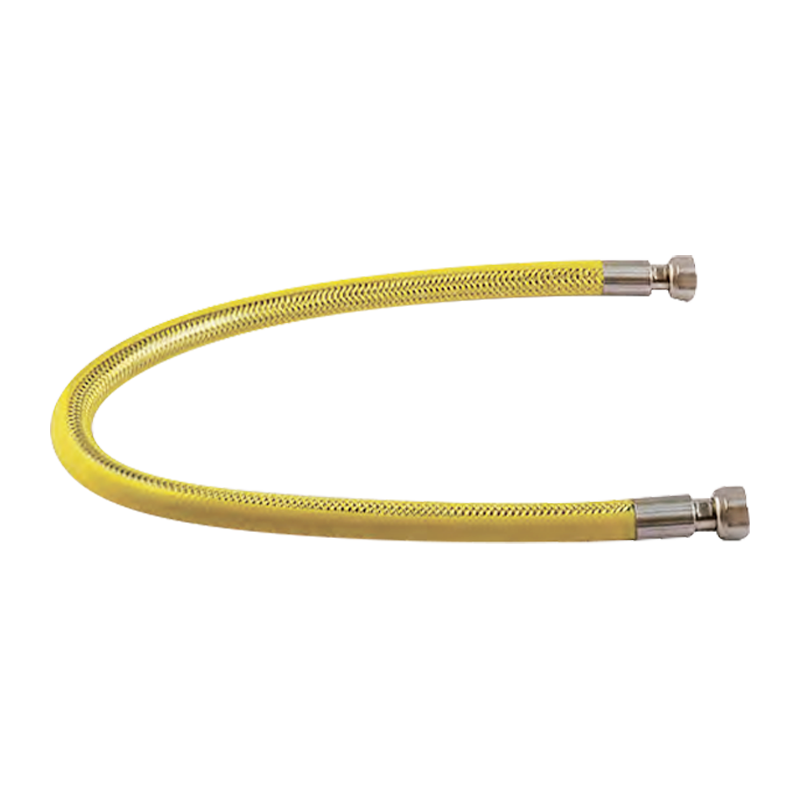
The outer wire braid of a corrugated hose provides both pressure reinforcement and mechanical protection for the inner corrugated tube. When the braid contacts adjacent pipework, structural members, or other hoses during flexing, wire strands progressively abrade and break. Once sufficient braid wires are compromised, the assembly loses its rated pressure capacity and the inner tube becomes vulnerable to pressure-induced failure.
Prevention requires adequate clearance during installation — a minimum of one hose diameter of free space around the assembly — and the use of protective sleeves or guards in environments where contact cannot be avoided.
5. Pressure Surge and Thermal Shock
Water hammer — the pressure shock wave generated by rapid valve closure in liquid systems — can impose instantaneous pressures 5–20 times the system's steady-state operating pressure. Even a high pressure metal hose rated well above normal operating conditions can fail if the surge pressure repeatedly approaches or exceeds its burst rating.
Similarly, rapid thermal cycling between high and low temperatures causes differential thermal expansion between the corrugated inner tube and the braid — generating cyclic stress at their interface. In steam or cryogenic applications, thermal management (gradual warm-up/cool-down procedures and appropriate hose length selection) is as important as pressure rating.
Distribution of Corrugated Metal Hose Failure Modes in Industrial Service (%)
Approximate failure mode distribution based on industrial maintenance literature; results vary by application sector
Correct Specification: Matching the Hose to the Application
The majority of corrugated hose failures are rooted in misspecification. A hose selected purely on nominal bore size and pressure rating — without considering temperature, media chemistry, movement type, and installation geometry — will rarely achieve its potential service life.
| Specification Parameter | What to Define | Common Mistake |
|---|---|---|
| Operating Pressure | Max continuous + surge allowance | Specifying only steady-state pressure |
| Temperature Range | Min/max operating + upset conditions | Using ambient temperature only |
| Media Compatibility | Full chemical composition, pH, chloride content | Specifying only fluid name |
| Movement Type | Vibration, angular, lateral, axial | Treating all movement as equivalent |
| Installed Length | Minimum length for deflection + safety margin | Installing too short for required movement |
| End Fitting Type | Thread type, seal face, material grade | Mismatched thread standards causing leakage |
For high pressure metal hose applications — typically above 100 bar — additional parameters become critical: the number of braid layers, the wire diameter and pitch of the braid, and the corrugation profile (annular vs. helical) must all be matched to the combined pressure, temperature, and movement requirements. A single-braid hose adequate for 25 bar will fail rapidly if installed in a 100 bar system, even if the nominal bore size matches.
Installation Best Practices That Prevent Premature Failure
Correct installation is as important as correct specification. The following practices eliminate the majority of installation-related failure modes across natural gas, water, steam, and industrial fluid applications.
- Never install a corrugated hose in torsion. Always use two wrenches when tightening end fittings — one on the fitting, one holding the hose body fixed. Verify the braid shows no helical twist pattern after installation.
- Respect the minimum bend radius. Operating a hose below its minimum bend radius accelerates fatigue cracking at the corrugation crests. Every hose assembly should be supplied with a minimum bend radius specification — treat it as a hard limit, not a guideline.
- Install with sufficient free length for the required movement. For lateral movement applications, the installed hose must be long enough to accommodate the full deflection range without approaching the minimum bend radius at either extreme of travel.
- Avoid axial compression or extension. Corrugated hoses should be installed in their neutral length — neither compressed nor extended. Axial compression causes the corrugations to contact each other under pressure, accelerating fatigue; axial extension places tensile load on the braid wires.
- Provide clearance around the entire hose assembly. During flexing, the outer diameter of the hose assembly increases. Ensure at least one full hose diameter of clearance to all adjacent structures to prevent abrasion contact.
- Support the pipe, not the hose. Adjacent pipework on both sides of a flexible connector should be independently supported. If the hose is supporting pipe weight, it is carrying a load it was not designed for and fatigue life will be severely reduced.
Material Selection Guide for Corrugated Hoses
Stainless steel is the dominant material for corrugated hoses, but the grade selection is critical and not all grades perform equally across all environments.
| Material Grade | Max Continuous Temp | Chloride Resistance | Typical Application |
|---|---|---|---|
| 304 / 304L SS | 870°C | Low | General industrial, dry gas, low-chloride water |
| 316 / 316L SS | 870°C | Moderate | Chemical, marine, food processing |
| 321 SS | 900°C | Moderate | High-temperature exhaust, steam |
| Duplex 2205 | 300°C (practical) | High | Offshore, seawater, chemical injection |
| Inconel 625 | 980°C | Very High | Subsea, aggressive chemical, extreme temp |
For natural gas pipeline applications, 304L or 316L are the standard choices for the corrugated inner tube, with 304 braid wire. Where hydrogen sulfide (sour gas) is present, materials must be evaluated against NACE MR0175 requirements to prevent sulfide stress cracking.
Maintenance and Inspection: Extending Service Life in Service
Even correctly specified and installed metal hoses require periodic inspection to identify developing problems before they reach failure. A structured inspection program typically pays back its cost many times over in avoided emergency repairs and unplanned downtime.
Visual Inspection Checklist
- Braid condition: Look for broken wires, fraying, discoloration, or corrosion on the outer braid — these are early indicators of mechanical damage or chemical attack.
- End fitting integrity: Check for leakage at both end connections, and for any signs of cracking, corrosion, or deformation at the ferrule-to-braid interface.
- Hose geometry: Confirm the hose remains within its installed configuration — that it has not shifted into a tighter bend, developed kinking, or is now contacting adjacent structures.
- Corrugation profile: Where accessible, confirm that corrugations are uniform and not flattened, collapsed, or showing visible cracks at the crests.
- Settlement or pipe movement: Check that adjacent pipework supports have not shifted, placing new torsional or axial loads on the flexible connector.
Hose Condition Score Over Time — Inspected vs. Uninspected Service
Regular inspection allows early intervention that sustains hose condition and prevents sudden failure events
For critical service applications — natural gas distribution, steam, or high-pressure process lines — annual inspection as a minimum is recommended, with six-monthly checks in high-vibration or chemically aggressive environments. Any hose showing broken braid wires, visible cracking, or permanent deformation should be replaced immediately regardless of its service age.
When to Replace Rather Than Repair
Unlike many mechanical components, corrugated hoses and flexible metal hose assemblies are not field-repairable. A hose that shows any of the following conditions should be removed from service and replaced:
- Any visible crack, pinhole, or seepage at the corrugated tube or weld zones
- More than 10% of braid wires broken or missing in any 50mm section
- Permanent kinking or deformation of the corrugated profile
- Leakage or corrosion at the end fitting ferrule
- Any hose that has experienced a pressure event exceeding its rated working pressure
- Hoses in critical natural gas or steam service that have reached their specified replacement interval, regardless of visual condition
The cost of a replacement flexible metal hose assembly is negligible compared to the liability, downtime, and safety consequences of an in-service failure on a pressurized gas or fluid system.
About Zhejiang Zhenlong Energy Equipment Technology Co., Ltd.
Zhejiang Zhenlong Energy Equipment Technology Co., Ltd. is a company engaged in the research, development, manufacturing, and processing of energy equipment. The company manufactures and processes metal hoses, natural gas pipelines, pipe fittings, sanitary ware, valves, plastic products, and hardware — integrating industry and trade across its full product range.
Located in Yuyao, Ningbo, Zhejiang, the facility covers 40 acres with a factory building of 30,000 square meters. Production infrastructure includes 30 welding and forming production lines, 2 uninterrupted solid melting hydrogen furnace production lines, and testing equipment including a metal material analysis direct reading spectrometer and flow tightness tester.
Zhenlong strictly implements the ISO9000:2008 quality management system and holds the People's Republic of China Special Equipment Manufacturing License (Pressure Pipeline) and EU CE certification. The company is a member of the China Urban Gas Association and maintains a strong R&D, design, and production team dedicated to providing customers with safe pipe fittings and comprehensive pre- and after-sales service. Zhejiang Zhenlong originates from sincere cooperation with partners at home and abroad, working together to create brilliance.